Start Here
What it really costs to start an instrument
Two instruments with the same price tag can differ by a factor of two once you count what you cannot play without.
By Sawyer V. · Published · Last updated

Instrument prices are quoted the way airline fares are: the headline number is real and it is not what you will pay. A keyboard needs a stand and a bench before it can be played properly. An electric guitar needs an amplifier before it can be heard. A violin without a bow is an ornament.
This page prices the whole thing.
Ukulele is the cheapest complete start by a clear margin and has almost no recurring cost. Acoustic guitar is next. Keyboards are more than they look because of the stand and bench. Drums and band instruments are the most expensive to begin and to run.
The complete first-year picture
| Family | Beyond the instrument | Recurring |
|---|---|---|
| Ukulele | Tuner. Optionally a strap. | Strings about once a year |
| Acoustic guitar | Tuner, spare strings | Strings every few months, yearly setup |
| Electric guitar | Amp, cable, tuner, strings | Strings, yearly setup |
| Keyboard | Stand, adjustable bench, sustain pedal, headphones | Nothing |
| Drums (electronic) | Throne, sticks, headphones, isolation mat | Sticks; mesh heads eventually |
| Violin / cello | Usually included in an outfit; shoulder rest | Strings, rosin, bow rehair, size changes |
| Clarinet / saxophone | Reeds, swab, cork grease, music stand | Reeds continuously, annual service |
The cheapest genuine start
A Kala KA-15S#ad plus a Snark clip-on chromatic tuner#ad is a complete musical setup. Nothing else is required, nothing needs power, nothing needs a stand, and the only recurring cost is a set of strings roughly once a year.
That is not a compromise position. It is a real instrument with a real repertoire, and it is why the ukulele appears so often in our recommendations for children, for travel and for anyone testing whether music will stick. The picks are in best beginner ukuleles.
An acoustic guitar is next. A Yamaha FG800#ad plus a tuner is similarly complete — no amplifier, no cable, no power. Strings are a modest recurring cost and a yearly setup is worth budgeting for. The price bands in detail are in what a first guitar should cost.
Where the surprises are
Keyboards. The board is only part of it. Played on a dining table at dining-table height, a keyboard bends the wrists upward and hurts, so a stand and an adjustable bench are not accessories — they are part of the instrument. Add a sustain pedal, which written piano music assumes within months, and headphones, which decide whether evening practice is possible. A Casio Casiotone CT-S1#ad is inexpensive; the complete setup is meaningfully more. The list is in keyboard accessories you actually need.
Electric guitar. An amplifier and a cable are the difference between an instrument and a quiet plank. Both are modest and both are real. See do you need an amp to learn electric guitar.
Drums. The kit is the start. Add a throne if the included stool is not adjustable, sticks, hearing protection, and — in any shared building — an isolation mat, because pedals transmit impact into the floor regardless of headphones. The list is in drum accessories you actually need.
Band instruments. The one category where our year-one advice is to spend nothing on an instrument and rent instead, for reasons that are structural rather than financial. See what a band instrument should cost.
What recurs, and what does not
Nothing recurring: keyboards and digital pianos. No tuning, no strings, no consumables. Over five years this is a genuine and underrated advantage over an acoustic piano, which needs tuning roughly twice a year indefinitely — see digital versus acoustic piano.
Modest and predictable: guitar and ukulele strings, drum sticks, drum heads.
Continuous: reeds on clarinet and saxophone. Cheap individually, constant in practice, and a genuine hidden difficulty when a student plays on a dead one — see reeds explained.
Periodic and larger: bow rehairing on strings, annual servicing on woodwind and brass, size changes on violin and cello for a growing child.
The cost nobody puts in the budget
Teaching, and it varies enormously by family.
Fretted instruments and keyboards can be self-taught to a genuinely enjoyable level. Apps, books and video do the job, and a few lessons at the start to fix posture is a small, high-value expense — see lessons versus teaching yourself.
Bowed strings and woodwind are much harder alone, because the faults that matter are invisible to the person making them. For those families, teaching is close to a required line rather than an optional one, and it is usually the largest number in the first year.
How to spend a fixed budget
Put the money in the instrument, not the accessories. A better instrument with a basic tuner beats a worse instrument with a case, a strap and a stand.
Except where the accessory is structural. A keyboard without a bench at the right height is not a cheaper setup; it is a setup that causes wrist pain.
Buy used where used is safe. Guitars, basses, amps and acoustic drum kits are excellent secondhand. Woodwind, brass and bowed strings are not, for reasons in used versus new.
Rent where renting is right. Band instruments in year one, and violins and cellos for a growing child. See rent or buy.
What we would buy
Kala KA-15S
Kala Brand MusicBest for: The honest floor, soprano
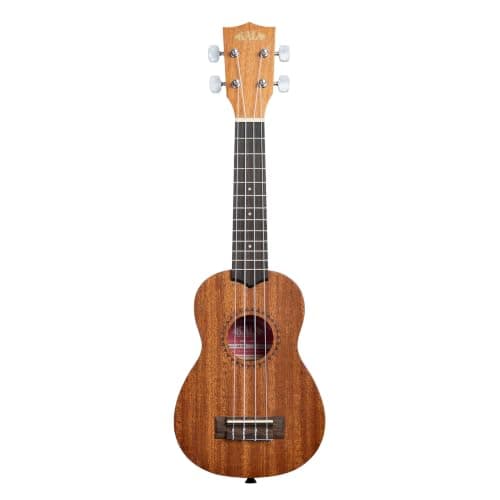
Mahogany throughout, a GraphTech NuBone nut and saddle, and Aquila strings fitted from the factory. The nut material is the spec that separates this from the pile of look-alikes.
Published specifications
- Size:
- Soprano
- Top / back / sides:
- Mahogany
- Neck / fretboard:
- Mahogany neck, rosewood fretboard
- Nut and saddle:
- GraphTech NuBone
- Scale length:
- 13.625"
- Frets:
- 12
- Nut width:
- 1.375"
- Overall length:
- 21.062"
- Strings:
- Aquila Super Nylgut
What it gets right
- NuBone nut and saddle rather than molded plastic — this is what decides whether the instrument plays in tune up the neck
- Aquila strings fitted at the factory, so the first thing you would otherwise replace is already done
- 21 inches overall and light enough for a small child to hold unsupported
Where it gives ground
- 12 frets only, and the body joint stops you well short of the high notes
- Soprano scale means less room between frets — adult fingers with wide fingertips will find it cramped
What it is not good at
Adult hands, sometimes. A 13.625 inch scale is genuinely tight. If the player is a grown-up with large hands, read our soprano-versus-concert comparison before buying this size.
How the specs score against a beginner’s needs
Scores are our reading of the published specifications above against what a beginner physically needs. They are not test results — we have not played this instrument.
Specifications from Kala Brand Music — KA-15S specifications.
Yamaha FG800
YamahaBest for: Buy once, acoustic
A solid Sitka spruce top with scalloped bracing at the entry price. Solid-versus-laminate is the one acoustic spec that changes what the instrument does over years, and this is the cheapest place to get it done right.
Published specifications
- Top:
- Solid Sitka spruce
- Back / sides:
- Nato / okume
- Neck / fingerboard:
- Nato neck, rosewood fingerboard, R400 mm (23-5/8") radius
- Scale length:
- 650 mm (25-9/16")
- Nut width:
- 43 mm (1-11/16")
- Bracing:
- Scalloped
- Body:
- Traditional Western (dreadnought), 412 mm (16-1/4") wide, 100-118 mm deep
- Hardware:
- Die-cast chrome tuners, urea nut and saddle
What it gets right
- A solid top, not a laminate — the only acoustic spec at this price that genuinely changes over time
- Scalloped bracing and die-cast tuners are specifications you normally pay considerably more for
- Yamaha's most-copied entry acoustic; parts, setups and advice are everywhere
Where it gives ground
- A full dreadnought body is a big box — 412 mm across and up to 118 mm deep
- Nato and okume back and sides are the cost saving; the top is where the money went
What it is not good at
Fitting a smaller player. The dreadnought body is wide and deep enough that a young teenager can struggle to get their arm over it comfortably. If that is the buyer, look at the JR1 or a concert-size body instead.
How the specs score against a beginner’s needs
Scores are our reading of the published specifications above against what a beginner physically needs. They are not test results — we have not played this instrument.
Specifications from Yamaha Europe — FG/FS800 series specifications.
Casio Casiotone CT-S1
CasioBest for: 61 keys, piano sound first
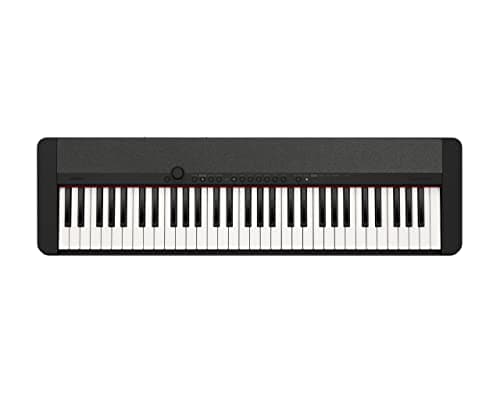
61 full-size touch-sensitive keys, 61 tones and no arranger clutter. It is the 61-key board for someone who wants to play piano rather than operate a keyboard.
Published specifications
- Keys:
- 61, full-size, touch-sensitive
- Polyphony:
- 64 notes
- Tones:
- 61, including a stereo grand piano
- Weight:
- 9.9 lb
- Dimensions:
- 36.61" W x 10.15" D x 3.30" H
- Connectivity:
- USB-MIDI
What it gets right
- Deliberately few sounds and a clean panel, which removes the single biggest distraction from actual practice
- 9.9 pounds and 3.3 inches tall — it can live on a shelf between sessions, and an instrument that lives out of the way gets played less
- 64-note polyphony, higher than the PSR-E383's 48
Where it gives ground
- No lesson mode at all, unlike the PSR-E383
- Unweighted keys, same fundamental limit as any 61-key board
What it is not good at
Entertaining a young child. There is no light-up key guidance, no play-along scoring and only 61 sounds. That restraint is the point for an adult beginner and a drawback for a seven-year-old.
How the specs score against a beginner’s needs
Scores are our reading of the published specifications above against what a beginner physically needs. They are not test results — we have not played this instrument.
Specifications from Casio — CT-S1 product page.
Snark clip-on chromatic tuner
SnarkBest for: Tuning anything with strings
Clips to the headstock and reads pitch from the vibration of the wood, so it works in a noisy room and an adult who plays nothing can tune the instrument in twenty seconds.
Published specifications
- Type:
- Clip-on chromatic
- Sensing:
- Vibration through the headstock, not the microphone
- Fits:
- Guitar, bass, ukulele, violin, mandolin
- Display:
- Full-color rotating screen
What it gets right
- Vibration sensing means it works in a room with a television on, which a microphone tuner does not
- Chromatic, so one tuner covers every instrument in the house
- The rotating display means it reads correctly whichever way the instrument is held
Where it gives ground
- The clip is plastic and it is the part that eventually breaks
- Battery-powered, and it will be flat the one time you need it in a hurry
What it is not good at
Wind and brass instruments. It reads vibration through a solid body, so there is nothing for it to clip to on a flute or a trumpet.
How the specs score against a beginner’s needs
Scores are our reading of the published specifications above against what a beginner physically needs. They are not test results — we have not played this instrument.
Specifications from Snark tuners (retail listing with published feature set).
Questions people actually ask
What is the cheapest instrument to start?
The ukulele, comfortably. A decent soprano plus a clip-on tuner is a complete setup with nothing else required and no recurring costs beyond a set of strings roughly once a year.
What costs are hidden when buying an instrument?
Stands and benches for keyboards, amplification for electric guitar and bass, hearing protection and a throne for drums, reeds for woodwind, and a bow and rosin for strings. None are optional and none are usually in the headline price.
Which instrument has the highest ongoing cost?
Clarinet and saxophone, because reeds are a continuous consumable. Bowed strings are next, because of rehairing and periodic setup. Keyboards have essentially none.
Do you need lessons in the budget?
For fretted instruments and keyboards you can start without. For bowed strings and woodwind, some teaching is close to necessary, and it is usually the largest line in the first year.
Sources
Still deciding?
Every recommendation on this site is built the same way, and the method is published in full — including what we do not do and what would get a pick dropped.
Read next
- What instrument should I learn?
Four practical constraints instead of a personality quiz, each one routing straight to the instrument that fits.
- How much should a beginner guitar cost?
Four price bands defined by specification rather than by number, plus the hidden costs that turn a $200 budget into a $270 purchase.
- How much should a beginner keyboard cost?
Four bands from touch response to hammer action, plus the stand, bench and pedal costs that turn a keyboard budget into a bigger one.
- What a school band instrument should cost
The four Starter Path bands applied to band instruments, the specific way ultra-cheap ones fail, and the real cost of year one.
- Eight ways a first instrument purchase goes wrong
The eight recurring first-purchase mistakes, what each costs, and a one-minute check that prevents each one.