Ukuleles
Best beginner ukuleles: what's worth it from $60 to $120
Ukuleles are the cheapest honest way into a stringed instrument and the easiest category to buy badly, because the part that decides everything is a piece of plastic the size of a fingernail.
By Sawyer V. · Published · Last updated
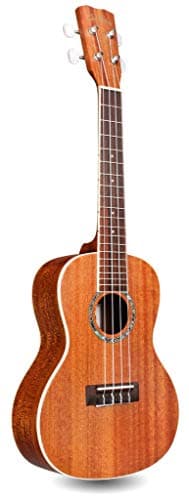
The ukulele is the lowest-friction way into stringed instruments and the easiest category in which to buy something that does not work. Nylon strings under low tension mean it barely hurts to play, four strings mean chords are simple, and a small body means a seven-year-old can hold it. All genuinely true.
What is also true is that a $25 ukulele and a $70 ukulele look identical in a photograph, and the difference between them is a piece of plastic about the size of a fingernail. Every pick below states its Starter Path band, and we have not played any of them — our method is on how we pick.
The nut and saddle, which decide everything
The nut is the small slotted piece where the strings leave the fingerboard at the headstock end. The saddle is its counterpart at the body end. Together they set the string height and, crucially, the vibrating length.
If either is molded from soft plastic, two things go wrong. First, the string binds in the slot when you tune, so the tuning happens in jumps rather than smoothly and the instrument will not sit precisely in tune. Second, and worse, the saddle position is usually not compensated correctly, so the instrument plays sharper and sharper as you move up the neck. A chord at the first fret sounds fine. The same chord at the seventh sounds wrong, and no amount of tuning fixes it, because the problem is the geometry.
A beginner cannot diagnose this. What they experience is that some chords sound bad and they do not know why, and the natural conclusion is that they are playing them wrong.
Both wooden picks here specify GraphTech NuBone or an equivalent bone substitute, which is dense, slippery and can be cut precisely. It is the single specification worth checking before anything else.
Strings, and the free upgrade you should look for
Ukulele strings vary far more than guitar strings do, and cheap ones sound genuinely dull — thuddy, with no sustain and a muted top end.
Aquila Nylgut and Super Nylgut are the most common upgrade, and a set costs around $10 to $12. Both the Kala and the Cordoba here ship with Aquila strings from the factory, which means the first thing you would otherwise do to the instrument has already been done. When comparing two ukuleles at similar prices, factory Aquilas are effectively a $12 discount plus a job you do not have to learn to do.
What to skip
The under-$30 ukulele in a bright color with a bag, a strap, a tuner, a capo and spare strings. The accessories are worth perhaps $20 retail, which tells you what is left for the instrument. These have molded plastic nuts, friction tuners that slip, and intonation that is wrong from the factory and cannot be corrected.
They are frequently bought as a gift, played twice, and quietly abandoned — not because the recipient did not want to play, but because the instrument would not stay in tune. This is the specific failure the “below the floor” band exists to name.
Also skip friction tuners if you can see them in the photos. These are the simple pegs that hold by friction alone rather than geared tuners with a worm drive. They exist on traditional instruments and on cheap ones for opposite reasons, and on a cheap one they slip. A beginner tuning a slipping peg is a beginner having a bad time.
Size, briefly
Four sizes exist and two of them matter for a beginner. Soprano is the classic and the smallest. Concert is a bit bigger with more room between frets. Tenor is bigger again and less common as a first instrument; baritone is tuned differently and is effectively a different instrument.
The short version: adults are generally happier on concert, children on soprano, and the tone difference between them is smaller than the ergonomic difference. Full detail in soprano vs concert vs tenor.
Quick picks
Adults and older teenagers
Concert size, because a 13.6 inch soprano scale is genuinely cramped for adult fingers and the extra inch and a bit fixes it entirely.
| # | Product | Best for | Score | Price |
|---|---|---|---|---|
| 1 | Cordoba 15CMA 375 mm concert scale with 18 frets and a 35 mm nut. | Adult hands, concert sizeEnough | 9.0 | $129.99 · View on Amazon #ad How we’re funded |
The classic soprano, any age
The size everyone pictures, and the one that produces the bright plinky voice people associate with the instrument.
| # | Product | Best for | Score | Price |
|---|---|---|---|---|
| 1 | 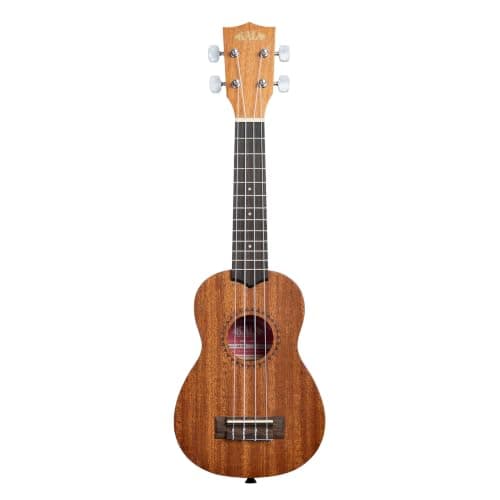 Kala KA-15SMahogany throughout, a GraphTech NuBone nut and saddle, and Aquila strings fitted from the factory. | The honest floor, sopranoThe honest floor | 8.7 | $69.00 · View on Amazon #ad How we’re funded |
Young children, or a house that is hard on instruments
A composite body that ignores humidity and survives being carried around by the neck. You give up tone for durability, and for a six-year-old that is the right trade.
| # | Product | Best for | Score | Price |
|---|---|---|---|---|
| 1 | 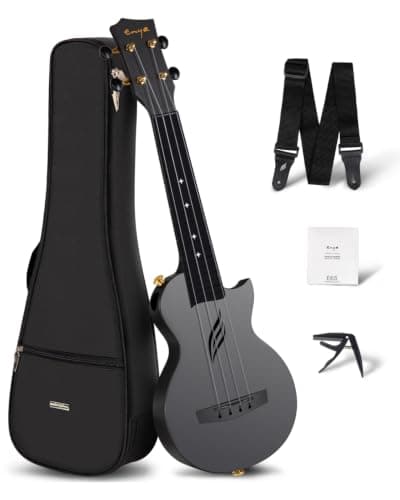 Enya Nova U MiniA 21 inch carbon-fiber-and-polycarbonate body weighing 430 grams. | Young kids, survives anythingThe honest floor | 8.0 | $59.14 · View on Amazon #ad How we’re funded |
The picks in full
Kala KA-15S
Kala Brand MusicBest for: The honest floor, soprano
Mahogany throughout, a GraphTech NuBone nut and saddle, and Aquila strings fitted from the factory. The nut material is the spec that separates this from the pile of look-alikes.
Published specifications
- Size:
- Soprano
- Top / back / sides:
- Mahogany
- Neck / fretboard:
- Mahogany neck, rosewood fretboard
- Nut and saddle:
- GraphTech NuBone
- Scale length:
- 13.625"
- Frets:
- 12
- Nut width:
- 1.375"
- Overall length:
- 21.062"
- Strings:
- Aquila Super Nylgut
What it gets right
- NuBone nut and saddle rather than molded plastic — this is what decides whether the instrument plays in tune up the neck
- Aquila strings fitted at the factory, so the first thing you would otherwise replace is already done
- 21 inches overall and light enough for a small child to hold unsupported
Where it gives ground
- 12 frets only, and the body joint stops you well short of the high notes
- Soprano scale means less room between frets — adult fingers with wide fingertips will find it cramped
What it is not good at
Adult hands, sometimes. A 13.625 inch scale is genuinely tight. If the player is a grown-up with large hands, read our soprano-versus-concert comparison before buying this size.
How the specs score against a beginner’s needs
Scores are our reading of the published specifications above against what a beginner physically needs. They are not test results — we have not played this instrument.
Specifications from Kala Brand Music — KA-15S specifications.
Cordoba 15CM
CordobaBest for: Adult hands, concert size
A 375 mm concert scale with 18 frets and a 35 mm nut. The extra inch and a bit of scale over a soprano is the difference between cramped and comfortable for most adults.
Published specifications
- Size:
- Concert
- Top / back / sides:
- Mahogany
- Fingerboard:
- Rosewood
- Scale length:
- 375 mm (14-3/4")
- Frets:
- 18
- Nut width:
- 35 mm (1-3/8")
- Body / overall:
- 280 mm body, 610 mm (24") overall
- Strings / finish:
- Aquila, satin finish, abalone rosette
What it gets right
- 18 frets against a soprano's 12 — a whole extra register that a soprano simply does not have
- The 375 mm scale gives noticeably more room between frets without becoming a tenor-sized instrument
- Aquila strings and an abalone rosette; it looks considerably more expensive than it is
Where it gives ground
- Identical 35 mm nut width to the Kala soprano — the extra room is between the frets, not across the neck
- 24 inches overall is a lot of instrument for a small child
What it is not good at
Sounding like a ukulele in the postcard sense. The concert body is fuller and rounder; the bright, plinky voice people picture is the soprano's.
How the specs score against a beginner’s needs
Scores are our reading of the published specifications above against what a beginner physically needs. They are not test results — we have not played this instrument.
Specifications from Cordoba Guitars — 15CM.
Enya Nova U Mini
EnyaBest for: Young kids, survives anything
A 21 inch carbon-fiber-and-polycarbonate body weighing 430 grams. It is water resistant and it does not care about humidity, which is the honest reason to buy it for a six-year-old.
Published specifications
- Size:
- Soprano, 21"
- Top / back / sides:
- 30% carbon fiber and polycarbonate composite
- Weight:
- 430 g (0.9 lb)
- Overall length:
- 22"
- Nut width:
- 1-3/8"
- Body:
- Arched back, radius fretboard, cutaway
- In the box:
- Semi-hard case, strap, capo, spare strings
What it gets right
- Composite body — it does not crack in a dry house or swell in a damp one, which is what actually kills cheap wooden ukuleles
- 430 grams; a five-year-old can carry it around by the neck all day, and they will
- Case, strap, capo and spare strings included
Where it gives ground
- It does not sound like wood, and no amount of playing will change that
- The composite body is a fixed quantity — there is no breaking-in and no improvement over time
What it is not good at
Tone. A mahogany Kala sounds warmer and fuller, plainly. You are buying survivability, and that is a legitimate thing to buy for a young child, but be clear that is the trade.
How the specs score against a beginner’s needs
Scores are our reading of the published specifications above against what a beginner physically needs. They are not test results — we have not played this instrument.
Specifications from Enya Music — Nova carbon fiber ukulele collection.
Questions people actually ask
What is a good beginner ukulele?
One with a bone-substitute nut and saddle, geared tuners, and decent strings fitted from the factory. Those three cost the manufacturer very little and are the difference between an instrument that plays in tune and a decoration. Mahogany bodies at this price are common and largely interchangeable.
Soprano vs concert ukulele, which is better?
Neither, but they suit different hands. Soprano is 13.6 inches of scale with 12 frets and the bright classic voice. Concert is about 14.75 inches with 18 frets, more room between frets and a fuller sound. Adults are generally happier on concert. Full comparison in soprano vs concert vs tenor.
How much should a beginner ukulele cost?
Roughly $60 to $80 is the honest floor and $90 to $130 is the buy-once tier. Below about $40 the nut and saddle are molded plastic and the instrument will not play in tune above the fifth fret, which is a permanent condition. Bands and reasoning in what a first ukulele should cost.
Do I need to change the strings on a new ukulele?
On a cheap one, almost always — the fitted strings are usually the cheapest available and sound dull and lifeless. Both wooden picks here ship with Aquila strings from the factory, which is a genuine saving of about $12 and a job you do not have to do.
Sources
Still deciding?
Every recommendation on this site is built the same way, and the method is published in full — including what we do not do and what would get a pick dropped.
Read next
- Soprano vs concert vs tenor ukulele
Real scale lengths and fret counts across all four sizes, with the hand-size rule and buy paths for the two that matter.
- Ukulele vs guitar for beginners
Why the ukulele is genuinely easier, exactly which skills transfer to guitar, and when the stepping-stone plan is a detour.
- How much should a beginner ukulele cost?
Four bands from $30 to $200, defined by nut material and tuner type rather than by brand, with the accessory list included.
- Best ukuleles for kids
Wood or composite, with the humidity problem that kills cheap wooden ukuleles in dry houses stated plainly.
- What comes with a ukulele, and what you still need
What is really in the box, what the bundle accessories are worth, and the three things you genuinely need.
- How to buy your first ukulele
The order to make the decisions in, what to check before you pay, and the one specification that separates a ukulele you keep from one you replace.