Keys
Digital piano or acoustic piano to start?
The free upright from a relative is the most common first piano and one of the worst, for reasons that have nothing to do with digital being inferior.
By Sawyer V. · Published · Last updated
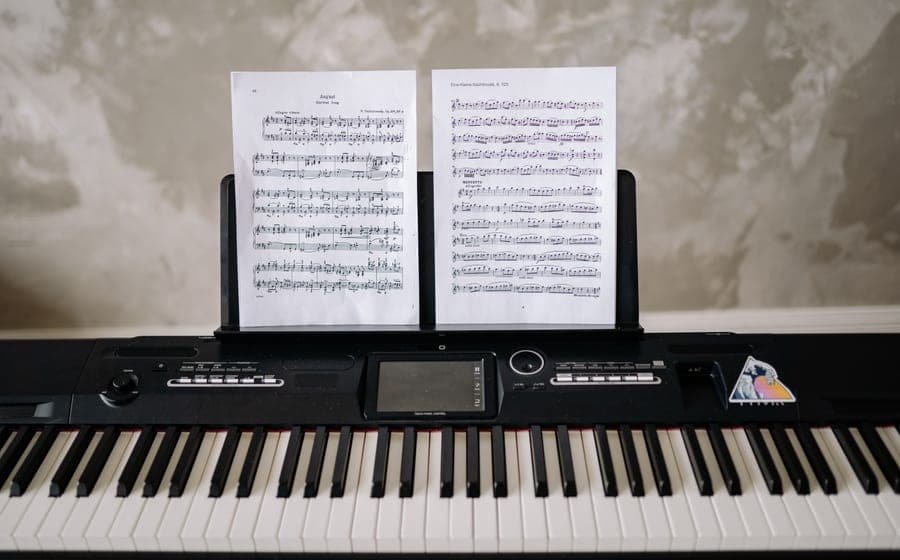
The instinct is that a real piano must be better than an electronic imitation of one, and for a good acoustic against a cheap digital that is true. The comparison a beginner actually faces is rarely that one.
It is usually a modern digital piano against a decades-old upright that is free or nearly free, has not been tuned in years, and lives wherever it can be got through the door. That is a very different question, and the answer often goes the other way.
For most beginners, a digital piano with 88 weighted keys is the better buy. It never needs tuning, has a volume control and a headphone socket, fits in an apartment and can be moved by two people. Choose an acoustic if you have space, budget for tuning twice a year, and can have the specific instrument inspected first.
The comparison, honestly
| Digital piano | Acoustic upright | |
|---|---|---|
| Tuning | Never | Roughly twice a year, forever |
| Volume control | Yes, plus headphones for silence | None — it is as loud as it is |
| Weight | Portable to two-person | Professional movers |
| Space | Fits a small apartment | Needs a permanent wall |
| Key action | Simulated hammer action, good at the top end | The real thing |
| Sound | Sampled, through speakers | Strings and a soundboard filling the room |
| Extras | Metronome, recording, transpose, other voices | None |
| Lifespan | Decades, then obsolete electronics | A century with maintenance |
What a teacher is actually asking for
When a piano teacher says a student needs a proper piano, they are almost never insisting on strings and a soundboard. They are asking for two things.
88 keys, because the repertoire eventually uses them and running out of notes mid-piece is a hard stop rather than an inconvenience.
A weighted hammer action, because piano technique is built on controlling how hard a key is struck, and that control cannot be developed on keys that offer no resistance. It is also physical: piano playing builds finger strength, and unweighted keys do not.
The Yamaha P-145#ad delivers both, which is why it sits in the buy-once band of our digital piano roundup. The Alesis Recital#ad gives you 88 full-size keys at a considerably lower price with a semi-weighted rather than hammer action — a real compromise, honestly stated, and still far closer to the target than a 61-key board.
The full weighted argument is in weighted versus unweighted keys.
The free piano problem
Free uprights are common because moving one costs more than most people will pay, and this is where beginners get caught.
Moving is not free. An upright weighs several hundred pounds and needs people who move pianos for a living. That is a real bill before you have played a note.
Tuning is not free. An instrument that has sat untuned for a decade or more will often not come back to pitch in one visit, because raising the tension across the whole frame moves everything. Budget for two or three appointments.
Some of them cannot be repaired economically. Cracked soundboards, loose tuning pins that will not hold pitch, worn hammers, seized action parts. A piano with loose pins is not a piano that needs tuning; it is a piano that cannot hold a tuning, and the repair is not worth doing on a domestic upright.
None of that means refuse it. It means have a tuner look at it before it is moved, and treat their opinion as the deciding vote. The same instinct applies across instruments, which we work through in used versus new.
Where the digital genuinely wins
The volume knob. Plug in headphones and the instrument is silent to everyone else. For an apartment, a shared house or a household with someone asleep, this single feature decides how many hours the piano gets played.
Zero running cost. No tuner, no regulation, no humidity control.
It fits. A slim digital sits against a wall in a room that could never accommodate an upright, and two people can move it up a staircase.
Practice tools. A built-in metronome, the ability to record yourself and hear what you actually sound like, transpose for singing along. These are genuine learning aids and the acoustic has none of them.
Where the acoustic genuinely wins
The action, at the top end. A good acoustic action does things no simulation fully reproduces — escapement, repetition feel, the way the key responds when played very quietly. Beginners will not notice. Advanced students will.
The sound in the room. An acoustic piano resonates as a whole object. Strings that are not struck vibrate sympathetically, and the sound arrives from a large body rather than from two speakers. Digital sampling has become very good and this is still not the same experience.
It does not become obsolete. A well-maintained upright works in fifty years. A digital piano’s electronics have a finite life and no repair path once parts are gone.
It cannot be turned down. Listed as a win deliberately. An instrument that is always audible in the house gets practiced on more casually and heard by the family, and both of those help a child keep going.
The decision in one line
If you have the space, the budget for tuning and an instrument that has been inspected, an acoustic is a wonderful thing to learn on. In every other case — and for most beginners, most of the time — an 88-key weighted digital is the better instrument, and it is better precisely because it will actually get played.
If you are still deciding between a digital piano and a cheaper keyboard, that is a different fork and we cover it in keyboard versus digital piano, with the money laid out in what a first keyboard should cost.
What we would buy
Yamaha P-145
YamahaBest for: Buy once, 88 weighted keys
88 graded hammer keys, a concert grand sample and 24 pounds. If the plan is piano lessons rather than keyboard playing, this is where the shopping actually starts.
Published specifications
- Keys:
- 88, GHC (Graded Hammer Compact), fully weighted and graded
- Polyphony:
- 64 notes
- Sound:
- Yamaha CFIIIS concert grand sample, damper resonance DSP
- Speakers:
- 7 W built-in
- Dimensions:
- 1,326 x 268 x 129 mm (52-3/16" x 10-9/16" x 5-1/16")
- Weight:
- 11.1 kg (24 lb 8 oz)
- In the box:
- Music rest, sustain foot switch
What it gets right
- Graded hammer action — the low keys are heavier than the high ones, which is the thing an unweighted keyboard cannot teach
- All 88 keys, so no method book ever runs off the end of the instrument
- Genuinely portable at 24 pounds and 268 mm deep; it fits on a desk
Where it gives ground
- 64-note polyphony is the entry-tier number; heavy sustain-pedal passages will drop notes eventually
- A single sustain footswitch, not a proper piano-style pedal — most players replace it
What it is not good at
Anything other than piano. There are only a handful of voices and no arranger features, so if the player wants to make beats or layer sounds, a PSR-E383 will make them happier for less money.
How the specs score against a beginner’s needs
Scores are our reading of the published specifications above against what a beginner physically needs. They are not test results — we have not played this instrument.
Specifications from Yamaha USA — P-145 specifications.
Alesis Recital
AlesisBest for: 88 keys on a tight budget
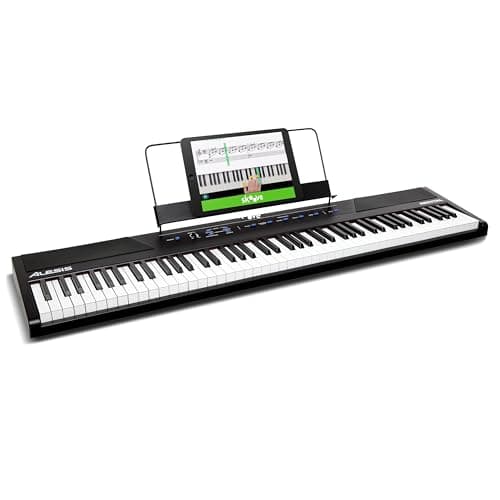
88 full-size semi-weighted keys and 128-note polyphony for meaningfully less than a hammer-action piano. Semi-weighted is a real compromise and the page should say so, so: it is a real compromise.
Published specifications
- Keys:
- 88, full-size, semi-weighted
- Touch response:
- Adjustable — low / medium / high
- Polyphony:
- 128 notes
- Voices:
- 5, layerable and splittable
- Speakers:
- 2 x 20 W
- Weight:
- 15.7 lb
- Extras:
- Lesson mode, metronome, reverb, chorus
What it gets right
- All 88 keys at a price where most instruments give you 61 — the method book never runs out of instrument
- 128-note polyphony, double the Yamaha P-145's 64
- 15.7 pounds, lighter than the P-145's 24 and a genuine consideration if it moves between rooms
Where it gives ground
- Semi-weighted is not hammer action and not graded — the resistance is springs, not weights
- Five voices total, and the piano sample is clearly the entry tier
What it is not good at
Building acoustic-piano technique. Semi-weighted keys let a beginner play faster than their hands have earned, and the habit shows the first time they sit at a real piano. If lessons on an acoustic are coming, spend up to the hammer action.
How the specs score against a beginner’s needs
Scores are our reading of the published specifications above against what a beginner physically needs. They are not test results — we have not played this instrument.
Specifications from Alesis — Recital product page.
Questions people actually ask
Is a digital piano good enough to learn on?
Yes, provided it has 88 keys and a weighted hammer action. Those two specifications are what a piano teacher is actually asking for. Everything else about an acoustic is preference, tradition and resonance rather than a learning requirement.
Should I accept a free upright piano?
Only after someone has looked inside it. Moving costs money, tuning costs money, and a piano that has been unplayed and untuned for twenty years may need work worth more than the instrument. Free pianos are frequently the most expensive option on this page.
How often does an acoustic piano need tuning?
Around twice a year in normal domestic conditions, and more after a move or a big change in humidity. It is a recurring cost with no equivalent on the digital side, which owns nothing that drifts out of tune.
Do digital pianos feel like real pianos?
A good weighted hammer action gets close enough that skills transfer in both directions. The remaining differences — escapement feel, sympathetic resonance, the sound arriving from the whole body of the instrument — are real and matter more to advanced players than to beginners.
Sources
Still deciding?
Every recommendation on this site is built the same way, and the method is published in full — including what we do not do and what would get a pick dropped.
Read next
- Keyboard vs digital piano
What each instrument is built for, what each costs to complete, and the question that decides between them.
- Best beginner digital pianos: 88 keys, honestly compared
Hammer action versus semi-weighted at the entry price, with the polyphony and weight trade-offs both stated.
- Weighted vs unweighted keys
Hammer, semi-weighted and synth action explained by effect on the hands, with the one question that settles the choice.
- How much should a beginner keyboard cost?
Four bands from touch response to hammer action, plus the stand, bench and pedal costs that turn a keyboard budget into a bigger one.
- Should a first instrument be used or new?
Where secondhand is the best value on the site and where it hides expensive faults, plus a check-before-you-pay list per family.