Band & Orchestra
What a school band instrument should cost
Band is the one category where our honest answer for year one is to spend nothing on an instrument at all.
By Sawyer V. · Published · Last updated
Every other hub on this site answers the price question with a purchase recommendation. This one starts by recommending against buying at all, and the reason is structural rather than financial.
In year one, rent. Directors reassign students between sections in the first months and rentals include maintenance a beginner cannot diagnose. Buy in year two or three, at the step-up tier, once the student has settled into a section and is clearly continuing.
The four bands, applied to band instruments
Below the floor. Unbranded instruments sold at prices that look too good. These frequently arrive with pads that do not seal, keys that are out of regulation, or valves that stick. A leaking woodwind plays, and makes the low notes disproportionately hard, and a student concludes they are failing. Having it put right by a technician costs more than the instrument did.
The honest floor. Budget instruments from established makers. A Jean Paul CL-300#ad or a Jean Paul FL-220#ad sits here: genuinely playable, correctly regulated, and a reasonable purchase when renting is not available.
Enough. The step-up student instruments that carry a player through school and hold their value. A Yamaha YCL-255#ad or a Yamaha YFL-222#ad is the buy-once purchase and the one we recommend for a committed student.
Where overspending starts. Professional and intermediate instruments with features a school student cannot use — wooden bodies requiring humidity management, open-hole flutes, professional bore designs. Real improvements, aimed at players who have the technique to exploit them.
Why year one is different here
Three things make band instruments unlike every other category on this site.
Reassignment is normal. Directors move students between sections in the first months based on physical fit and ensemble balance. A family who bought a flute has turned a routine, sensible decision into a financial argument, and the student is the one who loses.
Maintenance is not optional and is not visible. Woodwind pads and corks are consumables that degrade continuously. A rental program handles that as routine; an owner has to notice the problem first, which is precisely what a beginner cannot do. The routine that helps is in how to clean a band instrument.
Rental payments frequently apply toward a purchase. On most school-affiliated programs, at least in part, which makes the year-one cost far less wasteful than it looks. It is the first question to ask before signing — the full list is in renting versus buying.
The specific way ultra-cheap instruments fail
Worth spelling out, because it is not the failure people expect.
A very cheap clarinet does not arrive broken. It arrives almost working: pads that seal on most notes but not all, keys that are slightly out of regulation, a mouthpiece that is adequate rather than good.
The student plays it. The low notes are hard, the upper register is unreliable, and everything requires more air than it should. They practice diligently and improve slowly, and they attribute all of it to themselves.
Nobody investigates, because nothing broke. That is the whole failure mode, and it is why we are stricter about this category than about guitars, where a bad instrument announces itself.
The total cost of year one
The instrument is not the only line, and the others are rarely quoted upfront.
Reeds for clarinet and saxophone, continuously. A student should rotate several rather than play one to death — see reeds explained.
Valve oil and slide grease for brass. Cheap and slow to consume.
Cleaning supplies. Swabs, a mouthpiece brush, cork grease, a polishing cloth.
A music stand. Genuinely necessary. Reading from a bed or a table pulls the head down and the posture with it.
Method books. Usually specified by the program.
An annual service on an owned instrument. Typically included on a rental, which is part of the rental’s real value.
What a rental actually includes
Rental is the recommendation, so it is worth knowing what you are buying with it, because programs differ and the differences are the whole value.
Maintenance. The important one. On a woodwind program it should cover pads and corks, which are the consumables that decide whether the instrument seals. If it does not, the rental is worth considerably less than it appears, because the failure it was protecting you from is excluded.
Damage cover. Most school-affiliated programs include some. Ask what the excess is and what counts as damage rather than wear, because a dropped instrument is a realistic event with a ten-year-old.
Size and section swaps. The reason to rent at all. A good program swaps without penalty when a director reassigns a student. Confirm this explicitly rather than assuming, because it is the single thing the arrangement exists to provide.
Purchase credit. Most programs apply at least part of what you have paid toward buying an instrument later. Ask what proportion and whether there is a time limit, because that number decides when buying becomes the cheaper path.
The notice period. What happens if the student stops. A month is reasonable; a twelve-month minimum term is not, on an activity with this much year-one attrition.
Those five questions take five minutes to ask and they separate a good program from an expensive one. If a shop cannot answer them clearly, that is itself the answer.
Where to spend if you are buying
Buy the step-up tier rather than the budget tier if the student is committed. The gap between the two is smaller than the gap between the budget tier and nothing, and step-up instruments hold resale value in a way budget ones do not — the detail is in step-up band instruments for year two.
Upgrade the mouthpiece before anything else on clarinet and saxophone. The mouthpiece supplied with a budget instrument is usually its weakest component, and a better one is a small fraction of the instrument price for a disproportionate improvement.
Do not buy used without an inspection. The failure modes above are invisible in a photograph, which is why we treat woodwind and brass as the highest-risk secondhand purchases on the site — see used versus new.
What we would buy
Jean Paul CL-300
Jean Paul USABest for: Budget clarinet, if buying in year one
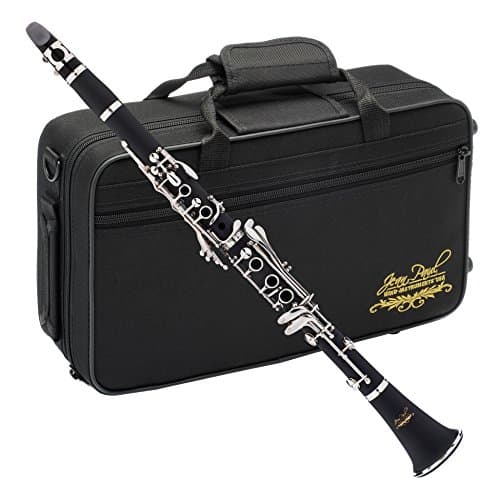
Ebonite body with nickel keys on the full Boehm 17-key system, at roughly half what the Yamaha costs. The system is complete; the tolerances are where the money went.
Published specifications
- Body:
- Ebonite
- Keys:
- Nickel-plated
- System:
- Boehm, 17 keys
What it gets right
- The full 17-key Boehm system, so nothing in the method book is unplayable on it
- Ebonite is stable in a dry house, same practical advantage as the Yamaha's resin
- Low enough cost that an uncertain first year is not an expensive bet
Where it gives ground
- Pad seating and key regulation are the weak points, and a leak develops sooner than on the Yamaha
- The supplied mouthpiece is basic even by student standards
What it is not good at
Surviving without maintenance. Woodwind pads are consumable on any instrument, and on a budget one they need attention sooner. This is exactly why school rental is worth its price.
How the specs score against a beginner’s needs
Scores are our reading of the published specifications above against what a beginner physically needs. They are not test results — we have not played this instrument.
Specifications from Jean Paul USA CL-300 published description.
Yamaha YCL-255
YamahaBest for: Step-up clarinet, year two onward
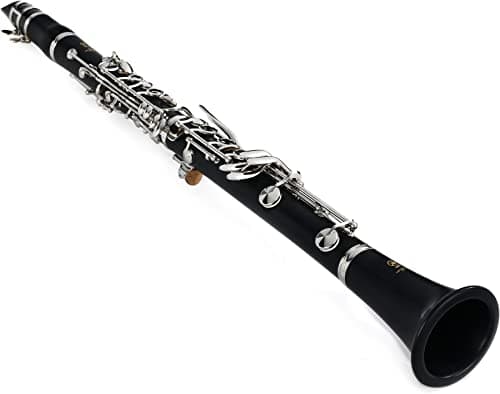
ABS resin body with a 65 mm barrel taken from Yamaha's high-end clarinets, Valentino pads and a 4C mouthpiece. The default student clarinet in most band rooms.
Published specifications
- Body:
- ABS resin, matte wood-like finish
- System:
- Boehm, 17 keys and 6 rings
- Keywork:
- Power-forged, nickel-plated nickel silver
- Barrel:
- 65 mm — the length used on Yamaha's high-end clarinets
- Pads:
- Valentino
- Bell:
- Solid ABS resin with resonance chamber
- Thumb rest:
- Adjustable, with strap ring
- Mouthpiece:
- Yamaha 4C
What it gets right
- ABS resin does not crack in a dry house, which is the failure that ends cheap wooden clarinets
- The 65 mm barrel is genuinely the same specification as Yamaha's expensive clarinets, and it is a large part of why this one plays in tune
- An adjustable thumb rest with a strap ring, which matters because a clarinet's weight lands on one thumb
Where it gives ground
- Resin will never have the warmth of grenadilla wood, and a student will notice when they play a wooden one
- The included 4C mouthpiece is competent and is the first thing many teachers upgrade
What it is not good at
Being a year-one purchase. Rent through the school first; directors reassign students in the first months and this is real money to have committed.
How the specs score against a beginner’s needs
Scores are our reading of the published specifications above against what a beginner physically needs. They are not test results — we have not played this instrument.
Specifications from Yamaha USA — YCL-255 overview.
Jean Paul FL-220
Jean Paul USABest for: Budget flute, if buying in year one
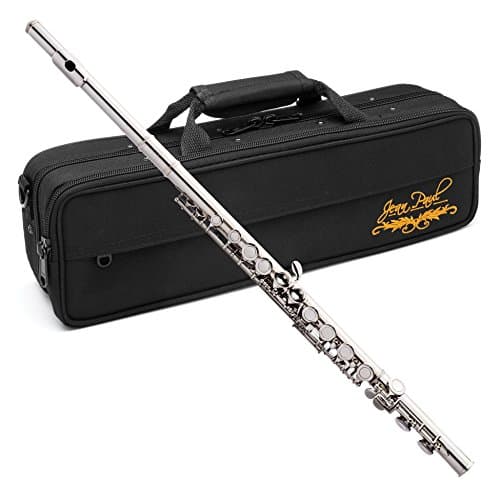
Closed-hole, offset G with a split E mechanism and power-forged keys. The split E is the notable inclusion at this price — it makes the third-octave E far easier to hit.
Published specifications
- Keys:
- Power-forged, closed hole (plateau)
- G key:
- Offset, for better hand alignment
- Mechanism:
- Split E, simplifying third-octave E
- Embouchure plate:
- Student-friendly design
- Finish:
- Silver plated
What it gets right
- A split E mechanism at this price is unusual and it removes one of the first real frustrations a flute student hits
- Offset G aligns the left hand more naturally, which matters for a smaller player
- Considerably cheaper than the Yamaha, which is the point
Where it gives ground
- Build tolerances are not the Yamaha's, and pad seating is where that shows over a year
- Resale value is low, so it is not a purchase you get much back from
What it is not good at
Lasting through a school career. It gets a student through the early years; a committed player will want the Yamaha or better by around year three.
How the specs score against a beginner’s needs
Scores are our reading of the published specifications above against what a beginner physically needs. They are not test results — we have not played this instrument.
Specifications from Jean Paul USA FL-220 published description.
Yamaha YFL-222
YamahaBest for: Step-up flute, year two onward
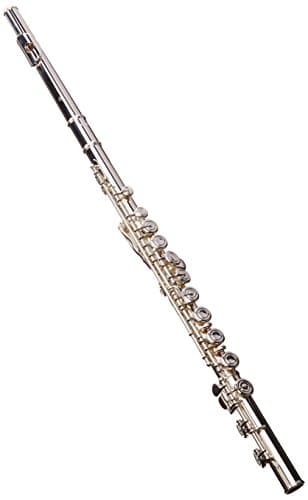
Silver-plated nickel silver throughout with pointed key arms and stainless steel springs. The flute most school programs treat as the standard once a student commits.
Published specifications
- Head / body / footjoint:
- Silver-plated nickel silver
- Keys:
- Hand-assembled silver-plated, offset G, closed hole (plateau)
- Footjoint:
- C foot
- Headjoint:
- CY, double flare taper with undercut embouchure hole
- Key arms:
- Pointed, for even pad-cup pressure
- Springs:
- Stainless steel
What it gets right
- Pointed key arms spread pressure evenly across the pad cup, which means a better seal and fewer leaks as the instrument ages
- Stainless steel springs resist the corrosion that makes cheap flute keys sluggish
- Closed-hole plateau keys give a beginner a solid platform for fingering before open holes are ever a question
Where it gives ground
- Offset G and closed holes are the right beginner choices and are also what a player eventually moves past
- Silver plate wears through at the contact points over years of daily use
What it is not good at
Being a year-one purchase. Rent through the school first — reassignment is common in the first months and this is not a cheap instrument to be stuck with.
How the specs score against a beginner’s needs
Scores are our reading of the published specifications above against what a beginner physically needs. They are not test results — we have not played this instrument.
Specifications from Yamaha YFL-222 published specifications (West Music).
Questions people actually ask
How much should you spend on a first band instrument?
In year one, ideally nothing — rent instead. Directors reassign students between sections in the first months, and school rental usually includes the maintenance a beginner cannot diagnose.
Are cheap band instruments any good?
The budget tier from established brands is genuinely playable. The tier below that — unbranded instruments at prices that look too good — frequently arrives leaking, and repairing it costs more than it did.
When should you buy rather than rent?
Year two or three, once the student has stayed in the same section and is clearly committed. At that point a step-up instrument is a better purchase than another year of rental payments.
What else costs money in the first year?
Reeds for clarinet and saxophone, valve oil and grease for brass, cleaning supplies, a music stand, method books, and an annual service. None are large individually and together they are a real budget line.
Sources
Still deciding?
Every recommendation on this site is built the same way, and the method is published in full — including what we do not do and what would get a pick dropped.
Read next
- Renting vs buying a school band instrument
Why year one is a rental year, what programs cover, the maintenance nobody warns you about, and when buying starts to win.
- Best beginner clarinets
Why resin beats wood for a student, what a 65mm barrel does for intonation, and two picks for the year-two step-up.
- Best beginner flutes
Closed-hole and offset G explained, the split E mechanism, and the two picks for a year-two step-up.
- Step-up band instruments for year two
What separates a step-up from a budget instrument, the timing that makes the purchase sensible, and the pick for each section.
- Choosing a school band instrument
Which instrument suits which child, what school rental covers, and the honest case for not buying in year one.