Start Here
Eight ways a first instrument purchase goes wrong
Almost every bad first-instrument purchase is one of eight mistakes, and each one has a check that takes under a minute.
By Sawyer V. · Published · Last updated

Across every instrument family we cover, first-purchase mistakes fall into a small number of categories. They repeat because they all sound sensible at the time.
The eight: buying below the floor as quit insurance, ignoring size, buying for aspiration rather than the player, letting accessories distract from the instrument, forgetting the things you cannot play without, buying used in the wrong families, skipping the setup, and buying an instrument that cannot be practiced at the times you have.
1. Buying below the floor as insurance
The most common and the most self-defeating. The reasoning is that the beginner might quit, so spend as little as possible.
The problem is that below-the-floor instruments cause quitting. Tuners that will not hold pitch, an action too high to fret, a nut that binds, keys that do not respond to how hard you press. A beginner on one of those does not conclude the instrument is bad. They conclude they are.
The check: does the seller publish specifications, and is the brand one that appears in real recommendations? A Squier Sonic Stratocaster#ad publishes its scale length, nut width, radius and hardware. An anonymous instrument at half the price publishes a color. Where the line sits is in are cheap guitars worth it.
2. Ignoring size
Violins, cellos and children’s guitars are sized to the body, and one size too big is not slightly awkward — it is unplayable.
A child who cannot reach the correct hand position will fail at something physically impossible and conclude they have no talent. That conclusion is sticky and it is the single most preventable failure in this whole category.
The check: measure the player before buying. Arm length for violins, height for cellos and guitars. The charts are in violin sizes, cello sizes and guitar sizes for kids. Never size up to grow into.
3. Buying for aspiration rather than for the player
The 88-key weighted digital piano for someone who wants to play chords and sing. The dreadnought for a small-framed adult. The instrument the buyer wanted at seventeen.
The check: describe honestly what the player will actually do in the next twelve months, and buy for that. Aspiration is a fine reason to upgrade later and a poor reason to choose a first instrument.
4. Letting the accessory count distract you
A bundle with a bag, a strap, picks, a stand and a cable looks like value. It frequently is, and it is also the standard technique for selling an instrument that cannot be sold on its own merits.
The check: take the instrument out of the bundle, look it up on its own, and ask whether you would buy it. If yes, the bundle is good value. If you cannot find any information about it, the accessories are doing a job — see are guitar starter packs worth it.
5. Forgetting what you cannot play without
A keyboard needs a stand and an adjustable bench, or it gets played at dining-table height with the wrists bent upward. An electric guitar needs an amplifier. A violin needs a bow and rosin. Drums need a throne and hearing protection.
The check: price the complete setup before committing to an instrument budget. The family-by-family list is in what it really costs to start an instrument.
The cheapest item on any of those lists is a tuner. A Snark clip-on chromatic tuner#ad costs very little and prevents a beginner practicing on an out-of-tune instrument, which actively trains the ear wrongly.
6. Buying used in the wrong families
Used is excellent value on guitars, basses, amplifiers and acoustic drum kits, where the faults are visible and cheap to fix.
It is a trap on woodwind, brass and bowed strings, where the expensive faults are invisible. A clarinet with worn pads looks fine and plays almost fine, and the leak shows only as the low notes being harder — which a student attributes to themselves, for months.
The check: can someone competent inspect it? If not, buy new or rent in those families. Full detail in used versus new.
7. Skipping the setup
A new fretted instrument is set to a production tolerance rather than to a player, and it has since travelled and sat in a warehouse at a different humidity.
On an inexpensive instrument this is the single highest-value money available. Nut slots cut too high make the first three frets much harder to press — which is exactly where a beginner spends their first six months.
The check: budget for a setup at the same time as the instrument, or buy from a shop that includes one. What it involves is in what a guitar setup actually is.
8. Buying something that cannot be practiced when you are free
An acoustic drum kit in an apartment. A trumpet in a shared house where practice time is after nine at night. An instrument that can only be played when nobody else is home is an instrument that gets played rarely.
The check: ask when practice will actually happen, and whether the instrument can be played then. If not, choose one that can — a Casio Casiotone CT-S200#ad with headphones is silent, a Kala KA-15S#ad is quiet with nothing attached, and an unplugged electric guitar is quieter than either. The full analysis is in best instruments for an apartment.
The one-minute version
Measure the player. Check the specifications are published. Price the complete setup. Confirm it can be practiced at the times you have. Budget for a setup on anything fretted. Rent rather than buy for band instruments in year one and for a growing child on strings.
That is the whole checklist, and it prevents nearly every expensive first-purchase mistake. Where to start if the instrument itself is still undecided is which instrument should you learn.
What we would buy
Squier Sonic Stratocaster
Squier by FenderBest for: The honest floor, electric
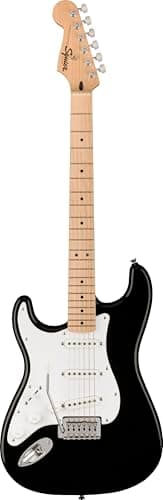
The cheapest electric that still has full-scale geometry, sealed tuners and a real 9.5 inch fingerboard radius. Nothing about it will make a beginner's first year harder.
Published specifications
- Scale length:
- 25.5" (647.7 mm) — full size
- Body / neck:
- Poplar body, maple neck, "C" profile
- Fingerboard:
- Maple or Indian laurel, 9.5" (241 mm) radius
- Frets:
- 21, narrow tall
- Nut width:
- 1.650" (42 mm), synthetic bone
- Pickups:
- Three ceramic single-coils (SSS)
- Bridge:
- 6-saddle vintage-style synchronized tremolo
What it gets right
- Full 25.5 inch scale, so nothing learned here has to be relearned later
- Synthetic bone nut rather than a soft plastic one — the part that decides whether a cheap guitar stays in tune
- Sealed-gear tuners, which is the single most important spec on a first electric
Where it gives ground
- Poplar body and ceramic pickups are exactly what you would expect at this tier
- The tremolo bridge will pull the guitar out of tune if a beginner uses it, and beginners always use it
What it is not good at
Staying in tune if you use the whammy bar. If that matters, buy the hardtail (HT) version of the same guitar instead — it is the identical instrument with the tremolo deleted.
How the specs score against a beginner’s needs
Scores are our reading of the published specifications above against what a beginner physically needs. They are not test results — we have not played this instrument.
Specifications from Squier Wiki — Sonic Stratocaster specifications.
Casio Casiotone CT-S200
CasioBest for: Kids, full-size keys
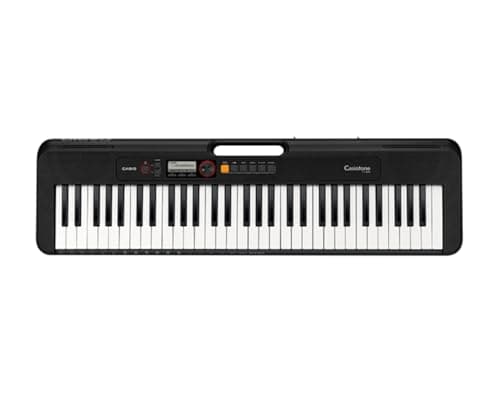
61 full-size keys, 400 tones and a power supply in the box, at the price where most keyboards still ship with narrow mini keys. That one specification is why it is here.
Published specifications
- Keys:
- 61, full-size
- Polyphony:
- 48 notes
- Tones:
- 400
- Rhythms:
- 77
- Display:
- LCD
- Connectivity:
- USB-MIDI
- In the box:
- Power supply, music rest
What it gets right
- Full-size keys at a price where mini keys are the norm — this is the specification that decides whether a child learns a hand span they can keep
- Power supply included, which is not a given and turns a cheap keyboard into an expensive paperweight when it is missing
- Light and simple enough that a child can set it up themselves, which means it gets used
Where it gives ground
- Unweighted keys, so it will not build the finger strength an acoustic piano needs
- 400 tones is a lot of browsing for a child who is meant to be practicing
What it is not good at
Preparing anyone for a real piano. It is a first keyboard for a young child, not a piano substitute — read our weighted-versus-unweighted comparison before assuming otherwise.
How the specs score against a beginner’s needs
Scores are our reading of the published specifications above against what a beginner physically needs. They are not test results — we have not played this instrument.
Specifications from Casio Casiotone CT-S200 published specifications.
Kala KA-15S
Kala Brand MusicBest for: The honest floor, soprano
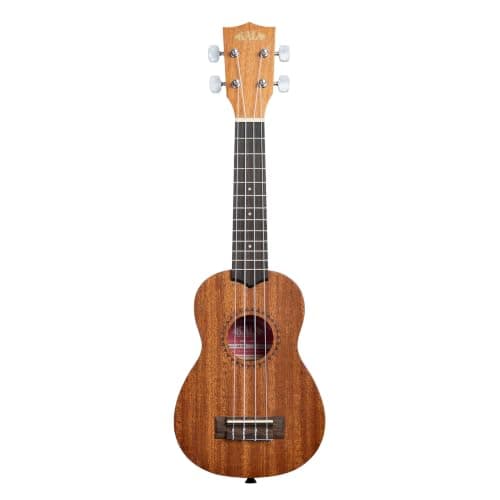
Mahogany throughout, a GraphTech NuBone nut and saddle, and Aquila strings fitted from the factory. The nut material is the spec that separates this from the pile of look-alikes.
Published specifications
- Size:
- Soprano
- Top / back / sides:
- Mahogany
- Neck / fretboard:
- Mahogany neck, rosewood fretboard
- Nut and saddle:
- GraphTech NuBone
- Scale length:
- 13.625"
- Frets:
- 12
- Nut width:
- 1.375"
- Overall length:
- 21.062"
- Strings:
- Aquila Super Nylgut
What it gets right
- NuBone nut and saddle rather than molded plastic — this is what decides whether the instrument plays in tune up the neck
- Aquila strings fitted at the factory, so the first thing you would otherwise replace is already done
- 21 inches overall and light enough for a small child to hold unsupported
Where it gives ground
- 12 frets only, and the body joint stops you well short of the high notes
- Soprano scale means less room between frets — adult fingers with wide fingertips will find it cramped
What it is not good at
Adult hands, sometimes. A 13.625 inch scale is genuinely tight. If the player is a grown-up with large hands, read our soprano-versus-concert comparison before buying this size.
How the specs score against a beginner’s needs
Scores are our reading of the published specifications above against what a beginner physically needs. They are not test results — we have not played this instrument.
Specifications from Kala Brand Music — KA-15S specifications.
Snark clip-on chromatic tuner
SnarkBest for: Tuning anything with strings
Clips to the headstock and reads pitch from the vibration of the wood, so it works in a noisy room and an adult who plays nothing can tune the instrument in twenty seconds.
Published specifications
- Type:
- Clip-on chromatic
- Sensing:
- Vibration through the headstock, not the microphone
- Fits:
- Guitar, bass, ukulele, violin, mandolin
- Display:
- Full-color rotating screen
What it gets right
- Vibration sensing means it works in a room with a television on, which a microphone tuner does not
- Chromatic, so one tuner covers every instrument in the house
- The rotating display means it reads correctly whichever way the instrument is held
Where it gives ground
- The clip is plastic and it is the part that eventually breaks
- Battery-powered, and it will be flat the one time you need it in a hurry
What it is not good at
Wind and brass instruments. It reads vibration through a solid body, so there is nothing for it to clip to on a flute or a trumpet.
How the specs score against a beginner’s needs
Scores are our reading of the published specifications above against what a beginner physically needs. They are not test results — we have not played this instrument.
Specifications from Snark tuners (retail listing with published feature set).
Questions people actually ask
What is the most common mistake buying a first instrument?
Buying the cheapest thing available as insurance against quitting. Below-the-floor instruments are a leading cause of quitting, so the insurance policy produces the outcome it was meant to prevent.
Should I buy a cheap instrument in case they give up?
Buy at the honest floor rather than below it. That is the cheapest configuration that genuinely works — cheap enough that abandoning it is not a disaster, good enough that it is not the reason they abandoned it.
Is buying a bundle a mistake?
Not inherently. A bundle built around a good instrument is fine and the extras are a bonus. A bundle built around an anonymous instrument uses the accessory count to distract from it.
What should I check before buying a sized instrument?
Measure the player. Violins, cellos and children’s guitars are sized to the body, and one size too big is unplayable rather than merely awkward — and the child concludes they are bad at it.
Sources
Still deciding?
Every recommendation on this site is built the same way, and the method is published in full — including what we do not do and what would get a pick dropped.
Read next
- What instrument should I learn?
Four practical constraints instead of a personality quiz, each one routing straight to the instrument that fits.
- Should a first instrument be used or new?
Where secondhand is the best value on the site and where it hides expensive faults, plus a check-before-you-pay list per family.
- What it really costs to start an instrument
Complete first-year cost by instrument family, the recurring items nobody quotes, and where the cheapest total actually is.
- Are cheap guitars worth it?
The line between cheap and too cheap, named part by part, with what each failure does to a beginner who cannot diagnose it.
- Why beginners quit, and what prevents it
The three points where beginners stop, what causes each, and the interventions that work at each stage.