Ukuleles
How much should a beginner ukulele cost?
The cheapest instrument on this site, and the one where the gap between fine and useless is smallest in dollars and largest in outcome.
By Sawyer V. · Published · Last updated
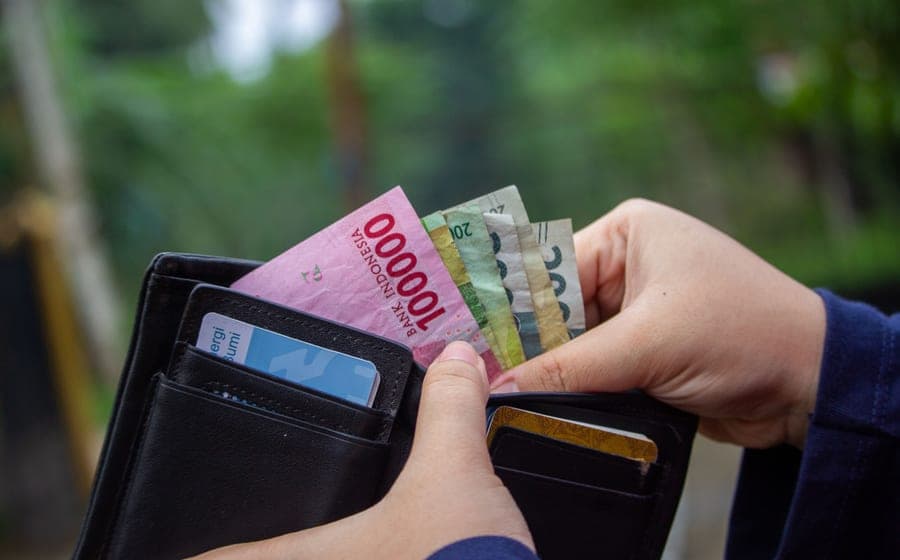
A first ukulele should cost about $60 to $80 at the honest floor and $90 to $130 for a buy-once instrument. The floor is set by three things: a bone-substitute nut and saddle, geared tuners, and decent strings. Below about $40 at least one is missing and the instrument cannot be corrected.
Ukuleles have the smallest dollar gap between an instrument that works and one that does not, and the largest consequence. Thirty dollars separates them.
The four bands
Below the floor
Roughly under $40. Molded plastic nut and saddle, friction tuners that slip under nylon strings, and intonation that is wrong from the factory.
That last one is the killer and it is permanent. The instrument plays progressively sharper up the neck, so chords near the nut sound acceptable and anything past the fifth fret sounds wrong. It cannot be tuned out and it cannot be set up out. A beginner hears “that chord sounded bad” and concludes they played it wrong.
The honest floor
Roughly $60 to $80. The checkable list: a bone-substitute nut and saddle (NuBone, Graph Tech or similar), geared tuners rather than friction pegs, and a named manufacturer that publishes a scale length. A Kala KA-15S sits here.
This is where most people should buy. A ukulele from this band is a real instrument, plays in tune the length of the neck, and will not be the reason anyone stops.
Enough
Roughly $90 to $130. Better wood, better finishing, factory-fitted Aquila strings, and usually a concert or tenor body with the more comfortable fret spacing. A Cordoba 15CM is the canonical example.
Buy-once. Nothing about an instrument from this band will hold a player back for years.
Where overspending starts
Above roughly $200. Solid rather than laminate tops, better tonewoods, hand finishing, upgraded tuners.
All real improvements and all inaudible to someone in their first year. The honest advice is to buy at the “enough” band and spend the difference on a hard case and lessons, and to revisit the question in two years when the player knows what they want.
What else you will need
Considerably less than for any other instrument on this site, which is part of the appeal.
A clip-on tuner, $12 to $20. Genuinely non-negotiable. Nylon strings stretch, so a new ukulele goes out of tune constantly for the first week or two while the strings settle, and needs tuning every single time it is picked up after that.
Aquila strings, $10 to $12, if not already fitted. Cheap factory strings sound dull, and a set of Aquilas transforms an inexpensive instrument more than any other single change. Both wooden picks in our roundup ship with them already.
A stand, $15. Same argument as everywhere else on this site: an instrument on a stand gets picked up several times a day.
A gig bag, if it did not come with one. Most do.
That is the complete list. A ukulele is one of very few instruments where the accessories are genuinely a rounding error, and it makes the total cost of starting lower than anything else we cover. The four-band framework applies the same way to guitars, keys and drums.
What we would buy
Kala KA-15S
Kala Brand MusicBest for: The honest floor, soprano
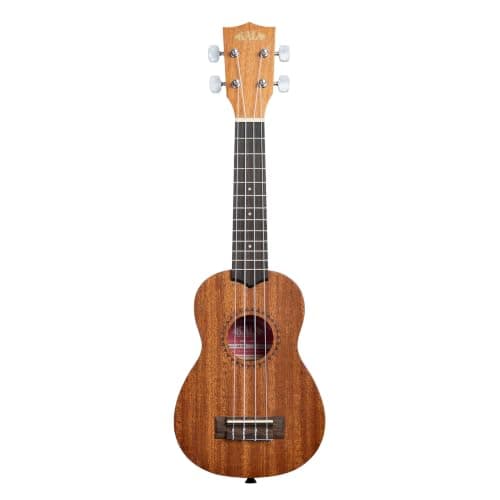
Mahogany throughout, a GraphTech NuBone nut and saddle, and Aquila strings fitted from the factory. The nut material is the spec that separates this from the pile of look-alikes.
Published specifications
- Size:
- Soprano
- Top / back / sides:
- Mahogany
- Neck / fretboard:
- Mahogany neck, rosewood fretboard
- Nut and saddle:
- GraphTech NuBone
- Scale length:
- 13.625"
- Frets:
- 12
- Nut width:
- 1.375"
- Overall length:
- 21.062"
- Strings:
- Aquila Super Nylgut
What it gets right
- NuBone nut and saddle rather than molded plastic — this is what decides whether the instrument plays in tune up the neck
- Aquila strings fitted at the factory, so the first thing you would otherwise replace is already done
- 21 inches overall and light enough for a small child to hold unsupported
Where it gives ground
- 12 frets only, and the body joint stops you well short of the high notes
- Soprano scale means less room between frets — adult fingers with wide fingertips will find it cramped
What it is not good at
Adult hands, sometimes. A 13.625 inch scale is genuinely tight. If the player is a grown-up with large hands, read our soprano-versus-concert comparison before buying this size.
How the specs score against a beginner’s needs
Scores are our reading of the published specifications above against what a beginner physically needs. They are not test results — we have not played this instrument.
Specifications from Kala Brand Music — KA-15S specifications.
Cordoba 15CM
CordobaBest for: Adult hands, concert size
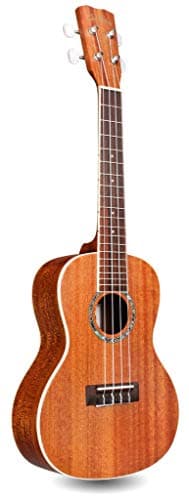
A 375 mm concert scale with 18 frets and a 35 mm nut. The extra inch and a bit of scale over a soprano is the difference between cramped and comfortable for most adults.
Published specifications
- Size:
- Concert
- Top / back / sides:
- Mahogany
- Fingerboard:
- Rosewood
- Scale length:
- 375 mm (14-3/4")
- Frets:
- 18
- Nut width:
- 35 mm (1-3/8")
- Body / overall:
- 280 mm body, 610 mm (24") overall
- Strings / finish:
- Aquila, satin finish, abalone rosette
What it gets right
- 18 frets against a soprano's 12 — a whole extra register that a soprano simply does not have
- The 375 mm scale gives noticeably more room between frets without becoming a tenor-sized instrument
- Aquila strings and an abalone rosette; it looks considerably more expensive than it is
Where it gives ground
- Identical 35 mm nut width to the Kala soprano — the extra room is between the frets, not across the neck
- 24 inches overall is a lot of instrument for a small child
What it is not good at
Sounding like a ukulele in the postcard sense. The concert body is fuller and rounder; the bright, plinky voice people picture is the soprano's.
How the specs score against a beginner’s needs
Scores are our reading of the published specifications above against what a beginner physically needs. They are not test results — we have not played this instrument.
Specifications from Cordoba Guitars — 15CM.
Enya Nova U Mini
EnyaBest for: Young kids, survives anything
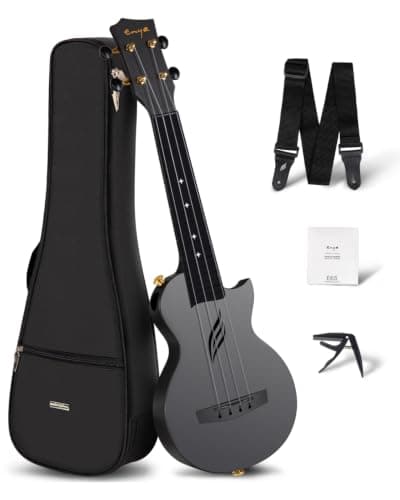
A 21 inch carbon-fiber-and-polycarbonate body weighing 430 grams. It is water resistant and it does not care about humidity, which is the honest reason to buy it for a six-year-old.
Published specifications
- Size:
- Soprano, 21"
- Top / back / sides:
- 30% carbon fiber and polycarbonate composite
- Weight:
- 430 g (0.9 lb)
- Overall length:
- 22"
- Nut width:
- 1-3/8"
- Body:
- Arched back, radius fretboard, cutaway
- In the box:
- Semi-hard case, strap, capo, spare strings
What it gets right
- Composite body — it does not crack in a dry house or swell in a damp one, which is what actually kills cheap wooden ukuleles
- 430 grams; a five-year-old can carry it around by the neck all day, and they will
- Case, strap, capo and spare strings included
Where it gives ground
- It does not sound like wood, and no amount of playing will change that
- The composite body is a fixed quantity — there is no breaking-in and no improvement over time
What it is not good at
Tone. A mahogany Kala sounds warmer and fuller, plainly. You are buying survivability, and that is a legitimate thing to buy for a young child, but be clear that is the trade.
How the specs score against a beginner’s needs
Scores are our reading of the published specifications above against what a beginner physically needs. They are not test results — we have not played this instrument.
Specifications from Enya Music — Nova carbon fiber ukulele collection.
Questions people actually ask
How much should a beginner ukulele cost?
Roughly $60 to $80 is the honest floor and $90 to $130 is the buy-once tier. Below about $40 the nut and saddle are molded plastic and the instrument will not play in tune above the fifth fret — a permanent condition, not a setup issue.
Is a $30 ukulele worth it?
Rarely. At $30, after the bag, strap and tuner that usually come with it, the instrument itself has cost almost nothing. Buying a $65 ukulele and a separate $12 tuner is a substantially better outcome for a small amount more.
Do expensive ukuleles sound better?
Yes, and the returns fall away quickly for a beginner. Above about $200 you are buying solid rather than laminate wood and better finishing, both of which are real and neither of which a new player can hear yet.
Should I buy a ukulele bundle?
Only from a manufacturer whose instrument you would buy on its own. Enya’s Nova U Mini ships with a case, strap, capo and strings and is a real instrument underneath. A no-name bundle at the same price is a $20 instrument with $20 of accessories.
Sources
Still deciding?
Every recommendation on this site is built the same way, and the method is published in full — including what we do not do and what would get a pick dropped.
Read next
- Are cheap ukuleles worth it?
The intonation failure that cannot be repaired, what causes it, and the two specs that tell you whether an instrument has it.
- Best beginner ukuleles: what's worth it from $60 to $120
Segmented by hand size rather than price, with the nut-material spec that separates a real ukulele from a decoration.
- How much should a beginner guitar cost?
Four price bands defined by specification rather than by number, plus the hidden costs that turn a $200 budget into a $270 purchase.
- How much should a beginner keyboard cost?
Four bands from touch response to hammer action, plus the stand, bench and pedal costs that turn a keyboard budget into a bigger one.
- How much should a beginner drum set cost?
Four bands defined by completeness and hardware quality, with the shells-only trap and the real running costs.