Start Here
Lessons or teaching yourself?
The honest split is not about discipline. It is about whether the instrument tells you when you are doing it wrong.
By Sawyer V. · Published · Last updated
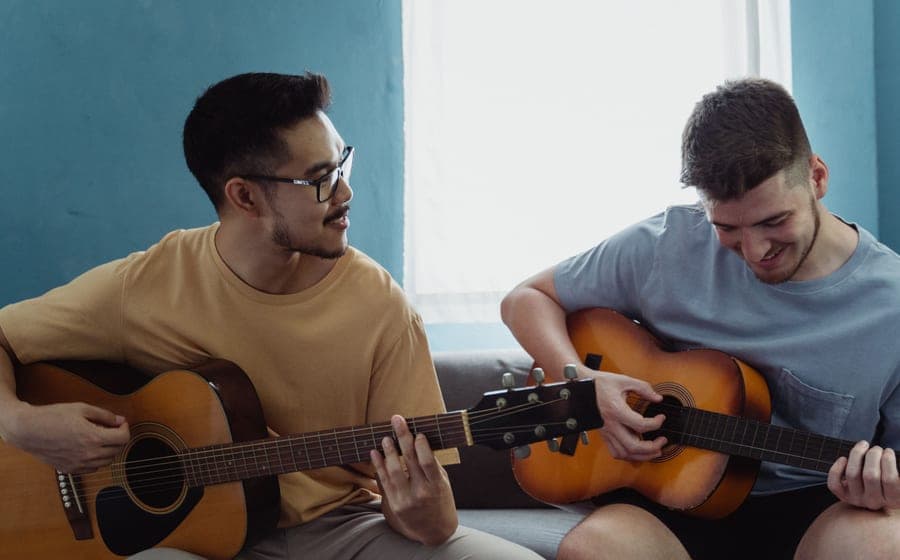
The self-teaching question is usually answered by temperament — are you disciplined, do you like structure. That is the wrong axis.
What actually decides it is whether the instrument gives you honest feedback. On some instruments, doing it wrong sounds wrong and you fix it. On others, doing it wrong sounds bad in a way you cannot diagnose, and you conclude you have no talent.
Fretted instruments and keyboards are genuinely self-teachable, because a mistake is audible and identifiable. Bowed strings and woodwind are not, because a bad sound could be any of three things. For those, get a teacher — and for the others, get a few lessons anyway to set posture.
The self-teachable instruments
Ukulele. The most self-teachable instrument we cover. Chord shapes are simple, the strings are forgiving, a wrong note is obvious, and there is very little physical technique that can be built wrong. A Kala KA-15S#ad and a set of chord diagrams genuinely is enough to start.
Guitar and bass. Nearly as self-teachable. Frets place the notes, a buzz tells you your finger is in the wrong place, and the enormous quantity of free instruction available means structure is never the constraint. A Squier Sonic Stratocaster#ad and a phone is a working setup.
The one real risk is a tense fretting hand and an over-gripping thumb, which builds quietly and causes trouble later — see why the guitar hurts your fingers.
Keyboard. Self-teachable with one caveat. Pressing a key gives the correct note, so pitch is never in doubt, and apps and books are excellent for note reading and structure. What they cannot see is your hands — collapsed knuckles, flat fingers, raised shoulders and bent wrists all go uncorrected. That specific gap is worked through in piano lessons versus learning apps.
Drums. Partly. Rudiments and basic beats are learnable alone; limb independence and time feel benefit enormously from someone watching. Playing along with recordings covers more of the gap than it does on most instruments.
The instruments that resist self-teaching
Violin, viola and cello. The clearest case on the site. A beginner produces a bad sound and genuinely cannot tell whether the cause is a finger in the wrong place, a bow that is not parallel to the bridge, too much bow pressure, or the wrong contact point. Four candidate causes, one symptom, and no way to isolate them.
Add posture. The violin hold is unnatural, and a raised shoulder or a gripping left hand feels normal to the person doing it while making everything harder. A Stentor Student II Violin Outfit#ad in the hands of a self-teaching beginner usually produces a year of frustration — the technique that has to be right is in how to hold a violin and bow.
Woodwind. Embouchure is invisible and it decides everything. A student with a tight, pinched embouchure sounds thin and runs out of air, and has no way to know that is what is happening. Compounding it, a leaking instrument or a dead reed produces exactly the same symptoms as poor technique.
Brass. Same problem, more so. The lips are the sound source and the player cannot see them.
What a teacher actually provides
Worth separating, because only two of these are hard to get elsewhere.
Diagnosis. The main thing. Knowing that your thumb never passes under, rather than that you played a wrong note. This is the part that cannot be substituted.
Posture and physical setup. The other irreplaceable one, and the reason even confident self-teachers should book a handful of lessons.
Structure. Genuinely replaceable. Apps, books and structured courses do this well and cheaply. For guitar, the method books worth working from are compared in best guitar books for beginners.
Accountability. Someone expecting you on Thursday. Replaceable in principle, and for children usually not in practice.
Repertoire selection. Choosing material at the right difficulty. Partly replaceable, and easy to get wrong alone — most self-teachers pick things far too hard and stall.
The hybrid
For most adults on a self-teachable instrument, this is the efficient answer.
Work daily from a book, an app or a course. Book a lesson at the start, another after a month or two, then every few months. Arrive with specific questions and let the teacher watch you play something you have been working on.
That is a handful of lessons a year against a weekly commitment, and it covers exactly the gap self-teaching leaves. The first lesson should be almost entirely about how you hold the instrument.
For children
Lean toward a teacher, on nearly every instrument.
Not because children cannot learn alone — plenty do — but because the accountability of someone expecting them is worth a great deal at an age where practice is easy to postpone, and because children rarely report discomfort that signals a technique problem.
The exception is a child who is genuinely enthusiastic about a self-teachable instrument. A ten-year-old teaching themselves ukulele from videos and enjoying it is doing something valuable, and imposing lessons on that can convert a hobby into homework. What actually keeps beginners going is in how to stop a beginner quitting.
Choosing a teacher
Ask what a first lesson covers. If the answer involves how you hold the instrument, that is a good sign.
Ask whether they teach adults. Teaching an adult beginner is a different job to teaching a child, and not everyone does both well.
Say what you want to play. A teacher aiming at graded exams and a student who wants to play songs will frustrate each other within two months.
Consider a short block rather than an open commitment. Four to six lessons is enough to tell whether it is working, and it removes the sense of signing up indefinitely.
What we would buy
Kala KA-15S
Kala Brand MusicBest for: The honest floor, soprano
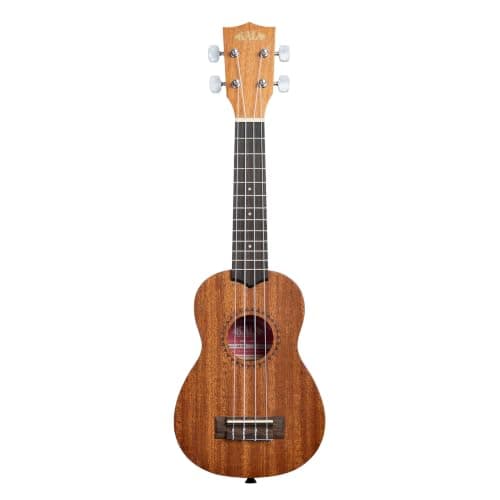
Mahogany throughout, a GraphTech NuBone nut and saddle, and Aquila strings fitted from the factory. The nut material is the spec that separates this from the pile of look-alikes.
Published specifications
- Size:
- Soprano
- Top / back / sides:
- Mahogany
- Neck / fretboard:
- Mahogany neck, rosewood fretboard
- Nut and saddle:
- GraphTech NuBone
- Scale length:
- 13.625"
- Frets:
- 12
- Nut width:
- 1.375"
- Overall length:
- 21.062"
- Strings:
- Aquila Super Nylgut
What it gets right
- NuBone nut and saddle rather than molded plastic — this is what decides whether the instrument plays in tune up the neck
- Aquila strings fitted at the factory, so the first thing you would otherwise replace is already done
- 21 inches overall and light enough for a small child to hold unsupported
Where it gives ground
- 12 frets only, and the body joint stops you well short of the high notes
- Soprano scale means less room between frets — adult fingers with wide fingertips will find it cramped
What it is not good at
Adult hands, sometimes. A 13.625 inch scale is genuinely tight. If the player is a grown-up with large hands, read our soprano-versus-concert comparison before buying this size.
How the specs score against a beginner’s needs
Scores are our reading of the published specifications above against what a beginner physically needs. They are not test results — we have not played this instrument.
Specifications from Kala Brand Music — KA-15S specifications.
Squier Sonic Stratocaster
Squier by FenderBest for: The honest floor, electric
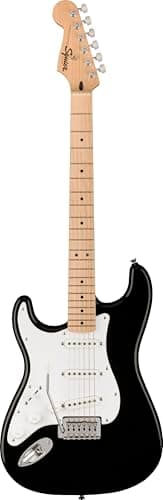
The cheapest electric that still has full-scale geometry, sealed tuners and a real 9.5 inch fingerboard radius. Nothing about it will make a beginner's first year harder.
Published specifications
- Scale length:
- 25.5" (647.7 mm) — full size
- Body / neck:
- Poplar body, maple neck, "C" profile
- Fingerboard:
- Maple or Indian laurel, 9.5" (241 mm) radius
- Frets:
- 21, narrow tall
- Nut width:
- 1.650" (42 mm), synthetic bone
- Pickups:
- Three ceramic single-coils (SSS)
- Bridge:
- 6-saddle vintage-style synchronized tremolo
What it gets right
- Full 25.5 inch scale, so nothing learned here has to be relearned later
- Synthetic bone nut rather than a soft plastic one — the part that decides whether a cheap guitar stays in tune
- Sealed-gear tuners, which is the single most important spec on a first electric
Where it gives ground
- Poplar body and ceramic pickups are exactly what you would expect at this tier
- The tremolo bridge will pull the guitar out of tune if a beginner uses it, and beginners always use it
What it is not good at
Staying in tune if you use the whammy bar. If that matters, buy the hardtail (HT) version of the same guitar instead — it is the identical instrument with the tremolo deleted.
How the specs score against a beginner’s needs
Scores are our reading of the published specifications above against what a beginner physically needs. They are not test results — we have not played this instrument.
Specifications from Squier Wiki — Sonic Stratocaster specifications.
Stentor Student II Violin Outfit
StentorBest for: First violin, every size
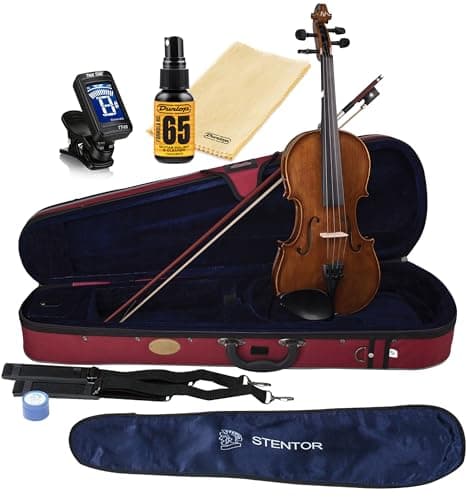
Solid carved spruce and maple with an ebony fingerboard, set up in a workshop before shipping, and made in five fractional sizes. The workshop setup is the specification that matters most on a beginner violin.
Published specifications
- Top:
- Solid carved spruce
- Back / sides:
- Solid figured maple
- Fingerboard:
- Ebony
- Pegs:
- Ebony or rosewood
- Sizes:
- 4/4, 3/4, 1/2, 1/4, 1/8
- Strings:
- Steel core, factory fitted
- Outfit:
- Wooden bow with ebony frog and natural horsehair, rosin, shaped lightweight case with music pocket and rucksack straps
What it gets right
- Ebony fingerboard and pegs, not stained hardwood — a stained fingerboard wears through and a soft peg will not hold a tuning
- Individually set up in a workshop before it ships, which is the single biggest variable on a cheap violin
- Available in five fractional sizes, so the same instrument family covers a child from about age five to adult
Where it gives ground
- The supplied steel-core strings are the first upgrade most teachers suggest
- The bow is functional rather than good; it is the second upgrade
What it is not good at
Being bought without measuring. Violin size is set by the player's arm length, not their age, and a violin one size too big is genuinely unplayable rather than merely awkward. Measure first.
How the specs score against a beginner’s needs
Scores are our reading of the published specifications above against what a beginner physically needs. They are not test results — we have not played this instrument.
Specifications from Stentor Music — Student II violin outfit.
Questions people actually ask
Which instruments can you teach yourself?
Ukulele, guitar, bass and keyboard, to a genuinely enjoyable level. They give immediate feedback — a wrong note sounds wrong — and the physical technique is forgiving enough that self-correction works.
Which instruments really need a teacher?
Violin, viola, cello and the woodwind family. On those, the faults that matter are invisible to the person making them, and a beginner cannot tell whether a bad sound is the left hand, the bow or the embouchure.
How many lessons does a self-teaching adult need?
Surprisingly few. One at the start to set posture and hand position, another after a month or two, then every few months. That covers the gap that books and apps cannot at a fraction of the cost of weekly lessons.
Do children need lessons more than adults?
Generally yes, for accountability rather than information. Children benefit from someone expecting them each week, and they are far less likely to report discomfort that signals a technique problem.
Sources
Still deciding?
Every recommendation on this site is built the same way, and the method is published in full — including what we do not do and what would get a pick dropped.
Read next
- What instrument should I learn?
Four practical constraints instead of a personality quiz, each one routing straight to the instrument that fits.
- Piano lessons or a learning app?
What apps do well, the two things only a person can catch, and a hybrid approach that costs a fraction of weekly lessons.
- Why beginners quit, and what prevents it
The three points where beginners stop, what causes each, and the interventions that work at each stage.
- Learning an instrument as an adult
What genuinely changes for an adult starter, which instruments suit it, and the three mistakes that end most attempts.
- What it really costs to start an instrument
Complete first-year cost by instrument family, the recurring items nobody quotes, and where the cheapest total actually is.