Band & Orchestra
Reeds, and why they decide how hard playing feels
A reed is a piece of cane that costs almost nothing and changes the instrument more than any other single variable a student controls.
By Sawyer V. · Published · Last updated

Reeds are the cheapest thing a clarinet or saxophone student buys and the variable that changes the instrument most. They are also the reason a student can be practicing diligently and getting steadily worse.
This page exists because parents buying for a first-year band student are rarely told any of it.
A reed is a thin cane blade that vibrates to produce the sound. Beginners should use a soft reed — typically 2 or 2.5 — and should own several, rotated rather than played one at a time. Wet it before playing, take it off the mouthpiece afterward, and replace it every few weeks.
What the strength number means
Reeds are graded by stiffness, usually from about 1.5 to 5 in half steps. The number is not a quality rating — a 3.5 is not better than a 2, it is harder.
Softer reeds vibrate with less air pressure. Easier to make a sound on, more forgiving of an undeveloped embouchure, and thinner in tone.
Harder reeds need more air and a firmer embouchure. They give a fuller sound and more control at volume, and they are unplayable for someone who has not built the muscles.
Beginners should start at 2 or 2.5 and stay there until playing feels comfortable. Moving up is something a teacher suggests when the sound starts going thin, typically after several months.
The most common mistake
Buying a harder reed because a harder reed sounds better on a professional recording.
A student on a reed that is too hard cannot get the low notes to speak, runs out of air quickly, and develops a tight, pinched embouchure trying to compensate. All three read as “I am bad at this instrument.”
If a student is struggling to produce a sound at all on a Yamaha YCL-255#ad or a Jean Paul CL-300#ad, check the reed strength before concluding anything about the student. It is a one-minute check that fixes a surprising proportion of first-year difficulties.
Rotation, and why it works
A reed is cane, and cane fibers change shape when wet and dry repeatedly. Played every day, a single reed goes through that cycle daily and breaks down in a couple of weeks.
Rotating three or four reeds — a different one each session — gives each one time to dry and stabilize between uses. The whole set lasts noticeably longer than the same number of reeds played one at a time, and the student always has a working spare when one chips mid-rehearsal.
Cane is also inconsistent. Reeds from the same box vary, and a student will find one they prefer. Rotating means finding the good ones rather than discovering them by accident.
Handling a reed
Wet it before playing. Thirty seconds to a minute in the mouth. A dry reed is stiff, unresponsive and much easier to chip.
Mount it carefully. The tip of the reed should sit level with the tip of the mouthpiece, or a hair below it. Too high and it will not vibrate freely; too low and it chokes.
Do not over-tighten the ligature. Snug is enough. Clamping it hard damps the vibration you are trying to produce.
Take it off afterward, every time. A reed left on a mouthpiece stays wet, warps and grows mold. This is the single most common way students destroy reeds, and it is part of the routine in how to clean a band instrument.
Store it in a reed guard. A flat holder that keeps it straight while it dries. The paper sleeve reeds ship in does not do this job once the reed has been wet.
When a reed is finished
A chipped tip. Look at it against the light. Even a tiny chip at the thin end ruins the response.
It has gone soft or waterlogged. Feels floppy and the tone goes dull.
It warps. A reed that no longer sits flat on the mouthpiece will leak air at the sides.
It just sounds worse. The most reliable indicator. A reed that was fine last week and is fighting you today is done.
For a student playing most days, expect a reed to last a few weeks. That is normal and not a sign of doing anything wrong.
Clarinet and saxophone reeds are different
They are not interchangeable and the sizes are instrument-specific.
A clarinet reed is narrower and shorter than an alto saxophone reed. A Yamaha YAS-280#ad or a Jean Paul AS-400#ad needs alto saxophone reeds specifically — not tenor, not clarinet. Buying the wrong size is a common and easily avoided waste.
Strength numbering also does not translate exactly between brands. A 2.5 from one maker can feel like a 3 from another, which is worth knowing before assuming a student has suddenly regressed after a brand change.
Synthetic reeds
Plastic or composite reeds exist and are worth knowing about.
Advantages: they last far longer, need no wetting, are completely consistent, and do not warp or grow mold. For a young student who will not manage a reed routine, that combination is genuinely attractive.
Disadvantages: they cost considerably more per reed, and most teachers consider the tone less warm than good cane. Some directors specify cane.
Our reading: cane for a student with a teacher who will guide them, and synthetic as a reasonable option for a young beginner in a household where reeds keep getting destroyed. Either way, reed cost is a real ongoing budget line and it is one of the running-cost differences we weigh in woodwind versus brass.
What we would buy
Yamaha YCL-255
YamahaBest for: Step-up clarinet, year two onward
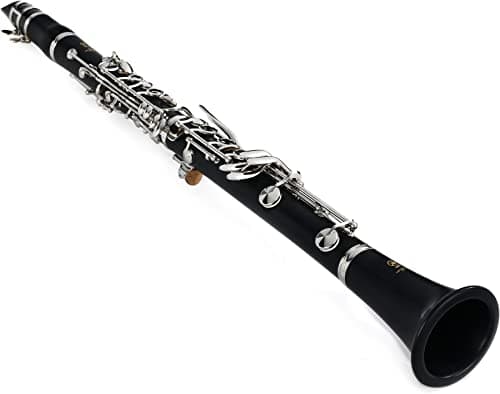
ABS resin body with a 65 mm barrel taken from Yamaha's high-end clarinets, Valentino pads and a 4C mouthpiece. The default student clarinet in most band rooms.
Published specifications
- Body:
- ABS resin, matte wood-like finish
- System:
- Boehm, 17 keys and 6 rings
- Keywork:
- Power-forged, nickel-plated nickel silver
- Barrel:
- 65 mm — the length used on Yamaha's high-end clarinets
- Pads:
- Valentino
- Bell:
- Solid ABS resin with resonance chamber
- Thumb rest:
- Adjustable, with strap ring
- Mouthpiece:
- Yamaha 4C
What it gets right
- ABS resin does not crack in a dry house, which is the failure that ends cheap wooden clarinets
- The 65 mm barrel is genuinely the same specification as Yamaha's expensive clarinets, and it is a large part of why this one plays in tune
- An adjustable thumb rest with a strap ring, which matters because a clarinet's weight lands on one thumb
Where it gives ground
- Resin will never have the warmth of grenadilla wood, and a student will notice when they play a wooden one
- The included 4C mouthpiece is competent and is the first thing many teachers upgrade
What it is not good at
Being a year-one purchase. Rent through the school first; directors reassign students in the first months and this is real money to have committed.
How the specs score against a beginner’s needs
Scores are our reading of the published specifications above against what a beginner physically needs. They are not test results — we have not played this instrument.
Specifications from Yamaha USA — YCL-255 overview.
Jean Paul CL-300
Jean Paul USABest for: Budget clarinet, if buying in year one
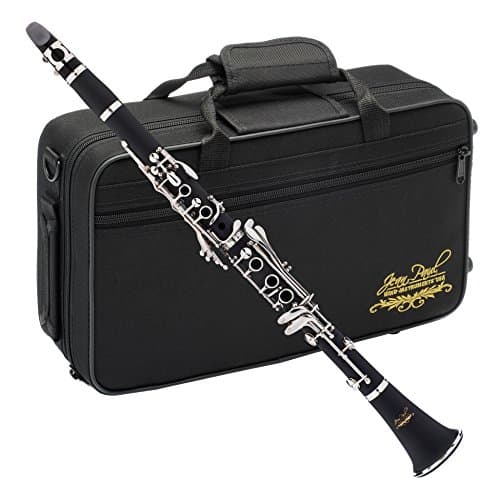
Ebonite body with nickel keys on the full Boehm 17-key system, at roughly half what the Yamaha costs. The system is complete; the tolerances are where the money went.
Published specifications
- Body:
- Ebonite
- Keys:
- Nickel-plated
- System:
- Boehm, 17 keys
What it gets right
- The full 17-key Boehm system, so nothing in the method book is unplayable on it
- Ebonite is stable in a dry house, same practical advantage as the Yamaha's resin
- Low enough cost that an uncertain first year is not an expensive bet
Where it gives ground
- Pad seating and key regulation are the weak points, and a leak develops sooner than on the Yamaha
- The supplied mouthpiece is basic even by student standards
What it is not good at
Surviving without maintenance. Woodwind pads are consumable on any instrument, and on a budget one they need attention sooner. This is exactly why school rental is worth its price.
How the specs score against a beginner’s needs
Scores are our reading of the published specifications above against what a beginner physically needs. They are not test results — we have not played this instrument.
Specifications from Jean Paul USA CL-300 published description.
Yamaha YAS-280
YamahaBest for: Step-up alto sax, year two onward
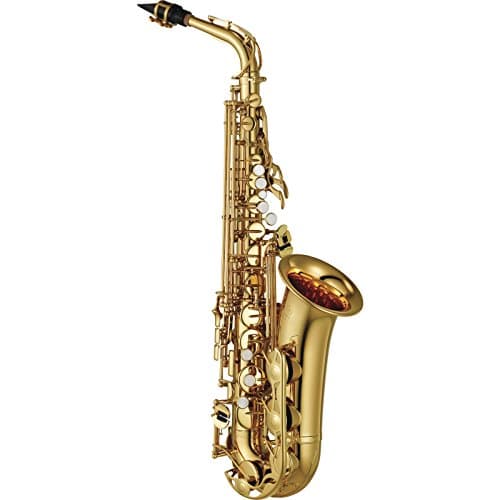
Lightweight, ergonomically shaped for a young player, with an adjustable thumb hook, a high F# key and a redesigned low B-to-C# connection. Widely treated as the standard student alto.
Published specifications
- Key:
- Eb alto
- Material:
- Brass, gold lacquer finish
- Bell:
- Two-piece
- Key touches:
- White polyester
- Mechanism:
- Improved B-C# connector, high F# key, adjustable thumb hook
- Neck receiver:
- Redesigned for stability
- Included:
- Yamaha 4C mouthpiece, case with rucksack straps, sax strap, cork grease
What it gets right
- Genuinely designed around a young player — light, and shaped so the hands fall naturally rather than reaching
- The adjustable thumb hook matters more than it sounds: a saxophone's weight lands on the right thumb, and a fixed hook fits one hand size
- High F# key included, which the method book will want before the second year is out
Where it gives ground
- Even a lightweight alto is heavy for a small eleven-year-old over a full rehearsal
- The 4C mouthpiece is a solid start and a very common first upgrade
What it is not good at
Being a year-one purchase. Saxophone is the most requested section and the most reassigned; rent until the placement is settled.
How the specs score against a beginner’s needs
Scores are our reading of the published specifications above against what a beginner physically needs. They are not test results — we have not played this instrument.
Specifications from Yamaha YAS-280 published specifications.
Jean Paul AS-400
Jean Paul USABest for: Budget alto sax, if buying in year one
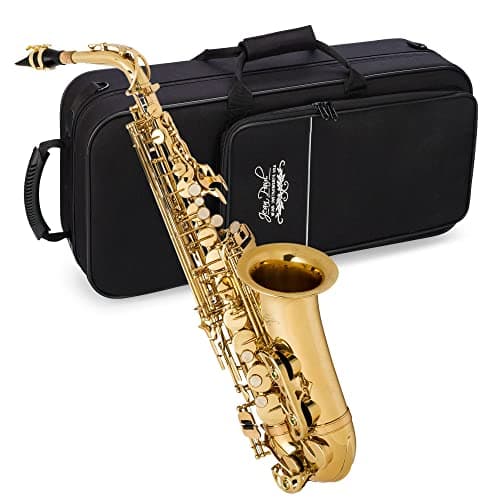
A golden-brass lacquered student alto at a fraction of the Yamaha. The honest framing: it is a real, playable saxophone and it is not built to the same tolerances.
Published specifications
- Key:
- Eb alto
- Material:
- Golden brass, lacquered
- Level:
- Student / beginner
What it gets right
- Puts a playable alto saxophone within reach of a family that cannot fund a Yamaha
- Jean Paul builds specifically for the beginner and intermediate band market rather than repackaging generic stock
- Cheap enough that a year of uncertainty is not an expensive bet
Where it gives ground
- Pad seating and key regulation are where the price shows, and both affect how the instrument plays within a year
- Published specifications are thinner than Yamaha's, which makes it harder to compare properly
What it is not good at
Going without maintenance. Every saxophone needs pad work eventually and a budget one needs it sooner. If the school rents, rent.
How the specs score against a beginner’s needs
Scores are our reading of the published specifications above against what a beginner physically needs. They are not test results — we have not played this instrument.
Specifications from Jean Paul USA AS-400 published description.
Questions people actually ask
What reed strength should a beginner use?
Soft — typically a 2 or 2.5 on the common numbering. A harder reed needs more air pressure and a more developed embouchure, and a beginner on one simply cannot make the instrument speak.
How long does a reed last?
A few weeks of regular playing, and less if it is the only reed in use. Rotating several reeds rather than playing one to death extends the life of all of them noticeably.
How do you know when a reed is dead?
It responds sluggishly, the tone goes dull or buzzy, low notes stop speaking cleanly, or the tip is visibly chipped or warped. Any of those and it is finished.
Should a beginner wet the reed?
Yes, always. Thirty seconds to a minute in the mouth before playing. A dry reed is stiff and unresponsive, and playing a dry reed is also the fastest way to chip one.
Sources
Still deciding?
Every recommendation on this site is built the same way, and the method is published in full — including what we do not do and what would get a pick dropped.
Read next
- Best beginner clarinets
Why resin beats wood for a student, what a 65mm barrel does for intonation, and two picks for the year-two step-up.
- Best beginner saxophones
Why alto is the beginner size, the ergonomic details that matter at eleven, and two picks for when buying is right.
- How to clean a band instrument
The two-minute after-playing routine per family, what happens when it is skipped, and the jobs that belong to a technician.
- Saxophone or clarinet to start on?
Weight and reach, the register break, cost per instrument, and why starting on clarinet makes the saxophone easier later.
- Woodwind or brass for a first band instrument?
How each family produces sound, what that means for the first month, running costs, and how each suits different students.