Start Here
Best instruments for a teenager to start
A teenager who chose their own instrument practices. One who was assigned an instrument negotiates. That difference outweighs every specification.
By Sawyer V. · Published · Last updated
Teenagers are the easiest group to buy an instrument for and the easiest to get wrong, because the decision is not really about the instrument. It is about whether they picked it.
A teenager who chose their instrument practices without being asked. One who was assigned an instrument by a well-meaning parent negotiates about practicing for a term and then stops.
Every pick states its Starter Path band, and we have not physically tested any of them — the method is on how we pick.
Start from the music they already listen to, and buy the instrument that plays it. Then solve the two things that actually end teenage instruments: noise, and an instrument so cheap it is unpleasant to play.
Electric guitar: the default, and usually right
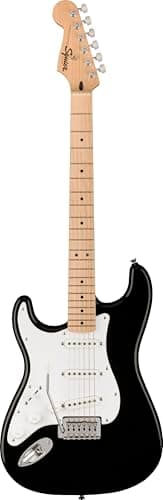
The Squier Sonic Stratocaster#ad is the standard first electric because it gets the specifications that matter right: a full 25.5 inch scale, sealed tuners that hold pitch, and a synthetic bone nut. Nothing about it makes a beginner’s first year harder.
Two things make it particularly suited to a teenager. It plays the music they listen to, which is most of the motivation. And unplugged it is one of the quietest instruments there is — quieter than an acoustic guitar — so a bedroom at eleven at night is not a household negotiation.
Plan for an amplifier with a headphone output rather than one without, and the reasoning is in do you need an amp to learn electric guitar. The wider field is in best beginner electric guitars.
Bass: the strategic answer
If a teenager says they want to be in a band, the bass is the shortest route.
There are far more guitarists than bassists in every scene at every level. A competent beginner bassist who can hold time gets invited to play with people; an equivalent guitarist joins a queue. And playing with other people is the single strongest predictor of anyone continuing.
The Squier Affinity Precision Bass PJ#ad is the standard entry point, with both a Precision split-coil and a Jazz bridge pickup so one instrument covers the thick sound and the bright one.
One honest caution: an electric bass unplugged is very nearly silent, so amplification is required from day one rather than eventually, and bass amps cost more than guitar amps. A headphone amp or an interface is the cheap route. The full comparison is in guitar or bass for beginners.
Drums: possible, with one non-negotiable
An acoustic kit in a family house is a difficult proposition and the numbers are in how loud are drums.
The Alesis Nitro Max Kit#ad is the workable answer. Mesh heads are dramatically quieter to strike than rubber pads and rebound much closer to a real drumhead, and the headphone output carries the actual drum sounds.
The non-negotiable is an isolation mat, budgeted at the same time as the kit rather than after the first complaint. The kick and hi-hat pedals put repeated impact into the floor regardless of headphones, and in a house with wooden joists that is heard downstairs. Same argument as best instruments for an apartment.
Keys: the one that pays off later
A teenager who is writing songs, producing on a laptop, or curious about how music works is better served by a keyboard than by anything else.
The keyboard lays out pitch in a straight line with a visible pattern. Intervals, chords and scales become shapes you can see, which is why nearly everyone who writes or arranges music works at one, including guitarists.
The Casio Casiotone CT-S1#ad is 61 full-size touch-sensitive keys built around the piano sound, and like most modern boards it also functions as a MIDI controller over USB — so it doubles as the input device for anything they make on a computer. That distinction is worth understanding before buying a controller instead, and it is in MIDI keyboard versus digital piano.
The two things that actually end teenage instruments
Noise. A teenager whose practice is constantly being interrupted stops practicing. Solve it at purchase: an electric guitar with a headphone amp, an electronic kit with a mat, a keyboard with headphones. Every one of those turns a household conflict into a non-issue.
An instrument that is unpleasant to play. The cheap-in-case-they-quit instinct backfires specifically here. An instrument that will not hold tune, or has an action so high it hurts, is a leading cause of quitting — so the insurance policy produces the outcome it was bought to prevent. The line between acceptable and not is in are cheap guitars worth it.
How to buy without guessing
Ask what they listen to. Then buy the instrument that plays it. This is the whole method.
Let them come to the shop. Ownership of the decision is worth more than getting the optimal model.
Buy at the honest floor or just above it. Good enough that nothing about the instrument is an obstacle, cheap enough that abandoning it is not a family incident.
Buy used where used is safe. Electric guitars, basses and amps are excellent secondhand, which means a better instrument for the same money — see used versus new.
Get them playing with someone else quickly. A school group, a friend, an online collaboration. Practicing alone has a shelf life, and this is what extends it — more in how to stop a beginner quitting.
Quick picks
If they name a band
The default teenage instrument for good reason: it plays the music they already listen to, and it is nearly silent unplugged.
| # | Product | Best for | Score | Price |
|---|---|---|---|---|
| 1 | Squier Sonic StratocasterThe cheapest electric that still has full-scale geometry, sealed tuners and a real 9. | The honest floor, electricThe honest floor | 8.2 | $249.99 · View on Amazon #ad How we’re funded |
If they want to be in a band
There are far more guitarists than bassists everywhere. A competent beginner bassist gets asked to play; a beginner guitarist joins a queue.
| # | Product | Best for | Score | Price |
|---|---|---|---|---|
| 1 | No image Squier Affinity Precision Bass PJA full 34 inch scale with both a Precision split-coil and a Jazz bridge pickup, so one bass covers the thick sound and the bright one. | First bass, most versatileThe honest floor | 8.4 | Check price on Amazon → #ad How we’re funded |
If it has to be drums
Mesh heads and headphones make drums possible in a house with other people in it. Budget for an isolation mat at the same time.
| # | Product | Best for | Score | Price |
|---|---|---|---|---|
| 1 | 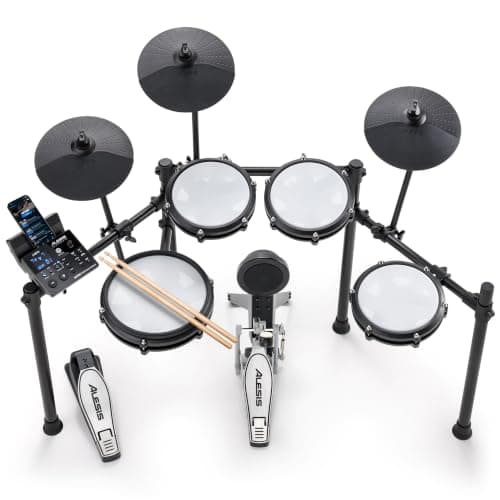 Alesis Nitro Max KitMesh heads on every pad, a dual-zone snare and Bluetooth audio for playing along. | Apartments and shared wallsEnough | 8.4 | $449.00 · View on Amazon #ad How we’re funded |
If they are writing or producing
Keys is the instrument that makes music theory visible, and it doubles as a controller for anything they make on a computer.
| # | Product | Best for | Score | Price |
|---|---|---|---|---|
| 1 | 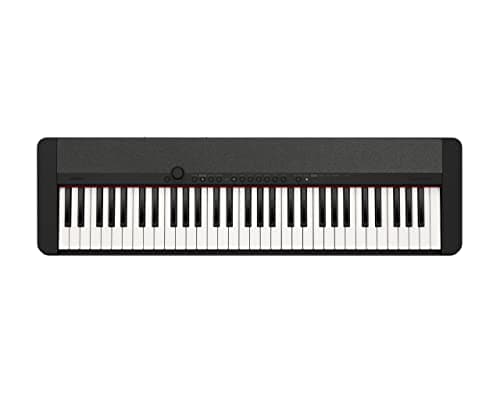 Casio Casiotone CT-S161 full-size touch-sensitive keys, 61 tones and no arranger clutter. | 61 keys, piano sound firstThe honest floor | 7.8 | $219.99 · View on Amazon #ad How we’re funded |
The picks in full
Squier Sonic Stratocaster
Squier by FenderBest for: The honest floor, electric
The cheapest electric that still has full-scale geometry, sealed tuners and a real 9.5 inch fingerboard radius. Nothing about it will make a beginner's first year harder.
Published specifications
- Scale length:
- 25.5" (647.7 mm) — full size
- Body / neck:
- Poplar body, maple neck, "C" profile
- Fingerboard:
- Maple or Indian laurel, 9.5" (241 mm) radius
- Frets:
- 21, narrow tall
- Nut width:
- 1.650" (42 mm), synthetic bone
- Pickups:
- Three ceramic single-coils (SSS)
- Bridge:
- 6-saddle vintage-style synchronized tremolo
What it gets right
- Full 25.5 inch scale, so nothing learned here has to be relearned later
- Synthetic bone nut rather than a soft plastic one — the part that decides whether a cheap guitar stays in tune
- Sealed-gear tuners, which is the single most important spec on a first electric
Where it gives ground
- Poplar body and ceramic pickups are exactly what you would expect at this tier
- The tremolo bridge will pull the guitar out of tune if a beginner uses it, and beginners always use it
What it is not good at
Staying in tune if you use the whammy bar. If that matters, buy the hardtail (HT) version of the same guitar instead — it is the identical instrument with the tremolo deleted.
How the specs score against a beginner’s needs
Scores are our reading of the published specifications above against what a beginner physically needs. They are not test results — we have not played this instrument.
Specifications from Squier Wiki — Sonic Stratocaster specifications.
Alesis Nitro Max Kit
AlesisBest for: Apartments and shared walls
Mesh heads on every pad, a dual-zone snare and Bluetooth audio for playing along. Mesh is the spec that makes an electronic kit tolerable to sit at for an hour.
Published specifications
- Pads:
- 10" dual-zone mesh snare, three 8" mesh toms
- Cymbals:
- Three 10" pads — hi-hat, crash, ride
- Module:
- 440 sounds, 32 kits, 60 play-along songs, performance recorder
- Connectivity:
- Bluetooth audio, USB-MIDI
- Mounting:
- Included four-post rack
- Weight:
- Under 15 kg complete
What it gets right
- Mesh heads on every drum pad — quieter and far closer to a real rebound than the rubber pads a tier down
- Bluetooth audio means playing along to a phone with no cable and no extra mixer
- USB-MIDI, so it doubles as a controller for recording software later
Where it gives ground
- Mesh heads are quiet in the room but the kick pedal thumps through a floor; downstairs neighbors still hear it
- Single-zone toms — no rimshot on anything except the snare
What it is not good at
Teaching cymbal technique. Three 10 inch pads cannot reproduce how a real hi-hat or a crash responds, and a drummer moving to an acoustic kit later has that to learn from scratch.
How the specs score against a beginner’s needs
Scores are our reading of the published specifications above against what a beginner physically needs. They are not test results — we have not played this instrument.
Specifications from Alesis Drums — Nitro Max Kit.
Squier Affinity Precision Bass PJ
Squier by FenderBest for: First bass, most versatile
A full 34 inch scale with both a Precision split-coil and a Jazz bridge pickup, so one bass covers the thick sound and the bright one. The standard first bass for good reason.
Published specifications
- Scale length:
- 34" — full size
- Body:
- Poplar or alder, polyurethane finish
- Neck:
- Maple, "C" shape
- Fingerboard:
- Laurel or maple, 9.5" radius
- Frets:
- 20, medium jumbo
- Nut width:
- 1.5" (38.1 mm), synthetic bone
- Pickups:
- Split single-coil P (middle) + single-coil J (bridge), separate volumes, master tone
- Bridge:
- 4-saddle standard, chrome hardware
What it gets right
- Two pickup voices in one instrument, so a beginner is not locked into a single sound before they know what they want
- 34 inch scale is the standard every bass method book and every bandmate assumes
- Separate volume controls let you blend the two pickups rather than just switching
Where it gives ground
- A 34 inch scale is a long reach at the first fret for a smaller player
- Basses are heavy, and this one is not an exception — a wide strap matters
What it is not good at
Small hands and young players. There is no 3/4 version of this in the line, so a player under about 12 should look at a short-scale bass instead.
How the specs score against a beginner’s needs
Scores are our reading of the published specifications above against what a beginner physically needs. They are not test results — we have not played this instrument.
Specifications from Fender — Affinity Series Precision Bass PJ, Squier Wiki — Affinity Precision Bass PJ.
Casio Casiotone CT-S1
CasioBest for: 61 keys, piano sound first
61 full-size touch-sensitive keys, 61 tones and no arranger clutter. It is the 61-key board for someone who wants to play piano rather than operate a keyboard.
Published specifications
- Keys:
- 61, full-size, touch-sensitive
- Polyphony:
- 64 notes
- Tones:
- 61, including a stereo grand piano
- Weight:
- 9.9 lb
- Dimensions:
- 36.61" W x 10.15" D x 3.30" H
- Connectivity:
- USB-MIDI
What it gets right
- Deliberately few sounds and a clean panel, which removes the single biggest distraction from actual practice
- 9.9 pounds and 3.3 inches tall — it can live on a shelf between sessions, and an instrument that lives out of the way gets played less
- 64-note polyphony, higher than the PSR-E383's 48
Where it gives ground
- No lesson mode at all, unlike the PSR-E383
- Unweighted keys, same fundamental limit as any 61-key board
What it is not good at
Entertaining a young child. There is no light-up key guidance, no play-along scoring and only 61 sounds. That restraint is the point for an adult beginner and a drawback for a seven-year-old.
How the specs score against a beginner’s needs
Scores are our reading of the published specifications above against what a beginner physically needs. They are not test results — we have not played this instrument.
Specifications from Casio — CT-S1 product page.
Questions people actually ask
What instrument should a teenager learn?
The one connected to the music they already love. Motivation at that age is the entire variable, and an instrument chosen for them rather than by them gets practiced for about six weeks.
Is guitar or drums better for a teenager?
Guitar is quieter, cheaper and more portable. Drums are more physical and more social, and need an electronic kit plus an isolation mat to be workable in most houses. Let the teenager decide which.
Should I buy a cheap instrument in case they quit?
No, and this is the most common mistake. A cheap instrument that will not stay in tune or is painful to play is a leading cause of quitting, so the insurance policy causes the outcome it was meant to guard against.
How do I stop a teenager giving up after three months?
Get them playing with other people as early as possible. Practicing alone in a bedroom has a limited motivational shelf life; playing with one other person of any standard extends it enormously.
Sources
Still deciding?
Every recommendation on this site is built the same way, and the method is published in full — including what we do not do and what would get a pick dropped.
Read next
- Best beginner electric guitars: what's worth it from $150 to $400
Segmented by player and price band, with the three specs that actually decide whether a first electric survives its first year.
- Guitar or bass for a first instrument?
Which one is genuinely easier, why bassists get into bands faster, and the physical differences that decide it for small hands.
- Best electronic drum sets for beginners
Mesh versus rubber pads, the kick-thump problem that headphones do not solve, and picks for adults and children.
- Why beginners quit, and what prevents it
The three points where beginners stop, what causes each, and the interventions that work at each stage.
- Best instruments for an apartment
Four instruments that survive a shared wall, ranked by how quiet they are at their loudest, plus the headphones that make the difference.
- Best guitars for teenagers
Why body size matters more than scale length at this age, what a teenager should be able to grow into, and the guitars we would buy.