Guitars
Guitar or bass for a first instrument?
Four strings or six is the least interesting difference. What actually separates them is how soon you can play with other people.
By Sawyer V. · Published · Last updated
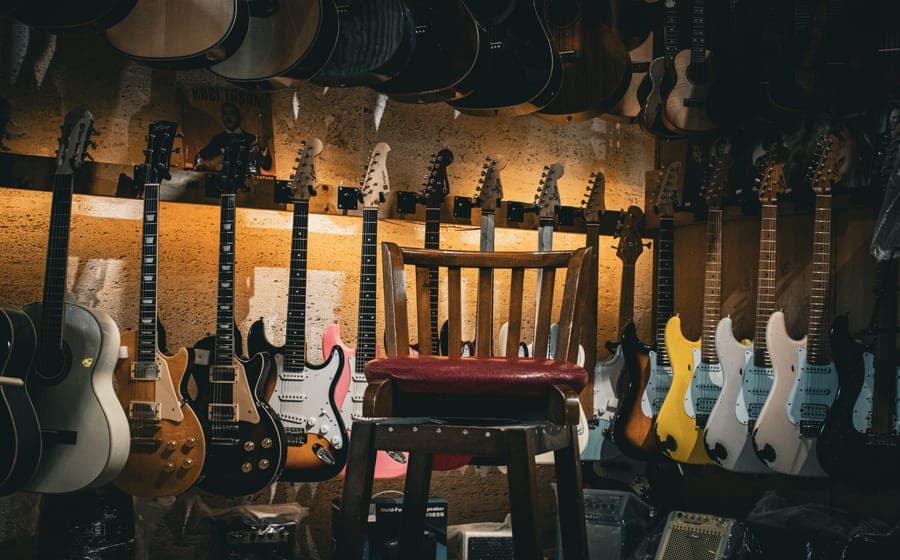
The bass is chronically undersold to beginners, usually by guitarists. It gets described as the easier option, the fallback, the thing you play if you could not manage chords. That is wrong in a way that matters, because it sends people to the wrong instrument in both directions.
Choose bass if you want to be playing real songs with other people soonest, and you like rhythm more than melody. Choose guitar if you want to play alone, sing along, or write songs. Bass is easier for the first three months and neither is easier after that.
The first three months are genuinely different
A guitarist’s first hurdle is chord changes. Three fingers arrive at three different strings simultaneously, cleanly, in time, and then move to a different shape without a gap. That takes weeks of frustrating repetition before it sounds like music.
A bassist’s first hurdle is much lower. One note at a time, one finger, and the most common bass parts in popular music are genuinely simple — root notes on the beat. A beginner can play a recognisable, correct bass line to a real song within a few weeks, and it sounds right rather than approximately right.
That is the whole basis of the “bass is easier” claim and it is true as far as it goes. What it leaves out is that the ceiling is identical. Timing precision on bass is unforgiving in a way guitar is not: the bass and the kick drum have to agree, and everyone hears it when they do not.
The physical differences that decide it
| Electric guitar | Electric bass | |
|---|---|---|
| Typical scale | 25.5 inches | 34 inches |
| Strings | Six, thin | Four, thick and high tension |
| Fret spacing | Close — four frets under one hand | Wide — often one finger per fret is a stretch |
| Weight | Moderate | Noticeably heavier |
| Hardest early skill | Clean chord changes | Timing and note length |
| Needs an amp | To be heard properly | Almost immediately — unplugged, a bass is nearly silent |
The scale length line is the one that decides it for a lot of people. A 34 inch bass neck asks for a hand span that many players simply do not have yet, and it is why we do not usually recommend bass as a child’s first instrument. Small-handed adults should read guitars for small hands before assuming a full-scale bass is comfortable.
Where bass wins
You will be asked to join things. There are far more guitarists than bassists, in every scene, at every level. A competent beginner bassist who can hold time gets invited to play with people much sooner than an equivalent guitarist, and playing with other people is the single strongest reason anyone keeps going.
It sounds good early. One clean note per beat is a complete, correct part. A guitarist playing at the same skill level is playing a partial chord with a buzz on the fourth string.
Fewer things to get wrong. Four strings, one note at a time, no chord voicings to memorise, no strumming pattern to coordinate against the left hand.
The Squier Affinity Precision Bass PJ#ad is the standard entry point for exactly this: a full 34 inch scale with both a Precision split-coil and a Jazz bridge pickup, so one instrument covers the thick sound and the bright one. The alternatives are in the beginner bass roundup.
If range matters more than tradition, the Yamaha TRBX174#ad gives 24 frets rather than 20, which is two extra octaves’ worth of upper register for players who intend to go beyond root notes.
Where guitar wins
It works alone. A guitar plus a voice is a complete musical performance. A bass alone is a part of one. If most of your playing will be by yourself in a room, that difference compounds over years.
It accompanies singing. Chords under a melody is the single most useful amateur musical skill there is, and bass does not do it.
Songwriting. Most songs are written on a guitar or a keyboard because both can state harmony. A bass states one note of it at a time.
Smaller and lighter. A Squier Sonic Stratocaster#ad is more comfortable for more people than any full-scale bass, and comfort in the first year is not a minor consideration — it decides how long the sessions are.
The amp question is not symmetrical
An electric guitar unplugged is quiet but audible, and plenty of practice can happen that way. An electric bass unplugged is very nearly inaudible — the strings simply do not move enough air at those frequencies.
That means a bassist needs amplification from day one in a way a guitarist does not, and bass amps are more expensive than guitar amps at every level because moving low frequencies takes real power and a real speaker. Factor it into the budget honestly. A headphone amp or an audio interface is the cheap way through it and is what most beginner bassists actually use at home.
How to decide in one question
When you imagine yourself playing, are other people in the picture?
If yes — a band, a church group, a school ensemble, jamming with friends — bass gets you there faster and keeps you there, because the demand for bassists exceeds the supply everywhere.
If no — a room, a chair, maybe a voice — guitar is the instrument that rewards that, because it can be the whole arrangement by itself.
Both instruments transfer to each other far more than people expect. The fretboard logic is identical, and the bottom four strings of a guitar are tuned to the same notes as a bass an octave up. Nothing you learn on either is wasted on the other. If you are still weighing the whole field, our instrument chooser works through it from the top.
What we would buy
Squier Sonic Stratocaster
Squier by FenderBest for: The honest floor, electric
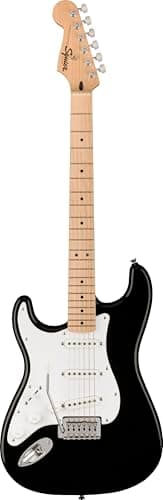
The cheapest electric that still has full-scale geometry, sealed tuners and a real 9.5 inch fingerboard radius. Nothing about it will make a beginner's first year harder.
Published specifications
- Scale length:
- 25.5" (647.7 mm) — full size
- Body / neck:
- Poplar body, maple neck, "C" profile
- Fingerboard:
- Maple or Indian laurel, 9.5" (241 mm) radius
- Frets:
- 21, narrow tall
- Nut width:
- 1.650" (42 mm), synthetic bone
- Pickups:
- Three ceramic single-coils (SSS)
- Bridge:
- 6-saddle vintage-style synchronized tremolo
What it gets right
- Full 25.5 inch scale, so nothing learned here has to be relearned later
- Synthetic bone nut rather than a soft plastic one — the part that decides whether a cheap guitar stays in tune
- Sealed-gear tuners, which is the single most important spec on a first electric
Where it gives ground
- Poplar body and ceramic pickups are exactly what you would expect at this tier
- The tremolo bridge will pull the guitar out of tune if a beginner uses it, and beginners always use it
What it is not good at
Staying in tune if you use the whammy bar. If that matters, buy the hardtail (HT) version of the same guitar instead — it is the identical instrument with the tremolo deleted.
How the specs score against a beginner’s needs
Scores are our reading of the published specifications above against what a beginner physically needs. They are not test results — we have not played this instrument.
Specifications from Squier Wiki — Sonic Stratocaster specifications.
Squier Affinity Precision Bass PJ
Squier by FenderBest for: First bass, most versatile
A full 34 inch scale with both a Precision split-coil and a Jazz bridge pickup, so one bass covers the thick sound and the bright one. The standard first bass for good reason.
Published specifications
- Scale length:
- 34" — full size
- Body:
- Poplar or alder, polyurethane finish
- Neck:
- Maple, "C" shape
- Fingerboard:
- Laurel or maple, 9.5" radius
- Frets:
- 20, medium jumbo
- Nut width:
- 1.5" (38.1 mm), synthetic bone
- Pickups:
- Split single-coil P (middle) + single-coil J (bridge), separate volumes, master tone
- Bridge:
- 4-saddle standard, chrome hardware
What it gets right
- Two pickup voices in one instrument, so a beginner is not locked into a single sound before they know what they want
- 34 inch scale is the standard every bass method book and every bandmate assumes
- Separate volume controls let you blend the two pickups rather than just switching
Where it gives ground
- A 34 inch scale is a long reach at the first fret for a smaller player
- Basses are heavy, and this one is not an exception — a wide strap matters
What it is not good at
Small hands and young players. There is no 3/4 version of this in the line, so a player under about 12 should look at a short-scale bass instead.
How the specs score against a beginner’s needs
Scores are our reading of the published specifications above against what a beginner physically needs. They are not test results — we have not played this instrument.
Specifications from Fender — Affinity Series Precision Bass PJ, Squier Wiki — Affinity Precision Bass PJ.
Yamaha TRBX174
YamahaBest for: 24 frets, more range
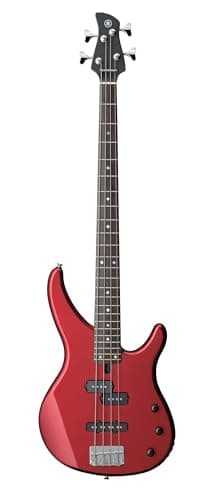
A mahogany-bodied PJ bass with 24 frets rather than the usual 20, which is four extra semitones at the top for anyone who wants to play melodically.
Published specifications
- Scale length:
- 34" — full size
- Body:
- Mahogany
- Neck:
- Maple
- Fingerboard:
- Rosewood, 10" radius
- Frets:
- 24
- Pickups:
- Split-coil P + single-coil J, separate volumes, master tone
- Hardware:
- Chrome, vintage-style bridge, covered tuning machines
What it gets right
- 24 frets against the usual 20 — a genuinely useful extra range once a player starts learning melodies rather than just root notes
- Mahogany body rather than poplar, which is a real material upgrade at this tier
- Covered tuning machines keep dust and knocks out of the gears
Where it gives ground
- The 10 inch fingerboard radius is rounder than the Squier's 9.5 inch equivalent feel and some players notice it
- Fewer finish options than the Squier line
What it is not good at
Sounding like a Fender, if that is what you are after. It is its own instrument with its own voice, and buying it expecting a P-Bass will disappoint.
How the specs score against a beginner’s needs
Scores are our reading of the published specifications above against what a beginner physically needs. They are not test results — we have not played this instrument.
Specifications from Yamaha USA shop — TRBX174 4-string electric bass guitar.
Questions people actually ask
Is bass easier to learn than guitar?
Easier to start, not easier to master. One note at a time on four strings means a beginner can play a real bass line in a real song within weeks, where a guitarist is still fighting chord changes. The gap closes quickly after that.
Is bass harder on your fingers?
Physically yes. Bass strings are much thicker and under considerably higher tension, and a standard bass scale is 34 inches against 25.5 for a guitar, so the stretches are longer. It is more demanding on hand strength and less demanding on precision.
Can you learn bass without a band?
You can, and it is less rewarding. Bass is an ensemble instrument by design — solo bass playing exists but it is not where the instrument lives. Playing along to recordings covers most of the gap and should be part of practice from week one.
Should a child start on bass?
Usually not before about eleven. A full-size bass is 34 inches of scale with heavy strings, and that is a genuine physical barrier for smaller hands. Short-scale basses exist and help; a guitar or ukulele is generally a better route into music at that age.
Sources
Still deciding?
Every recommendation on this site is built the same way, and the method is published in full — including what we do not do and what would get a pick dropped.
Read next
- Best beginner bass guitars
Why a bass is not a big guitar, the two picks worth considering, and the amplifier cost nobody budgets for.
- Best beginner electric guitars: what's worth it from $150 to $400
Segmented by player and price band, with the three specs that actually decide whether a first electric survives its first year.
- Best guitars for small hands
Scale length and nut width explained as a reach problem, with picks for adults with small hands and for children.
- Acoustic vs electric guitar for beginners
The physical difference is real but small. The cost difference is larger than most people expect. Buy CTAs for both answers.
- What instrument should I learn?
Four practical constraints instead of a personality quiz, each one routing straight to the instrument that fits.