Start Here
Why beginners quit, and what prevents it
Nobody quits an instrument in a single decisive moment. They practice less each week until picking it up feels like starting over.
By Sawyer V. · Published · Last updated
Most people who start an instrument stop within a year, and it is rarely a decision. There is no moment where someone concludes music is not for them. They practice four times in week one, twice in week two, once in week four, and then a couple of weeks pass and picking it up feels like starting over.
The useful thing is that the drop-off happens in predictable places for predictable reasons.
Three failure points: the instrument is physically hard or sounds wrong; progress plateaus around three months; practice never became a routine. Fix them with a properly set-up instrument, honest expectations about the plateau, and a fixed short daily session with the instrument left out where it can be reached.
Failure point one: weeks two to four
The first drop-off, and it is physical.
Fingertips hurt. Nothing sounds like music yet. The chord changes that looked simple in a video are impossible. The gap between what the beginner imagined and what is happening is at its widest.
What prevents it.
An instrument that is not fighting them. The most under-recognized factor on this page. A guitar with an action so high it hurts, or a ukulele that will not play in tune above the fifth fret, produces a beginner who thinks they are the problem. On any fretted instrument, a proper setup is the highest-value spend available — see what a guitar setup actually is.
Keeping it in tune. A beginner cannot distinguish an out-of-tune instrument from their own mistakes, so an untuned instrument teaches them that they sound bad. A Snark clip-on chromatic tuner#ad is the cheapest retention device on this site.
An early win. One song, however simple, in the first two weeks. This is why the ukulele has such a strong record with beginners: several usable chords on a Kala KA-15S#ad need one finger, so real music happens in days rather than weeks.
Short, frequent sessions. Fifteen minutes daily builds calluses faster and far less painfully than two hours on a Saturday.
Failure point two: three to six months
The second and larger drop-off, and it is psychological.
Early progress on any instrument is fast, because going from nothing to something is a large relative change. Then it flattens. The player can do three chords and cannot yet do the fourth, and improvement stops being visible week to week.
Almost everyone reads this as having hit their ceiling. It is not a ceiling; it is what learning looks like after the beginner phase.
What prevents it.
Being told in advance that it happens. Genuinely effective. A beginner who expects a plateau interprets it as a stage; one who does not interprets it as evidence. Realistic timelines are in how long it takes to learn guitar.
Recording yourself monthly. The single best antidote. Progress is invisible day to day and obvious across two months, and hearing it removes the argument.
Playing with someone else. The strongest intervention available at any stage. A school group, a friend, a ukulele club, a church band, one other person of any standard. Practicing alone in a room has a limited motivational shelf life; playing with people does not.
A few lessons. A plateau is frequently a specific technical obstacle the player cannot identify. An hour with a teacher can dissolve it — see lessons versus teaching yourself.
Failure point three: practice never became a routine
The quiet one, and the most common of all. Nothing goes wrong. Practice just gradually stops happening.
Most missed practice is logistical rather than motivational. The instrument is in a case, in a cupboard, in a room nobody sits in. The keyboard needs setting up. Every session begins with a small chore, and small chores are enough.
What prevents it.
Leave the instrument out. On a stand, in the room you already sit in. This is the highest-leverage and cheapest intervention available, and the caveats about radiators and sunlight are in setting up a practice space.
Attach it to something that already happens. After dinner, before the evening television. A fixed slot is a routine; an intention is a decision you have to make again every day.
Make it possible at the times you actually have. Adults practice in the evening, when other people are in the house. The Audio-Technica ATH-M20x#ad on a keyboard, or a headphone amp on an electric guitar, converts “I can practice when the house is empty” into “I can practice.”
Lower the target. Ten minutes is a session. A beginner who commits to ten minutes does it most days; one who commits to an hour does it twice and then feels guilty, and guilt is not a practice aid.
The things that do not work
Nagging. Converts an interest into an obligation. The most reliably counterproductive intervention there is.
Buying a better instrument mid-plateau. Tempting and rarely the cause. The exception is a genuinely bad instrument, which is a real cause — but a plateau at three months is usually a technique obstacle, not a hardware one.
Practicing only what already sounds good. Enjoyable and it is playing rather than practicing. Both have a place; conflating them stalls progress.
Setting goals that are years away. Motivating for a week. A goal three weeks out beats a goal three years out for everyone except the unusually driven.
Choosing well in the first place
A great deal of quitting is decided before anything is bought.
An instrument that does not fit the player, cannot be practiced at the times they have, or was chosen for them rather than by them is carrying a handicap from day one. That is why we spend as much space on fit and noise as on picks — the whole-field version is in which instrument should you learn.
What we would buy
Snark clip-on chromatic tuner
SnarkBest for: Tuning anything with strings
Clips to the headstock and reads pitch from the vibration of the wood, so it works in a noisy room and an adult who plays nothing can tune the instrument in twenty seconds.
Published specifications
- Type:
- Clip-on chromatic
- Sensing:
- Vibration through the headstock, not the microphone
- Fits:
- Guitar, bass, ukulele, violin, mandolin
- Display:
- Full-color rotating screen
What it gets right
- Vibration sensing means it works in a room with a television on, which a microphone tuner does not
- Chromatic, so one tuner covers every instrument in the house
- The rotating display means it reads correctly whichever way the instrument is held
Where it gives ground
- The clip is plastic and it is the part that eventually breaks
- Battery-powered, and it will be flat the one time you need it in a hurry
What it is not good at
Wind and brass instruments. It reads vibration through a solid body, so there is nothing for it to clip to on a flute or a trumpet.
How the specs score against a beginner’s needs
Scores are our reading of the published specifications above against what a beginner physically needs. They are not test results — we have not played this instrument.
Specifications from Snark tuners (retail listing with published feature set).
Kala KA-15S
Kala Brand MusicBest for: The honest floor, soprano
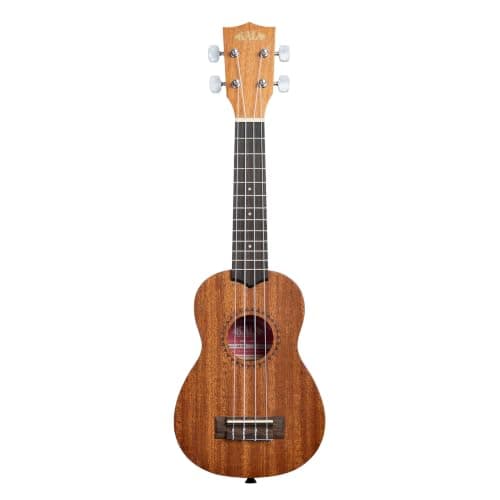
Mahogany throughout, a GraphTech NuBone nut and saddle, and Aquila strings fitted from the factory. The nut material is the spec that separates this from the pile of look-alikes.
Published specifications
- Size:
- Soprano
- Top / back / sides:
- Mahogany
- Neck / fretboard:
- Mahogany neck, rosewood fretboard
- Nut and saddle:
- GraphTech NuBone
- Scale length:
- 13.625"
- Frets:
- 12
- Nut width:
- 1.375"
- Overall length:
- 21.062"
- Strings:
- Aquila Super Nylgut
What it gets right
- NuBone nut and saddle rather than molded plastic — this is what decides whether the instrument plays in tune up the neck
- Aquila strings fitted at the factory, so the first thing you would otherwise replace is already done
- 21 inches overall and light enough for a small child to hold unsupported
Where it gives ground
- 12 frets only, and the body joint stops you well short of the high notes
- Soprano scale means less room between frets — adult fingers with wide fingertips will find it cramped
What it is not good at
Adult hands, sometimes. A 13.625 inch scale is genuinely tight. If the player is a grown-up with large hands, read our soprano-versus-concert comparison before buying this size.
How the specs score against a beginner’s needs
Scores are our reading of the published specifications above against what a beginner physically needs. They are not test results — we have not played this instrument.
Specifications from Kala Brand Music — KA-15S specifications.
Audio-Technica ATH-M20x
Audio-TechnicaBest for: Practice headphones
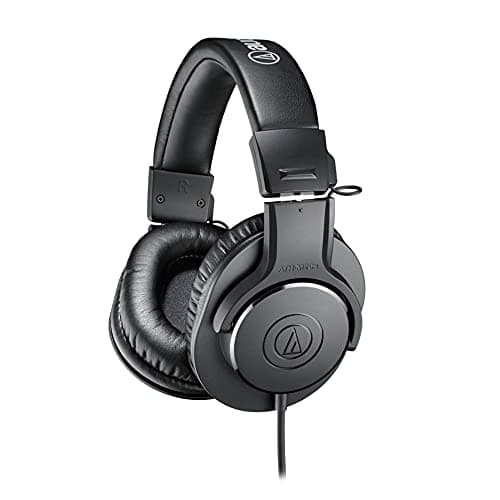
Closed-back 40 mm drivers with a 1/4 inch adapter included, which is the socket most digital pianos actually have. The cheapest headphones we would put on a practicing student.
Published specifications
- Type:
- Closed-back, circumaural (over-ear)
- Drivers:
- 40 mm, copper-clad aluminum voice coils
- Frequency response:
- 15 Hz - 20,000 Hz
- Cable:
- 9.8 ft (3.0 m), single-sided, straight
- Weight:
- 6.7 oz (190 g) without cable
- In the box:
- 6.3 mm (1/4") snap-on adapter
What it gets right
- Closed-back, so the sound stays in and the room stays out — the whole point of practice headphones
- The 1/4 inch adapter is included, and that is the socket most digital pianos have rather than the 1/8 inch a phone uses
- Under 200 grams, which matters over an hour of practice on a child's head
Where it gives ground
- The cable is fixed, not detachable, so a damaged cable means new headphones
- A 3 meter cable is generous at a piano and a trip hazard anywhere else
What it is not good at
Portability. They do not fold flat and there is no case. These live at the instrument.
How the specs score against a beginner’s needs
Scores are our reading of the published specifications above against what a beginner physically needs. They are not test results — we have not played this instrument.
Specifications from Audio-Technica ATH-M20x published specifications.
Questions people actually ask
Why do most beginners quit an instrument?
Three main reasons: the instrument is physically hard or sounds bad, progress stalls around the three-month mark, or practice never became a routine. All three are addressable and none are about talent.
When do most people give up?
There are two peaks. The first is in weeks two to four, when it hurts and nothing sounds like music. The second is around three to six months, when the initial fast progress flattens out.
How do I keep a child practicing?
Make it a fixed short routine rather than a decision, keep the instrument out where they can reach it, and get them playing with someone else as early as possible. Nagging is the least effective available option.
Is it normal to feel like you are not improving?
Completely. Progress on any instrument is lumpy — weeks of apparent stagnation end with something suddenly working, because skill consolidates between practice sessions rather than during them.
Sources
Still deciding?
Every recommendation on this site is built the same way, and the method is published in full — including what we do not do and what would get a pick dropped.
Read next
- Setting up a practice space that gets used
Why the instrument should never live in its case, the seat height that prevents wrist problems, and the two cheap accessories that matter most.
- What instrument should I learn?
Four practical constraints instead of a personality quiz, each one routing straight to the instrument that fits.
- Lessons or teaching yourself?
Which instruments are self-teachable and which are not, what a teacher actually provides, and the hybrid most adults should use.
- How long does it take to learn guitar?
Milestones by practice hours rather than months, what gates each phase, and why the first three weeks matter most.
- Best instruments for a teenager to start
Four picks matched to what teenagers actually want to play, plus the noise and cost problems that end teenage instruments.