Guitars
Best beginner electric guitars: what's worth it from $150 to $400
Electric guitars are easier to fret than acoustics and harder to buy well. Three specs decide almost everything, and two of them are never on the front of the box.
By Sawyer V. · Published · Last updated
The electric guitar is the easiest stringed instrument for a complete beginner to get a clean note out of, and the hardest one to shop for without a spec sheet. Thin strings and low action mean the physical barrier is lower than on an acoustic. But the parts that decide whether the instrument is a pleasure or a quiet source of frustration — the nut material, the bridge type, the tuning machines — are exactly the parts nobody photographs for the listing.
This page is organized around the person playing rather than a flat ranking, because a 25.5 inch scale that is perfect for a fifteen-year-old is simply out of reach for a seven-year-old. Every pick below states which Starter Path band it sits in, what it does badly, and what you will still need to buy. We have not played any of these guitars, and the method we used instead is written out in full on how we pick.
The three specs that decide everything
Almost every genuine complaint about a cheap electric guitar traces back to one of three things. None of them are tone.
1. The tuning machines and the nut
A guitar that will not hold its tuning is not a cheap guitar. It is an instrument that starts every practice session sounding wrong no matter what the player does, and a beginner cannot tell the difference between “this is out of tune” and “I am bad at this.” That confusion is the single most common way a beginner quits, and it is entirely preventable.
Two components cause it. Sealed-gear tuning machines hold their setting; open, unsealed ones drift. And the nut — the small slotted piece at the top of the fingerboard — is where the string binds when you tune. A soft molded plastic nut grips the string, the string releases in a jump, and the guitar goes flat again ten minutes later. A synthetic bone or graphite nut does not do that. Every guitar on this list has sealed tuners, and the two Squiers specify a synthetic bone nut, which at this price is genuinely the spec to look for.
2. The bridge
A tremolo bridge — the kind with a whammy bar — floats on springs. Use it and the string tension changes; release it and the strings do not always return to exactly where they started. On an expensive guitar with a locking nut this is managed. On a $200 guitar it is not, and a beginner who has just discovered the whammy bar will use it constantly.
This is why both children’s guitars below have fixed bridges and why we would steer most adult first-time buyers toward a hardtail if the option exists. The Squier Sonic ships in both forms — the HT version is the identical guitar with the tremolo deleted, and for a first instrument it is the better buy.
3. Scale length, which is really about reach
Scale length is the vibrating length of the string, and it sets how far apart the frets are. A full-size electric is typically 25.5 inches on a Fender design or about 24.75 inches on a Gibson design; a 3/4-size instrument runs around 23 inches or shorter. For an adult that difference is a preference. For a child it decides whether their hand can reach a first-position chord shape at all. We work through the full sizing table by age and height in what size guitar a child needs.
What to skip
The under-$100 full-size “complete starter kit” from a brand you have not heard of. Not because cheap is bad — the Squier Sonic is cheap and it is genuinely fine — but because of what the price forces the manufacturer to leave out. At that price the bill of materials cannot include sealed tuners, a bone-substitute nut, a level fret job and an amplifier that is more than a buzzing speaker in a box. Something has to give, and the parts that give are the ones listed above: the tuning stability parts.
The specific failure is predictable. The guitar arrives, it will not stay in tune through a single practice session, the frets have sharp ends that catch the hand, and the buzzing amp makes every note sound bad. The beginner concludes they have no ear and no aptitude. They had neither problem. We go through the arithmetic of what the extra $80 actually buys in are cheap guitars worth it.
Also skip: a full-size guitar bought for a child “to grow into.” This is well-meant and it does not work. Growing into a guitar is not like growing into a coat. A child who cannot reach the chord shapes does not practice, and a child who does not practice does not grow into anything. Buy the size that fits now and sell it on in three years.
How to read the picks
Each pick carries a Starter Path band. The floor is the cheapest configuration that genuinely works — nothing spare, nothing missing. “Enough” is the buy-once tier a beginner will not outgrow inside a year or two. Most readers should land on the floor for a first electric and spend the difference on an amplifier and lessons, and the page says so rather than pushing everyone upward.
The scores are our reading of the published specifications against what a beginner physically needs. They are not test results. We say that on every card because it is true and because most of this category does not.
Quick picks
Adults and teenagers, full-size
Anyone from about 5 feet tall upward should be on a full 25.5 inch scale. Nothing on this list compromises that, so the choice comes down to hardware and pickups.
| # | Product | Best for | Score | Price |
|---|---|---|---|---|
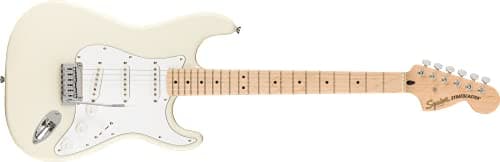
| 1 | Squier Affinity Series StratocasterSame geometry as the Sonic with medium jumbo frets and better hardware. | Buy once, adult starterEnough | 8.6 | $319.99 · View on Amazon #ad How we’re funded |
| 2 | 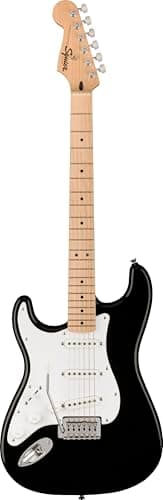 Squier Sonic StratocasterThe cheapest electric that still has full-scale geometry, sealed tuners and a real 9. | The honest floor, electricThe honest floor | 8.2 | $249.99 · View on Amazon #ad How we’re funded |
| 3 | 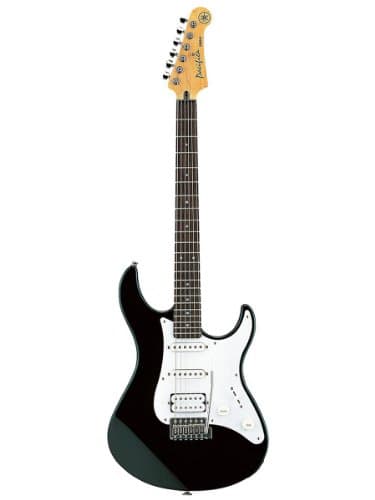 Yamaha Pacifica PAC012An HSS layout and 22 frets at the entry tier. | One guitar, several stylesThe honest floor | 8.3 | $279.99 · View on Amazon #ad How we’re funded |
Children, roughly ages 6 to 13
Short-scale instruments, chosen for reach rather than price. Both have fixed bridges, which is the single most important spec on a child's guitar.
| # | Product | Best for | Score | Price |
|---|---|---|---|---|
| 1 | No image Epiphone Power Players Les PaulA 22. | Ages roughly 8-13Enough | 8.7 | Check price on Amazon → #ad How we’re funded |
| 2 | 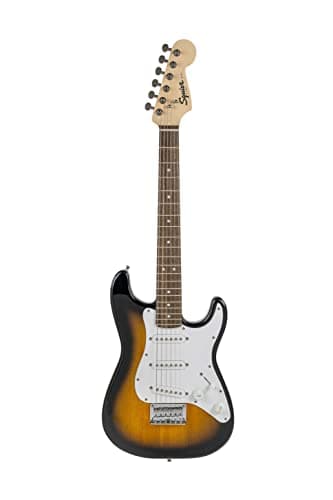 Squier Mini StratocasterA 22. | Ages roughly 6-12The honest floor | 8.1 | $199.99 · View on Amazon #ad How we’re funded |
The picks in full
Squier Affinity Series Stratocaster
Squier by FenderBest for: Buy once, adult starter
Same geometry as the Sonic with medium jumbo frets and better hardware. This is the tier where a beginner stops having a reason to upgrade.
Published specifications
- Scale length:
- 25.5" (648 mm) — full size
- Body / neck:
- Poplar body, maple neck, "C" profile
- Fingerboard:
- Maple, 9.5" (241 mm) radius
- Frets:
- 21, medium jumbo
- Nut width:
- 1.650" (42 mm), synthetic bone
What it gets right
- Medium jumbo frets are noticeably easier to fret cleanly than narrow tall wire, which is the physical thing a beginner struggles with
- Identical scale, radius and nut width to the Sonic, so the step up is hardware, not geometry
- Widely serviced — any shop can set one up without ordering parts
Where it gives ground
- The jump from the Sonic buys hardware and fretwire, not tone
- Still a poplar body; if you are chasing a specific sound this is not the guitar that delivers it
What it is not good at
Justifying itself over the Sonic on paper. The difference is real but it is felt, not read — if the budget is tight, the Sonic is not a compromise.
How the specs score against a beginner’s needs
Scores are our reading of the published specifications above against what a beginner physically needs. They are not test results — we have not played this instrument.
Specifications from Reverb — Squier Affinity Series Stratocaster specs.
Squier Sonic Stratocaster
Squier by FenderBest for: The honest floor, electric
The cheapest electric that still has full-scale geometry, sealed tuners and a real 9.5 inch fingerboard radius. Nothing about it will make a beginner's first year harder.
Published specifications
- Scale length:
- 25.5" (647.7 mm) — full size
- Body / neck:
- Poplar body, maple neck, "C" profile
- Fingerboard:
- Maple or Indian laurel, 9.5" (241 mm) radius
- Frets:
- 21, narrow tall
- Nut width:
- 1.650" (42 mm), synthetic bone
- Pickups:
- Three ceramic single-coils (SSS)
- Bridge:
- 6-saddle vintage-style synchronized tremolo
What it gets right
- Full 25.5 inch scale, so nothing learned here has to be relearned later
- Synthetic bone nut rather than a soft plastic one — the part that decides whether a cheap guitar stays in tune
- Sealed-gear tuners, which is the single most important spec on a first electric
Where it gives ground
- Poplar body and ceramic pickups are exactly what you would expect at this tier
- The tremolo bridge will pull the guitar out of tune if a beginner uses it, and beginners always use it
What it is not good at
Staying in tune if you use the whammy bar. If that matters, buy the hardtail (HT) version of the same guitar instead — it is the identical instrument with the tremolo deleted.
How the specs score against a beginner’s needs
Scores are our reading of the published specifications above against what a beginner physically needs. They are not test results — we have not played this instrument.
Specifications from Squier Wiki — Sonic Stratocaster specifications.
Yamaha Pacifica PAC012
YamahaBest for: One guitar, several styles
An HSS layout and 22 frets at the entry tier. The humbucker at the bridge means one guitar covers both the quiet and the loud thing a beginner wants to try.
Published specifications
- Scale length:
- 25-1/2" (648 mm) — full size
- Body:
- Solid agathis, bolt-on construction
- Neck:
- Maple, 22 frets
- Fingerboard radius:
- 13-3/4" (350 mm) — flatter than a Strat
- Pickups:
- Humbucker / single / single (HSS)
- Nut:
- Urea
What it gets right
- 22 frets rather than 21, and a flatter 350 mm radius that suits chord playing
- The bridge humbucker covers distorted rock without a pickup swap later
- Yamaha's entry instruments are consistently well set up out of the box for the tier
Where it gives ground
- Agathis is a soft, plain body wood; the finish marks easily
- The flatter fingerboard radius is a real difference from a Strat — if a friend's Strat is the reference, this will feel different
What it is not good at
Being a Stratocaster. It is Strat-shaped and it is not one; the radius and the bridge pickup make it its own thing. That is a feature, but do not buy it expecting a Fender feel.
How the specs score against a beginner’s needs
Scores are our reading of the published specifications above against what a beginner physically needs. They are not test results — we have not played this instrument.
Specifications from Yamaha USA — PAC012 specifications.
Epiphone Power Players Les Paul
EpiphoneBest for: Ages roughly 8-13
A 22.73 inch scale on a mahogany body with two real humbuckers, and a gig bag, strap, cable and picks in the box. The short scale is the whole point: it is reachable.
Published specifications
- Scale length:
- 22.73" — 3/4+ size
- Body / neck:
- Mahogany body, bolt-on mahogany neck, SlimTaper D profile
- Frets:
- 22, sculpted heel for upper-fret access
- Pickups:
- Epiphone 650R (neck) and 700T (bridge) humbuckers
- Bridge:
- LightningBar compensated wrap-around
- In the box:
- Gig bag, strap, picks, guitar cable
What it gets right
- A wrap-around bridge has nothing to knock out of tune — the right choice for a kid's guitar
- Mahogany body and neck rather than the plywood usual at this size
- Ships with the accessories that otherwise cost another chunk on top
Where it gives ground
- Les Pauls are dense, and even a 3/4+ one has weight a small child will notice on a strap
- Humbuckers only — no bright, clean single-coil sound available
What it is not good at
Very small children. At 3/4+ this suits roughly age 8 upward; a five-year-old needs the smaller scale of a Squier Mini or a Loog.
How the specs score against a beginner’s needs
Scores are our reading of the published specifications above against what a beginner physically needs. They are not test results — we have not played this instrument.
Specifications from Epiphone (Gibson) — Power Players Les Paul.
Squier Mini Stratocaster
Squier by FenderBest for: Ages roughly 6-12
A 22.75 inch scale, 20 frets and a hardtail bridge. Fender's own sizing guidance puts it at roughly ages 6 to 12, and the fixed bridge removes the main way a child detunes a guitar.
Published specifications
- Scale length:
- 22.75" (578 mm) — 3/4 size
- Frets:
- 20
- Body / neck:
- Laminated hardwood body, maple neck, "C" profile
- Fingerboard:
- 9.5" radius
- Nut width:
- 1.6" (40.6 mm), synthetic bone
- Pickups / bridge:
- Three single-coils, 5-way switch, 6-saddle hardtail
- Detail:
- Smaller strap pins, side-mounted output jack
What it gets right
- Hardtail bridge — no tremolo to pull it out of tune, which matters more than any other spec on a child's guitar
- The narrower 1.6 inch nut is genuinely easier for small fingers than a full-size 1.65 inch
- Side-mounted jack and smaller strap pins are real design thought, not a shrunk adult guitar
Where it gives ground
- Laminated hardwood body — it is built to a price and it looks it up close
- 20 frets, so a couple of notes at the top of the neck simply are not there
What it is not good at
Growing with the player. A child who sticks with it will outgrow the 22.75 inch scale in a couple of years, and that is the expected outcome, not a defect.
How the specs score against a beginner’s needs
Scores are our reading of the published specifications above against what a beginner physically needs. They are not test results — we have not played this instrument.
Specifications from Squier Wiki — Mini Stratocaster specifications.
Questions people actually ask
What is the best beginner guitar for adults, electric or acoustic?
For most adults starting from zero, an electric. The strings are thinner and sit closer to the fingerboard, so fretting a clean chord takes noticeably less hand strength in the first few weeks — which is precisely when people quit. The trade is that an electric needs an amplifier and a cable to make a useful sound. We work through both sides in acoustic versus electric.
Is Fender Squier good for beginners?
Yes, and specifically because Squier is Fender’s own budget line rather than an unrelated brand copying the shape. That means the scale length, the fingerboard radius and the neck profile match a real Stratocaster, so nothing learned on a Squier has to be relearned on a Fender later. The Sonic and Affinity lines are both built to the same geometry; the difference between them is fretwire and hardware, not dimensions.
Which is better, Squier or Epiphone?
They are different instruments rather than better and worse. Squier builds Fender designs — longer 25.5 inch scale, single-coil pickups, bright and clear. Epiphone builds Gibson designs — shorter scale, humbuckers, thicker and warmer. A beginner will be happy on either; the choice is which sound they already like. We compare all three common starter brands side by side in Squier vs Epiphone vs Yamaha.
Do I need an amplifier to start on electric guitar?
To make any useful sound, yes. An unplugged electric is audible but very quiet and thin. The practical minimum is a small practice amp and a cable, and many starter packs bundle exactly that. Budget for it up front rather than discovering it after the guitar arrives — it is the most common hidden cost on an electric purchase, and we account for it in what a first guitar should cost.
How do I choose my first guitar?
In this order: reach, then bridge type, then everything else. Reach means the scale length has to suit the player’s size — a full 25.5 inches for most adults and teenagers, something shorter for a child. Bridge type means a fixed or wrap-around bridge for a beginner, because a tremolo pulls a guitar out of tune and beginners always use it. Pickups, body wood and finish come after both of those, and they matter much less than the internet suggests.
Sources
Still deciding?
Every recommendation on this site is built the same way, and the method is published in full — including what we do not do and what would get a pick dropped.
Read next
- Acoustic vs electric guitar for beginners
The physical difference is real but small. The cost difference is larger than most people expect. Buy CTAs for both answers.
- How much should a beginner guitar cost?
Four price bands defined by specification rather than by number, plus the hidden costs that turn a $200 budget into a $270 purchase.
- Are cheap guitars worth it?
The line between cheap and too cheap, named part by part, with what each failure does to a beginner who cannot diagnose it.
- Squier vs Epiphone vs Yamaha for a first guitar
Fender, Gibson and Yamaha lineages compared on the specs that differ: scale length, pickups, fingerboard radius.
- Best guitars for kids: sized by reach, not by age
Segmented by age band with real scale lengths and body dimensions, plus why buying big to grow into reliably backfires.