Drums
Best gifts for drummers
Drummers are the easiest musicians to buy for, because the things they need most are things they wear out or refuse to spend money on.
By Sawyer V. · Published · Last updated
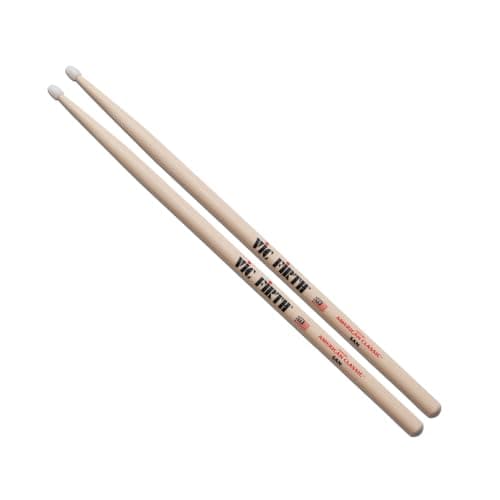
Drummers are the easiest musicians on this site to buy for. Buy sticks if you want something that cannot possibly be a duplicate — they are a consumable and every drummer is always running low. Buy musicians' earplugs if you want the gift they actually need, because drummers sit closer to a crash cymbal than anyone else in the room and are the last people to spend their own money on hearing protection. Do not buy a cymbal.
Every pick states its Starter Path band, and we have not played any of them — the method is on how we pick. Stick dimensions and the rest come from published specifications, cited at the bottom.
Sticks are the safest drum gift because they wear out — Vic Firth 5A is the near-universal size, though at 16 inches it is too long for a child under about ten. Musicians' earplugs are the one drummers skip for themselves and the one that matters most; make sure they are filtered plugs, not foam. Do not buy a cymbal unless they named it: weight, diameter and alloy are personal and expensive to get wrong.
Why drum gifts are easier than other instruments
Most musical gifts fail in one of two ways: they duplicate something the player owns, or they depend on a specification of their instrument that you do not know. Drums dodge both more than any other family here.
Drummers have consumables. Sticks chip at the shoulder, dent where they cross the hi-hat edge, and eventually break. A guitarist's accessories last years; a drummer's sticks last weeks to months depending on how hard they play. That makes sticks a gift with essentially no duplicate risk, which is rare.
Most of the kit is not size-dependent. A practice pad fits any drummer. Earplugs fit any drummer. A book fits any drummer. Compare that with violin, where almost every accessory is tied to the instrument's fractional size.
The one real exception is sticks for a child, which is the trap on this page and worth its own section.
The stick size trap
5A is the default stick and it is the right answer for almost everyone — published at 16 inches long and 0.565 inch in diameter, medium taper, hickory. Teachers assume it, drum shops stock walls of it, and a drummer with no stated preference is almost certainly using one.
For a child it is the wrong gift. Sixteen inches of hickory in a seven-year-old's hand is enough stick that the only way to control it is to grip hard at the butt, and a beginner who learns that grip spends a long time unlearning it later. The hand position a teacher wants depends on the stick being light enough to rebound off the drum without being forced.
So: 5A from about ten upward, and a 7A or a junior stick below that. If you do not know the child's age, this is a case for asking rather than guessing — our page on choosing drum sticks has the full sizing table.
The nylon-versus-wood tip question is much lower stakes: nylon is brighter on cymbals and lasts longer, wood is warmer, and nobody's technique depends on it.
The picks
Vic Firth American Classic 5AN#ad is the stick pick: US hickory, teardrop nylon tip, the standard 5A dimensions. Buy these if the drummer is roughly ten or older. Skip them if they are a younger child, or if they have told you they play a specific other model — a drummer with a model preference has it for a reason.
The Etymotic ER20XS#ad is the hearing protection pick, and the most important item on this page. Filtered plugs attenuate fairly evenly rather than stripping the treble the way foam does, which is why drummers will actually keep them in. Buy these if they play an acoustic kit at all. Skip them if you have seen them wearing plugs already. Our hearing protection roundup has the decibel reasoning, and how loud drums actually are makes the case better than we can here.
The Evans RealFeel two-sided practice pad#ad is the practical one. Two surfaces with different rebound, twelve inches, and it works on a snare stand or a lap. Its value is entirely about when practice is allowed to happen: a kit in a shared house has hours, and a pad does not. Buy this if their kit has restricted hours. Skip it if they already have a pad.
Stick Control#ad is the book. Forty eight pages of sticking patterns with no explanatory text, aimed squarely at developing the weak hand, and the first entry on Modern Drummer's 1993 list of the greatest drum books. Buy this if they have a teacher, or the self-discipline to use a book that tells you nothing. Skip it if they are a self-teaching beginner in month one, for whom it is 48 pages of apparently identical rows — our drum books roundup explains which method book comes first.
What we did not list, and why
Cymbals. The biggest trap. Weight, diameter and alloy all change the sound dramatically, drummers have strong preferences, and the money involved makes a mistake expensive. The only time a cymbal is a good gift is when they have sent you a link.
A throne. Genuinely one of the best upgrades a drummer can make and a terrible surprise gift, because height and seat shape are fitted to the player's legs and back. If they have mentioned a bad back, our drum thrones roundup is worth sending them rather than buying from.
Drum heads. Size-specific to their exact kit, and a drummer who wants new heads knows precisely which. A 14-inch snare head is useless on a 13-inch snare.
A kick pedal. A real upgrade and a specific one — and most drummers who are unhappy with their pedal can fix it with a spring adjustment and some oil, which is free. Our kick pedal roundup leads with exactly that.
Novelty items. The drumstick-shaped pen, the drum-kit mug, the “I'm a drummer” t-shirt. We have nothing against them and they are not what this page is for.
If you want to spend more
Three honest options, in order of how likely they are to be welcome.
Mutes or mesh heads, if the noise situation is the thing limiting their playing. The SoundOff Standard box set#ad covers toms, snare, kick and the cymbals — and the cymbals are the part cheaper mute packs leave out, which is why most people conclude mutes do not work. Our mutes roundup is the detail.
Lessons. Not a product and still the best thing on this page for a beginner.
A contribution toward a kit they choose. If the goal is to start somebody drumming, the kit decision involves floor space, household noise and whether acoustic or electronic makes sense — three things that are not yours to decide. How to buy your first drum set is written for them to read.
Quick picks
The gift that can never be a duplicate
Sticks chip, dent and snap, so a drummer is always running out. 5A is the near-universal default size. For: any drummer from about age ten. Skip if: the drummer is a small child, where 16 inches is too long.
| # | Product | Best for | Score | Price |
|---|---|---|---|---|
| 1 | Vic Firth American Classic 5AN16 inches, 0. | The gift any drummer will useThe honest floor | 8.6 | $15.49 · View on Amazon #ad How we’re funded |
The one they will not buy themselves
Musicians' earplugs attenuate evenly instead of muffling, so you can still hear what you are playing. Drummers sit closer to a crash cymbal than anyone and buy these last. For: every drummer alive. Skip if: they already wear them.
| # | Product | Best for | Score | Price |
|---|---|---|---|---|
| 1 | 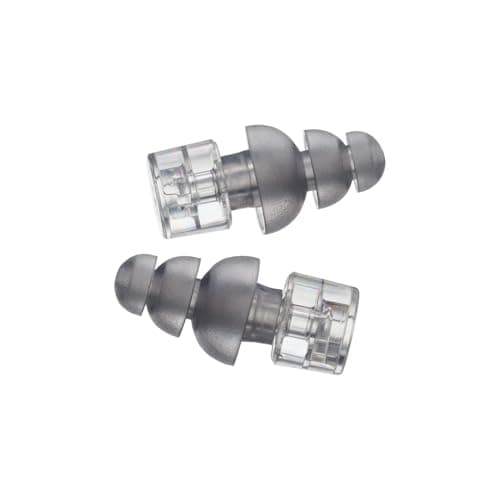 Etymotic ER20XSFiltered earplugs that cut level roughly evenly across the frequency range, so the kit still sounds like a kit — just quieter. | Hearing protection that still sounds rightEnough | 9.3 | Check price on Amazon → #ad How we’re funded |
If they need somewhere quiet to practice
A two-sided practice pad gives a drummer somewhere to work on hands when the kit is off-limits, which in most households is most of the time. For: anybody whose kit has restricted hours. Skip if: they own a pad already — most do eventually.
| # | Product | Best for | Score | Price |
|---|---|---|---|---|
| 1 | 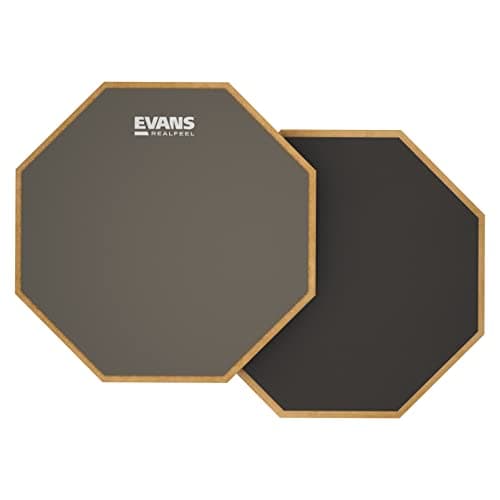 Evans RealFeel 12" two-sided practice padGum rubber on one side and neoprene on the other, so one pad gives you a realistic rebound surface and a harder, slower one for building control. | The standard practice padEnough | 9.0 | $44.99 · View on Amazon #ad How we’re funded |
The book every drummer ends up owning
48 pages of sticking patterns, no explanation, and the book Modern Drummer put first on its all-time list. For: a drummer with a teacher or the discipline to use it. Skip if: they are in their first month and teaching themselves.
| # | Product | Best for | Score | Price |
|---|---|---|---|---|
| 1 | 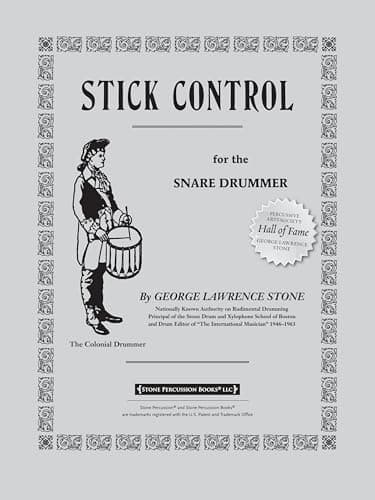 Stick Control: For the Snare Drummer48 pages of sticking patterns and nothing else - no tunes, no explanations, no audio. | Hand technique, for the next ten yearsEnough | 8.4 | $12.99 · View on Amazon #ad How we’re funded |
The picks in full
Vic Firth American Classic 5AN
Vic FirthBest for: The gift any drummer will use
16 inches, 0.565 inch diameter, medium taper, US hickory, nylon teardrop tip. The 5A is the default stick size for almost every drummer alive, which makes it the one drum gift you can buy without knowing anything about their kit.
Published specifications
- Length:
- 16.00" (40.64 cm)
- Diameter:
- 0.565" (1.44 cm)
- Taper:
- Medium
- Material:
- Premium US hickory
- Tip:
- Nylon, teardrop shape
- Quantity:
- One pair
What it gets right
- 5A is the near-universal default size, so this fits a beginner, a teenager and a working drummer equally
- Sticks are a consumable — they chip and break — so this is the rare gift that cannot be a duplicate of something they own
- A nylon tip gives a brighter, more defined cymbal attack than wood and lasts longer against a hi-hat edge
- Hickory is the standard shaft wood: stiffer than maple, less brittle than oak
Where it gives ground
- Nylon tips can come loose and fly off after heavy use; wood-tip 5A is the alternative and a matter of taste
- A 16 inch stick is long for a child under about ten, who is usually better on a 7A or a junior stick
- One pair is a small gift on its own and reads better alongside something else
- A drummer with a strong preference may already be committed to a different model
What it is not good at
Young children. At 16 inches and 0.565 inch this is an adult-sized stick, and a seven-year-old handed one learns a grip that has to be corrected later.
How the specs score against a beginner’s needs
Scores are our reading of the published specifications above against what a beginner physically needs. They are not test results — we have not played this instrument.
Specifications from George's Music — Vic Firth American Classic 5AN published specifications (16.00 in length, 0.565 in diameter, medium taper, premium US hickory, teardrop nylon tip).
Etymotic ER20XS
Etymotic ResearchBest for: Hearing protection that still sounds right
Filtered earplugs that cut level roughly evenly across the frequency range, so the kit still sounds like a kit — just quieter. Reusable, with a cord and a case.
Published specifications
- Type:
- High-fidelity filtered earplug, reusable
- Attenuation:
- Up to 20 dB sound reduction
- Response:
- Configured to replicate the natural response of the ear canal
- In the box:
- Neck cord, carrying case
- Sizes:
- Standard and large
What it gets right
- Even attenuation across frequencies, so cymbals do not disappear the way they do behind foam plugs
- Reusable rather than disposable, which is what makes them actually get worn every session
- The neck cord is the difference between owning them and losing them in week two
Where it gives ground
- Two sizes, and getting the wrong one means a poor seal and much less protection than the rating suggests
- They sit deeper in the ear than foam, which takes some getting used to
What it is not good at
Extremely loud environments on their own. Twenty decibels is right for a drum kit; a loud stage may need more, and no earplug helps if it is not sealed.
How the specs score against a beginner’s needs
Scores are our reading of the published specifications above against what a beginner physically needs. They are not test results — we have not played this instrument.
Specifications from Etymotic ER20XS published specifications.
Evans RealFeel 12" two-sided practice pad
EvansBest for: The standard practice pad
Gum rubber on one side and neoprene on the other, so one pad gives you a realistic rebound surface and a harder, slower one for building control. The default recommendation.
Published specifications
- Diameter:
- 12"
- Surfaces:
- Two — natural gum rubber and neoprene
- Gum side:
- Responds much the way a drumhead does
- Manufacture:
- Designed, engineered and made in the USA
What it gets right
- The gum side rebounds close enough to a real head that the stroke you build on it works on a kit
- The second surface is slower and harder, which is genuinely useful for building hand strength rather than just speed
- 12 inches is snare-sized, so it mounts on a snare stand at the right height
Where it gives ground
- Heavier than a single-sided pad, which matters if it lives in a backpack
- No stand mount on the pad itself in the basic version — check what you are buying
What it is not good at
Teaching anything involving feet. A pad is a hands tool; limb independence needs a kit, and no amount of pad work substitutes.
How the specs score against a beginner’s needs
Scores are our reading of the published specifications above against what a beginner physically needs. They are not test results — we have not played this instrument.
Specifications from Evans RealFeel practice pad published description.
Stick Control: For the Snare Drummer
Stone Percussion BooksBest for: Hand technique, for the next ten years
48 pages of sticking patterns and nothing else - no tunes, no explanations, no audio. Modern Drummer named it the first of its 25 greatest drum books in 1993, and it is the one book on this page a drummer will still be using in twenty years.
Published specifications
- Author:
- George Lawrence Stone
- Pages:
- 48
- Publisher:
- Stone Percussion Books, LLC
- Contents:
- Single-beat combinations, triplets, short roll combinations, flam beats, flam triplets, dotted notes, short roll progressions
- Stated aim:
- Control, speed, flexibility, touch, endurance and coordination, with extra attention to the weak hand
- Publisher item:
- Alfred 00-32749
What it gets right
- The weak-hand emphasis is the reason it works: the left hand of a right-handed drummer is the limiting factor for years and this is the standard fix
- Works on a practice pad, a pillow or a kit, so it needs nothing bought alongside it
- 48 pages that genuinely last a decade, which no method book on this page can claim
- Every drum teacher knows it, so a student arriving with it is on familiar ground
Where it gives ground
- Not a method: there is no teaching, no notes, no sequence explained - just pages of patterns
- Deeply boring without a teacher or a metronome and a reason
- Nothing about the drum set, feet, or reading rhythms in context
- No audio and no video in any edition
What it is not good at
Being a first book. It assumes someone has already told you how to hold a stick and what the patterns are for; bought alone by a beginner it is 48 pages of apparently identical rows.
How the specs score against a beginner’s needs
Scores are our reading of the published specifications above against what a beginner physically needs. They are not test results — we have not played this instrument.
Specifications from Alfred Music — Stick Control: For the Snare Drummer (item 00-32749): George Lawrence Stone, Stone Percussion Books LLC, 48 pages, contents and stated aims.
Questions people actually ask
What is the best gift for a drummer?
Sticks#ad if you want something certain, and musicians' earplugs#ad if you want something they genuinely need and will not buy for themselves. Sticks are a consumable, so unlike almost every other musical gift they cannot duplicate something they already own.
What size drumsticks should I buy?
5A for anybody from roughly age ten upward — it is the default size that most drummers use and most teachers assume. For a younger child, 5A at 16 inches and 0.565 inch diameter is genuinely too much stick, and a 7A or a purpose-made junior stick is the right call. Our page on choosing drum sticks has the sizing properly.
Should I buy them a cymbal?
No, unless they have told you exactly which one. Cymbals are chosen by weight, diameter and alloy, they are the most personal-taste component on a kit, and they are expensive enough that getting it wrong is a real waste. They are also the one component where a drummer will have opinions they have not told you about. Our cymbal pack roundup is for the drummer to read, not the gift buyer.
Are earplugs an insulting gift?
It is a reasonable worry and the answer is no, as long as they are musicians' earplugs rather than foam ones. Foam plugs cut the high frequencies far more than the lows, so the music sounds wrong and drummers refuse to wear them. Filtered plugs attenuate roughly evenly across the spectrum, so the kit sounds like itself, quieter. That distinction is the whole gift.
What about a practice pad — will they already have one?
Possibly, and it is the main duplicate risk on this page. Most drummers acquire a pad eventually, but plenty of beginners with a kit at home never get round to it, and a pad is what makes practice possible at eleven at night. If you know they have one, the book is the better pick.
Can I gift a drum kit?
You can, and think hard first — not because of taste but because of logistics. A kit needs floor space, a tolerant household and, in most homes, a serious conversation about noise. Our pages on how loud drums actually are and drums for apartments are the honest reading before that purchase, and an electronic kit is usually the answer.
Sources
- George's Music — Vic Firth American Classic 5AN published specifications (16.00 in, 0.565 in diameter, medium taper, US hickory, teardrop nylon tip)
- Etymotic — ER20XS high-fidelity earplugs specifications
- Evans — RealFeel two-sided practice pad product page
- Alfred Music — Stick Control: For the Snare Drummer (item 00-32749)
Still deciding?
Every recommendation on this site is built the same way, and the method is published in full — including what we do not do and what would get a pick dropped.
Read next
- Drum accessories you actually need
Sticks, a pad, hearing protection and a throne, in priority order, plus the upgrades that genuinely change how a cheap kit sounds.
- Best hearing protection for drummers
Why foam plugs are the wrong tool, filtered plugs versus isolation headphones, and what the exposure numbers actually say.
- Best drum practice pads
Gum rubber versus neoprene, why 12 inches is the right size, and the honest limit of what pad practice builds.
- Best drum books for beginners
Snare method against drumset method is the whole first decision, and it is not printed on the cover in plain language. Four books on published contents, page counts and what each one leaves out.
- How to choose drum sticks
What the numbers and letters mean, which size suits which player, tip materials, and why sticks are a consumable.
- Best stocking stuffers for musicians
Under about twenty-five dollars and useful whatever they play. Four that pass, three that are usually duplicates, and the one segment where you do need to know the instrument.