Drums
Best drum practice pads
Every drum teacher assigns pad work, and it is the one piece of drum gear that is silent, portable and cheap. Here is which one and why.
By Sawyer V. · Published · Last updated
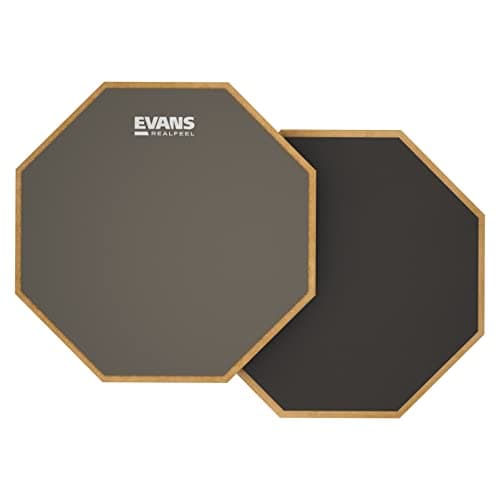
A practice pad is the cheapest thing in drumming and one of the most useful. It is also widely misunderstood as a budget substitute for a kit, which it is not — it is a different tool that does one half of the job extremely well.
Both picks state their Starter Path band, and we have not played them — the method is on how we pick.
Buy a 12 inch pad with a gum rubber playing surface, mounted on a snare stand at real playing height. Gum rubber rebounds close enough to a drumhead that the stroke transfers; 12 inches is snare-sized so the height and geometry are right.
What the surface actually does
Drumming technique is built on rebound. A great deal of what a drummer learns is controlling the way a stick bounces back — a double stroke, for instance, is one motion producing two hits because the stick returns on its own.
That means the practice surface has to bounce like a drum, or you build a stroke that does not work on one. Gum rubber does. Hard plastic and thin foam do not, and the hours spent on them teach a lifting motion instead of a rebounding one.
The Evans RealFeel 12" two-sided practice pad#ad puts gum rubber on one face and a harder neoprene on the other. The neoprene side is slower and returns less energy, which sounds like a downside and is genuinely useful: practicing on a resistant surface builds hand strength, and then everything feels easy back on the rebounding side.
The Evans RealFeel 12" single-sided practice pad#ad has the same gum surface without the second face. For a beginner that second surface is not the point yet, so this is a perfectly good first pad and lighter to carry.
Why 12 inches and why a stand
A snare drum is 13 or 14 inches. A 12 inch pad mounts on a snare stand and sits at the same height and angle a real snare does, which means everything you practice is in the right physical position.
Small 6 inch pads exist and they are for a bag, not for daily practice. Used as a main surface on a table, they encourage a hunched, wrist-only stroke at the wrong height, and that habit shows the moment the player sits at a kit.
If you already own a kit you have a snare stand. If you do not, a cheap one costs little and is the difference between a pad you practice on properly and a pad on a coffee table.
What pad practice genuinely builds
Rudiments. Single strokes, double strokes, paradiddles, flams, rolls — the vocabulary of drumming, all of it played on one surface with two hands. A pad is the correct tool for this, not a compromise.
Evenness. Getting both hands to strike at identical volume is thousands of repetitions, and a pad exposes unevenness with unusual clarity because there is no drum sound to hide behind.
Timing. A pad and a metronome is the entire apparatus for building reliable time, which is the single most valuable thing a drummer has.
What it cannot build
Limb independence — hands and feet doing different things at once, which is the defining skill of kit drumming and cannot be approximated on one surface.
Anything with feet. Bass drum technique needs a pedal. Separate bass-pedal practice pads exist and are worth having if a pad is the main instrument for a while.
Moving around a kit and balancing volume between drums. Both need more than one surface.
The full comparison of what each tool teaches is in drum kit or practice pad first.
What to skip
Pads with a hard plastic playing surface. Loud, no rebound, and tiring on the wrists. They are cheaper for a reason.
Very small pads as a primary surface, covered above.
Pads with built-in electronics and counters. The metronome on any phone is better, free, and does not need batteries.
What else to buy
Sticks, obviously — and a lighter pair than you would use on a kit is easier on the hands for long pad sessions. A snare stand. A metronome, which is free on a phone.
And if there is an acoustic kit in the house, hearing protection before anything else on that list.
Quick picks
If you only buy one pad
Gum rubber on one side for realistic rebound, harder neoprene on the other for control work. One pad, two jobs.
| # | Product | Best for | Score | Price |
|---|---|---|---|---|
| 1 | Evans RealFeel 12" two-sided practice padGum rubber on one side and neoprene on the other, so one pad gives you a realistic rebound surface and a harder, slower one for building control. | The standard practice padEnough | 9.0 | $44.99 · View on Amazon #ad How we’re funded |
If it needs to travel, or the budget is tight
The same gum rubber playing surface without the second side. Lighter and cheaper, and the surface that matters is identical.
| # | Product | Best for | Score | Price |
|---|---|---|---|---|
| 1 | 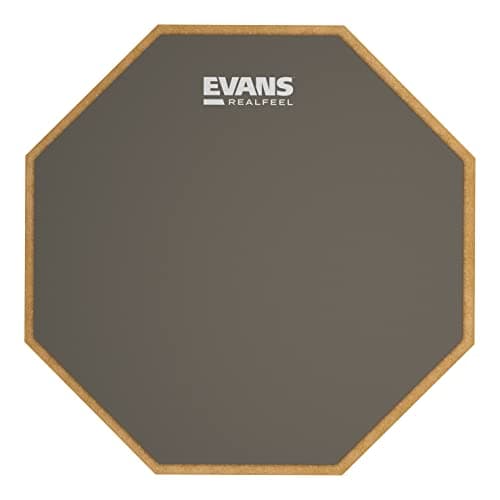 Evans RealFeel 12" single-sided practice padThe same gum rubber playing surface as the two-sided pad, without the neoprene side. | Lighter, one surfaceThe honest floor | 8.5 | $39.99 · View on Amazon #ad How we’re funded |
The picks in full
Evans RealFeel 12" two-sided practice pad
EvansBest for: The standard practice pad
Gum rubber on one side and neoprene on the other, so one pad gives you a realistic rebound surface and a harder, slower one for building control. The default recommendation.
Published specifications
- Diameter:
- 12"
- Surfaces:
- Two — natural gum rubber and neoprene
- Gum side:
- Responds much the way a drumhead does
- Manufacture:
- Designed, engineered and made in the USA
What it gets right
- The gum side rebounds close enough to a real head that the stroke you build on it works on a kit
- The second surface is slower and harder, which is genuinely useful for building hand strength rather than just speed
- 12 inches is snare-sized, so it mounts on a snare stand at the right height
Where it gives ground
- Heavier than a single-sided pad, which matters if it lives in a backpack
- No stand mount on the pad itself in the basic version — check what you are buying
What it is not good at
Teaching anything involving feet. A pad is a hands tool; limb independence needs a kit, and no amount of pad work substitutes.
How the specs score against a beginner’s needs
Scores are our reading of the published specifications above against what a beginner physically needs. They are not test results — we have not played this instrument.
Specifications from Evans RealFeel practice pad published description.
Evans RealFeel 12" single-sided practice pad
EvansBest for: Lighter, one surface
The same gum rubber playing surface as the two-sided pad, without the neoprene side. Lighter and cheaper, and for a beginner the second surface is not the point yet.
Published specifications
- Diameter:
- 12"
- Surface:
- Single — natural gum rubber
- Response:
- Realistic stick rebound, consistent across the surface
- Manufacture:
- Designed, engineered and made in the USA
What it gets right
- Identical playing surface to the two-sided pad, which is the part that matters
- Lighter, so it actually travels
- The cheapest genuinely good pad, which makes it the right first one
Where it gives ground
- One surface, so no harder option for strength work later
- The flat back slides on a smooth table without a stand
What it is not good at
Being the last pad a committed drummer owns. Most people who keep drumming end up wanting the second surface eventually.
How the specs score against a beginner’s needs
Scores are our reading of the published specifications above against what a beginner physically needs. They are not test results — we have not played this instrument.
Specifications from Evans RealFeel single-sided pad published description.
Questions people actually ask
What size practice pad should I get?
12 inches. That is snare-sized, so it mounts on a snare stand at proper playing height and the stroke you build translates directly. Smaller pads are fine for a bag and encourage a cramped, wrist-only motion when used as the main surface.
Is a practice pad worth it if I already have a kit?
Yes, and most drummers own both. A pad allows hand technique work at any hour, in any room, without setting anything up. It removes every excuse not to practice rudiments, which is exactly why teachers assign pad homework.
Can you learn drums on just a practice pad?
You can learn stick control, rudiments, hand speed, evenness and timing — a genuine and substantial half of drumming. You cannot learn limb independence, which needs four limbs on four things. A pad alone does not produce a drummer.
Gum rubber or neoprene?
Gum rubber for most practice — it rebounds much the way a drumhead does, so the stroke you build works on a real drum. Neoprene is harder and slower, which makes it useful for deliberately building hand strength rather than speed.
Sources
Still deciding?
Every recommendation on this site is built the same way, and the method is published in full — including what we do not do and what would get a pick dropped.
Read next
- Best drum books for beginners
Snare method against drumset method is the whole first decision, and it is not printed on the cover in plain language. Four books on published contents, page counts and what each one leaves out.
- Drum kit or practice pad first?
What a pad genuinely teaches, what it cannot, and when starting on one is the right call rather than a compromise.
- How loud are drums?
Measured decibel levels against the NIOSH limit, what travels through walls and floors, and which quieting options actually work.
- Best beginner drum sets: complete kits for teens and adults
Complete acoustic and electronic kits for adult players, with the total-purchase problem and the noise question both addressed.
- Best hearing protection for drummers
Why foam plugs are the wrong tool, filtered plugs versus isolation headphones, and what the exposure numbers actually say.
- Choosing a school band instrument
Which instrument suits which child, what school rental covers, and the honest case for not buying in year one.