Start Here
Best stocking stuffers for musicians
Small, cheap and instrument-independent is a narrow brief. Four things pass it, and most of the obvious candidates do not.
By Sawyer V. · Published · Last updated
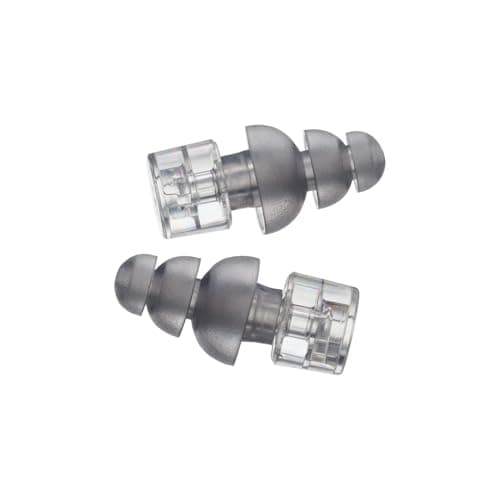
The brief for a stocking stuffer is narrow: small, under about twenty-five dollars, and useful without knowing which instrument they play. Four things pass it. Musicians' earplugs are the best of them — universal, cheap, and almost nobody buys their own. Then a clip-on tuner for any string player, and a short theory workbook, which is the one nobody thinks of. If you know they drum, sticks are the only genuinely consumable musical gift there is.
Every pick states its Starter Path band, and we have not tested any of them — the method is on how we pick. Prices are live and date-stamped; every pick here was under about twenty-five dollars when this page was written.
Best under-$25 musical gift: filtered musicians' earplugs — universal across every instrument, and the one thing musicians consistently fail to buy for themselves. Make sure they are filtered, not foam: foam plugs cut the treble so badly that players take them out. Then a clip-on tuner for a string player and a 40-page theory workbook for anyone. Avoid strings, picks and cables — gauge-specific, size-specific or already owned.
The two filters that eliminate most ideas
Instrument independence. Most music accessories serve one instrument and some serve one size of one instrument. A capo is a guitar object. A reed case is a clarinet object. A shoulder rest fits one fractional size of violin. The moment a gift needs you to know which instrument and which size, it stops being a stocking stuffer and becomes research.
Duplicate risk. The small cheap accessories are exactly the things a player buys for themselves in the first few months. By month three a guitarist owns picks, a cable, a tuner and a strap. Giving another one is not a disaster; it is just not a gift.
Run both filters and the field narrows quickly. What survives is either something genuinely universal, or something a musician specifically avoids spending their own money on — which is the insight behind the top pick.
The picks
The Etymotic ER20XS#ad is the best answer on this page. Filtered earplugs attenuate roughly evenly across the frequency range rather than stripping the highs the way foam does, which is why a musician will keep them in and why foam plugs end up in a pocket after one song. Buy these if they play with other people, in any genre, on any instrument — and especially if they drum or play in a band. Skip them if you have seen them wearing plugs already. Our hearing protection roundup has the decibel case.
The D'Addario Micro Headstock Tuner#ad clips behind the headstock of any fretted or bowed string instrument and reads the neck's vibration rather than the room's noise, so it works in a loud house. Buy this if they play guitar, bass, mandolin or banjo. Skip it if they play ukulele — ukulele players almost always have one — or if you can see one already fitted.
Alfred's Essentials of Music Theory, Book 1#ad is the surprise. Forty pages, lessons 1 to 25, instrument-neutral, with exercises and a review at the end of each unit. It covers the staff through to sharps, flats and half steps — which is most of what a player needs in their first two years. Buy this if they have never done any theory, whatever they play. Skip it if they are already working through a course.
Vic Firth 5AN sticks#ad are the one pick that needs information, and they earn their place because sticks are the only genuinely consumable gift in music. They chip, dent and break, so a drummer is always running low. Buy these if you know they drum and they are about ten or older. Skip them if they are a younger child — 16 inches and 0.565 inch is an adult stick, and our stick sizing guide has the alternative.
What we left off, and why
Guitar picks. The single most-suggested musical stocking stuffer and the single most likely duplicate. Every guitarist has a tin.
Cables. Any electric player owns several, and the useful variable — the length that suits their room — is the thing you do not know.
A metronome. Genuinely useful for a string or band player and redundant for anybody with a keyboard, since every digital keyboard has one built in and every phone has a free app. It is a good gift for a specific person rather than a safe gift for an unknown one. Our metronome roundup covers the standalone units worth owning.
Strings. Gauge, family and — for violin and ukulele — instrument size. Three ways to be wrong on a cheap item.
A capo. Guitar-specific and a strong gift there, which is why it is on our guitar gifts page instead.
Novelty items. The treble-clef mug, the keyboard socks, the “drummer” keyring. Nothing wrong with them and they are not what somebody searching for a musical gift is trying to find.
If you want to spend a little more
The under-twenty-five bracket is genuinely restrictive, and two things just above it change a player's week rather than their day.
Headphones, for anybody with a digital instrument. A keyboard or an electronic drum kit with headphones can be played at eleven at night, which converts time that was not available into practice time. That is a bigger effect than any accessory on this page.
A real music stand, for anybody working from printed music. The wire collapsible kind that comes free will not hold a method book open, and a student reading off a bed develops a posture problem rather than a reading habit. Our music stands roundup covers them.
And if the person does not play anything yet, none of this is the gift. Our page on first instrument gifts covers how to start somebody without choosing the instrument for them.
Quick picks
Universal — works for any musician
Filtered earplugs that attenuate evenly instead of muffling, so the music still sounds like music. Any musician who plays with others needs them and almost nobody buys their own. For: everyone. Skip if: they already wear them.
| # | Product | Best for | Score | Price |
|---|---|---|---|---|
| 1 | Etymotic ER20XSFiltered earplugs that cut level roughly evenly across the frequency range, so the kit still sounds like a kit — just quieter. | Hearing protection that still sounds rightEnough | 9.3 | $17.81 · View on Amazon #ad How we’re funded |
Universal — for anything with strings
A clip-on tuner fits any guitar, ukulele, violin, mandolin or banjo ever built. For: any string player. Skip if: you have seen one clipped to their headstock, which is the real duplicate risk here.
| # | Product | Best for | Score | Price |
|---|---|---|---|---|
| 1 | 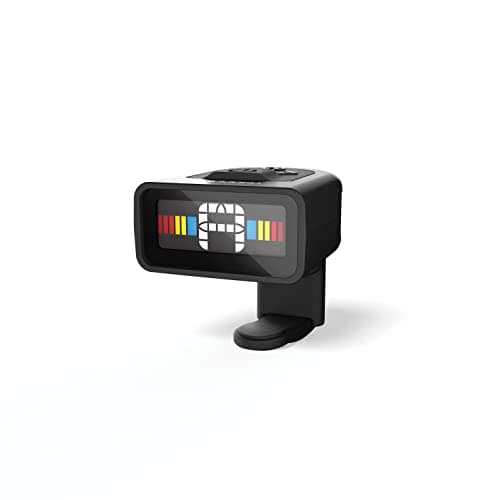 D'Addario Micro Headstock Tuner (PW-CT-12)The tuner that disappears. | Staying on the headstockThe honest floor | 7.4 | $21.99 · View on Amazon #ad How we’re funded |
Universal — and the one nobody thinks of
A forty-page theory workbook, instrument-neutral, cheap, and short enough that a real person finishes it. For: any player who has never done theory. Skip if: they are already working through one.
| # | Product | Best for | Score | Price |
|---|---|---|---|---|
| 1 | 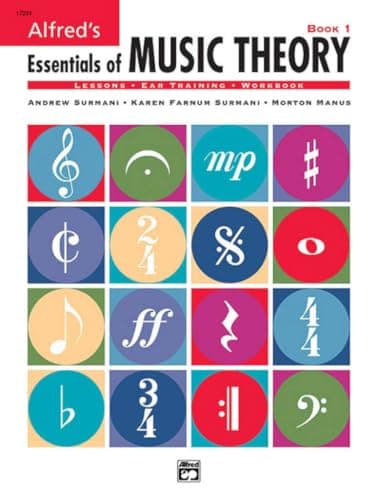 Alfred's Essentials of Music Theory, Book 140 pages covering lessons 1 to 25: the staff, clefs, note values, time signatures, ties and slurs, repeats, dynamics, and sharps and flats. | The first 25 lessons, cheaplyThe honest floor | 8.0 | $9.99 · View on Amazon #ad How we’re funded |
Only if you know they drum
Sticks are the one genuinely consumable musical gift, so they are never a duplicate. For: a drummer aged about ten or older. Skip if: they are not a drummer, or they are a small child — 16 inches is too much stick.
| # | Product | Best for | Score | Price |
|---|---|---|---|---|
| 1 | 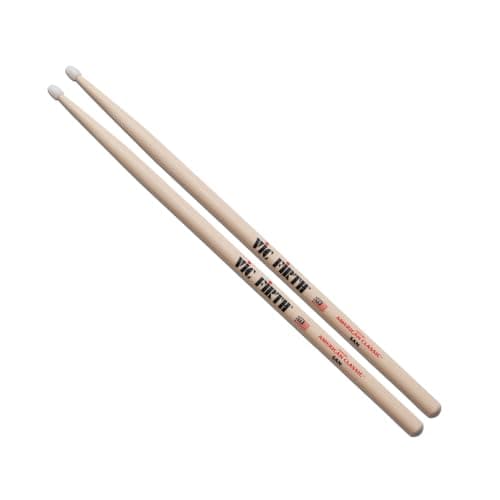 Vic Firth American Classic 5AN16 inches, 0. | The gift any drummer will useThe honest floor | 8.6 | $15.49 · View on Amazon #ad How we’re funded |
The picks in full
Etymotic ER20XS
Etymotic ResearchBest for: Hearing protection that still sounds right
Filtered earplugs that cut level roughly evenly across the frequency range, so the kit still sounds like a kit — just quieter. Reusable, with a cord and a case.
Published specifications
- Type:
- High-fidelity filtered earplug, reusable
- Attenuation:
- Up to 20 dB sound reduction
- Response:
- Configured to replicate the natural response of the ear canal
- In the box:
- Neck cord, carrying case
- Sizes:
- Standard and large
What it gets right
- Even attenuation across frequencies, so cymbals do not disappear the way they do behind foam plugs
- Reusable rather than disposable, which is what makes them actually get worn every session
- The neck cord is the difference between owning them and losing them in week two
Where it gives ground
- Two sizes, and getting the wrong one means a poor seal and much less protection than the rating suggests
- They sit deeper in the ear than foam, which takes some getting used to
What it is not good at
Extremely loud environments on their own. Twenty decibels is right for a drum kit; a loud stage may need more, and no earplug helps if it is not sealed.
How the specs score against a beginner’s needs
Scores are our reading of the published specifications above against what a beginner physically needs. They are not test results — we have not played this instrument.
Specifications from Etymotic ER20XS published specifications.
D'Addario Micro Headstock Tuner (PW-CT-12)
D'AddarioBest for: Staying on the headstock
The tuner that disappears. It clips behind the headstock, reads vibration through the wood rather than through a microphone, and the screen rotates to four positions so it can be read from wherever it ends up.
Published specifications
- Type:
- Clip-on chromatic headstock tuner
- Sensing:
- Piezo — D'Addario cites improved piezo control for noisy environments
- Display:
- Full color, 4 screen orientations (2 vertical, 2 horizontal)
- Calibration:
- 410-480 Hz
- Power:
- CR2032 battery included
- Mounting:
- Ratchet clamp
- Accuracy:
- Not published by D'Addario
What it gets right
- Four screen orientations, so it reads correctly clipped to the front or the back of a headstock
- Calibration from 410 to 480 Hz covers ensembles that do not tune to A440
- Vibration sensing rather than a microphone, which is why it still works in a room with a television on
- Small enough to leave clipped on permanently
Where it gives ground
- CR2032 coin cell — a battery you have to go and find when it dies, and there is no rechargeable option in this model
- D'Addario publishes no accuracy figure in cents, so its precision cannot be compared on paper with tuners that do
- No weight or dimensions published, despite the size being the selling point
What it is not good at
Wind and brass. It reads vibration through a solid headstock, so there is nothing for it to clip to on a flute or a trumpet.
How the specs score against a beginner’s needs
Scores are our reading of the published specifications above against what a beginner physically needs. They are not test results — we have not played this instrument.
Specifications from D'Addario — Micro Headstock Tuner product page.
Alfred's Essentials of Music Theory, Book 1
Alfred MusicBest for: The first 25 lessons, cheaply
40 pages covering lessons 1 to 25: the staff, clefs, note values, time signatures, ties and slurs, repeats, dynamics, and sharps and flats. It is a workbook with exercises and a review at the end of each unit, which is what makes theory stick.
Published specifications
- Authors:
- Andrew Surmani, Karen Farnum Surmani and Morton Manus
- Pages:
- 40
- Lessons:
- 1 to 25
- Covers:
- Staff, notes and pitches; treble and bass clefs; grand staff and ledger lines; note values; 2/4, 3/4 and 4/4; whole, half and quarter notes and rests; dotted notes; ties and slurs; repeats and endings; eighth notes; dynamics, tempo and articulation; D.C., D.S., coda and fine; flats, sharps and naturals; whole and half steps
- Format:
- Workbook with exercises and an end-of-unit review
- ISBN:
- 978-0-88284-894-5
What it gets right
- Forty pages is a quantity a real person finishes, which no 300-page theory reference can claim
- Exercises and unit reviews rather than explanation alone - theory is a doing subject and this is built that way
- Instrument-neutral, so it serves a guitarist, a drummer and a pianist equally
- The cheapest book on this page, and genuinely complete for what it covers
Where it gives ground
- Stops at sharps, flats and half steps - no key signatures, scales, intervals or chords
- The ear-training CDs it refers to are sold separately
- No answer key included; Alfred sells the teacher's answer key as its own item
- Workbook format means writing in it, so it cannot be passed to a second child
What it is not good at
Getting anyone to chords. It ends well before key signatures and intervals, which is where theory starts being useful to a guitarist or songwriter. Book 1 is a third of the course, priced accordingly.
How the specs score against a beginner’s needs
Scores are our reading of the published specifications above against what a beginner physically needs. They are not test results — we have not played this instrument.
Specifications from Alfred Music — Alfred's Essentials of Music Theory, Book 1 (item 00-17231): Surmani, Surmani and Manus, 40 pages, Lessons 1-25 contents, ISBN 978-0-88284-894-5.
Vic Firth American Classic 5AN
Vic FirthBest for: The gift any drummer will use
16 inches, 0.565 inch diameter, medium taper, US hickory, nylon teardrop tip. The 5A is the default stick size for almost every drummer alive, which makes it the one drum gift you can buy without knowing anything about their kit.
Published specifications
- Length:
- 16.00" (40.64 cm)
- Diameter:
- 0.565" (1.44 cm)
- Taper:
- Medium
- Material:
- Premium US hickory
- Tip:
- Nylon, teardrop shape
- Quantity:
- One pair
What it gets right
- 5A is the near-universal default size, so this fits a beginner, a teenager and a working drummer equally
- Sticks are a consumable — they chip and break — so this is the rare gift that cannot be a duplicate of something they own
- A nylon tip gives a brighter, more defined cymbal attack than wood and lasts longer against a hi-hat edge
- Hickory is the standard shaft wood: stiffer than maple, less brittle than oak
Where it gives ground
- Nylon tips can come loose and fly off after heavy use; wood-tip 5A is the alternative and a matter of taste
- A 16 inch stick is long for a child under about ten, who is usually better on a 7A or a junior stick
- One pair is a small gift on its own and reads better alongside something else
- A drummer with a strong preference may already be committed to a different model
What it is not good at
Young children. At 16 inches and 0.565 inch this is an adult-sized stick, and a seven-year-old handed one learns a grip that has to be corrected later.
How the specs score against a beginner’s needs
Scores are our reading of the published specifications above against what a beginner physically needs. They are not test results — we have not played this instrument.
Specifications from George's Music — Vic Firth American Classic 5AN published specifications (16.00 in length, 0.565 in diameter, medium taper, premium US hickory, teardrop nylon tip).
Questions people actually ask
What is a good cheap gift for a musician?
Musicians' earplugs#ad. They work for every instrument, they cost about twenty dollars, and essentially no musician buys their own — which makes them the rare cheap gift that is both universal and unlikely to be a duplicate. The important detail is that they are filtered plugs rather than foam ones; foam strips the treble and musicians refuse to wear them.
What small gifts are usually duplicates?
Picks, cables and capos for guitarists; a tuner for a ukulele player (usually bought in the same transaction as the instrument); and a metronome for anyone with a keyboard, since every digital keyboard has one built in. None of these are bad objects. They are just the things a player already owns by month three.
Is a tuner a safe stocking stuffer?
For a string player, yes, with one caveat: it is the most likely single duplicate on this page, because a tuner is often the first accessory anybody buys. If you can glance at their instrument and there is no tuner clipped to the headstock, it is a good gift. It is a better gift for a guitarist than a ukulele player, who almost certainly has one.
Can I buy strings as a stocking stuffer?
Only if you can photograph the packet they currently use. Strings are gauged, and acoustic, electric and classical sets are three incompatible families — and for violin and ukulele the set is sized to the instrument as well. It looks like the perfect small gift and it has more ways to be wrong than almost anything else here.
What about sheet music or a songbook?
Good if you know their level, risky otherwise. A book of intermediate arrangements given to a three-month beginner reads as a vote of confidence and plays as a wall. Anything labeled “easy” or part of a beginner method is the safe bracket.
Is a theory book a boring gift?
A bit, and it is the one on this page most likely to still be in use in two years. The reason we picked the 40-page Book 1 rather than the 120-page complete edition is precisely that: a short workbook gets finished, and a finished forty pages teaches more than an abandoned three hundred. Our music theory books roundup explains that trade.
Sources
Still deciding?
Every recommendation on this site is built the same way, and the method is published in full — including what we do not do and what would get a pick dropped.
Read next
- Instrument gifts that actually get played
What to give when you cannot ask the recipient first: four instruments that work out of the box, plus the ten-dollar accessory that saves any of them.
- Best metronomes for beginners
Why an app is not always enough, the four specs that matter, and three metronomes from a card-sized digital to a wind-up mechanical.
- Best music theory books for beginners
Workbook or prose, and how much theory you actually need. Four books with published page counts and contents, including the one that costs double for two CDs nobody can play.
- Best gifts for guitar players
Strings and straps are the two gifts that go wrong, because both depend on specs of their specific guitar. Four that fit any guitar, ranked by how certain you can be.
- Best gifts for drummers
Sticks wear out, so they are never a duplicate. Hearing protection is the gift drummers skip for themselves. Four picks, and why a cymbal is the one to avoid.
- Best gifts for music teachers
Teachers buy their own studio equipment and it shows. Four things they use every lesson, what changes if they travel to students, and why instrument accessories are the wrong instinct.