Drums
How to buy your first drum set
Drums is the only instrument on this site where the room decides the purchase before the player does, and pretending otherwise is how kits end up sold on.
By Sawyer V. · Published · Last updated
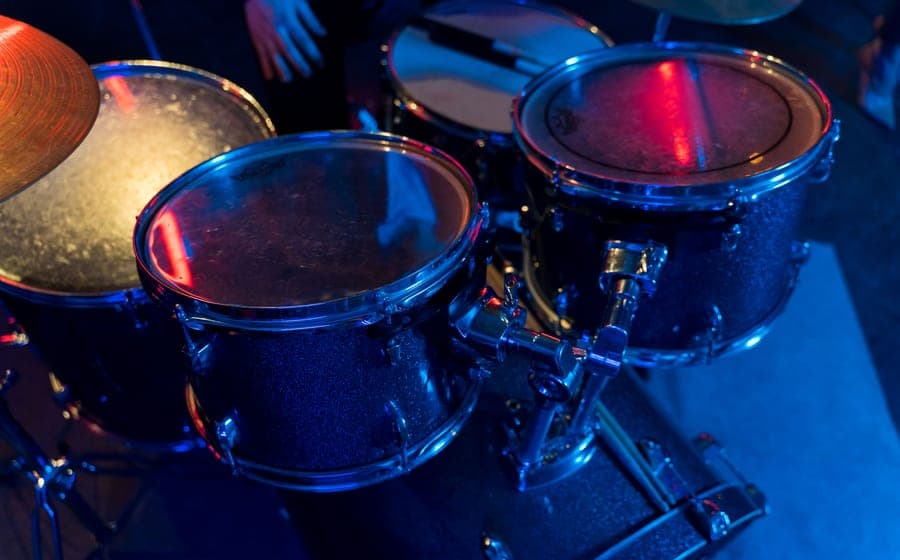
Drums is the instrument where a first purchase most often gets sold on within a year, and the reason is almost never that the player lost interest. It is that the kit did not fit the room, or that the box turned out not to contain a kit.
Five decisions, in the order that avoids both. The picks state their Starter Path band, and we have not physically tested any of them.
Decide the room first, then acoustic or electronic, then the size, then check what is actually in the box. In a shared building the answer is an electronic kit with mesh heads. In a detached house or a garage an acoustic kit teaches more.
One: the room, before the player
This ordering is deliberate and it is the opposite of how every other instrument on this site works.
A drum kit is genuinely loud — not loud like a television, loud like machinery — and no amount of enthusiasm survives a household that cannot tolerate it. The measured picture is in how loud are drums, and it is worth reading before spending anything.
Ask three questions. Is there anyone below you? Is there a shared wall? Is there a time of day when playing is impossible? If the answer to any of them is yes, the acoustic option has already been decided against, whatever the budget says.
Two: acoustic or electronic
Electronic if the room is shared. The Alesis Nitro Max Kit#ad is the kit: mesh heads on every pad, a dual-zone snare, Bluetooth audio for playing along and USB-MIDI for recording later. Mesh rather than rubber is the specification that matters, because rubber is tiring to play and teaches the wrong rebound.
Acoustic if you have the space and the tolerance. An acoustic kit teaches two things an entry electronic kit cannot: how a cymbal actually responds, and dynamics across the whole range from a whisper to a full hit. The Pearl Roadshow RS525SC#ad is the complete option.
The honest comparison, including what each one costs you long-term, is in acoustic versus electronic drums, and the apartment-specific version is in best drums for apartments.
Three: size, which means the bass drum
Everything about drum sizing comes back to one measurement: the diameter of the bass drum, because that is what puts the pedal at a particular distance from the seat.
A 22 inch kick, as on the Roadshow, is a full-size kit and assumes an adult or teenage leg. An eight-year-old on that kit cannot reach the pedal with their heel down, which is not a matter of technique but of geometry.
Junior kits exist for exactly this reason, down to a 16 inch kick for a three- or four-year-old. The age-by-age breakdown is in drum set sizes by age.
Four: what is actually in the box
This is the step that costs people money, and it is entirely avoidable.
“Five-piece kit” means five drums. It does not mean five drums plus the things that hold them up. A shell pack — drums only, no hardware — is a completely normal product and it is frequently advertised with a photograph that includes stands and cymbals that are not included.
The list to check for: hi-hat stand, cymbal stand, snare stand, bass drum pedal, throne, hi-hat cymbals, one crash or ride, and sticks. The Roadshow includes all of them, which is the main reason it is our acoustic recommendation rather than anything about its shells.
What each of those parts is, in plain language, is in drum kit parts explained.
Five: what you still need after that
Hearing protection. Non-negotiable on an acoustic kit, and it should be bought at the same time as the kit rather than later. Options are in best hearing protection for drummers.
Headphones, on an electronic kit, where they are the output rather than an accessory. See best headphones for electronic drums.
A rug, on an acoustic kit, to stop the kick drum and hi-hat stand walking forward as you play. This is a real and immediate problem on a hard floor.
A practice pad. The Evans RealFeel 12" single-sided practice pad#ad is where a large part of real drum practice happens, it is silent, and it works on the evenings when the kit cannot be used at all.
The order that saves the most money
If there is genuine doubt about whether the interest will last — and with drums there often is, because it is frequently the instrument a child names before they have held one — buy the practice pad and a pair of sticks first.
Rudiments on a pad are real drumming and they are what a teacher would start with anyway. Three months later you will know whether to buy a kit, and the pad will still be in use either way. The argument in full is in drum kit versus practice pad to start, and what the whole thing should cost is in how much a beginner drum set should cost.
What we would buy
Alesis Nitro Max Kit
AlesisBest for: Apartments and shared walls
Mesh heads on every pad, a dual-zone snare and Bluetooth audio for playing along. Mesh is the spec that makes an electronic kit tolerable to sit at for an hour.
Published specifications
- Pads:
- 10" dual-zone mesh snare, three 8" mesh toms
- Cymbals:
- Three 10" pads — hi-hat, crash, ride
- Module:
- 440 sounds, 32 kits, 60 play-along songs, performance recorder
- Connectivity:
- Bluetooth audio, USB-MIDI
- Mounting:
- Included four-post rack
- Weight:
- Under 15 kg complete
What it gets right
- Mesh heads on every drum pad — quieter and far closer to a real rebound than the rubber pads a tier down
- Bluetooth audio means playing along to a phone with no cable and no extra mixer
- USB-MIDI, so it doubles as a controller for recording software later
Where it gives ground
- Mesh heads are quiet in the room but the kick pedal thumps through a floor; downstairs neighbors still hear it
- Single-zone toms — no rimshot on anything except the snare
What it is not good at
Teaching cymbal technique. Three 10 inch pads cannot reproduce how a real hi-hat or a crash responds, and a drummer moving to an acoustic kit later has that to learn from scratch.
How the specs score against a beginner’s needs
Scores are our reading of the published specifications above against what a beginner physically needs. They are not test results — we have not played this instrument.
Specifications from Alesis Drums — Nitro Max Kit.
Pearl Roadshow RS525SC
PearlBest for: Complete acoustic kit, teen and up
A full 22 inch kick, five drums, four stands, a pedal, a throne and cymbals, on 9-ply poplar shells with hand-cut bearing edges. Nothing else needs buying to play it.
Published specifications
- Configuration:
- 5-piece: 22x16 bass, 14x5.5 snare, 10x8 and 12x9 rack toms, 16x16 floor tom
- Shells:
- 9-ply poplar, 7 mm, hand-cut 45-degree bearing edges
- Hoops:
- 1.6 mm triple-flanged steel
- Hardware included:
- H-50 hi-hat, C-50 cymbal, S-50 snare stand, P-50 pedal, D-50 throne
- Cymbals included:
- 16" brass crash/ride, 14" hybrid hi-hats
- Also included:
- Two pairs of maple sticks, stick bag
What it gets right
- Genuinely complete — stands, pedal, throne, cymbals and sticks are all in the box, which almost never happens at this price
- Hand-cut 45-degree bearing edges on poplar shells; the edge is what lets a drum be tuned at all
- Triple-flanged steel hoops rather than the pressed hoops on the tier below
Where it gives ground
- The included brass cymbals are the weak point and the first thing anyone replaces
- A 22 inch kick is a full-size kit and needs the floor space of one
What it is not good at
Being quiet, or fitting a child. This is a loud acoustic kit at adult dimensions — a 22 inch bass drum puts the pedal where an eight-year-old's leg does not reach. For that buyer, see the kids' kits and the electronic options.
How the specs score against a beginner’s needs
Scores are our reading of the published specifications above against what a beginner physically needs. They are not test results — we have not played this instrument.
Specifications from Pearl Roadshow RS525SC published specifications (Percussion Source).
Evans RealFeel 12" single-sided practice pad
EvansBest for: Lighter, one surface
The same gum rubber playing surface as the two-sided pad, without the neoprene side. Lighter and cheaper, and for a beginner the second surface is not the point yet.
Published specifications
- Diameter:
- 12"
- Surface:
- Single — natural gum rubber
- Response:
- Realistic stick rebound, consistent across the surface
- Manufacture:
- Designed, engineered and made in the USA
What it gets right
- Identical playing surface to the two-sided pad, which is the part that matters
- Lighter, so it actually travels
- The cheapest genuinely good pad, which makes it the right first one
Where it gives ground
- One surface, so no harder option for strength work later
- The flat back slides on a smooth table without a stand
What it is not good at
Being the last pad a committed drummer owns. Most people who keep drumming end up wanting the second surface eventually.
How the specs score against a beginner’s needs
Scores are our reading of the published specifications above against what a beginner physically needs. They are not test results — we have not played this instrument.
Specifications from Evans RealFeel single-sided pad published description.
Questions people actually ask
What should I look for in a first drum set?
Whether it is complete. A kit advertised as five pieces is five drums — stands, a pedal, a throne and cymbals may all be separate. Check the box contents before anything about the shells.
Should a beginner buy acoustic or electronic drums?
The room decides. In a house with neighbors through a wall or below, electronic. In a garage or a detached house, acoustic teaches cymbal technique and dynamics that an entry electronic kit cannot.
What size drum kit does a beginner need?
Adults and teenagers want a standard kit with a 20 or 22 inch bass drum. Children need a junior kit, because a 22 inch kick puts the pedal where a young child’s leg does not reach.
Do I need cymbals with my first kit?
A hi-hat and one crash or ride is the working minimum. Kits that include cymbals include cheap brass ones, which are usable and are the first thing most drummers replace.
Sources
Still deciding?
Every recommendation on this site is built the same way, and the method is published in full — including what we do not do and what would get a pick dropped.
Read next
- Best beginner drum sets: complete kits for teens and adults
Complete acoustic and electronic kits for adult players, with the total-purchase problem and the noise question both addressed.
- Acoustic vs electronic drums for beginners
Feel against practice hours, what transfers in each direction, and the building question that settles it. Buy paths for both.
- Drum set sizes by age
Bass drum diameter by age with a reach test, and the throne-height problem that no chart can capture.
- How much should a beginner drum set cost?
Four bands defined by completeness and hardware quality, with the shells-only trap and the real running costs.
- Every part of a drum kit, explained
What every drum, cymbal and stand is for, which parts are the weak link on a budget kit, and what a five-piece actually means.