Start Here
Setting up a practice space that gets used
The single biggest predictor of practice is not motivation. It is how many seconds it takes between deciding to play and actually playing.
By Sawyer V. · Published · Last updated
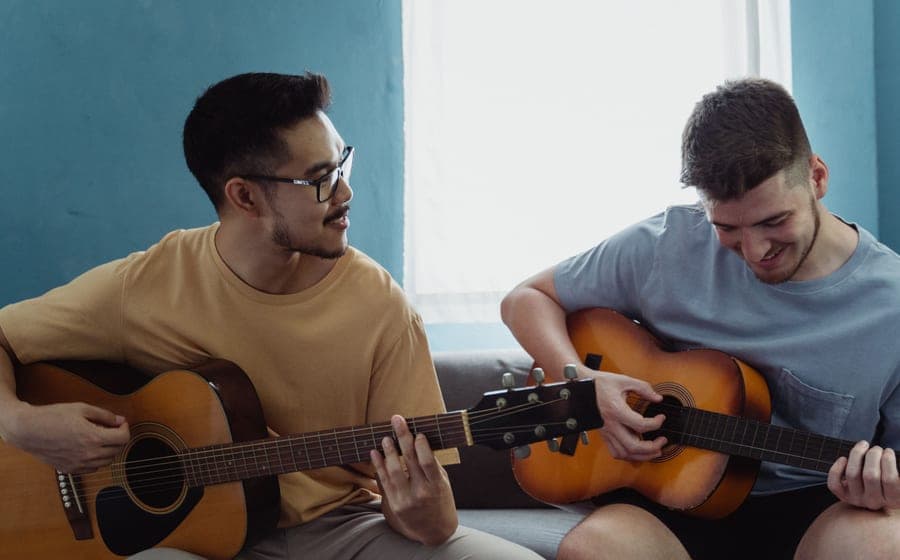
Nobody quits an instrument in a single decisive moment. They practice four times in week one, twice in week two, once in week four, and then two weeks pass and picking it up feels like starting over.
A large part of that decay is physical friction, not motivation. If the instrument is in a case, in a cupboard, in a room you do not sit in, then every practice session begins with a small chore. Removing that chore is the cheapest intervention available and it works better than resolve.
Keep the instrument out of its case on a stand, in the room you actually sit in. Get the seat height right so your forearms reach the instrument without lifting your shoulders. Own a tuner and, if noise is a factor, headphones. Everything else is optional.
Rule one: the instrument lives out of the case
This is the highest-leverage thing on the page. An instrument on a stand within reach of where you already sit gets picked up during a gap between things. An instrument in a case under a bed gets picked up when you have decided to have a practice session, which is a much rarer event.
The objection is dust and damage, and it is mostly wrong. Dust wipes off. The real risks are environmental, and they are avoidable: do not stand a wooden instrument next to a radiator, in direct sunlight through a window, or in a room that gets damp. Those three rules cover almost everything that goes wrong, and they are covered per instrument in ukulele care and violin care.
The genuine exception is a household with a toddler or an enthusiastic dog, where a stand is an accident waiting to happen. A wall hanger solves it and keeps the zero-friction advantage — the hangers and stands worth buying are in best guitar stands.
Rule two: get the height right before you get anything else
Almost every beginner practices at the wrong height, because the default surface in a home is a dining table and the default seat is a dining chair, and those two were designed for eating.
For keyboard players this is the most common and most damaging error. A board on a dining table sits roughly four inches too high, which forces the wrists to bend upward to reach the keys. Held for twenty minutes at a time, several times a week, that is how a beginner acquires wrist pain and concludes that piano hurts. The fix is an X-stand plus an adjustable bench, and the specifics are in our stand and bench guide.
For guitar and ukulele, a chair without arms, at a height that leaves your thighs roughly parallel to the floor. Arms on a chair push the picking elbow outward and change the whole geometry of the right hand. A dining chair is usually fine; a sofa is usually not, because it tips the pelvis back and the instrument slides.
For drums, throne height sets everything else. The general starting point is a seat height where the thighs slope very slightly downward and the heel can reach the pedal without stretching. Kit geometry from there is covered in how to set up a drum set.
Rule three: light you can read music by
An underrated one. Practice in the evening happens under whatever ambient light the room has, and living-room lighting is usually designed to be atmospheric rather than readable.
If you are reading anything — sheet music, chord charts, a tablet — you want light on the page rather than light in the room. A cheap clip lamp on a stand does more for practice quality than most gear purchases, because squinting at a chart is tiring in a way that gets misattributed to the music being hard.
Put the stand at roughly eye level too. Reading from a surface below your chin drags your head forward, and neck strain after twenty minutes reads as “I got tired” rather than “my stand is too low.”
The two accessories that actually matter
A tuner. The Snark clip-on chromatic tuner#ad clips to a headstock and reads string vibration through the wood, so it works with a television on in the background. This matters more than it sounds: a beginner cannot yet distinguish between an instrument that is out of tune and their own playing being wrong. Practicing on an out-of-tune instrument actively trains the ear toward the wrong intervals, so a ten-dollar tuner is protecting something that costs years to build.
Headphones, if noise is a factor. The Audio-Technica ATH-M20x#ad is a closed-back monitoring headphone with a fixed 3 meter cable — long enough to sit at a keyboard properly, closed enough that sound is not leaking back into the room. For anyone in a shared house or apartment, this is the accessory that converts “I can practice when nobody is home” into “I can practice.” The wider noise question is in best instruments for an apartment.
For drummers there is a third: the Evans RealFeel 12" single-sided practice pad#ad means hand technique can be practiced in any room at any hour, which is why teachers assign pad work in the first place.
What you do not need
Acoustic foam. Foam panels change how a room sounds when you record in it. They do essentially nothing to stop sound leaving the room, which is what people buy them for. It is the most reliably wasted money in home music setups.
A dedicated room. Waiting for the spare room to be free is a way of deferring the start indefinitely. A corner of a living room with a stand and a chair is a complete practice space.
Recording gear, at first. An interface and a microphone are excellent things to own in year two. In month one they are a project that competes with practice rather than supporting it.
A five-minute setup that beats any purchase
Put the instrument on a stand where you already sit. Put a chair at the right height in front of it. Put a music stand at eye level beside it, with a lamp on it. Put the tuner on the instrument, not in a drawer.
The whole point is that the answer to “shall I play for ten minutes” becomes yes by default, because there is nothing to set up. Ten minutes daily beats ninety minutes on a Sunday by a wide margin, and this is how you get it. The practice habit itself, and what a realistic first-year curve looks like, is covered in how long it takes to learn guitar.
What we would buy
Snark clip-on chromatic tuner
SnarkBest for: Tuning anything with strings
Clips to the headstock and reads pitch from the vibration of the wood, so it works in a noisy room and an adult who plays nothing can tune the instrument in twenty seconds.
Published specifications
- Type:
- Clip-on chromatic
- Sensing:
- Vibration through the headstock, not the microphone
- Fits:
- Guitar, bass, ukulele, violin, mandolin
- Display:
- Full-color rotating screen
What it gets right
- Vibration sensing means it works in a room with a television on, which a microphone tuner does not
- Chromatic, so one tuner covers every instrument in the house
- The rotating display means it reads correctly whichever way the instrument is held
Where it gives ground
- The clip is plastic and it is the part that eventually breaks
- Battery-powered, and it will be flat the one time you need it in a hurry
What it is not good at
Wind and brass instruments. It reads vibration through a solid body, so there is nothing for it to clip to on a flute or a trumpet.
How the specs score against a beginner’s needs
Scores are our reading of the published specifications above against what a beginner physically needs. They are not test results — we have not played this instrument.
Specifications from Snark tuners (retail listing with published feature set).
Audio-Technica ATH-M20x
Audio-TechnicaBest for: Practice headphones
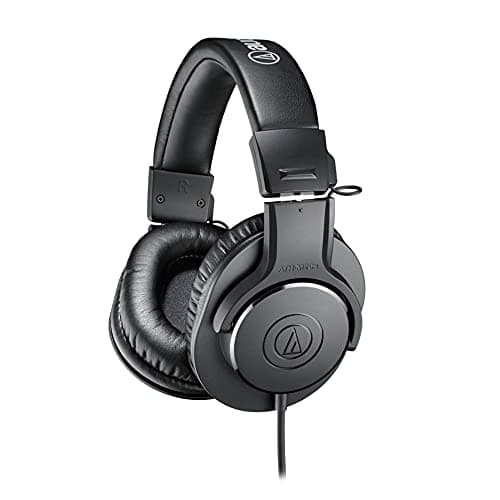
Closed-back 40 mm drivers with a 1/4 inch adapter included, which is the socket most digital pianos actually have. The cheapest headphones we would put on a practicing student.
Published specifications
- Type:
- Closed-back, circumaural (over-ear)
- Drivers:
- 40 mm, copper-clad aluminum voice coils
- Frequency response:
- 15 Hz - 20,000 Hz
- Cable:
- 9.8 ft (3.0 m), single-sided, straight
- Weight:
- 6.7 oz (190 g) without cable
- In the box:
- 6.3 mm (1/4") snap-on adapter
What it gets right
- Closed-back, so the sound stays in and the room stays out — the whole point of practice headphones
- The 1/4 inch adapter is included, and that is the socket most digital pianos have rather than the 1/8 inch a phone uses
- Under 200 grams, which matters over an hour of practice on a child's head
Where it gives ground
- The cable is fixed, not detachable, so a damaged cable means new headphones
- A 3 meter cable is generous at a piano and a trip hazard anywhere else
What it is not good at
Portability. They do not fold flat and there is no case. These live at the instrument.
How the specs score against a beginner’s needs
Scores are our reading of the published specifications above against what a beginner physically needs. They are not test results — we have not played this instrument.
Specifications from Audio-Technica ATH-M20x published specifications.
Evans RealFeel 12" single-sided practice pad
EvansBest for: Lighter, one surface
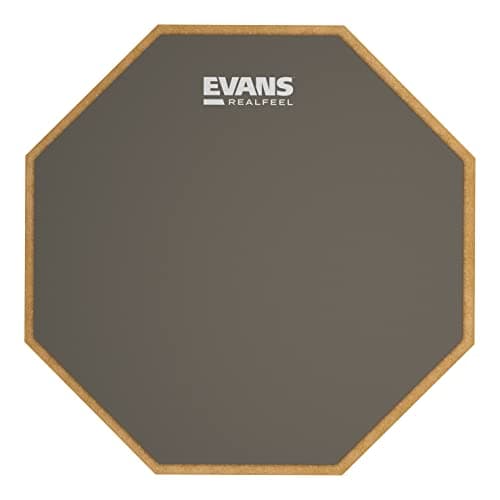
The same gum rubber playing surface as the two-sided pad, without the neoprene side. Lighter and cheaper, and for a beginner the second surface is not the point yet.
Published specifications
- Diameter:
- 12"
- Surface:
- Single — natural gum rubber
- Response:
- Realistic stick rebound, consistent across the surface
- Manufacture:
- Designed, engineered and made in the USA
What it gets right
- Identical playing surface to the two-sided pad, which is the part that matters
- Lighter, so it actually travels
- The cheapest genuinely good pad, which makes it the right first one
Where it gives ground
- One surface, so no harder option for strength work later
- The flat back slides on a smooth table without a stand
What it is not good at
Being the last pad a committed drummer owns. Most people who keep drumming end up wanting the second surface eventually.
How the specs score against a beginner’s needs
Scores are our reading of the published specifications above against what a beginner physically needs. They are not test results — we have not played this instrument.
Specifications from Evans RealFeel single-sided pad published description.
Questions people actually ask
Where should I keep my instrument at home?
Out of its case, on a stand, in the room you spend time in — as long as that room is not damp, not next to a radiator and not in direct sun. Instruments kept in cases get played dramatically less, and the reason is simply the twenty seconds of friction.
How much space do I need to practice?
For guitar, ukulele or a small keyboard, a chair and about a meter of clear floor. For a full drum kit, roughly two meters square plus room to get behind it. Nobody needs a dedicated music room, and waiting for one is a common way to never start.
What height should I sit at to practice?
High enough that your thighs are roughly level with the floor and your forearms come to the instrument without your shoulders lifting. For keyboard players that usually means a proper adjustable bench, because a dining chair is nearly always too low.
Do I need a music stand?
If you read anything from paper or a screen, yes. Reading from a surface below eye level pulls the head forward and down, and after twenty minutes that becomes neck ache which gets blamed on the instrument.
Sources
Still deciding?
Every recommendation on this site is built the same way, and the method is published in full — including what we do not do and what would get a pick dropped.
Read next
- Best instruments for an apartment
Four instruments that survive a shared wall, ranked by how quiet they are at their loudest, plus the headphones that make the difference.
- Keyboard stands and benches
How to set the correct playing height, X-stand versus Z-stand, and why the adjustable bench is the item to buy first.
- What you actually need to start piano
The complete accessory list in priority order, with what each one is for and which ones can genuinely wait.
- Best drum practice pads
Gum rubber versus neoprene, why 12 inches is the right size, and the honest limit of what pad practice builds.
- Learning an instrument as an adult
What genuinely changes for an adult starter, which instruments suit it, and the three mistakes that end most attempts.