Keys
What you actually need to start piano
The keyboard is most of the cost and not all of the purchase. Here is the complete list, in the order it matters.
By Sawyer V. · Published · Last updated
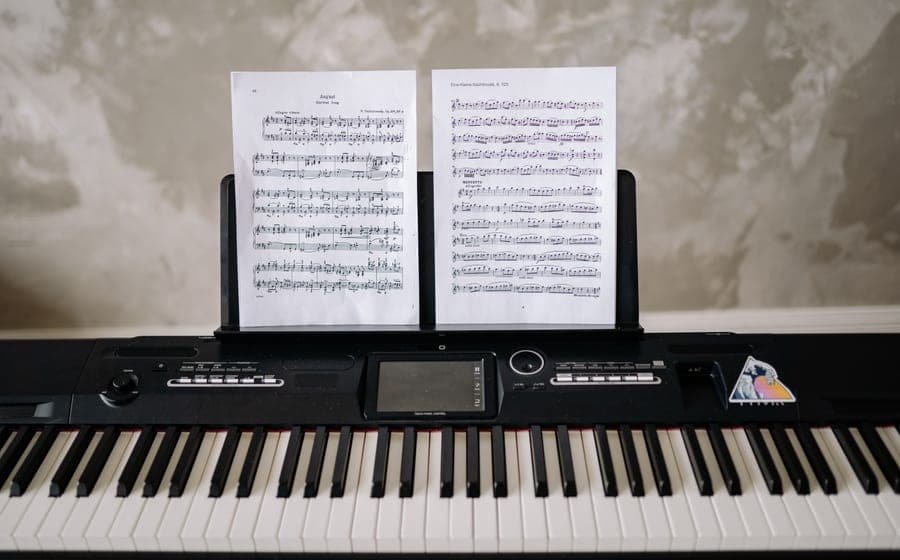
Buy a keyboard on its own and it will sit on a dining table at the wrong height, played from a chair at the wrong height, without the pedal the method book asks for in chapter four. None of that is obvious at purchase time, which is why the accessories are the most commonly under-budgeted part of starting piano.
Here is the complete list in priority order. If you are still choosing the instrument itself, our keyboard picks and digital piano picks both state what comes in the box.
1. An adjustable bench — the one nobody buys
This is first on the list because it is the item with the most lasting effect and the one most often skipped.
Piano technique starts from a posture: forearms roughly level with the keys, wrists neutral, elbows slightly ahead of the body. From that position the fingers can move freely and the arm weight can be used to control volume.
A dining chair is around 45 cm high. Most adults need something closer to 50 cm at a keyboard on a stand, and a child needs considerably more height relative to their body than any adult chair provides. Sitting too low pushes the wrists up and the fingers flat, which limits control and, over years of practice, causes strain.
An adjustable bench solves it permanently and costs less than most people spend on a sustain pedal. If you buy one thing from this list, buy this.
2. A stand at the right height
A dining table is too high for nearly every keyboard; a coffee table is far too low. An X-stand adjusts and folds and costs very little. A Z-stand is sturdier and better if the instrument lives in one place.
Set the stand so the keys land at about the player’s seated elbow height, then adjust the bench to match. Do it once, properly, at the start — a posture learned wrong is much harder to change than to set.
3. Headphones
The item that determines whether evening practice is possible. In a shared house, on an apartment floor, with a sleeping child in the next room, an instrument with headphones can be practiced and one without cannot.
Any decent closed-back over-ear pair is fine. Check the socket size on the instrument — some use a full-size quarter-inch jack, so a cheap adapter may be needed.
4. A sustain pedal
Method books introduce the sustain pedal early, usually within the first book. Many instruments include a small plastic footswitch, which is functional and slides around on a hard floor.
A piano-style pedal with a weighted base and a proper foot plate costs a modest amount and stays put. It also has the half-pedal feel of a real piano pedal, which matters once the player is doing anything expressive with it. Not urgent on day one; worth upgrading within the year.
5. A method book, or lessons
The highest-return purchase in this entire category and the one that is not a product. An hour of instruction does more for a beginner than any upgrade on this page.
If lessons are not possible, a structured method book series is the next best thing — specifically a structured series rather than a collection of songs, because the sequencing is the value. Ask any local teacher which series they use and buy that one.
What to skip
Dust covers. A keyboard that is covered is a keyboard that is not being played. Leave it out and visible — the single biggest predictor of practice hours is whether the instrument is ready to play without any setup.
Accessory bundles. The stand and bench in a $60 bundle are typically the cheapest possible versions of both. Buy them separately.
A keyboard bag, unless the instrument genuinely travels weekly.
Extra sound packs and expansions. Nobody has ever improved because of an additional piano sample.
The realistic total
Instrument, stand, bench, headphones and pedal is the complete first purchase, and the accessories are a meaningful fraction on top of the keyboard. Knowing that up front usually leads to a better decision — often buying a slightly cheaper instrument and a proper bench rather than the reverse. We put the numbers in bands in what a first keyboard should cost.
What we would buy
Yamaha P-145
YamahaBest for: Buy once, 88 weighted keys
88 graded hammer keys, a concert grand sample and 24 pounds. If the plan is piano lessons rather than keyboard playing, this is where the shopping actually starts.
Published specifications
- Keys:
- 88, GHC (Graded Hammer Compact), fully weighted and graded
- Polyphony:
- 64 notes
- Sound:
- Yamaha CFIIIS concert grand sample, damper resonance DSP
- Speakers:
- 7 W built-in
- Dimensions:
- 1,326 x 268 x 129 mm (52-3/16" x 10-9/16" x 5-1/16")
- Weight:
- 11.1 kg (24 lb 8 oz)
- In the box:
- Music rest, sustain foot switch
What it gets right
- Graded hammer action — the low keys are heavier than the high ones, which is the thing an unweighted keyboard cannot teach
- All 88 keys, so no method book ever runs off the end of the instrument
- Genuinely portable at 24 pounds and 268 mm deep; it fits on a desk
Where it gives ground
- 64-note polyphony is the entry-tier number; heavy sustain-pedal passages will drop notes eventually
- A single sustain footswitch, not a proper piano-style pedal — most players replace it
What it is not good at
Anything other than piano. There are only a handful of voices and no arranger features, so if the player wants to make beats or layer sounds, a PSR-E383 will make them happier for less money.
How the specs score against a beginner’s needs
Scores are our reading of the published specifications above against what a beginner physically needs. They are not test results — we have not played this instrument.
Specifications from Yamaha USA — P-145 specifications.
Yamaha PSR-E383
YamahaBest for: Learning tools, 61 keys
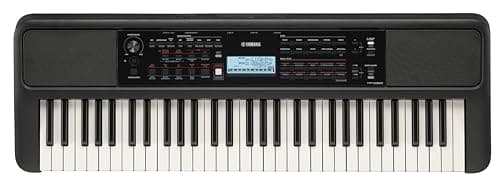
61 touch-sensitive keys and 125 lesson songs with hand-separate practice and scoring. The touch response is the spec that matters; the 650 tones are the spec that sells it.
Published specifications
- Keys:
- 61, organ-style (unweighted), touch-sensitive
- Touch response:
- Soft / medium / hard / off
- Polyphony:
- 48 notes
- Tones:
- 650 (258 panel, 25 drum/SFX, 20 arpeggio, 347 XGlite)
- Lessons:
- 125 lesson songs, right/left/both-hand practice with evaluation
- In the box:
- Music rest, PA130 power adapter
What it gets right
- Touch-sensitive keys — playing harder makes it louder, which is the thing a beginner has to learn early and a non-touch keyboard cannot teach
- The lesson mode with hand-separate practice and scoring is genuinely useful, not a gimmick
- Power adapter included, which is not a given at this tier
Where it gives ground
- Unweighted organ-style keys — this will not build the finger strength a piano needs
- 61 keys, so a method book that assumes 88 will eventually run out of instrument
What it is not good at
Preparing anyone for an acoustic piano. If there is a real piano in the child's future, the unweighted action is a habit to unlearn later. Read our 61-versus-88 comparison before deciding.
How the specs score against a beginner’s needs
Scores are our reading of the published specifications above against what a beginner physically needs. They are not test results — we have not played this instrument.
Specifications from Yamaha — PSR-E383 specifications.
Questions people actually ask
Do I need a piano bench or will a chair do?
A bench, and specifically an adjustable one. Piano posture requires the forearm roughly level with the keys, and a dining chair is too low for nearly every adult and dramatically too low for a child. Playing from too low pushes the wrists up into an angle that limits control and, over years, causes strain.
When do I need a sustain pedal?
Within the first few months of structured lessons — most method books introduce it early in the first book. If the instrument came with a small plastic footswitch, that works. A proper piano-style pedal is a worthwhile upgrade once the player is using it regularly.
Are headphones necessary?
Not to play, but frequently to practice. Practice happens in the evening, in shared houses. Headphones are the difference between an hour of practice being possible and being negotiated. Any decent over-ear pair works; there is no need for anything specialized.
What can I skip?
A dust cover, a fancy cable, extra sound expansions, a second pedal unit, and almost every branded accessory bundle. Also skip a keyboard bag unless the instrument genuinely travels.
Sources
Still deciding?
Every recommendation on this site is built the same way, and the method is published in full — including what we do not do and what would get a pick dropped.
Read next
- How much should a beginner keyboard cost?
Four bands from touch response to hammer action, plus the stand, bench and pedal costs that turn a keyboard budget into a bigger one.
- Best beginner keyboards: 61 keys that suit real lessons
Touch response over tone count, segmented for children and adult learners, with the 61-key ceiling stated plainly.
- Best beginner digital pianos: 88 keys, honestly compared
Hammer action versus semi-weighted at the entry price, with the polyphony and weight trade-offs both stated.
- Keyboard vs digital piano
What each instrument is built for, what each costs to complete, and the question that decides between them.
- 61 vs 88 key keyboard
When 61 keys stops being enough, what 88 actually costs in money and floor space, and buy paths for both answers.