Strings
Cello sizes by age and height
A cello is sized to the player the way a violin is, with fewer steps and a much larger consequence for getting it wrong.
By Sawyer V. · Published · Last updated
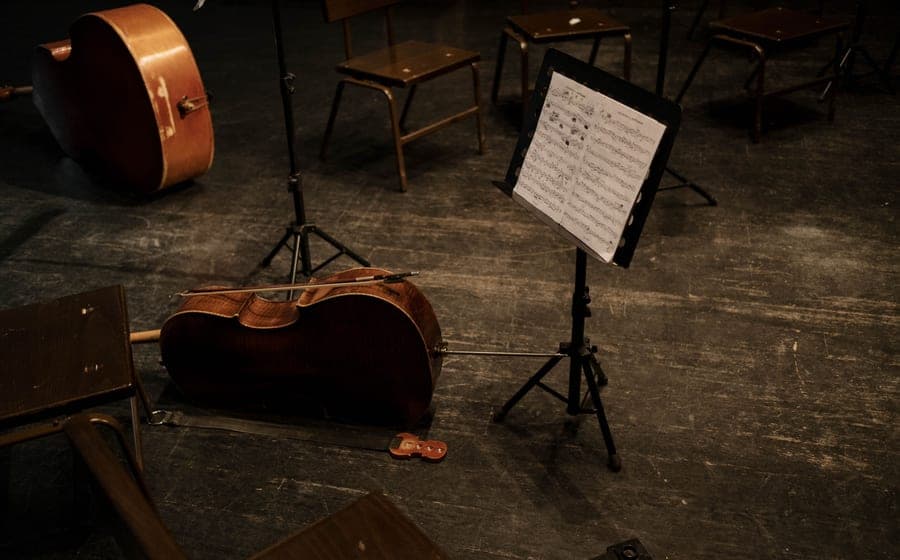
The cello is one of two instruments on this site where the wrong size is not an inconvenience but a wall. A child on a cello that is too big cannot reach the notes, and they will not tell you the instrument is wrong. They will tell you, eventually, that they do not want to play any more.
Size by height and arm reach, never by age alone. Rough guide: 1/4 for about ages 5 to 7, 1/2 for 7 to 11, 3/4 for 11 to 15, full size from about 15 or five feet tall. Never size up to grow into — an oversized cello is unplayable rather than merely awkward.
The size chart
| Size | Typical age | Typical height |
|---|---|---|
| 1/8 | 4–6 | Under about 3 ft 8 in |
| 1/4 | 5–7 | About 3 ft 8 in to 4 ft |
| 1/2 | 7–11 | About 4 ft to 4 ft 6 in |
| 3/4 | 11–15 | About 4 ft 6 in to 5 ft |
| 4/4 (full) | 15 and up | About 5 ft and taller |
Height beats age throughout. A tall nine-year-old and a short twelve-year-old can easily need the same size, and the fractional names describe the instrument rather than the child.
Note that the fractions are not literal. A 1/2 cello is not half the size of a full one — it is roughly three-quarters of the body length. The names are traditional categories, not measurements.
How to check a cello actually fits
Sit the player on a chair at a height where their feet are flat and their knees are at about a right angle. Put the cello between their knees with the endpin extended so the instrument leans back against the chest.
Check one: the peg by the ear. The C-string peg — the top-left one — should sit near the player’s left ear. Much lower and the cello is too small; much higher and it is too big.
Check two: first position reach. With the left arm relaxed and rounded, the hand should reach the first position on the fingerboard without the elbow lifting or the shoulder rising. If they have to stretch or lean, the instrument is too large.
Check three: the bow arm. They should be able to draw the bow across all four strings without the arm going above shoulder height on the C string.
If any of the three fails, go down a size. The same logic and the arm-length measuring method for violins is in violin sizes by age.
Why sizing up backfires
It is a reasonable-sounding instinct — children grow, instruments cost money, buy the bigger one. On a cello it is a specific and costly mistake.
An oversized cello forces the left hand to overstretch to reach first position, which produces intonation that will not settle and, over months, genuine hand strain. It forces the bow arm too high on the lower strings, which produces a scratchy, uneven sound.
The player experiences all of that as being bad at the cello. That is the sticky conclusion this entire site exists to prevent, and it costs far more than the price of the correct size.
Rent while growing
Cellos sit firmly on the rent side of the buy-or-rent question for a growing child, for three reasons.
Three or four size changes. Buying each one and reselling it is considerably more expensive than a rental program that swaps sizes as part of the arrangement.
Each change costs more than a violin’s. Cellos are more expensive at every size, and so are their cases and bows.
Maintenance is included. Bridges warp, soundposts shift and pegs stop holding, and none of those are things a beginner or a parent can diagnose. A rental program treats them as routine.
The full argument, across instrument families, is in rent or buy a first instrument.
When buying makes sense
At 3/4 or full size, once growth has essentially stopped, and for an adult beginner who will never change size at all.
At that point an outfit is the sensible purchase: instrument, bow, case and rosin together, because a cello with no bow is not a playable object. A Cecilio CCO-100 cello outfit#ad is the entry point we cover in best beginner cellos.
Be careful buying used without an inspection. A warped bridge, a shifted soundpost or a warped bow stick all look completely normal in a photograph and none are cheap to put right — the family-by-family version of that warning is in used versus new.
Two things that come with the size
The endpin sets the angle. Extending it further tips the cello back and changes where the neck sits relative to the body. Adjust it so the instrument rests comfortably against the chest with the peg near the ear — it is part of fitting the instrument, not an afterthought.
Chair height matters as much as cello size. A child on an adult dining chair has their knees too low to support the instrument. A correctly sized cello on the wrong chair fails the same checks a too-large cello does.
If you are still weighing cello against the smaller option, the honest comparison is in violin or cello for a beginner — where a Stentor Student II Violin Outfit#ad is the equivalent starting point on the violin side.
What we would buy
Cecilio CCO-100 cello outfit
CecilioBest for: First cello, complete outfit
A spruce-top, maple-body cello that arrives with a hard case, a soft case, a bow, a stand, rosin and a spare string set. Cellos are expensive to complete, and this one is complete.
Published specifications
- Top:
- Spruce
- Back / neck / sides:
- Maple
- Bow:
- Brazilwood with unbleached horsehair
- In the outfit:
- Hard case, soft case, bow, cello stand, rosin, spare string set
- Sizes:
- Available in full and fractional sizes
- Warranty:
- 1 year against manufacturer defects
What it gets right
- Genuinely complete — a cello needs a bow, rosin, a stand and a case to be usable, and buying those separately costs more than the instrument
- Both a hard and a soft case, which for an instrument this size is a real convenience rather than a gimmick
- Available in fractional sizes, so a growing child stays within one family
Where it gives ground
- The supplied bow and strings are the first two things a teacher will suggest upgrading
- Set-up quality is the variable at this tier — budget for a shop check before the first lesson
What it is not good at
Arriving ready. A cello needs its bridge fitted and its soundpost checked, and at this price that work has not been done to the standard a teacher expects. Factor a setup in.
How the specs score against a beginner’s needs
Scores are our reading of the published specifications above against what a beginner physically needs. They are not test results — we have not played this instrument.
Specifications from Cecilio Music — CCO-100 cello outfit.
Stentor Student II Violin Outfit
StentorBest for: First violin, every size
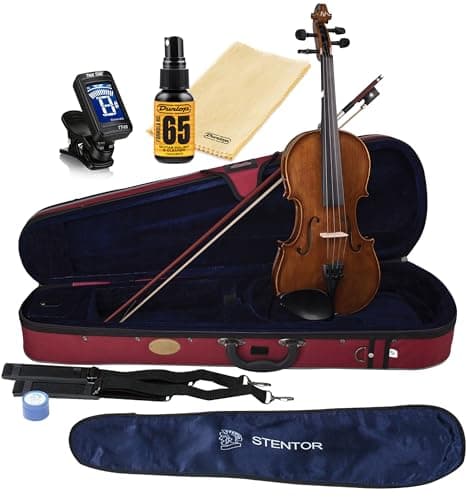
Solid carved spruce and maple with an ebony fingerboard, set up in a workshop before shipping, and made in five fractional sizes. The workshop setup is the specification that matters most on a beginner violin.
Published specifications
- Top:
- Solid carved spruce
- Back / sides:
- Solid figured maple
- Fingerboard:
- Ebony
- Pegs:
- Ebony or rosewood
- Sizes:
- 4/4, 3/4, 1/2, 1/4, 1/8
- Strings:
- Steel core, factory fitted
- Outfit:
- Wooden bow with ebony frog and natural horsehair, rosin, shaped lightweight case with music pocket and rucksack straps
What it gets right
- Ebony fingerboard and pegs, not stained hardwood — a stained fingerboard wears through and a soft peg will not hold a tuning
- Individually set up in a workshop before it ships, which is the single biggest variable on a cheap violin
- Available in five fractional sizes, so the same instrument family covers a child from about age five to adult
Where it gives ground
- The supplied steel-core strings are the first upgrade most teachers suggest
- The bow is functional rather than good; it is the second upgrade
What it is not good at
Being bought without measuring. Violin size is set by the player's arm length, not their age, and a violin one size too big is genuinely unplayable rather than merely awkward. Measure first.
How the specs score against a beginner’s needs
Scores are our reading of the published specifications above against what a beginner physically needs. They are not test results — we have not played this instrument.
Specifications from Stentor Music — Student II violin outfit.
Questions people actually ask
What size cello does my child need?
It depends on height and arm reach rather than age. As a rough guide: 1/4 for roughly ages 5 to 7, 1/2 for 7 to 11, 3/4 for 11 to 15, and full size from about 15 or once the player is around five feet tall.
How do you measure for a cello?
Seated, with the cello between the knees and the endpin extended, the C-string peg should sit near the player’s left ear and they should reach first position comfortably with a rounded left hand.
How many cello sizes will a child go through?
Typically three or four between starting young and reaching full size. Fewer steps than a violin, and each change is more expensive, which is the main argument for renting through the growing years.
Is it better to size up so they grow into it?
No. An oversized cello forces the left hand to overstretch and the bow arm to work at a bad angle. The child cannot play it, concludes they are bad at cello, and stops — which costs far more than the size change would have.
Sources
Still deciding?
Every recommendation on this site is built the same way, and the method is published in full — including what we do not do and what would get a pick dropped.
Read next
- Best beginner cellos
Why outfit completeness is the spec that matters on a cello, sizing by height, and the setup cost to budget for.
- Violin sizes by age and arm length
The full fractional chart by arm length, how to measure, and why a violin one size too big cannot be played correctly.
- Violin or cello for a beginner?
Posture, early tone, transport, cost and orchestral demand, compared for a beginner choosing between the two.
- Should you rent or buy a first instrument?
Rent-or-buy answered per instrument family, with the two questions that decide it and the maintenance cost people miss.
- Bowed or fretted strings for a beginner?
What frets actually do for a beginner, why bowing is a second instrument, and which family suits a child, an adult or a self-teacher.