Guitars
Best guitars for adult beginners
An adult does not need a starter guitar. They need the guitar they would have bought in year three, because they will get there faster than a child does.
By Sawyer V. · Published · Last updated

Guitar buying advice is written for a fifteen-year-old with unlimited time and no money. An adult beginner has the opposite profile: some money, very little time, full-size hands, and a low tolerance for an instrument that is annoying to play.
Those are different buying criteria, and they point one tier higher than the usual recommendation.
Every pick states its Starter Path band, and we have not physically tested any of them — the method is on how we pick.
Buy at the buy-once tier rather than the honest floor. For most adults that means a solid-top acoustic or an electric one step above entry level. The extra money buys hardware that holds tune and a neck you will still be happy with in five years, and an adult reaches that point faster than a child does.
Why the entry tier is the wrong tier for an adult
Our price bands are built around the cheapest configuration that genuinely works. That is the right recommendation for a child, where there is real uncertainty about whether the interest survives six months and where the instrument will be outgrown physically anyway.
An adult is a different bet. Nobody outgrows a full-size guitar. Adults who start deliberately — rather than because a parent suggested it — continue at a much higher rate. And an adult can feel the difference between a guitar that plays easily and one that does not, in a way a beginner child usually cannot articulate.
The practical consequence is that the entry instrument becomes the thing you want to replace inside a year, and you end up spending the buy-once money anyway, having also spent the entry money.
The acoustic picks
The Yamaha FG800#ad is the default answer and has been for a long time. A solid spruce top is the specification that matters: solid wood moves as one piece and gets better with playing, where a laminate top is three thin layers glued together and stays where it started. That distinction is worked through in solid top versus laminate.
The Fender CD-60S#ad is the one we would hand to an adult who is worried about their hands. It has a neck profile and rolled fingerboard edges aimed squarely at making fretting easier, which is the difference between practicing for twenty minutes and stopping at eight in the first month.
The electric picks
The Squier Affinity Series Stratocaster#ad sits one tier above the honest floor, and what the money buys is consistency: hardware that holds tune through a session, and a fit and finish that does not remind you it was cheap every time you pick it up.
The Yamaha Pacifica PAC012#ad is the pick for an adult who does not yet know what they want to play. Its pickup layout covers a wider range of sounds than a traditional three-single-coil guitar, so one instrument handles clean playing and heavier styles. Why that matters is in guitar pickups explained.
The body size problem nobody mentions to adults
Adults are told to buy a full-size guitar, and then handed a dreadnought, and the two are not the same recommendation.
A dreadnought is a large, deep body. Scale length — the part that matters for hand span — is the same on a smaller-bodied guitar, but the depth means a shorter-armed player reaches around a box that pushes their strumming shoulder up and forward.
If a dreadnought feels like wrestling furniture, the fix is a concert or auditorium body rather than a fractional-size guitar. Full scale, less box. The shapes and what each is for are in guitar body shapes explained.
What adults get wrong
Buying the guitar they wanted at seventeen. A specific model with an emotional history attached is not necessarily the one that is easy to learn on. Buy the comfortable one first; the dream guitar is more enjoyable when you can play it.
Skipping the setup. The single highest-value spend on any guitar under a few hundred dollars, and the one adults are most likely to skip because they assume a new instrument arrives correct. It does not. See what a guitar setup actually is.
Practicing in long, rare sessions. Callus formation and muscle memory both consolidate between sessions. Twenty minutes most days beats two hours on a Sunday, and it hurts considerably less — see why the guitar hurts your fingers.
Assuming slow progress means no aptitude. The realistic first-year curve is in how long it takes to learn guitar, and it is slower than the internet implies for everybody.
What else to buy
A clip-on tuner, a spare set of strings, and a strap if you intend to stand up. For an electric, a small practice amp with a headphone output — which for an adult in a house with other people is the accessory that decides how many hours the guitar gets played. The full argument is in do you need an amp to learn electric guitar.
What you do not need in year one: pedals, a second guitar, or a recording setup. All three are projects that compete with practice rather than supporting it.
Quick picks
Buy once, acoustic
A solid spruce top on a dreadnought body. The instrument most adult beginners should own, and one almost nobody outgrows.
| # | Product | Best for | Score | Price |
|---|---|---|---|---|
| 1 | No image Yamaha FG800A solid Sitka spruce top with scalloped bracing at the entry price. | Buy once, acousticEnough | 8.8 | Check price on Amazon → #ad How we’re funded |
| 2 | 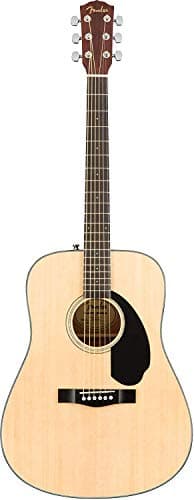 Fender CD-60SSolid spruce top, mahogany back and sides, and rolled fingerboard edges on a slightly shorter 25. | Easiest acoustic to fretEnough | 8.8 | $229.99 · View on Amazon #ad How we’re funded |
Buy once, electric
One tier above the honest floor, with hardware that stays in tune and a neck that will still suit you in five years.
| # | Product | Best for | Score | Price |
|---|---|---|---|---|
| 1 | 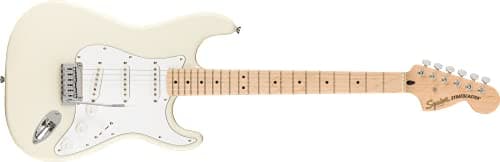 Squier Affinity Series StratocasterSame geometry as the Sonic with medium jumbo frets and better hardware. | Buy once, adult starterEnough | 8.6 | $319.99 · View on Amazon #ad How we’re funded |
| 2 | 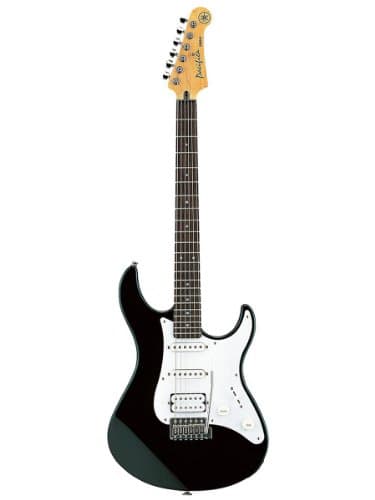 Yamaha Pacifica PAC012An HSS layout and 22 frets at the entry tier. | One guitar, several stylesThe honest floor | 8.3 | $279.99 · View on Amazon #ad How we’re funded |
The picks in full
Yamaha FG800
YamahaBest for: Buy once, acoustic
A solid Sitka spruce top with scalloped bracing at the entry price. Solid-versus-laminate is the one acoustic spec that changes what the instrument does over years, and this is the cheapest place to get it done right.
Published specifications
- Top:
- Solid Sitka spruce
- Back / sides:
- Nato / okume
- Neck / fingerboard:
- Nato neck, rosewood fingerboard, R400 mm (23-5/8") radius
- Scale length:
- 650 mm (25-9/16")
- Nut width:
- 43 mm (1-11/16")
- Bracing:
- Scalloped
- Body:
- Traditional Western (dreadnought), 412 mm (16-1/4") wide, 100-118 mm deep
- Hardware:
- Die-cast chrome tuners, urea nut and saddle
What it gets right
- A solid top, not a laminate — the only acoustic spec at this price that genuinely changes over time
- Scalloped bracing and die-cast tuners are specifications you normally pay considerably more for
- Yamaha's most-copied entry acoustic; parts, setups and advice are everywhere
Where it gives ground
- A full dreadnought body is a big box — 412 mm across and up to 118 mm deep
- Nato and okume back and sides are the cost saving; the top is where the money went
What it is not good at
Fitting a smaller player. The dreadnought body is wide and deep enough that a young teenager can struggle to get their arm over it comfortably. If that is the buyer, look at the JR1 or a concert-size body instead.
How the specs score against a beginner’s needs
Scores are our reading of the published specifications above against what a beginner physically needs. They are not test results — we have not played this instrument.
Specifications from Yamaha Europe — FG/FS800 series specifications.
Squier Affinity Series Stratocaster
Squier by FenderBest for: Buy once, adult starter
Same geometry as the Sonic with medium jumbo frets and better hardware. This is the tier where a beginner stops having a reason to upgrade.
Published specifications
- Scale length:
- 25.5" (648 mm) — full size
- Body / neck:
- Poplar body, maple neck, "C" profile
- Fingerboard:
- Maple, 9.5" (241 mm) radius
- Frets:
- 21, medium jumbo
- Nut width:
- 1.650" (42 mm), synthetic bone
What it gets right
- Medium jumbo frets are noticeably easier to fret cleanly than narrow tall wire, which is the physical thing a beginner struggles with
- Identical scale, radius and nut width to the Sonic, so the step up is hardware, not geometry
- Widely serviced — any shop can set one up without ordering parts
Where it gives ground
- The jump from the Sonic buys hardware and fretwire, not tone
- Still a poplar body; if you are chasing a specific sound this is not the guitar that delivers it
What it is not good at
Justifying itself over the Sonic on paper. The difference is real but it is felt, not read — if the budget is tight, the Sonic is not a compromise.
How the specs score against a beginner’s needs
Scores are our reading of the published specifications above against what a beginner physically needs. They are not test results — we have not played this instrument.
Specifications from Reverb — Squier Affinity Series Stratocaster specs.
Fender CD-60S
FenderBest for: Easiest acoustic to fret
Solid spruce top, mahogany back and sides, and rolled fingerboard edges on a slightly shorter 25.3 inch scale. The rolled edges are the reason to pick this one.
Published specifications
- Top:
- Solid spruce
- Back / sides:
- Mahogany
- Scale length:
- 25.3" (643 mm)
- Nut width:
- 1.69" (43 mm)
- Fingerboard:
- 12" radius, 20 frets, rolled edges
- Bracing:
- Quartersawn scalloped "X"
- Neck:
- Fender "Easy-to-Play" shape
What it gets right
- Rolled fingerboard edges remove the sharp edge that makes a new player's hand hurt after twenty minutes
- Solid spruce top at the same tier as the FG800, with mahogany rather than nato back and sides
- The 25.3 inch scale is slightly shorter than most dreadnoughts — marginally lower string tension
Where it gives ground
- Still a full dreadnought body, so the size objection is the same as the FG800's
- The 12 inch fingerboard radius is quite round compared with the FG800's flatter 400 mm
What it is not good at
Being obviously better than the FG800. These two are genuinely close, they trade blows on back-and-sides wood versus bracing, and anyone telling you one is clearly superior has not looked at the spec sheets.
How the specs score against a beginner’s needs
Scores are our reading of the published specifications above against what a beginner physically needs. They are not test results — we have not played this instrument.
Specifications from Fender — CD-60S Dreadnought.
Yamaha Pacifica PAC012
YamahaBest for: One guitar, several styles
An HSS layout and 22 frets at the entry tier. The humbucker at the bridge means one guitar covers both the quiet and the loud thing a beginner wants to try.
Published specifications
- Scale length:
- 25-1/2" (648 mm) — full size
- Body:
- Solid agathis, bolt-on construction
- Neck:
- Maple, 22 frets
- Fingerboard radius:
- 13-3/4" (350 mm) — flatter than a Strat
- Pickups:
- Humbucker / single / single (HSS)
- Nut:
- Urea
What it gets right
- 22 frets rather than 21, and a flatter 350 mm radius that suits chord playing
- The bridge humbucker covers distorted rock without a pickup swap later
- Yamaha's entry instruments are consistently well set up out of the box for the tier
Where it gives ground
- Agathis is a soft, plain body wood; the finish marks easily
- The flatter fingerboard radius is a real difference from a Strat — if a friend's Strat is the reference, this will feel different
What it is not good at
Being a Stratocaster. It is Strat-shaped and it is not one; the radius and the bridge pickup make it its own thing. That is a feature, but do not buy it expecting a Fender feel.
How the specs score against a beginner’s needs
Scores are our reading of the published specifications above against what a beginner physically needs. They are not test results — we have not played this instrument.
Specifications from Yamaha USA — PAC012 specifications.
Questions people actually ask
What guitar should an adult beginner buy?
One tier above the cheapest thing that works. Adults progress quickly enough in the first year that the entry instrument becomes the limiting factor sooner than it does for a child, and adults rarely enjoy the experience of a guitar that fights them.
Is 40 too old to learn guitar?
No. Adults usually learn faster in the first year because they practice deliberately, can read instructions and understand structure. The constraint is available hours, not capability, and the fingertip soreness passes at the same rate at any age.
Should an adult start on acoustic or electric?
Acoustic if the goal is playing and singing at home with nothing to plug in. Electric if the goal is rock, blues or playing with other people, or if quiet practice matters — an unplugged electric is one of the quietest instruments there is.
Do adults need a smaller guitar?
Almost never smaller, but sometimes a shallower body. A dreadnought is deep enough that a shorter-armed adult has to reach around it, and a concert or auditorium body solves that without giving up scale length.
Sources
Still deciding?
Every recommendation on this site is built the same way, and the method is published in full — including what we do not do and what would get a pick dropped.
Read next
- Best beginner guitars: one pick each for adults, teens and kids
Acoustic and electric in one place, segmented by player rather than price, with a single clear pick for each situation.
- Acoustic vs electric guitar for beginners
The physical difference is real but small. The cost difference is larger than most people expect. Buy CTAs for both answers.
- How much should a beginner guitar cost?
Four price bands defined by specification rather than by number, plus the hidden costs that turn a $200 budget into a $270 purchase.
- Learning an instrument as an adult
What genuinely changes for an adult starter, which instruments suit it, and the three mistakes that end most attempts.
- Guitar body shapes, and which one fits you
What dreadnought, concert, parlor and jumbo actually change, and how to pick a shape by your body rather than by the sound.