Guitars
Best beginner guitars: one pick each for adults, teens and kids
If you already know you want a guitar but not which kind, start here. Everything below is segmented by the player, because that is the variable that actually decides.
By Sawyer V. · Published · Last updated
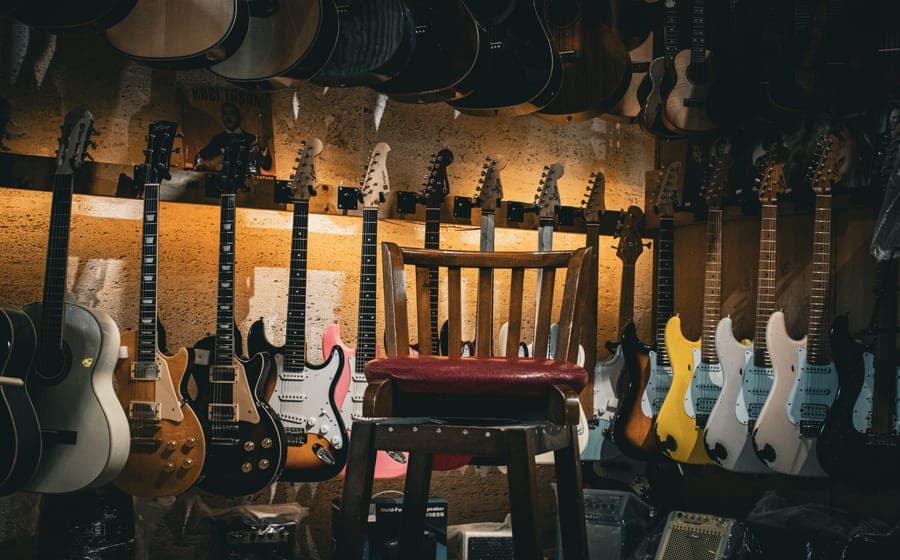
This page exists for one situation: you have decided on a guitar and you do not want to read four more articles first. It collects the single best pick for each kind of player and says plainly what each one gives up. If you already know you want an electric or an acoustic specifically, the dedicated roundups go deeper — electric here, acoustic here.
Everything is segmented by who is playing, because that is the variable that actually changes the answer. Price does not: a $200 guitar that a child cannot reach around is a worse buy than a $90 one they can. Our selection method, and the fact that we have not played any of these instruments, is set out on how we pick.
The one decision that matters more than the guitar
Before any of the picks: whichever guitar you buy, set aside about $40 to $60 for a setup at a local shop, or plan to learn to do it yourself.
A setup adjusts the neck relief and the string height so the strings sit as close to the fingerboard as they can without buzzing. Every guitar in this price bracket leaves the factory adjusted to a safe average and then travels through a warehouse and a temperature change to get to you. A $200 guitar that has been set up plays better than a $500 guitar that has not, and this is not a close contest. It is the highest-return money in the entire purchase and almost nobody mentions it.
What to skip, in every category
Bundles where the accessories cost more than the guitar. A starter pack with a strap, picks, a stand, a bag, a tuner, a cable, a DVD and an amplifier for $130 total has spent perhaps $50 on the guitar. The accessories are worth having, but they are worth having as a $30 add-on to a $180 instrument, not as the reason a $50 instrument is in the box.
The exception worth naming: some legitimate manufacturer packs bundle a real instrument with a basic amp at close to the sum of the parts. Squier and Fender both sell those. The test is whether the guitar inside the pack is a model you could look up and buy on its own. If it is, the pack is fine. If it only exists inside the bundle, that is the tell.
Reading the price bands
Every pick carries one of four bands. Below the floor means the instrument fails at something the player physically needs — that is a dead end, not a bargain. The honest floor is the cheapest configuration that genuinely works. Enough is the buy-once tier. And where overspending starts is the point at which more money buys capability a beginner cannot use yet.
For guitars specifically, that last band arrives sooner than most people expect. Above roughly $500 on a first instrument you are paying for a nicer top wood, a better-finished fretboard and more careful factory setup. All three are real. None of them is something a beginner can hear or feel in their first year. Buy the cheaper one and put the difference toward lessons, which is the only purchase in this whole category with a guaranteed return.
If you would rather start from the badge than the model, we set out what each major beginner brand is actually good at — and how much the brand tells you — in best beginner guitar brands.
Quick picks
Adults and teenagers
One acoustic and one electric, both at the point where the specifications stop compromising. Pick by which sound you want, not by which is easier.
| # | Product | Best for | Score | Price |
|---|---|---|---|---|
| 1 | No image Yamaha FG800A solid Sitka spruce top with scalloped bracing at the entry price. | Buy once, acousticEnough | 8.8 | Check price on Amazon → #ad How we’re funded |
| 2 | 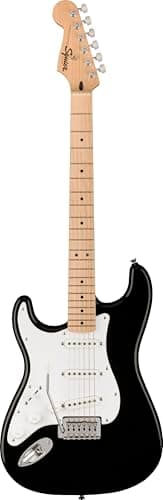 Squier Sonic StratocasterThe cheapest electric that still has full-scale geometry, sealed tuners and a real 9. | The honest floor, electricThe honest floor | 8.2 | $249.99 · View on Amazon #ad How we’re funded |
Children, roughly ages 8 to 13
Short scale, fixed bridge or no bridge to speak of, and a body a child can hold without help.
| # | Product | Best for | Score | Price |
|---|---|---|---|---|
| 1 | No image Epiphone Power Players Les PaulA 22. | Ages roughly 8-13Enough | 8.7 | Check price on Amazon → #ad How we’re funded |
| 2 | 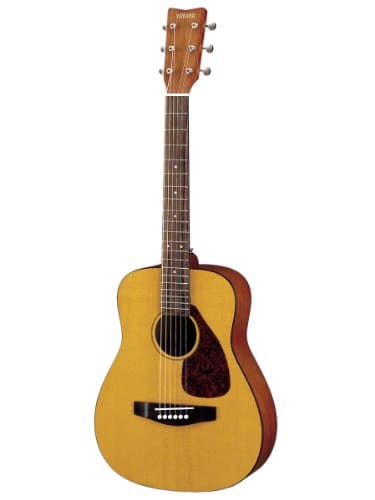 Yamaha JR1 (FG Junior)A 540 mm scale on a body 389 mm long and 317 mm across, with a gig bag included. | 3/4 acoustic, ages 7-11The honest floor | 8.2 | $189.99 · View on Amazon #ad How we’re funded |
Young children, roughly ages 6 to 8
Three strings and two pounds. The goal at this age is a real chord in week one, not a scaled-down adult instrument.
| # | Product | Best for | Score | Price |
|---|---|---|---|---|
| 1 | 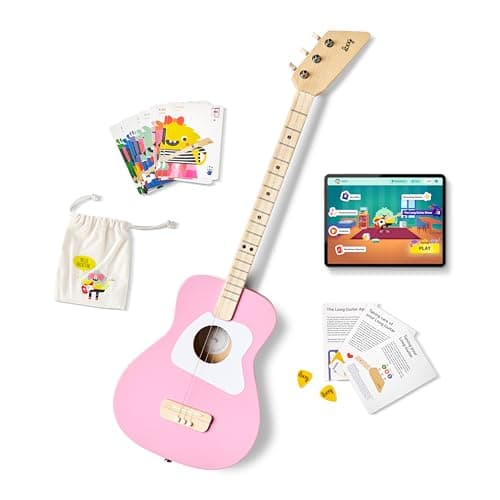 Loog Pro AcousticThree strings, a 20. | Ages 6-9, first chords fastThe honest floor | 8.0 | $149.00 · View on Amazon #ad How we’re funded |
The picks in full
Yamaha FG800
YamahaBest for: Buy once, acoustic
A solid Sitka spruce top with scalloped bracing at the entry price. Solid-versus-laminate is the one acoustic spec that changes what the instrument does over years, and this is the cheapest place to get it done right.
Published specifications
- Top:
- Solid Sitka spruce
- Back / sides:
- Nato / okume
- Neck / fingerboard:
- Nato neck, rosewood fingerboard, R400 mm (23-5/8") radius
- Scale length:
- 650 mm (25-9/16")
- Nut width:
- 43 mm (1-11/16")
- Bracing:
- Scalloped
- Body:
- Traditional Western (dreadnought), 412 mm (16-1/4") wide, 100-118 mm deep
- Hardware:
- Die-cast chrome tuners, urea nut and saddle
What it gets right
- A solid top, not a laminate — the only acoustic spec at this price that genuinely changes over time
- Scalloped bracing and die-cast tuners are specifications you normally pay considerably more for
- Yamaha's most-copied entry acoustic; parts, setups and advice are everywhere
Where it gives ground
- A full dreadnought body is a big box — 412 mm across and up to 118 mm deep
- Nato and okume back and sides are the cost saving; the top is where the money went
What it is not good at
Fitting a smaller player. The dreadnought body is wide and deep enough that a young teenager can struggle to get their arm over it comfortably. If that is the buyer, look at the JR1 or a concert-size body instead.
How the specs score against a beginner’s needs
Scores are our reading of the published specifications above against what a beginner physically needs. They are not test results — we have not played this instrument.
Specifications from Yamaha Europe — FG/FS800 series specifications.
Squier Sonic Stratocaster
Squier by FenderBest for: The honest floor, electric
The cheapest electric that still has full-scale geometry, sealed tuners and a real 9.5 inch fingerboard radius. Nothing about it will make a beginner's first year harder.
Published specifications
- Scale length:
- 25.5" (647.7 mm) — full size
- Body / neck:
- Poplar body, maple neck, "C" profile
- Fingerboard:
- Maple or Indian laurel, 9.5" (241 mm) radius
- Frets:
- 21, narrow tall
- Nut width:
- 1.650" (42 mm), synthetic bone
- Pickups:
- Three ceramic single-coils (SSS)
- Bridge:
- 6-saddle vintage-style synchronized tremolo
What it gets right
- Full 25.5 inch scale, so nothing learned here has to be relearned later
- Synthetic bone nut rather than a soft plastic one — the part that decides whether a cheap guitar stays in tune
- Sealed-gear tuners, which is the single most important spec on a first electric
Where it gives ground
- Poplar body and ceramic pickups are exactly what you would expect at this tier
- The tremolo bridge will pull the guitar out of tune if a beginner uses it, and beginners always use it
What it is not good at
Staying in tune if you use the whammy bar. If that matters, buy the hardtail (HT) version of the same guitar instead — it is the identical instrument with the tremolo deleted.
How the specs score against a beginner’s needs
Scores are our reading of the published specifications above against what a beginner physically needs. They are not test results — we have not played this instrument.
Specifications from Squier Wiki — Sonic Stratocaster specifications.
Epiphone Power Players Les Paul
EpiphoneBest for: Ages roughly 8-13
A 22.73 inch scale on a mahogany body with two real humbuckers, and a gig bag, strap, cable and picks in the box. The short scale is the whole point: it is reachable.
Published specifications
- Scale length:
- 22.73" — 3/4+ size
- Body / neck:
- Mahogany body, bolt-on mahogany neck, SlimTaper D profile
- Frets:
- 22, sculpted heel for upper-fret access
- Pickups:
- Epiphone 650R (neck) and 700T (bridge) humbuckers
- Bridge:
- LightningBar compensated wrap-around
- In the box:
- Gig bag, strap, picks, guitar cable
What it gets right
- A wrap-around bridge has nothing to knock out of tune — the right choice for a kid's guitar
- Mahogany body and neck rather than the plywood usual at this size
- Ships with the accessories that otherwise cost another chunk on top
Where it gives ground
- Les Pauls are dense, and even a 3/4+ one has weight a small child will notice on a strap
- Humbuckers only — no bright, clean single-coil sound available
What it is not good at
Very small children. At 3/4+ this suits roughly age 8 upward; a five-year-old needs the smaller scale of a Squier Mini or a Loog.
How the specs score against a beginner’s needs
Scores are our reading of the published specifications above against what a beginner physically needs. They are not test results — we have not played this instrument.
Specifications from Epiphone (Gibson) — Power Players Les Paul.
Yamaha JR1 (FG Junior)
YamahaBest for: 3/4 acoustic, ages 7-11
A 540 mm scale on a body 389 mm long and 317 mm across, with a gig bag included. It is a scaled-down FG, not a toy that happens to be small.
Published specifications
- Scale length:
- 540 mm (21-1/4") — 3/4 size
- Nut width:
- 43 mm (1-11/16")
- Top:
- Spruce (laminate)
- Back / sides:
- Meranti
- Neck / fingerboard:
- Nato neck, rosewood fingerboard and bridge
- Body:
- 389 mm long, 317 mm wide, 80-90 mm deep; 845 mm overall
- In the box:
- Gig bag
What it gets right
- The body is genuinely small — 317 mm across against the FG800's 412 mm, which is what actually decides whether a child can hold it
- Full 43 mm nut width despite the short scale, so chord shapes are not cramped
- Gig bag included, which on a child's instrument is not an accessory but a requirement
Where it gives ground
- Laminate spruce top, unlike the solid-top FG800 — this is the compromise for the size and price
- Meranti back and sides are basic
What it is not good at
Being a lifetime instrument. This is deliberately a stepping stone; a child who keeps playing moves to a full-size body in a few years and this one becomes the travel guitar.
How the specs score against a beginner’s needs
Scores are our reading of the published specifications above against what a beginner physically needs. They are not test results — we have not played this instrument.
Specifications from Yamaha USA shop — JR1 3/4 size acoustic guitar.
Loog Pro Acoustic
LoogBest for: Ages 6-9, first chords fast
Three strings, a 20.4 inch scale and two pounds. It uses standard guitar strings and standard tuning, so everything learned on it transfers directly to a six-string.
Published specifications
- Strings:
- 3, standard guitar strings and tuning
- Scale length:
- 20.4" (520 mm)
- Dimensions:
- 29.2" long, 8.8" wide, 2.6" deep
- Weight:
- 2.0 lb (0.9 kg)
- Body / neck:
- Basswood body, maple neck and fingerboard
- Frets:
- 18
- Age guidance:
- Manufacturer states from age 6
What it gets right
- Three strings means a real chord on the first day, which is the single biggest predictor of a child continuing
- Standard tuning and standard strings — this is not a proprietary instrument that teaches a dead end
- Two pounds and 29 inches long; a six-year-old can pick it up unaided
Where it gives ground
- Three strings, so full six-string chord shapes are not available
- Basswood and a short scale mean a quiet, thin voice compared with any full acoustic
What it is not good at
Being the guitar for long. It is a deliberate bridge to a six-string, and if the child is already 9 or 10 you should probably skip straight to a 3/4 six-string instead.
How the specs score against a beginner’s needs
Scores are our reading of the published specifications above against what a beginner physically needs. They are not test results — we have not played this instrument.
Specifications from Loog Guitars — Pro Acoustic specifications.
Questions people actually ask
What is the best guitar for beginners, electric or acoustic?
Whichever one matches the music the player actually wants to make. That sounds like a dodge and it is the single most reliable predictor of whether someone keeps going. The mechanical difference is real but small: electrics are easier to fret, acoustics are cheaper to complete because they need no amplifier. Neither advantage outweighs wanting to play the thing. Full comparison in acoustic vs electric for beginners.
How much should I spend on a first guitar?
For a full-size acoustic, the honest floor is around $180 and the buy-once tier is roughly $200 to $350. For an electric, budget for the amplifier as part of the purchase rather than as an extra. Above about $500 on a first guitar you are paying for things a beginner cannot yet hear. The reasoning, band by band, is in what a first guitar should cost.
What size guitar for a 7 year old?
Usually a 1/2 size, or a 3-string instrument like a Loog. Standard sizing guidance puts 1/2-size guitars at roughly ages 5 to 7 and 3/4 at roughly 8 to 12, but height is a better guide than age. The full table is in guitar sizes for kids.
Sources
Still deciding?
Every recommendation on this site is built the same way, and the method is published in full — including what we do not do and what would get a pick dropped.
Read next
- Best beginner electric guitars: what's worth it from $150 to $400
Segmented by player and price band, with the three specs that actually decide whether a first electric survives its first year.
- Best beginner acoustic guitars: solid tops from $200 to $350
Solid versus laminate tops, the dreadnought body-size problem, and picks for adults and children separately.
- Acoustic vs electric guitar for beginners
The physical difference is real but small. The cost difference is larger than most people expect. Buy CTAs for both answers.
- What size guitar does a child need?
Age and height chart with real scale lengths, the ten-second fit check, and why height beats age every time.
- How much should a beginner guitar cost?
Four price bands defined by specification rather than by number, plus the hidden costs that turn a $200 budget into a $270 purchase.
- How to buy your first guitar
The order to decide in, the four specifications that decide whether a cheap guitar is playable, and what to check before you pay.