Guitars
Guitar pickups, explained without the jargon
SSS, HSS, HH. Three letters on a spec sheet decide more about an electric guitar's sound than anything else you can see in a photograph.
By Sawyer V. · Published · Last updated
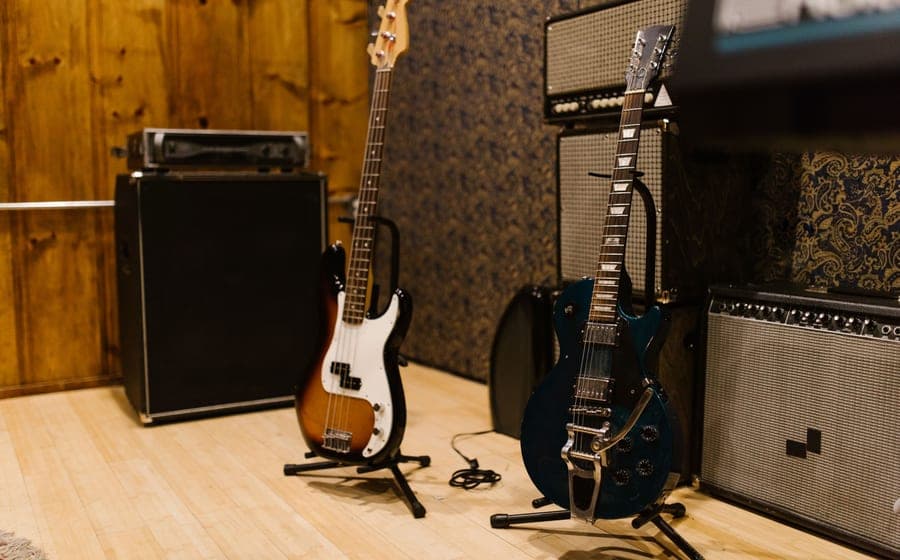
A pickup is a magnet with wire wound around it. A steel string vibrating above it disturbs the magnetic field, that disturbance induces a tiny current in the coil, and the amplifier turns that current into sound.
That is the entire mechanism, and everything else in this topic is a consequence of how many coils there are and where they sit.
Single-coils are bright, clear and hum slightly. Humbuckers are thicker, louder, darker and silent. A bridge humbucker with two single-coils — HSS — covers the widest range of music and is the layout we recommend for a first electric when the player does not yet know what they want to play.
Single-coils
One coil, one magnet, and a sound with a lot of high-frequency detail. Single-coils are clear and articulate: individual notes inside a chord stay separate, and picking-hand dynamics come through strongly.
They are the sound of most clean guitar tones you have heard — funk, surf, country, a great deal of pop and blues.
The trade is noise. One coil acts as an antenna for electrical interference, which arrives as a background hum that gets louder as you add gain. It is not a defect, it is the physics, and every player learns to angle themselves away from the offending screen or light fitting.
The Squier Sonic Stratocaster#ad is a three-single-coil guitar, which is a large part of why it is the standard first electric: it is the most broadly useful clean sound available at that money.
Humbuckers
Two coils, wound in opposite directions, wired together. Interference hits both coils equally and cancels when the signals are combined; the string signal does not cancel, because the magnets are oriented to prevent it.
The result is silence, more output, and a thicker, darker sound with less of the fine high-frequency detail. Under distortion that thickness holds together where a single-coil would get thin and hissy, which is why humbuckers dominate rock and metal.
The Epiphone Power Players Les Paul#ad is a two-humbucker guitar, and it sounds fundamentally different to a Stratocaster-style instrument for this reason alone — the wood and the shape are a much smaller part of the difference than most people assume.
Reading the layout code
Spec sheets give the pickup layout as letters read from the neck end to the bridge end.
SSS — three single-coils. Classic Stratocaster. Bright, versatile for clean playing, weakest under heavy distortion.
HSS — a humbucker at the bridge, single-coils at the middle and neck. The practical compromise: single-coil clarity for clean playing, humbucker thickness for the heavy stuff. The Yamaha Pacifica PAC012#ad uses this layout and it is the main reason we recommend it to players who do not yet know what they want.
HH — two humbuckers. Les Paul territory. Thick and quiet, less suited to sparkling clean tones.
P-90 — a wider single-coil, worth knowing about. Fatter than a standard single-coil, brighter than a humbucker, and it hums. A middle ground with a devoted following.
Position matters as much as type
A single guitar sounds like several guitars depending on which pickup is selected, because the string moves differently at different points along its length.
Neck pickup sits where the string swings widest, and sounds warm, round and full. Good for lead lines and jazz-like clean tones.
Bridge pickup sits where the string barely moves, and sounds bright, thin and cutting. This is the rhythm-and-riffs position and the one that works with distortion.
Middle, and the in-between positions on a five-way switch combine two pickups. Those combined settings produce the hollow, quacky sound that is one of the most recognizable electric guitar textures there is.
Learning what the selector does is free and changes your sound more than any pedal you could buy in year one. What to do with the amp is in amp settings for beginners.
Choosing by what you listen to
| If you mostly want to play | Look for |
|---|---|
| Pop, funk, country, indie, clean rhythm | SSS |
| Blues and classic rock | SSS or HSS — either works |
| A bit of everything, undecided | HSS |
| Hard rock, punk, metal | HH |
What not to worry about yet
Pickup upgrades. Swapping pickups on a budget guitar is a popular internet project and a poor first-year purchase. A setup costs less and improves the instrument more.
Magnet types and output numbers. Alnico versus ceramic, DC resistance figures, wind counts. All real, all far below the threshold of what changes a beginner's playing.
Active pickups. Battery-powered, very high output, specific to heavy styles. Not a beginner concern, and the batteries are a running annoyance.
The guitars themselves are compared in Squier versus Epiphone versus Yamaha, which is largely a pickup-layout argument wearing three brand names.
What we would buy
Squier Sonic Stratocaster
Squier by FenderBest for: The honest floor, electric
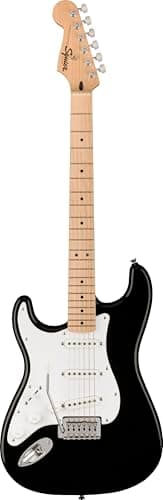
The cheapest electric that still has full-scale geometry, sealed tuners and a real 9.5 inch fingerboard radius. Nothing about it will make a beginner's first year harder.
Published specifications
- Scale length:
- 25.5" (647.7 mm) — full size
- Body / neck:
- Poplar body, maple neck, "C" profile
- Fingerboard:
- Maple or Indian laurel, 9.5" (241 mm) radius
- Frets:
- 21, narrow tall
- Nut width:
- 1.650" (42 mm), synthetic bone
- Pickups:
- Three ceramic single-coils (SSS)
- Bridge:
- 6-saddle vintage-style synchronized tremolo
What it gets right
- Full 25.5 inch scale, so nothing learned here has to be relearned later
- Synthetic bone nut rather than a soft plastic one — the part that decides whether a cheap guitar stays in tune
- Sealed-gear tuners, which is the single most important spec on a first electric
Where it gives ground
- Poplar body and ceramic pickups are exactly what you would expect at this tier
- The tremolo bridge will pull the guitar out of tune if a beginner uses it, and beginners always use it
What it is not good at
Staying in tune if you use the whammy bar. If that matters, buy the hardtail (HT) version of the same guitar instead — it is the identical instrument with the tremolo deleted.
How the specs score against a beginner’s needs
Scores are our reading of the published specifications above against what a beginner physically needs. They are not test results — we have not played this instrument.
Specifications from Squier Wiki — Sonic Stratocaster specifications.
Yamaha Pacifica PAC012
YamahaBest for: One guitar, several styles
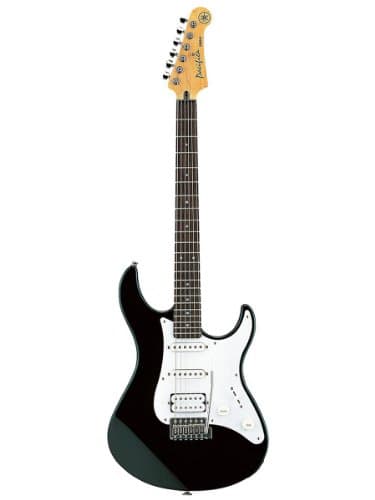
An HSS layout and 22 frets at the entry tier. The humbucker at the bridge means one guitar covers both the quiet and the loud thing a beginner wants to try.
Published specifications
- Scale length:
- 25-1/2" (648 mm) — full size
- Body:
- Solid agathis, bolt-on construction
- Neck:
- Maple, 22 frets
- Fingerboard radius:
- 13-3/4" (350 mm) — flatter than a Strat
- Pickups:
- Humbucker / single / single (HSS)
- Nut:
- Urea
What it gets right
- 22 frets rather than 21, and a flatter 350 mm radius that suits chord playing
- The bridge humbucker covers distorted rock without a pickup swap later
- Yamaha's entry instruments are consistently well set up out of the box for the tier
Where it gives ground
- Agathis is a soft, plain body wood; the finish marks easily
- The flatter fingerboard radius is a real difference from a Strat — if a friend's Strat is the reference, this will feel different
What it is not good at
Being a Stratocaster. It is Strat-shaped and it is not one; the radius and the bridge pickup make it its own thing. That is a feature, but do not buy it expecting a Fender feel.
How the specs score against a beginner’s needs
Scores are our reading of the published specifications above against what a beginner physically needs. They are not test results — we have not played this instrument.
Specifications from Yamaha USA — PAC012 specifications.
Epiphone Power Players Les Paul
EpiphoneBest for: Ages roughly 8-13
A 22.73 inch scale on a mahogany body with two real humbuckers, and a gig bag, strap, cable and picks in the box. The short scale is the whole point: it is reachable.
Published specifications
- Scale length:
- 22.73" — 3/4+ size
- Body / neck:
- Mahogany body, bolt-on mahogany neck, SlimTaper D profile
- Frets:
- 22, sculpted heel for upper-fret access
- Pickups:
- Epiphone 650R (neck) and 700T (bridge) humbuckers
- Bridge:
- LightningBar compensated wrap-around
- In the box:
- Gig bag, strap, picks, guitar cable
What it gets right
- A wrap-around bridge has nothing to knock out of tune — the right choice for a kid's guitar
- Mahogany body and neck rather than the plywood usual at this size
- Ships with the accessories that otherwise cost another chunk on top
Where it gives ground
- Les Pauls are dense, and even a 3/4+ one has weight a small child will notice on a strap
- Humbuckers only — no bright, clean single-coil sound available
What it is not good at
Very small children. At 3/4+ this suits roughly age 8 upward; a five-year-old needs the smaller scale of a Squier Mini or a Loog.
How the specs score against a beginner’s needs
Scores are our reading of the published specifications above against what a beginner physically needs. They are not test results — we have not played this instrument.
Specifications from Epiphone (Gibson) — Power Players Les Paul.
Questions people actually ask
What is the difference between a single-coil and a humbucker?
A single-coil is one coil of wire and sounds bright and clear with a fair amount of detail. A humbucker is two coils wired to cancel electrical hum, and sounds thicker, louder and darker. The hum cancellation is where the name comes from.
What does SSS or HSS mean on a guitar?
It reads from the neck to the bridge. SSS is three single-coils. HSS is a humbucker at the bridge with two single-coils. HH is two humbuckers. HSS is the most versatile layout for a beginner who does not yet know what they will play.
Do single-coil pickups really hum?
Yes, and it is normal rather than a fault. They pick up electrical interference from lighting, screens and power supplies. Turning to face a different direction usually reduces it noticeably, which is a genuinely useful trick.
Which pickups are best for metal?
Humbuckers, comfortably. High gain amplifies everything including hum, and the thicker output of a humbucker holds together under heavy distortion where a single-coil gets thin and noisy.
Sources
Still deciding?
Every recommendation on this site is built the same way, and the method is published in full — including what we do not do and what would get a pick dropped.
Read next
- Best beginner electric guitars: what's worth it from $150 to $400
Segmented by player and price band, with the three specs that actually decide whether a first electric survives its first year.
- Squier vs Epiphone vs Yamaha for a first guitar
Fender, Gibson and Yamaha lineages compared on the specs that differ: scale length, pickups, fingerboard radius.
- Best beginner guitar amps
Why the headphone socket outranks wattage, two picks, and the honest limits of a practice amp.
- Guitar amp settings, explained
What each control does, a neutral starting point to dial in from, and the three settings that cover most beginner playing.
- Best guitars for adult beginners
Why adults should skip the entry tier, four picks covering electric and acoustic, and the body size question nobody warns adults about.