Band & Orchestra
Best brass instruments for beginners
Five brass instruments turn up in a school band room. You can only buy a documented student version of two of them, and the easiest one to play is not one of the two.
By Sawyer V. · Published · Last updated
If a beginner wants to play brass, the realistic answer is trumpet or trombone — not because the others are worse instruments, but because those are the only two with a student model you can buy and check against a published specification. French horn, baritone and tuba are ordinary beginner band instruments and the market for them is not: the beginner-priced listings are unbranded with nothing published, and the named brands start well above what a first instrument should cost. For those, rent.
Every pick states its Starter Path band, and we have not played any of them — the method is on how we pick. Bores, bells and slide materials come from published spec sheets, cited at the bottom.
Buyable brass for a beginner is trumpet or trombone. Between them the choice is fingering against intonation: a trumpet gives you fixed fingerings and the smallest mouthpiece in the family; a trombone removes fingerings entirely and hands you a slide with no marked stops. French horn, baritone and tuba: rent. There is no honest beginner purchase for any of them. And note the awkward part — the brass instrument most often called the easiest to get a sound out of is the baritone, which is in the rent-only group.
The five instruments, and which you can actually buy
A school band room has five brass instruments in it. Here is the honest state of each as a purchase, which is a different question from how good an instrument it is.
Trumpet. Buyable. Several named brands publish bore, bell and valve materials at student prices, and the competition at the bottom of the market is real enough that you are choosing rather than settling. The most commonly assigned brass instrument, and the most commonly reassigned away from.
Trombone. Buyable. A smaller field than trumpet but a genuine one, and the specification that matters — the slide — is published by at least one budget maker.
French horn. Not buyable at a beginner price. We looked again for this page. The listings in beginner territory are unbranded “Double French Horn F/Bb 4 Keys Gold Lacquer”-type products with no manufacturer behind them and no published specification; the first named-brand instrument is several thousand dollars. There is no middle.
Baritone and euphonium. Not buyable either, and this is the frustrating one, because it is the instrument most often recommended as the easiest brass start. The beginner-priced options are unbranded or single units from brands with no published specification sheets.
Tuba. Effectively never a purchase for a beginner. Schools own tubas and lend them, and that is the entire normal route.
That is the real shape of this decision, and almost no page that ranks “best brass instruments for beginners” will tell you, because it is inconvenient for a list.
Which brass instrument, if you get a free choice
Most students do not — a band director assigns based on what the band needs and what the child's mouth suits, and that is a better process than a parent guessing. But where there is a choice, here is what actually differs.
Every brass instrument is slow to a first note. This is the thing to know before anything else. On a reed instrument the reed is the sound source and a student gets a squawk on day one. On brass the player's own lips are the sound source, buzzing against a cup, and that takes weeks to become reliable. Our easiest band instruments guide ranks the whole band room by time to a first note and brass sits at the bottom of it. Choosing brass is choosing a slower start.
Mouthpiece size is the real sorting mechanism. The trumpet has the smallest cup in the family, and where a player's lips simply do not suit it the buzz does not come at all. One brass retailer puts this plainly: if the mouthpiece is too small for the player's mouth shape, a larger horn is the better fit. That is why band directors look at a child's mouth before recommending brass, and it is why the answer to “they cannot get a note” is sometimes a different instrument rather than more practice.
Baritone is the easiest to get a sound out of. One school music program describes it as one of the easiest instruments to produce a sound on for almost all students, with the bonus that the skills transfer later to trombone and tuba. Its published downsides are that it is bulky and that it is not used in jazz bands or orchestras. Add our own finding — that you cannot buy a documented one — and the baritone becomes the clearest rent-don't-buy case in the whole band room.
Trumpet against trombone is fingering against intonation. Both demand the same embouchure, so neither is the easy option. What differs is where the remaining difficulty sits. A trumpet gives you three valves and fixed fingerings: the note you want has a button, and the problem is that the available notes for any given fingering sit very close together, so the lips have to pick between them. A trombone has no fingerings to learn at all — which sounds like an advantage and is half of one — because the slide has no fixed stops, so every position is found by ear.
In practice that maps onto the child. A student who reads and memorizes well often gets on better with the trumpet's fixed system; a student with a good ear and poor patience for memorization often does better on a slide. We put the two side by side in trombone against trumpet for beginners, which goes further into cost, carrying and what each asks of the player physically. And our woodwind against brass comparison covers the step before this one, if brass itself is not settled.
What we looked at on the instruments themselves
Four published specifications, in the order they matter for a beginner.
Bore. The internal diameter of the tubing, and the number that decides how much air the instrument asks for. A wide bore gives a bigger sound to a player who can fill it and exhausts one who cannot. Band retailers publish a recommended beginner range, and a student instrument sitting above it is harder work than it needs to be for no benefit a beginner can use.
What the slide or valves are made of. On a trombone the slide is the instrument, and the inner and outer tube materials decide how it feels; most budget makers stay silent about them. On a trumpet it is the valve material, where stainless steel is durable and monel is smoother over years.
What is in the box. A mouthpiece, a case, valve oil or slide cream and a cleaning kit are all things you would otherwise buy separately, and on a budget instrument a complete outfit is a meaningful part of the value.
Whether anyone stands behind it. A named manufacturer warranty and a working company website are weak signals individually and informative together. Brass instruments get dented and need service, and an Amazon-native brand with no dealer network is a different proposition from one with both.
The picks
A note on what these are. This page decides which instrument; the picks below are there so the decision can be acted on. Once the instrument is settled, our beginner trumpets and beginner trombones roundups go deeper on model choice, including the step-up options this page does not cover.
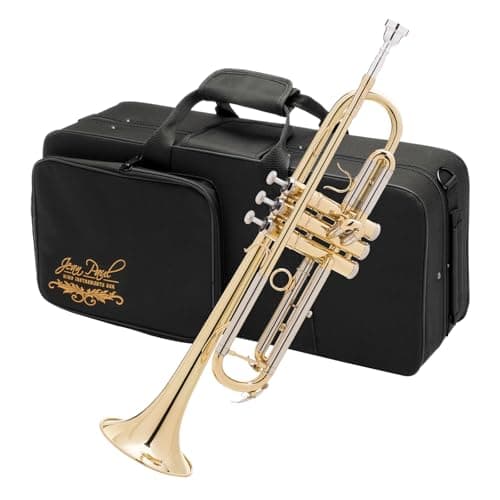
The Jean Paul TR-330#ad is the trumpet. A medium bore, stainless steel valves, a two-piece yellow brass bell, and the outfit complete with a 7C mouthpiece, semi-hard case, valve oil, cloth and gloves. The brand play-tests in the US before shipping, which for a budget brass instrument is a meaningfully better process than none at all. Buy this if a trumpet student is committed and the school has no rental. Skip it if year one is not finished. Honest limits: stainless steel valves are durable rather than as smooth as monel over time, and resale is minimal, so the saving against a Yamaha narrows across a few years.
The Eastar ETB-330#ad is the lowest entry price for a trombone that publishes real numbers — a brass body in lacquered gold, a hard case, a 7C mouthpiece and a cleaning kit, with bore and bell both stated in millimeters, which many budget brands omit entirely. Buy this if the budget is genuinely the constraint. Skip it if you can stretch, and here is why we say so plainly: its published bore is wider than the range band retailers recommend for beginners, so it asks for more air than a student horn should. Eastar also does not publish the slide materials — on a trombone, the most important part — and the brand's own model naming is inconsistent, which is a weak signal for parts and service.
The Jean Paul TB-400#ad is the trombone that checks out on paper. It is the rare budget instrument that publishes its slide materials separately — a cupronickel inner slide inside a yellow brass outer — with a bore just under half an inch, which sits inside the beginner range rather than above it, plus a hard case, mouthpiece and a one-year warranty. Buy this if the student is staying with it. Skip it if the part needs an F attachment: none is published, so the low register stays on the slide alone. Worth knowing too that it is marketed as intermediate while also being sold to beginners, so the name does not tell a parent which tier they are buying.
What we did not list, and why
Any french horn, baritone, euphonium or tuba. Covered above and the main finding of this page. We would rather publish a roundup with a hole in it and explain the hole than fill it with an unbranded instrument whose bore nobody states.
Cornets. A cornet is the smallest and lightest member of the family and a traditional starting instrument for younger children, especially in brass bands. We searched for one and the beginner listings from named brands returned trumpets rather than cornets. If a program specifically asks for a cornet, that is a conversation with the director about rental rather than a purchase.
Sub-$150 trumpets. There are many and they are in stock. None we checked publishes a bore, a bell diameter or a valve material, and on an instrument where those numbers decide how much air a child needs, a listing with nothing published cannot be compared against one that publishes everything.
Pocket trumpets. They look like the answer for a small child and they are not: the tubing is the same length wound tighter, so the instrument is no easier to play and the compact wrap can make intonation worse. Size is not the barrier on brass; embouchure is.
Step-up instruments. Out of scope here. Our page on step-up band instruments for year two is for the student who has already proved they are staying.
Before you buy anything
The honest order of operations for a brass beginner, which puts most of this page second.
Rent through the school if you can. Band is the one family where our standing advice is usually not to buy in year one. Directors reassign students between instruments in the first months — brass more than most, because embouchure suits some mouths and not others — and school rental normally covers the dents and the servicing that brass inevitably needs.
Ask what the program actually needs. A band short of low brass will welcome a baritone player, and that steers the decision more usefully than any ranking. Our page on choosing a school band instrument covers how that conversation normally goes.
Then, if buying is right, budget for the parts that are not the instrument. A practice mute is what makes brass practice possible in a flat or after bedtime — our practice mutes roundup covers those, including why a stuffy mute teaches a student to push. Valve oil and slide cream are cheap and not optional. And the mouthpiece that came with a rented horn is often the weakest part of it, which our trumpet mouthpieces page goes into — along with the trap of buying a bigger cup because it costs the same.
Quick picks
Trumpet — the one to buy
Medium bore, stainless steel valves, a two-piece yellow brass bell and a complete outfit, play-tested in the US before shipping. For: a committed trumpet student whose school has no rental. Skip if: year one is not finished — rent instead.
| # | Product | Best for | Score | Price |
|---|---|---|---|---|
| 1 | Jean Paul TR-330A medium-bore student trumpet with stainless steel valves and a two-piece yellow brass bell, play-tested in the US before shipping, with a 7C mouthpiece and semi-hard case. | Budget trumpet, if buying in year oneThe honest floor | 7.5 | $279.99 · View on Amazon #ad How we’re funded |
Trombone — lowest entry price
The cheapest trombone that publishes real numbers, with a hard case and mouthpiece included. For: the tightest budget. Skip if: you can stretch — its published bore is wider than the band most directors ask for, so it demands more air than a student should need.
| # | Product | Best for | Score | Price |
|---|---|---|---|---|
| 1 | 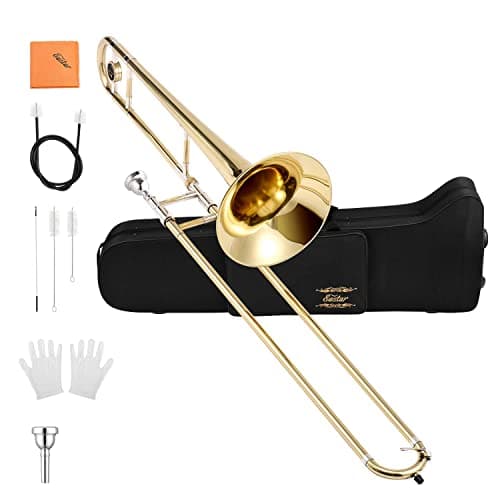 Eastar ETB-330The cheapest trombone here that publishes real numbers. | The lowest entry priceThe honest floor | 5.4 | $189.99 · View on Amazon #ad How we’re funded |
Trombone — the one that checks out on paper
The rare budget trombone that publishes its slide materials separately, with a bore just inside the beginner range. For: a student staying with it. Skip if: the band needs an F attachment, which this does not have.
| # | Product | Best for | Score | Price |
|---|---|---|---|---|
| 1 | 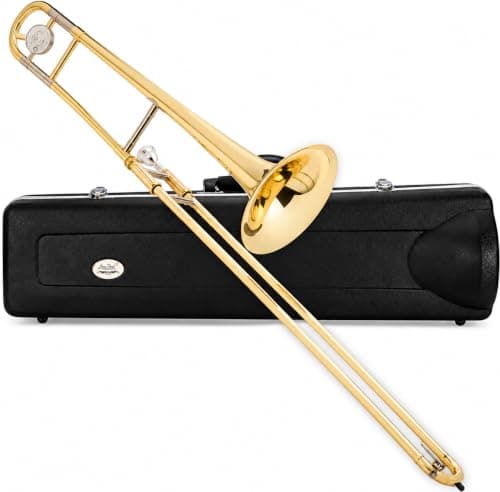 Jean Paul TB-400The rare budget trombone that publishes its slide materials. | A first trombone you can check on paperEnough | 8.0 | $499.99 · View on Amazon #ad How we’re funded |
The picks in full
Jean Paul TR-330
Jean Paul USABest for: Budget trumpet, if buying in year one
A medium-bore student trumpet with stainless steel valves and a two-piece yellow brass bell, play-tested in the US before shipping, with a 7C mouthpiece and semi-hard case.
Published specifications
- Key:
- Bb
- Bore:
- Medium
- Bell:
- Two-piece yellow brass
- Valves:
- Stainless steel
- Finish:
- Gold lacquer
- Included:
- 7C mouthpiece, semi-hard case, valve oil, polishing cloth, gloves
What it gets right
- Play-tested in the US before it ships, which for a budget brass instrument is a meaningfully better process than none
- A complete package — mouthpiece, case, oil and cloth are all things you would otherwise buy
- Deliberate breath resistance suited to a beginner, rather than the wide-open blow that leaves a new player out of air
Where it gives ground
- Stainless steel valves are durable and not as smooth as monel over time
- Resale is minimal, so the saving over a Yamaha is smaller than it looks across a few years
What it is not good at
Growing with a serious player. It gets a student through the first years honestly; beyond that the Yamaha or an intermediate horn is the step.
How the specs score against a beginner’s needs
Scores are our reading of the published specifications above against what a beginner physically needs. They are not test results — we have not played this instrument.
Specifications from Jean Paul USA TR-330 published description.
Eastar ETB-330
EastarBest for: The lowest entry price
The cheapest trombone here that publishes real numbers. A brass body with a lacquered gold finish, a hard case and a 7C mouthpiece, and a bore wider than the band most directors ask for.
Published specifications
- Key:
- B-flat tenor
- Bore:
- 13.4 mm (approx. 0.528 in)
- Bell:
- 206 mm (approx. 8.1 in)
- Body:
- Brass, with nickel and metal components
- Finish:
- Lacquered gold
- Included:
- Hard case, 7C mouthpiece, cleaning kit, gloves, care guide
- Slide material:
- Not published by Eastar
What it gets right
- Publishes bore and bell dimensions in millimeters, which many budget brands omit entirely
- Ships complete for a first year: hard case, mouthpiece, cleaning kit and gloves
- A stated twelve-month warranty on the brand's own page
Where it gives ground
- At about 0.528 inches the bore is wider than the 0.500-0.525 band retailers recommend for beginners, so it asks for more air than a student horn should
- Slide inner and outer tube materials are not published, and the slide is the most important part of a trombone
- Model naming is inconsistent on Eastar's own site and the brand's second store domain does not resolve, which is a weak signal for parts and service
What it is not good at
Matching what a band director usually specifies. The published bore sits above the standard student range.
How the specs score against a beginner’s needs
Scores are our reading of the published specifications above against what a beginner physically needs. They are not test results — we have not played this instrument.
Specifications from Eastar — trombone product page, Music & Arts — trombone buyer's guide (beginner bore range).
Jean Paul TB-400
Jean PaulBest for: A first trombone you can check on paper
The rare budget trombone that publishes its slide materials. A cupronickel inner slide inside a yellow brass outer, a bore just under half an inch, and a case and mouthpiece in the box.
Published specifications
- Key:
- B-flat tenor, straight (no F attachment)
- Bore:
- 12.6 mm (approx. 0.496 in)
- Bell:
- 204.4 mm (approx. 8.05 in), yellow brass
- Slide:
- Cupronickel inner slide, yellow brass outer slide
- Finish:
- Gold lacquer (silver also offered)
- Included:
- Hard carrying case, 12C mouthpiece, cleaning cloth and rod
- Warranty:
- 1 year for product defects
What it gets right
- Publishes inner and outer slide materials separately — the slide is the part that decides how a trombone feels, and most budget brands stay silent about it
- A bore just under 0.5 inches sits inside the range band retailers recommend for beginners, so it needs less air
- Ships with a hard case, mouthpiece and cleaning kit
- A named manufacturer warranty, which the Amazon-native brands in this category do not offer
Where it gives ground
- Straight tenor with no F attachment published, so the low register stays on the slide alone
- Marketed as intermediate while also being sold to beginners, so the naming does not tell a parent which tier it is
- The included 12C is a generic stock mouthpiece rather than a specified brand model
What it is not good at
Anything needing an F attachment. No trigger is published, so lower positions have to be reached with the slide.
How the specs score against a beginner’s needs
Scores are our reading of the published specifications above against what a beginner physically needs. They are not test results — we have not played this instrument.
Specifications from Jean Paul USA — TB-400 intermediate trombone, Music & Arts — trombone buyer's guide (beginner bore range).
Questions people actually ask
What is the best brass instrument for a beginner?
Trumpet or trombone, for a reason that is about the market rather than the music: they are the only two brass instruments with a student model you can actually buy and check on paper. For french horn, baritone and tuba, the listings available to a parent are either unbranded with no published specifications or they jump straight to professional money, so the honest answer for those is to rent through the school.
What is the easiest brass instrument to learn?
Within brass, the baritone is the one most often described as the easiest to get a sound out of — one school music program calls it one of the easiest instruments to produce a sound on for almost all students, and notes the skills transfer later to trombone and tuba. The catch is that it is bulky, it is not used in jazz bands or orchestras, and you cannot sensibly buy one. Across the whole band room, though, no brass instrument is easy: our easiest band instruments guide ranks brass last because the note depends on lip control rather than a reed.
Trumpet or trombone — which is easier?
They are hard in different places, and neither is easy. Both need the same embouchure, which is why brass takes weeks rather than days to a reliable first note. After that: a trumpet gives you fixed fingerings, so the note you want has a button, but the mouthpiece is the smallest in the family and the available notes for each fingering sit very close together. A trombone removes the fingerings entirely — there is nothing to memorize — and replaces them with a slide that has no marked stops, so intonation is yours to find. Fingering against intonation, not easy against hard. Our trombone against trumpet comparison takes the two apart properly, including cost and carrying.
Why can't I buy a beginner french horn or baritone?
You can buy something; you cannot buy something we would stand behind. We checked again for this page: the beginner-priced listings for french horn, baritone and euphonium are overwhelmingly unbranded sellers publishing no bore, no bell diameter and no materials, and the named-brand options were either single units in stock or priced well above a thousand dollars. On an instrument where bore and bell decide how much air a child needs, a listing with no published specification cannot be assessed. Rent those.
Should we buy at all in year one?
Usually not, and this is our standing position across the whole band hub. Directors reassign students between instruments in the first months, school rental normally covers maintenance, and buying turns a routine reassignment into an expensive mistake. The two cases where buying is right are a committed student at the year-two step-up, and a school with no rental program at all. Our page on renting against buying works through it properly.
My child's lips do not seem to suit the trumpet mouthpiece. What then?
That is a real and recognized problem rather than a lack of effort — a trumpet has the smallest mouthpiece in the brass family, and one brass retailer suggests plainly that where the mouthpiece is simply too small for a player's mouth shape and the buzz will not come, a larger horn is the better fit. Trombone, baritone and horn all use bigger cups. Before changing instruments, though, it is worth checking the mouthpiece itself — our trumpet mouthpiece page covers why a bigger cup for the same money usually makes a beginner worse, not better.
How much should a beginner brass instrument cost?
A student trumpet with published specifications sits in the low-to-mid hundreds, and a student trombone starts a little below that. Anything dramatically under those brackets is generally an unbranded instrument with no published bore or bell, which is the specific thing this page argues against. Our guide to what a band instrument should cost has the brackets by instrument.
Sources
- Jean Paul USA TR-330 published description (medium bore, stainless steel valves, two-piece yellow brass bell, included outfit)
- Jean Paul USA — TB-400 trombone (bore 12.6 mm, bell 204.4 mm, cupronickel inner slide and yellow brass outer slide, 1 year warranty)
- Eastar — trombone product page (ETB-330 bore, bell and included kit)
- Music & Arts — trombone buyer's guide (the bore range retailers recommend for beginners)
- Needham Music / Ensemble Schools — choosing an instrument (baritone described as one of the easiest instruments to produce a sound on, skills transferring to trombone and tuba, and its bulk and limited ensemble use as the downsides)
- Normans Musical Instruments — what is the easiest brass instrument to learn (cornet as the smallest and lightest of the family; a larger horn suggested where a trumpet mouthpiece is too small for the player's embouchure)
Still deciding?
Every recommendation on this site is built the same way, and the method is published in full — including what we do not do and what would get a pick dropped.
Read next
- Woodwind or brass for a first band instrument?
How each family produces sound, what that means for the first month, running costs, and how each suits different students.
- Best beginner trumpets
Bore size, monel versus stainless valves, the third valve trigger, and two picks for when buying is right.
- Best beginner trombones
What bore size means for a beginner, why slide material is the spec to check, and three trombones with honest limits stated.
- Trombone vs trumpet for beginners
Valves against a slide, what each demands physically, cost and carrying, and which instrument suits which beginner.
- Renting vs buying a school band instrument
Why year one is a rental year, what programs cover, the maintenance nobody warns you about, and when buying starts to win.
- The easiest band instruments to learn
Ranked by time to a reliable first note, with what embouchure is and why it decides the ranking.
- Choosing a school band instrument
Which instrument suits which child, what school rental covers, and the honest case for not buying in year one.