Band & Orchestra
Best beginner trumpets
Brass is the slowest section to a first note and the most commonly reassigned. Rent first — then when you buy, these are the two and here is what differs.
By Sawyer V. · Published · Last updated
Same rule as the rest of this hub: rent in year one if the school offers it. Brass is the most commonly reassigned section, because embouchure suitability depends on lip shape, teeth and bite and cannot be predicted in advance. A purchased trumpet turns a routine reassignment into an argument. See renting vs buying.
This page is for the year-two step-up and for families whose school has no program. Both picks state their Starter Path band, and we have not played them — our method is on how we pick.
A student trumpet should have a medium bore around .459 inches, a two-piece yellow brass bell, and an adjustable third valve trigger. Monel pistons are the meaningful upgrade over stainless: they stay smooth for years where cheaper pistons slow down.
Bore size, and why medium
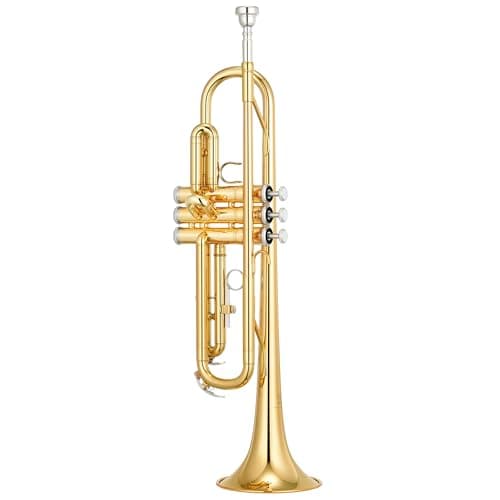
Bore is the internal diameter of the valve tubing, and it sets how much air the instrument takes to fill. The Yamaha YTR-2330#ad specifies .459 inches, which is the student standard.
A larger bore produces a broader sound and demands considerably more air. On a beginner who has not yet built breath support, that means running out of air mid-phrase and a tone that collapses at the end of every line.
A smaller bore is efficient and feels tight and resistant. Medium is the compromise that lets a student produce a decent sound without a developed air supply, and it is why nearly every student trumpet lands in the same narrow range.
Monel versus stainless valves
The most meaningful mechanical difference between the two picks.
A trumpeter presses the valves thousands of times per session, and every one has to return instantly and completely. A valve that has slowed — from corrosion, wear or poor tolerance — makes fast passages feel impossible in a way the player cannot diagnose.
Monel is a nickel-copper alloy that resists corrosion well and keeps its surface smooth for years. The Yamaha uses monel pistons. The Jean Paul TR-330#ad uses stainless steel, which is durable and not as slick over time.
Neither is bad. This is simply where the price difference lives, and it is a difference that grows with the instrument’s age rather than showing on day one.
The third valve trigger
Worth explaining because it looks like a decoration and is not.
Every valved brass instrument has a built-in intonation problem. Pressing two valves together adds two lengths of tubing that were each calculated for the instrument without the other, so certain combinations — low D and C# especially — come out noticeably sharp.
The adjustable third valve trigger lets the player push that slide out mid-note to lengthen the tubing and pull the pitch back down. It is standard on student trumpets for a reason: without it, those notes are simply out of tune and the student is blamed.
What the budget pick does well
The Jean Paul TR-330 is play-tested in the US before it ships, which for a budget brass instrument is meaningfully better than no process at all — somebody blows it and confirms the valves work and the slides move.
It also arrives complete: 7C mouthpiece, semi-hard case, valve oil, polishing cloth and gloves. Those are things you would otherwise buy separately, and the deliberate breath resistance suits a beginner who has no air supply yet.
What to skip
Very cheap unbranded trumpets. Brass at the bottom of the market includes instruments with valves that stick from new and slides that seize. A student fighting a stuck third valve is fighting the instrument, not learning.
Coloured lacquer finishes. They exist and they mark the instrument as a toy in a band room, which matters at eleven more than it should.
Buying before the director has looked at the child’s teeth and bite. Brass embouchure suitability is genuinely physical, and it takes a director ten seconds to assess.
What you also need
Valve oil, applied regularly and the most-skipped bit of brass maintenance. Slide grease. A cleaning snake. And a music stand.
If a first note is proving slow, that is normal for brass — the comparison across the band room is in the easiest band instruments to learn.
Quick picks
The step-up standard
A .459 bore with monel pistons, a gold brass leadpipe and an adjustable third valve trigger. Yamaha's top-selling student trumpet.
| # | Product | Best for | Score | Price |
|---|---|---|---|---|
| 1 | Yamaha YTR-2330A . | Step-up trumpet, year two onwardEnough | 8.8 | $1,400.00 · View on Amazon #ad How we’re funded |
If buying in year one, on a budget
Medium bore, stainless steel valves, play-tested in the US before shipping, with a 7C mouthpiece and semi-hard case included.
| # | Product | Best for | Score | Price |
|---|---|---|---|---|
| 1 | 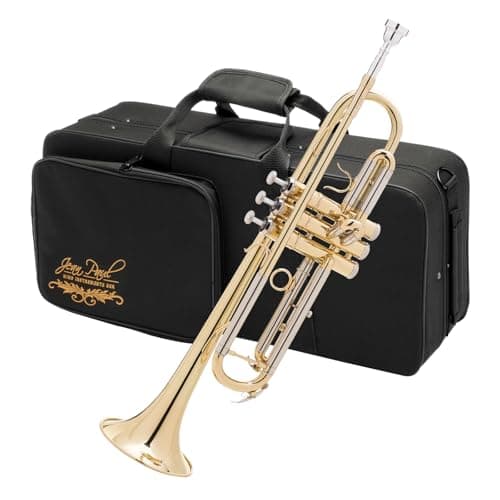 Jean Paul TR-330A medium-bore student trumpet with stainless steel valves and a two-piece yellow brass bell, play-tested in the US before shipping, with a 7C mouthpiece and semi-hard case. | Budget trumpet, if buying in year oneThe honest floor | 7.5 | $279.99 · View on Amazon #ad How we’re funded |
The picks in full
Yamaha YTR-2330
YamahaBest for: Step-up trumpet, year two onward
A .459 inch bore with monel pistons, a gold brass leadpipe and an adjustable third valve trigger. Yamaha's top-selling student trumpet and the one directors name first.
Published specifications
- Key:
- Bb
- Bore:
- .459"
- Bell:
- Yellow brass, two-piece, 4-7/8" diameter
- Leadpipe:
- Gold brass
- Valves:
- Monel pistons
- Third valve:
- Adjustable trigger
- Finish:
- Lacquer or silver plate
- Included:
- Mouthpiece
What it gets right
- Monel pistons are corrosion-resistant and stay smooth, which is the difference between a trumpet that stays fast and one that gums up
- The adjustable third valve trigger is how a player corrects the intonation problem every trumpet has on low D and C#
- A gold brass leadpipe warms the response slightly against plain yellow brass
Where it gives ground
- Student trumpets are all broadly similar on paper, so the case for this one is build quality rather than specification
- Lacquer wears at the contact points and looks tired long before it plays badly
What it is not good at
Being a year-one purchase. Brass reassignment is the most common kind in a band room, because embouchure suitability is unknowable in advance. Rent first.
How the specs score against a beginner’s needs
Scores are our reading of the published specifications above against what a beginner physically needs. They are not test results — we have not played this instrument.
Specifications from Yamaha Europe — YTR-2330 specifications.
Jean Paul TR-330
Jean Paul USABest for: Budget trumpet, if buying in year one
A medium-bore student trumpet with stainless steel valves and a two-piece yellow brass bell, play-tested in the US before shipping, with a 7C mouthpiece and semi-hard case.
Published specifications
- Key:
- Bb
- Bore:
- Medium
- Bell:
- Two-piece yellow brass
- Valves:
- Stainless steel
- Finish:
- Gold lacquer
- Included:
- 7C mouthpiece, semi-hard case, valve oil, polishing cloth, gloves
What it gets right
- Play-tested in the US before it ships, which for a budget brass instrument is a meaningfully better process than none
- A complete package — mouthpiece, case, oil and cloth are all things you would otherwise buy
- Deliberate breath resistance suited to a beginner, rather than the wide-open blow that leaves a new player out of air
Where it gives ground
- Stainless steel valves are durable and not as smooth as monel over time
- Resale is minimal, so the saving over a Yamaha is smaller than it looks across a few years
What it is not good at
Growing with a serious player. It gets a student through the first years honestly; beyond that the Yamaha or an intermediate horn is the step.
How the specs score against a beginner’s needs
Scores are our reading of the published specifications above against what a beginner physically needs. They are not test results — we have not played this instrument.
Specifications from Jean Paul USA TR-330 published description.
Questions people actually ask
What bore size should a beginner trumpet have?
Medium, around .459 inches, which is what the Yamaha YTR-2330 uses. A larger bore takes more air to fill and tires a beginner quickly; a smaller one feels tight. The medium bore is the student standard for exactly this reason.
What are monel valves?
Monel is a nickel-copper alloy used for valve pistons. It resists corrosion and stays smooth for years, where cheaper stainless or nickel-plated pistons can slow down. Since a trumpeter operates the valves thousands of times a session, smoothness is not a luxury.
Why is trumpet slow to a first note?
Because on a brass instrument the lips are the sound source. They buzz against the mouthpiece and the pitch comes from how fast they buzz, which is controlled by muscles that have never been used this way. Building that embouchure takes weeks, and there is no shortcut.
What is the third valve trigger for?
Correcting intonation. Every trumpet plays certain notes — low D and C# in particular — sharp, because of how the valve tubing combines. The third valve slide trigger lets the player lengthen that tubing on the fly to pull those notes back into tune.
Sources
Still deciding?
Every recommendation on this site is built the same way, and the method is published in full — including what we do not do and what would get a pick dropped.
Read next
- Best trumpet mouthpieces for beginners
Bach 7C against 5C against 3C, with the published cup diameters that separate them, plus where the Yamaha equivalent fits. Why the mouthpiece upgrade that costs nothing extra is the one to resist.
- Best brass instruments for beginners
Trumpet and trombone are the only brass instruments with a student model you can check on paper. Horn, baritone and tuba have no honest beginner purchase — rent those — and what separates trumpet from trombone is fingering against intonation.
- Best practice mutes for brass instruments
Back-pressure is the specification that matters, not how quiet it gets. Why a free-blowing mute beats a silent one for a student, and three mutes for trumpet and trombone.
- The easiest band instruments to learn
Ranked by time to a reliable first note, with what embouchure is and why it decides the ranking.
- Renting vs buying a school band instrument
Why year one is a rental year, what programs cover, the maintenance nobody warns you about, and when buying starts to win.
- Choosing a school band instrument
Which instrument suits which child, what school rental covers, and the honest case for not buying in year one.
- Best beginner saxophones
Why alto is the beginner size, the ergonomic details that matter at eleven, and two picks for when buying is right.
- Best beginner clarinets
Why resin beats wood for a student, what a 65mm barrel does for intonation, and two picks for the year-two step-up.
- Is trumpet hard to learn?
Why the embouchure is the whole difficulty, how long the first weeks take, and what a beginner should actually buy while they find out.