Band & Orchestra
Best beginner trombones
The slide is the instrument. Everything else on a trombone spec sheet matters less than how the slide moves and how much air the bore asks for.
By Sawyer V. · Published · Last updated

The trombone is the only band instrument with no keys or valves to press. Pitch comes from a slide, which means there is nothing mechanical telling the student where the note is — they learn seven positions by arm length and ear.
That design is why one specification dominates this page: the slide. A trombone with a rough or badly aligned slide is not a cheaper trombone, it is a harder one, and a beginner has no way to tell the difference between the instrument being difficult and themselves being bad at it.
We have not played these instruments. What follows is our reading of published manufacturer specifications; the method is on how we pick. Two of the brands that dominate the cheapest end of this category are not on this page at all, for reasons we set out below.
If the school has a rental program, rent the Yamaha YSL-354 or equivalent for the first year. If you are buying, the Jean Paul TB-400 is the best-documented horn at a sensible price, with a bore just under 0.5 inches and published slide materials. Buy the Eastar only if the budget is fixed and you accept a wider bore than a director would specify.
Bore size, and why it decides everything
The bore is the internal diameter of the tubing. A narrower bore needs less air to fill and gives more resistance to push against, which is exactly what a beginner with small lungs and no embouchure needs.
Music & Arts’ own buyer guide is explicit about the range: 0.500 to 0.525 inches for beginners, because smaller-bore trombones are easier to play and need less air to create a good tone. Wider bores belong to advancing players who can fill them and who want the bigger sound.
Applied to the horns here, that band sorts them quickly. The Yamaha is 12.7 mm, exactly 0.5 inches. The Jean Paul is 12.6 mm, just under. The Eastar is 13.4 mm, about 0.528 inches — above the range, on an instrument marketed to students.
The slide, which is the part that fails
A trombone slide is two tubes moving inside two others with fine tolerances. What the inner tubes are made of decides how smooth that feels and how it wears.
Nickel silver is the traditional student-horn inner slide material: hard, smooth and durable. Yamaha publishes it for the YSL-354.
Cupronickel is the other common choice at this level, and Jean Paul publishes it for the TB-400 inner slide with a yellow brass outer.
Not published is the third category, and it is worth treating as information in itself. Eastar publishes bore and bell dimensions but says nothing about the slide tubes, which is the specification that matters most.
The brands we could not write about
This page originally had two more picks on it. We dropped both, and the reason is worth stating because it is the whole point of this site.
Two brands that sell enormous numbers of budget trombones and violas have no working manufacturer website: one redirects to an unrelated business entirely, the other does not resolve. Neither is carried by the school band retailers we checked. That means there is no spec sheet, no warranty page and no service contact we could cite, and the figures that circulate for them come from marketplace listings rather than from anyone accountable.
We are not saying those instruments do not work. We are saying we cannot publish specifications for them without inventing the source, and the rest of the internet publishing confident numbers for them has the same problem. If you buy one, buy it knowing that parts, warranty and repair support are not part of the deal.
How we ranked these
Published specifications first, because on this instrument the unpublished numbers are the important ones. Then whether the bore sits in the beginner band, then what comes in the case, then brand support, then room to grow.
The picks
The Yamaha YSL-354#ad is the horn school programs are built around. A 12.7 mm bore — exactly the 0.5 inches directors specify — an 8 inch yellow brass bell, a nickel silver inner slide in a yellow brass outer, gold lacquer, an SL-48S mouthpiece and a case. Yamaha publishes the full sheet, down to the mouthpiece model.
It is also by far the most expensive instrument here, well beyond what most first-year families spend. We could not find an Amazon listing for it at a sensible price from a first-party seller, so its buy link is a tagged search rather than a product page — and honestly, the right way to get this horn is a school rental program or a band retailer, not a marketplace.
The Jean Paul TB-400#ad is the one we would buy outright. It publishes what almost nothing else at this price publishes: a cupronickel inner slide and a yellow brass outer slide, separately stated. The bore is 12.6 mm, just inside the beginner band, the bell is yellow brass at 204.4 mm, and it ships with a hard case, a 12C mouthpiece, a cleaning cloth and rod, and a one-year warranty.
Its limits are honest ones. It is a straight tenor with no F attachment, so the low register stays on the slide. It is marketed as intermediate while also being sold to beginners, which tells a parent nothing about which tier they are buying. And the included 12C is a generic stock mouthpiece rather than a named model.
The Eastar ETB-330#ad is the lowest entry price with real published numbers, and we include it because the alternative at this price is a horn with no specifications at all. Brass body, lacquered gold finish, 206 mm bell, hard case, 7C mouthpiece, cleaning kit and gloves, and a twelve-month warranty.
The trade is the one this page opened with. At 13.4 mm the bore is wider than the range directors recommend, so it asks for more air than a beginner has. The slide tube materials are not published. And the brand’s own model naming is inconsistent between its product page and its category listing, with a second store domain that does not resolve — weak signals for parts and service.
Before you buy anything
Ask the band director. Programs frequently specify a brand list, and an instrument outside it can be a problem at inspection or when the school repairs it.
Consider the arm. Trombone positions are reached by arm length, and a small sixth grader may not reach sixth and seventh position comfortably. Directors sometimes start smaller students elsewhere and move them to trombone a year later — the sizing view across instruments is in best band instruments for small players.
Budget for slide care. Slide cream or oil and a water spray bottle, used weekly, are what keep the instrument playable. That routine is in how to clean a band instrument.
If you are still choosing between brass instruments entirely, the head-to-head is in trombone vs trumpet for beginners.
Quick picks
What the band director will name
A 0.5 inch bore, an 8 inch yellow brass bell and a nickel silver inner slide. The school standard, and the one rental programs stock.
| # | Product | Best for | Score | Price |
|---|---|---|---|---|
| 1 | No image Yamaha YSL-354The school standard. | What the band director will nameEnough | 9.0 | Check price on Amazon → #ad How we’re funded |
The best-documented budget horn
The rare inexpensive trombone that publishes its slide materials, with a bore just under half an inch and a case and mouthpiece included.
| # | Product | Best for | Score | Price |
|---|---|---|---|---|
| 1 | 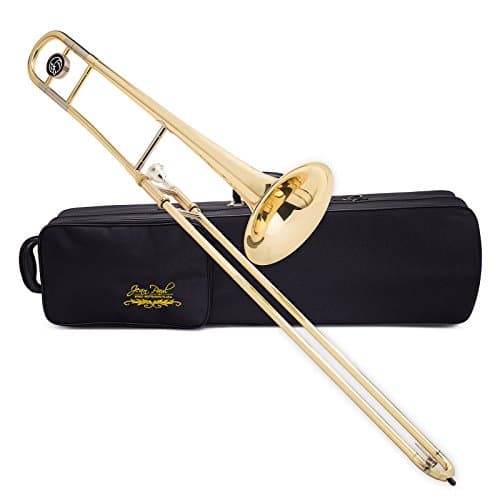 Jean Paul TB-400The rare budget trombone that publishes its slide materials. | A first trombone you can check on paperEnough | 8.0 | $499.99 · View on Amazon #ad How we’re funded |
The lowest entry price
Complete with hard case, mouthpiece and cleaning kit, and a bore wider than the band most directors ask for. Know what you are trading.
| # | Product | Best for | Score | Price |
|---|---|---|---|---|
| 1 | 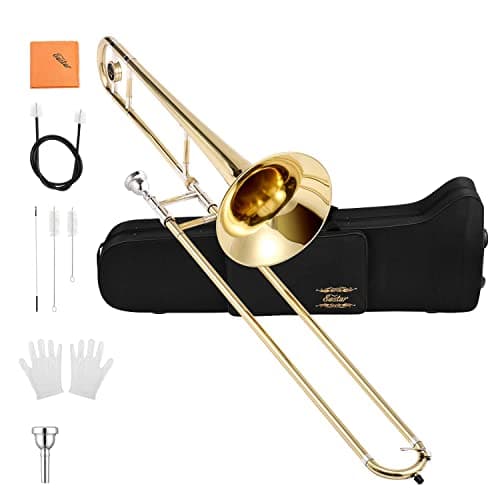 Eastar ETB-330The cheapest trombone here that publishes real numbers. | The lowest entry priceThe honest floor | 5.4 | $209.99 · View on Amazon #ad How we’re funded |
The picks in full
Yamaha YSL-354
YamahaBest for: What the band director will name
The school standard. A 0.5 inch bore, an 8 inch yellow brass bell and a nickel silver inner slide, sold with the SL-48S mouthpiece and a case. Rent it or buy it from a band retailer rather than a marketplace.
Published specifications
- Key:
- B-flat tenor
- Bore:
- M: 12.7 mm (0.5")
- Bell:
- 204.4 mm (8"), yellow brass
- Slide:
- Nickel silver inner slide, yellow brass outer slide
- Finish:
- Gold lacquer (YSL-354S is silver-plated)
- Mouthpiece:
- SL-48S included
- Case:
- Included
What it gets right
- A 0.5 inch bore sits exactly in the range retailers recommend for beginners, so it is easy to fill
- Nickel silver inner slide, which is the traditional student-horn specification for slide wear and feel
- The instrument school rental programs and band directors already support, so parts and repairs are routine
- Yamaha publishes a full spec sheet, including the mouthpiece model
Where it gives ground
- By far the most expensive trombone here, and well beyond what most first-year families spend
- We found no Amazon listing at a sensible price from a first-party seller, so its buy link is a tagged search rather than a product page
- A straight tenor: no F attachment, so it is not the horn for a player already heading to bass trombone parts
What it is not good at
A tight budget or a trial year. If the student may quit, renting this is the sensible route rather than buying it.
How the specs score against a beginner’s needs
Scores are our reading of the published specifications above against what a beginner physically needs. They are not test results — we have not played this instrument.
Specifications from Yamaha — YSL-354 specifications, Music & Arts — trombone buyer's guide (beginner bore range).
Jean Paul TB-400
Jean PaulBest for: A first trombone you can check on paper
The rare budget trombone that publishes its slide materials. A cupronickel inner slide inside a yellow brass outer, a bore just under half an inch, and a case and mouthpiece in the box.
Published specifications
- Key:
- B-flat tenor, straight (no F attachment)
- Bore:
- 12.6 mm (approx. 0.496 in)
- Bell:
- 204.4 mm (approx. 8.05 in), yellow brass
- Slide:
- Cupronickel inner slide, yellow brass outer slide
- Finish:
- Gold lacquer (silver also offered)
- Included:
- Hard carrying case, 12C mouthpiece, cleaning cloth and rod
- Warranty:
- 1 year for product defects
What it gets right
- Publishes inner and outer slide materials separately — the slide is the part that decides how a trombone feels, and most budget brands stay silent about it
- A bore just under 0.5 inches sits inside the range band retailers recommend for beginners, so it needs less air
- Ships with a hard case, mouthpiece and cleaning kit
- A named manufacturer warranty, which the Amazon-native brands in this category do not offer
Where it gives ground
- Straight tenor with no F attachment published, so the low register stays on the slide alone
- Marketed as intermediate while also being sold to beginners, so the naming does not tell a parent which tier it is
- The included 12C is a generic stock mouthpiece rather than a specified brand model
What it is not good at
Anything needing an F attachment. No trigger is published, so lower positions have to be reached with the slide.
How the specs score against a beginner’s needs
Scores are our reading of the published specifications above against what a beginner physically needs. They are not test results — we have not played this instrument.
Specifications from Jean Paul USA — TB-400 intermediate trombone, Music & Arts — trombone buyer's guide (beginner bore range).
Eastar ETB-330
EastarBest for: The lowest entry price
The cheapest trombone here that publishes real numbers. A brass body with a lacquered gold finish, a hard case and a 7C mouthpiece, and a bore wider than the band most directors ask for.
Published specifications
- Key:
- B-flat tenor
- Bore:
- 13.4 mm (approx. 0.528 in)
- Bell:
- 206 mm (approx. 8.1 in)
- Body:
- Brass, with nickel and metal components
- Finish:
- Lacquered gold
- Included:
- Hard case, 7C mouthpiece, cleaning kit, gloves, care guide
- Slide material:
- Not published by Eastar
What it gets right
- Publishes bore and bell dimensions in millimeters, which many budget brands omit entirely
- Ships complete for a first year: hard case, mouthpiece, cleaning kit and gloves
- A stated twelve-month warranty on the brand's own page
Where it gives ground
- At about 0.528 inches the bore is wider than the 0.500-0.525 band retailers recommend for beginners, so it asks for more air than a student horn should
- Slide inner and outer tube materials are not published, and the slide is the most important part of a trombone
- Model naming is inconsistent on Eastar's own site and the brand's second store domain does not resolve, which is a weak signal for parts and service
What it is not good at
Matching what a band director usually specifies. The published bore sits above the standard student range.
How the specs score against a beginner’s needs
Scores are our reading of the published specifications above against what a beginner physically needs. They are not test results — we have not played this instrument.
Specifications from Eastar — trombone product page, Music & Arts — trombone buyer's guide (beginner bore range).
Questions people actually ask
What bore size should a beginner trombone have?
Music & Arts’ buyer guide puts the beginner range at 0.500 to 0.525 inches, and gives the reason plainly: smaller bore trombones are easier to play and need less air to produce a good tone. A wider bore on a twelve-year-old is work.
Do I need an F attachment?
Not to begin. An F attachment adds a valve and tubing that make low notes and awkward positions easier, and it adds weight and cost. Beginning band parts are written for a straight tenor, and none of the horns here has one.
Should we rent or buy a trombone?
Rent for a first year if the school offers it, especially for brass, where a student may switch after a term. Buying makes sense once the student has stuck with it, and that calculation is in renting versus buying a band instrument.
Is a cheap trombone a false economy?
It depends on the slide. A stiff or misaligned slide makes accurate playing impossible in a way a student cannot diagnose, and it is the part cheap horns cut. If a budget trombone will not publish what its slide is made of, that tells you something.
What size mouthpiece comes with a student trombone?
Usually a 12C or a 7C. Both are reasonable beginner sizes; a 12C is a little smaller and a 7C slightly larger. Band directors sometimes specify one, so ask before buying an extra.
Sources
Still deciding?
Every recommendation on this site is built the same way, and the method is published in full — including what we do not do and what would get a pick dropped.
Read next
- Renting vs buying a school band instrument
Why year one is a rental year, what programs cover, the maintenance nobody warns you about, and when buying starts to win.
- Choosing a school band instrument
Which instrument suits which child, what school rental covers, and the honest case for not buying in year one.
- Woodwind or brass for a first band instrument?
How each family produces sound, what that means for the first month, running costs, and how each suits different students.
- Trombone vs trumpet for beginners
Valves against a slide, what each demands physically, cost and carrying, and which instrument suits which beginner.
- What a school band instrument should cost
The four Starter Path bands applied to band instruments, the specific way ultra-cheap ones fail, and the real cost of year one.