Band & Orchestra
Best trumpet mouthpieces for beginners
The one page on this site where the price does not vary. The whole decision is cup size, and buying more of it makes a beginner worse.
By Sawyer V. · Published · Last updated
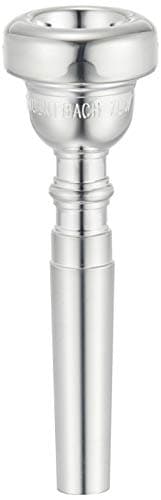
This is the only roundup on this site where price tells you nothing. A Bach 7C, a 5C and a 3C cost within a few dollars of each other, so the usual mechanism — the better thing costs more, and you decide whether the difference is worth it — does not operate. A student can buy a “bigger” mouthpiece for no extra money, which is exactly how the most common mistake in school band happens.
Every pick below states its Starter Path band, and we have not played any of them — the method is on how we pick. The cup diameters and rim descriptions are Bach’s and Yamaha’s own published figures, cited at the bottom.
Buy a Bach 7C: 16.20 mm cup diameter, medium cup depth, a medium-wide rim with a well-rounded edge. Bach’s own chart names school musicians as its audience and it is the reference every teacher’s instructions assume. A 3C costs the same and is 0.10 mm wider — that sounds trivial, it is not, and a beginner who switches loses upper register and blames themselves.
Why the mouthpiece matters more than the next trumpet
A trumpet is a tube that amplifies and shapes a buzz. The buzz itself is produced entirely by the player’s lips against the mouthpiece rim, inside the mouthpiece cup. Everything about how hard the instrument is to play — how high you can go, how long you last, how precisely you can place a note — happens in that small brass object before the horn is involved at all.
Which makes it the highest-leverage cheap purchase in the band hub. A student on a rented school trumpet with a dented, decade-old mouthpiece gets more from replacing the mouthpiece than from any realistic change of instrument, and it costs a fraction as much.
It also makes it the easiest thing to get wrong, because the one specification that decides the outcome is invisible and the model numbers do not explain themselves.
Reading the numbers: what 7C actually means
Bach’s model numbers are two parts. The number is cup diameter, and it runs backwards: a lower number is a wider cup. The letter is cup depth, where C is medium, B is medium-deep, A is deep and D onwards gets progressively shallower.
So the three models on this page share a letter and differ only in the number:
Bach 7C — 16.20 mm, medium cup. Bach’s rim description: medium wide, lowered toward the outside, medium sharp inside edge, well-rounded edge with a perfect grip.
Bach 5C — 16.25 mm, medium cup. Rim: medium wide, well rounded toward the inside and outside, fairly flat. Bach’s stated audience: players with a strong embouchure who do not like a sharp edge.
Bach 3C — 16.30 mm, medium cup. Rim: medium wide. Bach’s description: fairly large cup, good for all-around use.
A tenth of a millimeter between the 7C and the 3C sounds like nothing written down. On a surface that a pair of lips has to seal against and vibrate inside for an hour, it is a meaningful difference in how much tissue is being asked to work.
The trap: more mouthpiece for the same money
Here is the sequence that plays out in school band rooms every year. A student hears a better player, asks what they use, is told a 3C, and discovers it costs the same as the 7C they already have. There is no financial friction, so they buy it.
What happens next is predictable. The wider cup lets more lip vibrate, which does genuinely produce a fuller tone in the middle register — for about twenty minutes. Then endurance goes, because more tissue is working. The top of the range goes with it, because the upper register depends on a small, controlled vibrating area. The student now sounds better for a short while and worse for the rest of the rehearsal, and because the mouthpiece was free they do not connect the two things.
The better player with the 3C is not better because of the mouthpiece. They moved to the 3C because they had already developed the embouchure to support it. Cause and effect get reversed, and the student is left working harder for a worse result.
That is why the 3C is in the overspend band on this page despite costing the same as the floor pick. Overspending is not always about money.
The Yamaha alternative, and why the number is different
Yamaha’s 11C4 is the Japanese equivalent of a 7C and Yamaha describes it plainly as the standard model for beginners and advanced players. We are not listing it as a pick, for a supply reason rather than a quality one: it is a current Standard Series model and brass dealers stock it, but there is no live Amazon listing for the metal trumpet version at the time of writing, so we have nothing honest to link. It is still worth knowing for two reasons.
First, Yamaha publishes more than Bach does. The 11C4 is specified at 16.46 mm cup diameter, semi-flat standard-width rim, standard cup depth, a No. 27 (3.65 mm) throat and a semi-narrow backbore. Bach’s public chart gives diameter, depth and a rim description but not throat and backbore for every model.
Second, and this catches people out: the 11C4 is 16.46 mm, which is wider than a Bach 3C. The two makers measure to different reference points, so the numbers are not directly comparable across brands — but the practical effect is real. A student swapping between a Bach 7C and a Yamaha 11C4 mid-term will feel a genuine difference and their consistency will suffer for a week or two.
Pick one and stay on it. If the horn is a Yamaha student trumpet and your band shop has an 11C4 on the shelf, it is the mouthpiece that horn was voiced with and a sensible choice. For everybody buying online, the 7C#ad is the one everyone else’s instructions assume, and it is the one we can actually point you at.
What we did not list, and why
Ten-dollar unbranded 7C copies are the obvious omission and they are everywhere. The problem is not that they are bad — some are perfectly playable — it is that “7C” on an unbranded mouthpiece is a shape claim with no measurement behind it. Two from the same seller can differ. On the one component whose dimensions decide how hard the instrument is to play, buying something unspecified to save fifty dollars on a several-hundred-dollar instrument is the wrong trade.
Three-piece mouthpiece sets (7C, 5C and 3C in one box, for less than a single Bach) are worse than the individual copies, because they actively encourage the behavior this page is warning about. A beginner swapping between three cup sizes will not settle on any embouchure at all.
Shallow cups — the Bach 7D, 7E, the Yamaha 11B4 and 11A4 — are not listed because they are specialist tools. Yamaha describes the 11B4 as semi-shallow and suited to D, E-flat and piccolo trumpets; they make the high register easier at the cost of the bottom of the range. A beginner who finds high notes hard needs practice, not a shallower cup.
Denis Wick, Schilke and the other premium makers produce excellent mouthpieces at roughly double the Bach price. They are not listed because nothing about them helps a first-year player, and at that price the honest comparison is no longer other mouthpieces but a few lessons.
Looking after it, which nobody does
A trumpet mouthpiece collects everything that has been in the player’s mouth, and a student mouthpiece is typically cleaned when something goes visibly wrong. Warm water, mild soap and a mouthpiece brush once a week is the whole job, and it takes about a minute. Never hot water on a plated mouthpiece.
Two failures worth watching for. A dented rim, usually from being dropped, makes consistent placement impossible and is not repairable at this price point — replace it. And a stuck mouthpiece, from being shoved rather than twisted into the receiver, needs a mouthpiece puller at a repair shop and absolutely not a pair of pliers, which will destroy both parts.
Our page on cleaning a band instrument covers the weekly routine for the whole horn, and step-up band instruments for year two is the page for when the mouthpiece genuinely is no longer the limiting factor.
Quick picks
The one to buy
16.20 mm, medium cup, a rim with a well-rounded edge. Bach's own catalog calls it probably the most widely used model in the world and names school musicians as its audience. There is no second guess here.
| # | Product | Best for | Score | Price |
|---|---|---|---|---|
| 1 | Bach 7C Trumpet Mouthpiece16. | The first mouthpiece, for almost everyoneThe honest floor | 9.0 | $69.50 · View on Amazon #ad How we’re funded |
The one step up that is actually a step
16.25 mm and a flatter, well-rounded rim. Bach states the qualifying condition in print: players with a strong embouchure who do not like a sharp edge. That is a year-two test, not a year-one one.
| # | Product | Best for | Score | Price |
|---|---|---|---|---|
| 1 | 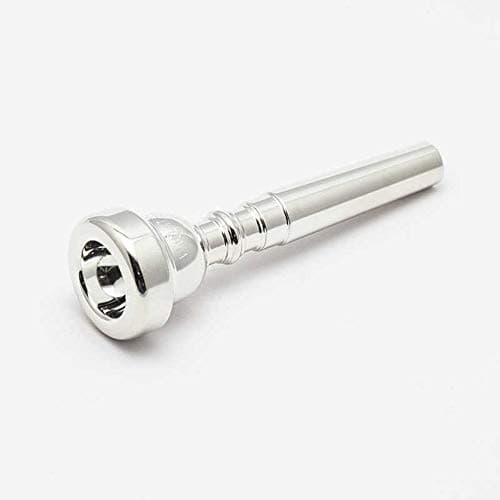 Bach 5C Trumpet Mouthpiece16. | The one step up that is actually a stepEnough | 7.8 | $64.88 · View on Amazon #ad How we’re funded |
Where overspending starts, and it is not about money
16.30 mm and a fairly large cup, for the same price as the 7C. That is precisely the trap: more mouthpiece for no more money, and a beginner who takes it loses the top of their range.
| # | Product | Best for | Score | Price |
|---|---|---|---|---|
| 1 | 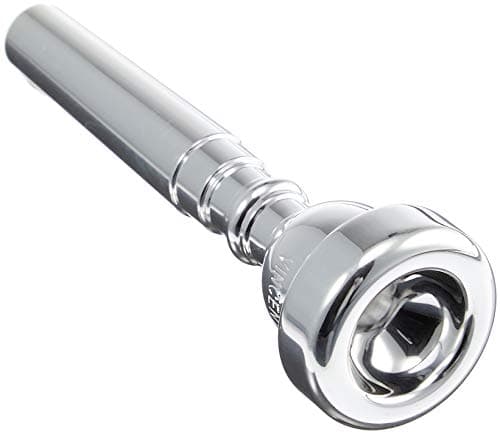 Bach 3C Trumpet Mouthpiece16. | Where overspending starts - and it is not about moneyWhere overspending starts | 6.4 | $65.00 · View on Amazon #ad How we’re funded |
The picks in full
Bach 7C Trumpet Mouthpiece
BachBest for: The first mouthpiece, for almost everyone
16.20 mm cup diameter, medium cup depth, a medium-wide rim lowered toward the outside with a well-rounded edge. Bach's own catalog calls it probably the most widely used model in the world and says it is preferred by school musicians, which is precisely who it is for.
Published specifications
- Cup diameter:
- 16.20 mm
- Cup depth:
- Medium
- Rim:
- Medium wide, lowered toward the outside; medium sharp inside edge with a well-rounded edge
- Bach's own description:
- Probably the most widely used model in the world; brilliant tone, preferred by school musicians and by artists
What it gets right
- It is the reference point: every teacher, every band director and every other mouthpiece chart is described relative to a 7C
- Medium cup depth is the balanced choice - enough depth for tone, not so much that a beginner cannot reach the upper register
- The rounded rim edge is forgiving on an embouchure that has not developed callus or control
- Most student trumpets ship with one, so replacing a worn 7C with a new 7C changes nothing a student has to relearn
Where it gives ground
- Costs roughly the same as the larger Bach cups, so there is no price advantage to starting small
- A player with notably large lips may find 16.20 mm cramped
- Silver plating wears through over years of daily use and the brass underneath can irritate skin
- Nothing about it is exciting, which is why students are talked out of it too early
What it is not good at
Producing a big orchestral sound. It is a middle-of-everything mouthpiece by design; a player who has developed enough to want more depth and width will outgrow it, and that is the correct time to change.
How the specs score against a beginner’s needs
Scores are our reading of the published specifications above against what a beginner physically needs. They are not test results — we have not played this instrument.
Specifications from Musician's Friend — Bach Standard Series trumpet mouthpiece chart, publishing Bach's own cup depth, cup diameter and rim description for every model including 7C.
Bach 5C Trumpet Mouthpiece
BachBest for: The one step up that is actually a step
16.25 mm - five hundredths of a millimeter wider than a 7C - with a medium cup and a flatter, well-rounded rim. Bach's catalog says plainly who it is for: players with a strong embouchure who do not like a sharp edge. That is the test, and it is not a beginner test.
Published specifications
- Cup diameter:
- 16.25 mm
- Cup depth:
- Medium
- Rim:
- Medium wide, well rounded toward the inside and outside, fairly flat
- Bach's own description:
- For players with a strong embouchure who do not like a sharp edge; the tone is lively and rich
What it gets right
- The flatter rim spreads pressure over more lip, which is more comfortable for long playing once the embouchure can support it
- Only 0.05 mm wider than a 7C, so the transition is genuinely small - this is the gentle step, not a jump
- Bach states the intended player explicitly, which removes the guesswork that surrounds mouthpiece choice
- Same price as the 7C, so there is no financial reason to delay once the player is ready
Where it gives ground
- A flatter rim gives less grip, and a beginner who relies on the rim edge for placement will slip
- Bach's "strong embouchure" qualifier is doing real work: this makes an undeveloped player worse, not better
- No specification advantage otherwise - the cup depth is identical to the 7C
- Changing mouthpiece mid-year resets consistency at exactly the point most students are being assessed
What it is not good at
First-year players. The whole point of the 5C is a flatter, less defined rim, and placement consistency is the one thing a beginner has not got yet.
How the specs score against a beginner’s needs
Scores are our reading of the published specifications above against what a beginner physically needs. They are not test results — we have not played this instrument.
Specifications from Musician's Friend — Bach Standard Series trumpet mouthpiece chart: 5C at 16.25 mm, medium cup, medium wide rounded fairly flat rim, with Bach's stated intended player.
Bach 3C Trumpet Mouthpiece
BachBest for: Where overspending starts - and it is not about money
16.30 mm, medium cup, medium-wide rim: Bach calls it a fairly large cup, good for all-around use. It costs the same as a 7C, which is exactly the trap - a student can buy more mouthpiece for no more money, and get worse.
Published specifications
- Cup diameter:
- 16.30 mm
- Cup depth:
- Medium
- Rim:
- Medium wide
- Bach's own description:
- Fairly large cup, good for all-around use
- Price relative to the 7C:
- Effectively identical - this is not a more expensive mouthpiece
What it gets right
- A genuinely excellent mouthpiece and a common professional choice for all-around playing
- The wider cup gives a bigger, fuller sound once there is an embouchure capable of filling it
- Bach's own description is accurate: it really is a general-purpose piece rather than a specialist one
- Readily available, so a player who has grown into it will not have to hunt
Where it gives ground
- 0.10 mm wider than a 7C sounds trivial and is not - it is more lip inside the cup, which costs endurance
- A student who switches early typically loses upper register and blames themselves rather than the mouthpiece
- Because it costs the same as a 7C, nothing about the purchase signals that it is a step up
- Band directors generally ask students to be on a 7C, and arriving on a 3C invites a conversation
What it is not good at
Beginners, categorically. This is the most common mouthpiece mistake in school band: a bigger cup for the same price looks like free improvement and is the opposite. It is the right mouthpiece in year three or four.
How the specs score against a beginner’s needs
Scores are our reading of the published specifications above against what a beginner physically needs. They are not test results — we have not played this instrument.
Specifications from Musician's Friend — Bach Standard Series trumpet mouthpiece chart: 3C at 16.30 mm, medium cup, medium wide rim, with Bach's stated description.
Questions people actually ask
What mouthpiece should a beginner trumpet player use?
A Bach 7C#ad, or its direct equivalent. Bach’s own catalog describes it as probably the most widely used model in the world and says its brilliant tone is preferred by school musicians. At 16.20 mm with a medium cup it is the reference point every other mouthpiece is described against, which also means a band director’s instructions will assume it.
Is a 3C better than a 7C?
Not for a beginner, and the numbers show why. A 3C is 16.30 mm against the 7C’s 16.20 mm — a tenth of a millimeter wider, which means more lip vibrating inside the cup. That produces a bigger sound for a player with the embouchure to support it and costs endurance and upper register for one who does not. Both cost about the same, which is exactly why students switch too early.
Should I replace the mouthpiece that came with my trumpet?
Only if it is damaged or if it is not a 7C-equivalent. Most student trumpets ship with a 7C or a close copy, and replacing a working 7C with a new 7C changes nothing the player has to relearn. Do replace one with a dented rim, a bent shank or worn plating — a damaged rim makes placement inconsistent and worn plating can irritate skin.
What is the difference between cup diameter and cup depth?
Diameter is how much lip is inside the cup; depth is how far the cup goes before it narrows into the throat. Diameter mostly affects endurance and range — wider is harder to sustain. Depth mostly affects tone — deeper is darker and rounder, shallower is brighter and easier high up. The 7C, 5C and 3C all have a medium cup depth, so the only thing changing across them is diameter.
Are cheap unbranded 7C mouthpieces any good?
Some play acceptably and none of them publish a specification. A mouthpiece sold as a “7C” from an unbranded maker is claiming a shape, not a measurement, and nothing holds it to the 16.20 mm and the rim contour Bach publishes. Given that a real one is the difference between a few dollars and perhaps sixty on an instrument that costs several hundred, this is a strange place to economise.
When should a student change mouthpiece?
When a teacher says so, and in practice that is usually year three or later. The signals that matter are physical rather than aspirational: a player whose lips are genuinely too full for a 7C, or whose sound has developed enough that the mouthpiece is the thing limiting it. Wanting a bigger sound is not a signal; it is what every student wants.
Where has the Yamaha 11C4 gone?
Nowhere — it is still a current Yamaha Standard Series model and brass dealers stock it. We have stopped listing it as a pick because there is no live Amazon listing for the metal trumpet version, so we cannot point you at one honestly. If your band shop has an 11C4, it is a perfectly good choice and a touch wider than a 7C at 16.46 mm. If you are buying online, the Bach 7C#ad is our pick and the one most band directors assume. Watch out for the cornet 11C4 and the ABS resin version, which are different products.
Sources
- Musician's Friend — Bach Standard Series trumpet mouthpiece chart, publishing Bach's own cup depth, cup diameter and rim description for 3C, 5C and 7C
- Mouthpiece Express — Yamaha trumpet mouthpiece specification chart: 11C4 cup diameter, rim contour, cup depth, throat and backbore with Yamaha's published description
Still deciding?
Every recommendation on this site is built the same way, and the method is published in full — including what we do not do and what would get a pick dropped.
Read next
- Best beginner trumpets
Bore size, monel versus stainless valves, the third valve trigger, and two picks for when buying is right.
- Is trumpet hard to learn?
Why the embouchure is the whole difficulty, how long the first weeks take, and what a beginner should actually buy while they find out.
- Step-up band instruments for year two
What separates a step-up from a budget instrument, the timing that makes the purchase sensible, and the pick for each section.
- How to clean a band instrument
The two-minute after-playing routine per family, what happens when it is skipped, and the jobs that belong to a technician.
- Renting vs buying a school band instrument
Why year one is a rental year, what programs cover, the maintenance nobody warns you about, and when buying starts to win.
- Trumpet or saxophone for a beginner?
Embouchure versus fingering, weight and reach, running costs, and how each one sounds in the first six months.