Band & Orchestra
Choosing a school band instrument
This is the one page on the site where our advice is usually not to buy anything. Here is why, and what to do instead.
By Sawyer V. · Published · Last updated
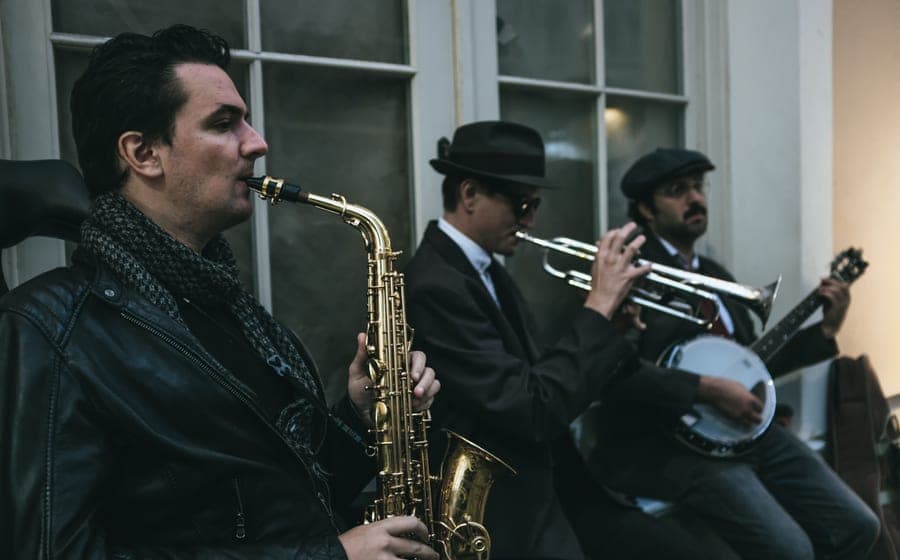
This page carries no product picks, and that is deliberate rather than an oversight. The honest answer for a family choosing a school band instrument is almost always to rent through the school in year one, and recommending a purchase would be worse advice dressed up as more helpful advice.
Here is the reasoning, and what to actually do.
Rent through the school program in year one. Band directors commonly reassign students between instruments in the first months based on physical fit and ensemble balance, rental usually includes maintenance, and a purchased instrument turns a routine reassignment into an expensive one.
Why year one is a rental year
Reassignment is normal. A band director looks at a room of eleven- year-olds and has to produce a balanced ensemble. That means moving students between sections in the first weeks — a child who wanted trumpet may end up on baritone horn because the band has six trumpets and no low brass, and a child who wanted flute may move to clarinet because their embouchure suits it better. This is routine and it is good for the child. It is also expensive if you bought the trumpet.
Physical fit is not knowable in advance. Brass instruments depend on embouchure, which depends on lip shape, teeth and bite. Some children produce a note on a trumpet in ten minutes and others struggle for weeks with the identical instrument. Woodwind depends on finger reach and hand size — a saxophone is heavy and its keys are spread wide.
Maintenance is included, and it is not trivial. Woodwind instruments have pads that seal the tone holes and corks that seal the joints. Both are consumable, both fail on a schedule rather than an event, and a child will not report a slowly worsening leak — they will just find the instrument harder to play. A rental program handles this; an owned instrument means finding a repair technician.
Attrition is real. A meaningful share of children who start band do not continue past the first year or two, and that is a fine outcome. Renting makes it a canceled subscription rather than an instrument in a closet.
Which instrument suits which child
| Instrument | Time to first note | Physical demands | Notes |
|---|---|---|---|
| Percussion | Immediate | Coordination; no embouchure | Reading and timing are the work |
| Clarinet | Days | Moderate finger reach | Often the largest section, so plenty of peers |
| Flute | Days to weeks | Breath control; arm extension | Getting any note at all is the first hurdle |
| Trumpet | Weeks | Embouchure; teeth and bite matter | Small and light to carry |
| Saxophone | Days | Heavy; wide key spread | Popular, so sections fill early |
| Trombone | Weeks | Arm length for outer slide positions | No valves, so pitch is by ear and arm |
The conversation to have with the band director
Before choosing anything, ask them four things. They have seen several hundred eleven-year-olds start and you have seen one.
Which sections does the band need? A child in an under-filled section gets more attention, more playing time and more opportunity. This matters more to a child’s experience than which instrument it is.
Does my child physically suit anything in particular? Directors routinely check hand size against key spread and look at teeth and bite for brass.
What does the rental program include? Specifically maintenance, and specifically whether payments apply toward a purchase later. Many do.
When should we buy? The usual answer is year two or three, once the instrument has settled and the child has decided to continue.
When buying does make sense
In year two or three, once the instrument has stopped changing and the child is clearly continuing. At that point buying is generally cheaper than continuing to rent, and a step-up instrument is a genuine improvement they will notice.
When the school has no rental program. Some do not. In that case ask the director for a specific model recommendation rather than shopping alone — band instruments have a much wider quality spread than guitars, and the cheap end includes instruments that genuinely cannot be played in tune.
For percussion. The exception. School percussionists usually use school-owned kit for the large instruments but are expected to own a practice pad and sticks, which is a small purchase. Our practice pad guide covers what a pad is for.
If band does not fit
Band is a specific arrangement: a school program, an ensemble, a schedule. Plenty of children want to play music and not that. If that is where you have landed, our first-instrument guide for children compares guitar, keys, ukulele and drums on physical fit, and beginner violins covers the orchestral side where a child wants strings rather than band.
What we would buy
Yamaha YCL-255
YamahaBest for: Step-up clarinet, year two onward
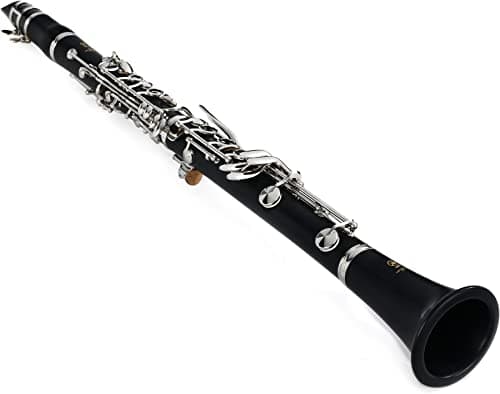
ABS resin body with a 65 mm barrel taken from Yamaha's high-end clarinets, Valentino pads and a 4C mouthpiece. The default student clarinet in most band rooms.
Published specifications
- Body:
- ABS resin, matte wood-like finish
- System:
- Boehm, 17 keys and 6 rings
- Keywork:
- Power-forged, nickel-plated nickel silver
- Barrel:
- 65 mm — the length used on Yamaha's high-end clarinets
- Pads:
- Valentino
- Bell:
- Solid ABS resin with resonance chamber
- Thumb rest:
- Adjustable, with strap ring
- Mouthpiece:
- Yamaha 4C
What it gets right
- ABS resin does not crack in a dry house, which is the failure that ends cheap wooden clarinets
- The 65 mm barrel is genuinely the same specification as Yamaha's expensive clarinets, and it is a large part of why this one plays in tune
- An adjustable thumb rest with a strap ring, which matters because a clarinet's weight lands on one thumb
Where it gives ground
- Resin will never have the warmth of grenadilla wood, and a student will notice when they play a wooden one
- The included 4C mouthpiece is competent and is the first thing many teachers upgrade
What it is not good at
Being a year-one purchase. Rent through the school first; directors reassign students in the first months and this is real money to have committed.
How the specs score against a beginner’s needs
Scores are our reading of the published specifications above against what a beginner physically needs. They are not test results — we have not played this instrument.
Specifications from Yamaha USA — YCL-255 overview.
Yamaha YFL-222
YamahaBest for: Step-up flute, year two onward
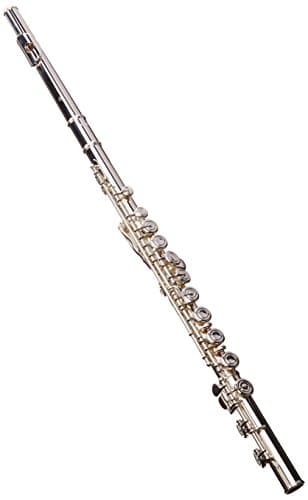
Silver-plated nickel silver throughout with pointed key arms and stainless steel springs. The flute most school programs treat as the standard once a student commits.
Published specifications
- Head / body / footjoint:
- Silver-plated nickel silver
- Keys:
- Hand-assembled silver-plated, offset G, closed hole (plateau)
- Footjoint:
- C foot
- Headjoint:
- CY, double flare taper with undercut embouchure hole
- Key arms:
- Pointed, for even pad-cup pressure
- Springs:
- Stainless steel
What it gets right
- Pointed key arms spread pressure evenly across the pad cup, which means a better seal and fewer leaks as the instrument ages
- Stainless steel springs resist the corrosion that makes cheap flute keys sluggish
- Closed-hole plateau keys give a beginner a solid platform for fingering before open holes are ever a question
Where it gives ground
- Offset G and closed holes are the right beginner choices and are also what a player eventually moves past
- Silver plate wears through at the contact points over years of daily use
What it is not good at
Being a year-one purchase. Rent through the school first — reassignment is common in the first months and this is not a cheap instrument to be stuck with.
How the specs score against a beginner’s needs
Scores are our reading of the published specifications above against what a beginner physically needs. They are not test results — we have not played this instrument.
Specifications from Yamaha YFL-222 published specifications (West Music).
Yamaha YAS-280
YamahaBest for: Step-up alto sax, year two onward
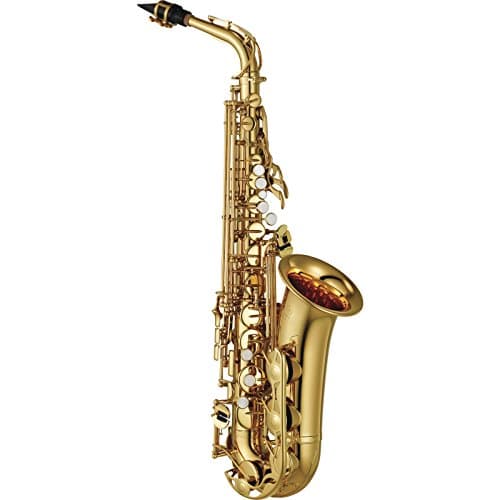
Lightweight, ergonomically shaped for a young player, with an adjustable thumb hook, a high F# key and a redesigned low B-to-C# connection. Widely treated as the standard student alto.
Published specifications
- Key:
- Eb alto
- Material:
- Brass, gold lacquer finish
- Bell:
- Two-piece
- Key touches:
- White polyester
- Mechanism:
- Improved B-C# connector, high F# key, adjustable thumb hook
- Neck receiver:
- Redesigned for stability
- Included:
- Yamaha 4C mouthpiece, case with rucksack straps, sax strap, cork grease
What it gets right
- Genuinely designed around a young player — light, and shaped so the hands fall naturally rather than reaching
- The adjustable thumb hook matters more than it sounds: a saxophone's weight lands on the right thumb, and a fixed hook fits one hand size
- High F# key included, which the method book will want before the second year is out
Where it gives ground
- Even a lightweight alto is heavy for a small eleven-year-old over a full rehearsal
- The 4C mouthpiece is a solid start and a very common first upgrade
What it is not good at
Being a year-one purchase. Saxophone is the most requested section and the most reassigned; rent until the placement is settled.
How the specs score against a beginner’s needs
Scores are our reading of the published specifications above against what a beginner physically needs. They are not test results — we have not played this instrument.
Specifications from Yamaha YAS-280 published specifications.
Yamaha YTR-2330
YamahaBest for: Step-up trumpet, year two onward
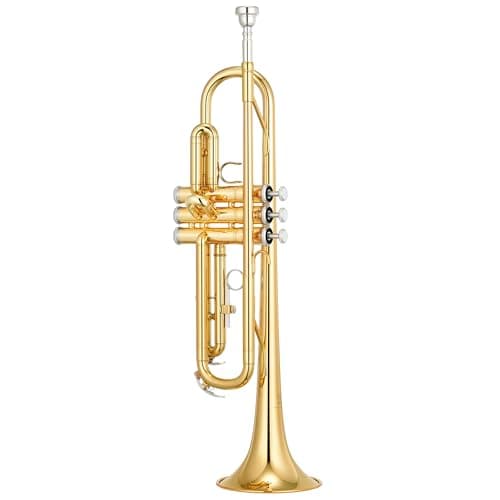
A .459 inch bore with monel pistons, a gold brass leadpipe and an adjustable third valve trigger. Yamaha's top-selling student trumpet and the one directors name first.
Published specifications
- Key:
- Bb
- Bore:
- .459"
- Bell:
- Yellow brass, two-piece, 4-7/8" diameter
- Leadpipe:
- Gold brass
- Valves:
- Monel pistons
- Third valve:
- Adjustable trigger
- Finish:
- Lacquer or silver plate
- Included:
- Mouthpiece
What it gets right
- Monel pistons are corrosion-resistant and stay smooth, which is the difference between a trumpet that stays fast and one that gums up
- The adjustable third valve trigger is how a player corrects the intonation problem every trumpet has on low D and C#
- A gold brass leadpipe warms the response slightly against plain yellow brass
Where it gives ground
- Student trumpets are all broadly similar on paper, so the case for this one is build quality rather than specification
- Lacquer wears at the contact points and looks tired long before it plays badly
What it is not good at
Being a year-one purchase. Brass reassignment is the most common kind in a band room, because embouchure suitability is unknowable in advance. Rent first.
How the specs score against a beginner’s needs
Scores are our reading of the published specifications above against what a beginner physically needs. They are not test results — we have not played this instrument.
Specifications from Yamaha Europe — YTR-2330 specifications.
Questions people actually ask
What is the easiest instrument to learn in band?
Percussion, then clarinet, then flute. Percussion requires no embouchure at all. Clarinet and flute produce a note relatively quickly. Brass instruments — trumpet, trombone, French horn — require building an embouchure, which is a set of lip and facial muscles that take weeks to develop before a reliable note exists.
Should I buy or rent a school band instrument?
Rent in year one, essentially always. Band programs commonly reassign students to different instruments in the first months based on fit and ensemble balance, and a purchased instrument makes that reassignment expensive rather than routine. Most school rental programs also include maintenance.
What band instrument should my child play?
Ask the band director before deciding. They will assess physical fit — hand size, teeth and bite for brass, lung capacity — and they know which sections the ensemble needs. A child placed in a section the band is short of gets more attention and more playing time, which matters more than the instrument.
How much does a beginner band instrument cost to rent?
School rental programs are typically monthly and often include maintenance and an option to apply payments toward a purchase later. Ask specifically what maintenance is covered, because pad and cork replacement on woodwind is the cost that surprises families who buy instead.
Sources
Still deciding?
Every recommendation on this site is built the same way, and the method is published in full — including what we do not do and what would get a pick dropped.
Read next
- Best gifts for band students
Woodwind, brass and percussion need completely different accessories. The one gift that works for all three, the two that are family-specific, and what to avoid on a rented instrument.
- Best beginner violins: measure first, then buy
Arm-length sizing chart, why workshop setup is the spec that matters most, and one pick available in five sizes.
- What instrument should I learn?
Four practical constraints instead of a personality quiz, each one routing straight to the instrument that fits.
- The best first instrument for a child
Instrument by instrument, the real starting age set by hand size and reach, with a pick for each and the noise column filled in.
- The easiest instruments to learn
Ranked by time to a first real song, with the ceiling each one trades away, and a pick for the top three.
- Best drum sets for kids
Picks by age band with real shell dimensions, plus the electronic option that makes a kids kit possible in an apartment.