Band & Orchestra
Best practice mutes for brass instruments
The cheapest way to make a trumpet practisable in a flat, and the one thing you must not do with it.
By Sawyer V. · Published · Last updated
Brass is the family where the practice problem is sharpest. A trumpet is not loud in a concert-hall sense; it is loud in the sense that it occupies a frequency range human hearing evolved to prioritise, and it carries through doors, floors and most walls. A student in a flat, a dorm or a house with a sleeping sibling will either solve this or quietly stop practicing.
Every pick below states its Starter Path band, and we have not played any of them — the method is on how we pick. Materials, weights and the intonation claims come from published spec sheets, cited at the bottom.
Buy a compact aluminum practice mute, not a straight mute and not a plastic one. For trumpet the Pro Tec ML203 Liberty is the floor and the Denis Wick 5526 is the buy-once; for tenor trombone the Pro Tec ML204 is the equivalent. Judge them on back-pressure and intonation rather than on how quiet they get — a mute that is silent but stuffy teaches a student to push, and that habit survives the mute.
A practice mute is not a performance mute
Both are metal cones that go in the bell, and that is where the similarity ends.
Performance mutes — straight, cup, harmon, plunger — exist to change the timbre. A composer writes con sordino and the player fits a straight mute, which makes the sound thin and nasal and only slightly quieter. Buying one of these for quiet practice is the most common mistake in this category, and the Denis Wick catalog contains several of them priced near the practice mute.
Practice mutes seal the bell almost completely and vent through a small restricted opening. That restriction is what removes the volume and it is also what creates the back-pressure, which is the whole trade-off and the subject of the rest of this page.
If a listing does not use the words “practice mute” or “warm-up mute”, it is a performance mute, whatever else the title says.
Back-pressure is the specification that matters
Every practice mute increases the resistance the player blows against. How much varies enormously, and it is the single most important difference between products in this category — more important than price, finish or how quiet they get.
Here is why it matters for a student rather than a professional. A brass player produces pitch with their embouchure and air support, and both calibrate themselves to the resistance of the instrument. A high-resistance mute asks for more air pressure for the same note. Practice exclusively through one and the body learns that calibration, and then the open horn feels loose and uncontrolled, the upper register collapses, and the student concludes they have gone backwards.
This is why Thomann’s published description of the Pro Tec Liberty — “very gentle response” — is doing more work on this page than any price comparison. A free-blowing mute is a safer tool for someone whose embouchure is still forming.
Denis Wick approaches the same problem from the other direction. Its published claim for the 5526 is consistent resistance rather than low resistance, which is what lets a developed player use the mute deliberately as stamina training. That is a real and legitimate use, and it is a second-year use.
Intonation, and the habit a sharp mute teaches
The second published number to look for is intonation. A sealed bell changes the effective acoustic length of the instrument, and most practice mutes push the pitch sharp — sometimes by a noticeable amount.
A professional compensates without thinking. A student does something worse: they hear that they are sharp, lip every note down to correct it, and spend an hour a day training a downward correction that is wrong on the open horn. Then they play in band, flat, and get told so.
Both aluminum mutes here publish an intonation claim — Pro Tec “very good intonation”, Denis Wick “accurate intonation ... while retaining stable pitch”. The unbranded mutes on the same shelf publish nothing at all, and on a specification that decides whether a student develops a bad habit, nothing is not good enough.
The picks, and what separates them
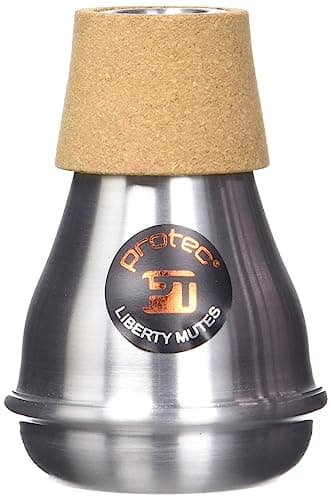
The Pro Tec ML203 Liberty#ad is the trumpet answer for most people. All aluminum with cork, small enough to be stored inside the trumpet bell so it needs no extra bag, and published as non-transposing. Aluminum rather than molded plastic matters here, because a plastic mute lives in a warm case full of breath moisture.
The Pro Tec ML204 Liberty#ad is the same product for tenor trombone: 5 inches high by 3 inches across, a quarter of a pound, stored in the bell. The weight figure matters more than it sounds — anything that has to be remembered gets forgotten, and anything that lives permanently in the case does not.
The Denis Wick 5526#ad is the professional standard and the buy-once choice. Black polyester-coated aluminum, a full-circumference cork rather than three separate pads, handmade in the UK, 0.12 kg. The full cork is a real design difference: it seals evenly, so the mute cannot sit crooked and the resistance is the same every time it goes in.
The Yamaha SILENT Brass SB7X-2#ad is a different category of object: a 70-gram pickup mute with a condenser microphone inside, a personal studio unit that re-synthesises the unmuted tone into headphones, earbuds and batteries. It is genuinely close to silent in the room and the AUX input means lesson videos play into the same headphones. It also costs a serious fraction of a student trumpet, which is why it sits in the overspend band.
What we did not list, and why
Sub-twenty-dollar aluminum mutes are widely sold and several are well reviewed. They are not listed because none of them publish an intonation or response claim, and on this page those two claims are the entire basis for comparison. A mute that might be sharp and might be stuffy, from a brand with no spec sheet, is a gamble taken with a student’s embouchure.
ABS plastic practice mutes cost less than the Pro Tec and are genuinely lighter. They are left off for a specific reason: a mute spends its life in a closed case with a warm, wet instrument, and molded plastic in that environment distorts over a season in a way that changes the seal and therefore the pitch.
The Denis Wick trombone practice mute would have been the obvious buy-once trombone pick alongside the trumpet 5526. Its listing read “currently unavailable” at the time of writing, so the trombone slot is the Pro Tec ML204 alone rather than a product you cannot buy.
Competing electronic systems from Best Brass and others do the same job as the Yamaha and some do it very well. One electronic system is enough to make the point that this tier exists and costs what it costs; listing three would imply a beginner should be choosing between them.
Using it without damaging the player
Three rules, which every brass teacher gives and which are worth repeating because the mute usually arrives without them.
Warm up open, every time. Long tones and lip slurs on the open horn before the mute goes in. Five minutes is enough, and it is what keeps the open-horn calibration intact.
Do not play loud into it. The temptation is to push because the mute makes everything quiet. That is how a student learns to force, and it is also how a cork seal gets blown out of shape.
Check the tuning slide after every mute session. If the student has been pulling the slide to compensate for a sharp mute, it needs to go back before band practice. This is a thirty-second habit that prevents a recurring and baffling intonation problem.
And check the cork periodically. A worn cork lets the mute sit loose, which changes both the pitch and the resistance, and a mute that rattles out mid-phrase onto a hard floor usually dents.
If the problem is the house rather than the horn
A practice mute solves a brass-specific problem, but the underlying situation — an instrument that is too loud for where it lives — is one we cover across the whole catalog. Our page on instruments for small apartments takes it family by family, and instruments for college dorms covers the specific version of it that involves a residence hall contract.
If the instrument is not yet bought, is trumpet hard to learn and beginner trumpets are the pages that come before this one.
Quick picks
Trumpet, the honest floor
All-aluminum, compact enough to store inside the bell, and published as free-blowing with good intonation. It is the cheapest named-brand mute that makes both of those claims.
| # | Product | Best for | Score | Price |
|---|---|---|---|---|
| 1 | Pro Tec ML203 Liberty Trumpet Practice MuteAn all-aluminum compact practice mute with cork, small enough to store inside the bell. | The honest floor, trumpetThe honest floor | 8.0 | $34.99 · View on Amazon #ad How we’re funded |
Trombone, the same answer
The trombone version: aluminum, five inches by three, a quarter of a pound, and it lives in the bell. Trombone is the instrument most often practiced standing in a hallway, which is exactly the problem this solves.
| # | Product | Best for | Score | Price |
|---|---|---|---|---|
| 1 | 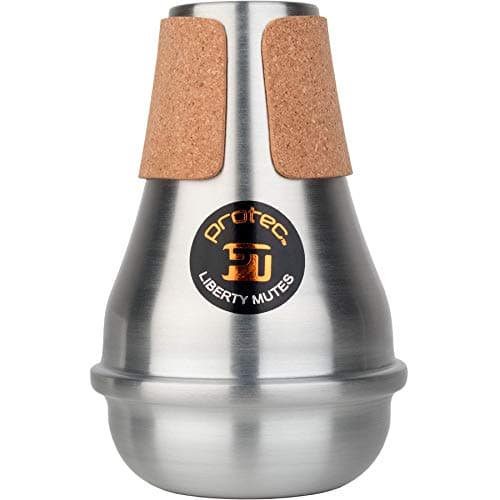 Pro Tec ML204 Liberty Tenor Trombone Practice MuteThe trombone version of the ML203: aluminum, compact, 5 inches tall by 3 inches across, and light enough at a quarter of a pound to live in the case permanently. | The same answer, for tromboneThe honest floor | 7.6 | $41.99 · View on Amazon #ad How we’re funded |
Trumpet, buy-once
Polyester-coated aluminum with a full-circumference cork, handmade in the UK. Denis Wick publishes the two claims that matter for a student: accurate intonation and consistent resistance.
| # | Product | Best for | Score | Price |
|---|---|---|---|---|
| 1 | 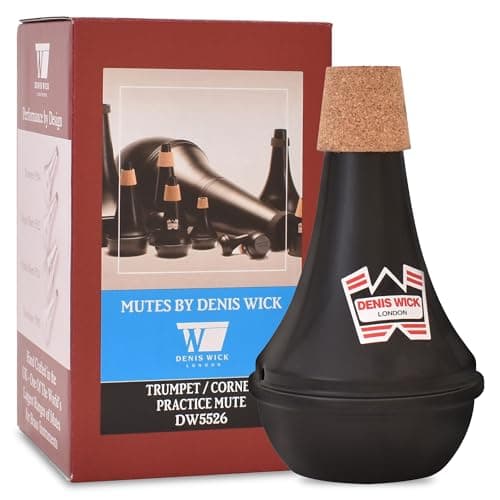 Denis Wick DW5526 Trumpet Practice MuteBlack polyester-coated aluminum with a full-circumference cork fitting, handmade in the UK, 0. | Buy-once, if brass is stickingEnough | 8.4 | $62.00 · View on Amazon #ad How we’re funded |
Where overspending starts
An electronic pickup mute and a personal studio that rebuilds the unmuted tone in your headphones. Genuinely the quietest thing here, and it costs a serious fraction of a student trumpet.
| # | Product | Best for | Score | Price |
|---|---|---|---|---|
| 1 | 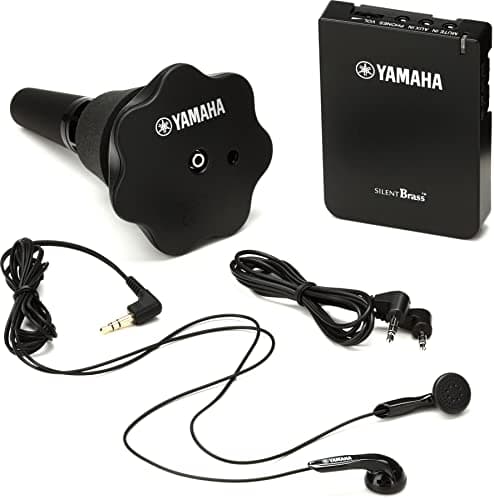 Yamaha SILENT Brass SB7X-2 (Trumpet)A pickup mute with a built-in condenser microphone, a personal studio unit that re-synthesises the instrument's natural resonance in your headphones, earbuds and batteries. | Where overspending startsWhere overspending starts | 8.0 | $297.00 · View on Amazon #ad How we’re funded |
The picks in full
Pro Tec ML203 Liberty Trumpet Practice Mute
Pro TecBest for: The honest floor, trumpet
An all-aluminum compact practice mute with cork, small enough to store inside the bell. Thomann publishes the two things that matter about it - very gentle response and very good intonation - and it is the cheapest named-brand mute that claims both.
Published specifications
- Instrument:
- Bb trumpet or cornet
- Material:
- Aluminum body with cork
- Pitch:
- Non-transposing: the published claim is that it does not alter pitch
- Response:
- Thomann publishes 'very gentle response' and 'very good intonation'
- Storage:
- Compact enough to be kept inside the trumpet bell
What it gets right
- The least expensive practice mute here from a maker that publishes a specification at all
- Fits inside the bell, which means it travels in the existing case with no extra bag
- Aluminum rather than molded plastic, so it does not warp with heat and breath moisture
- Free-blowing by design, which matters because a high-resistance mute teaches a student to push
Where it gives ground
- No manufacturer-published decibel figure, so 'how quiet' is unquantified
- Cork needs occasional replacement and a loose mute rattles in the bell
- Less silencing than the sealed electronic systems, which is the trade for the free blow
- Pro Tec's own site was unreachable at time of writing, so the specification cited is a dealer's
What it is not good at
Making a trumpet silent. A practice mute is quiet, not inaudible - a neighbor through a thin wall will still know a trumpet is being played, just not what note.
How the specs score against a beginner’s needs
Scores are our reading of the published specifications above against what a beginner physically needs. They are not test results — we have not played this instrument.
Specifications from Thomann — Pro Tec Liberty trumpet practice mute: completely made of aluminum, very gentle response, very good intonation.
Pro Tec ML204 Liberty Tenor Trombone Practice Mute
Pro TecBest for: The same answer, for trombone
The trombone version of the ML203: aluminum, compact, 5 inches tall by 3 inches across, and light enough at a quarter of a pound to live in the case permanently. Trombone is the band instrument most often practiced standing in a hallway, and this is the cheapest way to make that acceptable.
Published specifications
- Instrument:
- Tenor trombone
- Material:
- Aluminum
- Dimensions:
- 5.0" high x 3.0" diameter
- Weight:
- 0.25 lb
- Storage:
- Fits in the bell for transport
What it gets right
- A quarter of a pound, so it can simply live in the case instead of being a thing to remember
- Aluminum construction at the same price class as plastic alternatives
- Fits inside the bell, which is the only place a trombone case has spare room
- Matches the trumpet ML203 in feel, which matters in a household with two brass players
Where it gives ground
- No published decibel figure or intonation data from Pro Tec
- A trombone practice mute increases back-pressure more than a trumpet one does, simply because the instrument is larger
- Bass trombone needs the ML205 instead; this one is tenor only
- Cork wear is the same maintenance item as on any mute
What it is not good at
Bass trombone or euphonium. The bell diameter is wrong and it will either fall out or jam. Pro Tec's ML205 covers bass trombone and french horn.
How the specs score against a beginner’s needs
Scores are our reading of the published specifications above against what a beginner physically needs. They are not test results — we have not played this instrument.
Specifications from Palen Music — Pro Tec ML204 Liberty tenor trombone compact aluminum practice mute: material aluminum, 0.25 lb, 5.0 in high x 3.0 in diameter, fits in the bell.
Denis Wick DW5526 Trumpet Practice Mute
Denis WickBest for: Buy-once, if brass is sticking
Black polyester-coated aluminum with a full-circumference cork fitting, handmade in the UK, 0.12 kg. Denis Wick's published claim is the one that matters for a student: accurate intonation and consistent resistance, which is what turns mute practice into stamina training rather than a bad habit.
Published specifications
- Instrument:
- All Bb cornets and trumpets
- Material:
- Black polyester-coated aluminum
- Cork:
- Full-circumference cork fitting
- Weight:
- 0.12 kg
- Dimensions:
- 16 x 10.01 x 10.01 cm
- Published claim:
- Accurate intonation and consistent resistance; reduces sound to near silence while retaining stable pitch
- Made in:
- United Kingdom, handmade
What it gets right
- Full-circumference cork rather than three cork pads, so the seal is even and the mute does not sit crooked
- Denis Wick states the resistance is consistent, which is the property that lets a player build embouchure strength against it deliberately
- The professional standard: a student using one is using what their teacher uses
- Near-silence is a stronger published claim than any of the budget mutes make
Where it gives ground
- Close to double the Pro Tec for a student who may put the instrument down in a year
- Higher resistance than a free-blowing compact mute, which is the point and is also tiring
- Heavier in the bell, so a young player notices the balance change
- The trombone version of this mute was unavailable at time of writing
What it is not good at
Being a first purchase for a rented school trumpet. Everything that makes it better than the Pro Tec is something a second-year player notices, and the school may want the instrument back before then.
How the specs score against a beginner’s needs
Scores are our reading of the published specifications above against what a beginner physically needs. They are not test results — we have not played this instrument.
Yamaha SILENT Brass SB7X-2 (Trumpet)
YamahaBest for: Where overspending starts
A pickup mute with a built-in condenser microphone, a personal studio unit that re-synthesises the instrument's natural resonance in your headphones, earbuds and batteries. It is the only product here that is genuinely close to silent in the room, and it costs more than many student trumpets.
Published specifications
- System contents:
- PM7X pickup mute, STX-2 personal studio, Yamaha earbuds, batteries
- Pickup mute (PM7X):
- 82 x 139 mm (3-1/4 x 5-1/2 in), 70 g (2.5 oz), electric condenser microphone, mini phone jack output, nominal level -25 dB to -35 dB
- Personal studio (STX-2):
- 70 x 20 x 98 mm, 71 g (2.5 oz) without batteries; MUTE IN, AUX IN and PHONES jacks; volume and reverb type controls
- Processing:
- Brass Resonance Modeling - Yamaha's own processing that restores the unmuted tone in the headphones
- Power:
- Two AA alkaline or nickel-metal hydride batteries, 3 V DC
What it gets right
- The AUX IN means a backing track or a lesson video plays into the same headphones as the horn
- Brass Resonance Modeling means the player hears something like their real tone, so they can hear their own mistakes
- The quietest option here by a wide margin - it is the product people buy when the alternative is not practicing at all
- The PM7X mute at 70 g is lighter than the Denis Wick, which is counter-intuitive for an electronic system
Where it gives ground
- Several times the price of an aluminum practice mute, and the horn itself may be a school rental
- Needs batteries, earbuds and a working cable to make any sound at all - three more things to lose before a practice session
- The player hears a processed version of themselves, which is not the same as hearing the room
- Trumpet-specific: trombone, horn and euphonium each need their own system at a similar price
What it is not good at
Being proportionate. For a first-year player on a rented instrument this costs a significant fraction of the instrument's value to solve a problem a sixty-dollar mute mostly solves.
How the specs score against a beginner’s needs
Scores are our reading of the published specifications above against what a beginner physically needs. They are not test results — we have not played this instrument.
Questions people actually ask
What is the best practice mute for a beginner trumpet player?
The Pro Tec ML203 Liberty#ad. It is all-aluminum, it stores inside the bell so it travels in the case the school already supplied, and its published characteristics are the ones a student needs: very gentle response and very good intonation. A free-blowing mute is more important for a beginner than a silent one.
Can I use a straight mute for quiet practice?
No. A straight mute is a performance mute — it changes the color of the sound and barely reduces the volume, which is the opposite of what you want. A practice mute is a sealed object that fills the bell and vents through a small opening. They look similar in a shop and they do entirely different jobs.
Do practice mutes damage your playing?
They can, and this is the thing nobody warns students about. Any practice mute increases back-pressure, so the player has to push harder for the same note. Spend every practice session muted and the embouchure adapts to that resistance, then struggles when the mute comes out. The rule teachers give is simple: never let the mute be the only way the instrument gets played. Some sessions open, every week.
Does a practice mute put the trumpet out of tune?
Most do, upward, and that is exactly why the published intonation claim matters. A mute that sharpens the instrument teaches a student to lip every note down, which is a habit that then has to be unlearned. Pro Tec publishes “very good intonation” for the ML203 and Denis Wick publishes “accurate intonation” for the 5526 — those claims are the reason both are here and the unbranded mutes are not.
How quiet does a practice mute actually make a trumpet?
Quiet, not silent, and no manufacturer here publishes a decibel figure for the aluminum mutes. In practical terms a muted trumpet through a closed door is roughly the intrusiveness of a television in the next room: audible, not identifiable as notes. Only the electronic systems — Yamaha’s SILENT Brass and its competitors — approach actual silence, and they cost accordingly.
Is there a practice mute for french horn and euphonium?
Yes, and the bell diameter is what decides which. Pro Tec’s ML205 covers bass trombone and french horn; Yamaha makes SILENT Brass systems for horn, euphonium, flugelhorn and trombone as separate products at separate prices. The one thing not to do is force a trumpet or tenor trombone mute into a larger bell, where it will either fall out mid-note or jam.
Sources
- Thomann — Pro Tec Liberty trumpet practice mute: completely made of aluminum, very gentle response, very good intonation
- Palen Music — Pro Tec ML204 Liberty tenor trombone compact aluminum practice mute: material, weight and dimensions
- Normans — Denis Wick 5526 cornet or trumpet practice mute: coated aluminum, full circumference cork, UK handmade, weight, dimensions, published intonation and resistance claims
- Chuck Levin's — Yamaha SB7X-2 SILENT Brass system for trumpet: PM7X and STX-2 contents, dimensions, weights, microphone type, nominal level, jacks and power
Still deciding?
Every recommendation on this site is built the same way, and the method is published in full — including what we do not do and what would get a pick dropped.
Read next
- Best beginner trumpets
Bore size, monel versus stainless valves, the third valve trigger, and two picks for when buying is right.
- Best beginner trombones
What bore size means for a beginner, why slide material is the spec to check, and three trombones with honest limits stated.
- Is trumpet hard to learn?
Why the embouchure is the whole difficulty, how long the first weeks take, and what a beginner should actually buy while they find out.
- How to clean a band instrument
The two-minute after-playing routine per family, what happens when it is skipped, and the jobs that belong to a technician.
- Best instruments for an apartment
Four instruments that survive a shared wall, ranked by how quiet they are at their loudest, plus the headphones that make the difference.
- Best instruments for college dorms
Why headphones and footprint decide this, what dorm rules usually forbid, and four instruments that work in a shared room.