Ukuleles
Best clip-on tuners for ukulele
A ukulele goes out of tune faster than a guitar, has a smaller headstock to clip to, and in a classroom there are twenty of them tuning at once. Those three things rank this page.
By Sawyer V. · Published · Last updated
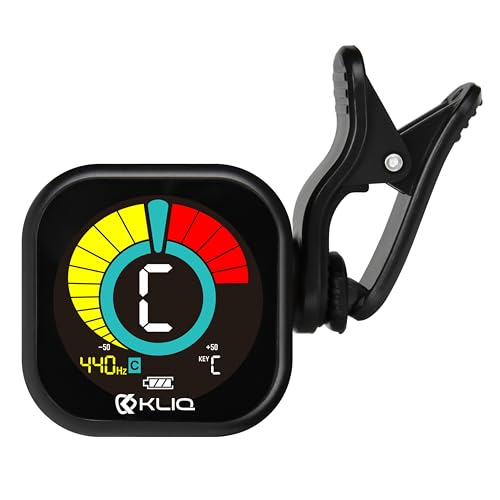
Buy the KLIQ UberTuner PDQ for about eighteen dollars. It senses vibration through the headstock rather than listening through a microphone, it has a ukulele mode, and it is rechargeable — which matters because a flat coin cell is how most cheap tuners end their lives.
A ukulele is a harder tuning job than a guitar in three specific ways, and those are what this page ranks on. Its nylon strings move constantly, so it is tuned far more often. Its headstock is small, so a bulky clip is genuinely in the way. And it is the instrument most likely to be in a room with nineteen others, because schools buy them by the class set. Accuracy figures, calibration ranges and battery types below are the makers’ own published specifications, cited at the bottom.
Best clip-on tuner for ukulele: the KLIQ UberTuner PDQ — about $18 as of November 7, 2026, rechargeable, vibration sensing, dedicated ukulele mode, 430-450 Hz calibration. For a mixed-instrument house: a Snark chromatic clip-on, about $21, switchable between vibration and microphone. For a published accuracy figure: the KLIQ UberTuner, accurate to within 1 cent, about $27. For a classroom: the Snark ST-8, 415-466 Hz, about $22 — the widest calibration range here. If the tuner should be invisible: a D’Addario micro tuner that hides behind the headstock, about $22. For intonation work: the Peterson StroboClip HD, ±0.1 cent with 50+ sweetened presets including ukulele, about $60 — and overkill for a beginner. A ukulele needs a CHROMATIC tuner, not a ukulele-only one, so it can handle low-G, baritone and re-entrant tunings.
Vibration or microphone: the only feature that always matters
Clip-on tuners work one of two ways. A microphone listens to the room. A piezo sensor reads the vibration of the wood it is clamped to.
For a ukulele the piezo is almost always the right answer, because the situations where a ukulele gets tuned are noisy: a living room with a television on, a church hall before a group, a classroom with a class set out of their bags. A microphone tuner in a classroom reads whatever is loudest, which is somebody else’s instrument.
The one case for a microphone is tuning something you cannot clip to. The Snark ST-8#ad and the Snark chromatic#ad both switch between the two, which is why a teacher should buy one of those rather than a piezo-only model.
The specification makers do not always publish
Two numbers separate these tuners and only some makers print them.
Accuracy, in cents. A cent is a hundredth of a semitone. The KLIQ UberTuner#ad publishes within 1 cent; the Peterson StroboClip HD#ad publishes ±0.1 cent. Snark publishes no figure at all for the ST-8 or the SN5X, and neither does KLIQ for the rechargeable PDQ. For strumming chords on a soprano, anything within a couple of cents is inaudible — which is why the absence of a figure is not disqualifying, and why we say so rather than inventing a number.
Calibration range, in hertz. This is the reference pitch the tuner calls A. Standard is 440 Hz; some ensembles and many older pianos are not at 440. The ST-8 publishes 415-466 Hz, both KLIQ models publish 430-450 Hz, and the SN5X publishes nothing but states its frequency range is tailored to guitar and bass — which is the reason it is last on this page rather than first on price.
The picks
The KLIQ UberTuner PDQ#ad is the one to buy: piezo vibration sensing, a full-color display with three-point adjustment, dedicated instrument modes including ukulele, 430-450 Hz calibration, transpose settings, and a rechargeable battery. Buy it if you want one tuner for a ukulele and do not want to think about it again. Skip it if you prefer a coin cell you can replace from a drawer, or if you need a published accuracy figure, because KLIQ gives one for the UberTuner and not for this.
The Snark chromatic clip-on#ad is the right default for a house rather than a player. Switchable vibration or microphone sensing, a rotating full-color display, and coverage of guitar, bass, ukulele, violin and mandolin. Buy it if there are several stringed instruments in the building. Skip it if only the ukulele needs tuning, where the PDQ is cheaper and rechargeable. The plastic clip is the part that eventually breaks on every Snark.
The KLIQ UberTuner#ad publishes accuracy within 1 cent, rotates 360 degrees, clips front or back of a headstock, and runs on a replaceable CR2032. Buy it if you want the number in writing. Skip it if the rechargeable PDQ at two-thirds the price does the job, which for most ukulele players it does.
The Snark ST-8 Super Tight#ad has the widest published calibration range here at 415-466 Hz, switchable sensors, and a rechargeable battery. Buy it if you teach, lead a group, or tune in loud rooms. Skip it if you need a cent figure, which Snark does not publish.
The D’Addario micro tuner#ad hides behind the headstock, which on a soprano ukulele is a genuine ergonomic argument rather than a cosmetic one — there is not much headstock to share. Buy it if the player performs, or dislikes a lump on the instrument. Skip it if a child is doing the tuning and needs a display they can read at a glance.
The Snark SN5X#ad is the cheapest thing here from a brand worth buying, with a full-color display and front-or-back mounting. Its published frequency range is tailored to guitar and bass. Buy it if you want a spare for a second case, or a stocking filler. Skip it if it will be the player’s only tuner: for a few dollars more the PDQ publishes a ukulele mode and the ST-8 publishes a calibration range.
The Peterson StroboClip HD#ad is a real strobe tuner in a clip-on body: ±0.1 cent, a 192-segment backlit display, more than fifty sweetened tuning presets including ukulele, capo and drop transposition, and up to 24 hours on a CR2032. Buy it if the player sets up instruments or argues about intonation. Skip it if this is a first tuner. Three times the price of the pick, for precision a beginner cannot yet hear, is money that belongs in a lesson or in our better-ukulele column.
What we left off, and why
Tuner apps. Free, accurate enough in a quiet room, and genuinely the right answer for a solo player at home. They fail in exactly the two places ukuleles get tuned most — noisy rooms and classrooms — which is why this page exists.
Pedal and rack tuners. Precise, and irrelevant: a ukulele with no pickup has nothing to plug in, and the great majority of beginner ukuleles are acoustic.
Tuners built into a soundhole. Neat on an acoustic-electric and a permanent modification on anything else. A beginner ukulele should not be modified.
Unbranded multi-packs. Three clip-on tuners for twelve dollars, no published accuracy, no calibration range, no sensor type. The entire argument of this page is that two published numbers separate these products, and those listings publish neither.
If the ukulele itself will not hold a tuning, the tuner is not the problem. Start with how to tune a ukulele, then strings, then the geared-tuner question on are cheap ukuleles worth it.
Quick picks
Buy this one
A rechargeable vibration-sensing clip-on with a dedicated ukulele mode and 430-450 Hz calibration, about $18. For: almost every ukulele player, because the battery is the thing that kills cheap tuners. Skip if: you would rather replace a coin cell than find a cable.
| # | Product | Best for | Score | Price |
|---|---|---|---|---|
| 1 | KLIQ UberTuner PDQ (rechargeable)Vibration-sensing clip-on with a full-color display, dedicated instrument modes, 430-450 Hz calibration and a rechargeable battery rather than a coin cell. | The one to buy for a ukuleleThe honest floor | 9.2 | $17.99 · View on Amazon #ad How we’re funded |
If one tuner has to serve a whole house
A switchable vibration-or-microphone chromatic tuner that covers guitar, bass, ukulele, violin and mandolin, about $21. For: a household with several stringed instruments. Skip if: nothing — this is the sensible default for a mixed-instrument home.
| # | Product | Best for | Score | Price |
|---|---|---|---|---|
| 1 | 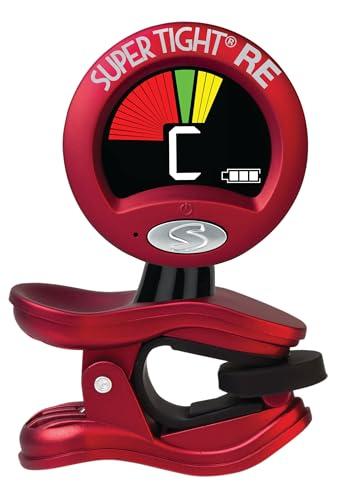 Snark clip-on chromatic tunerClips to the headstock and reads pitch from the vibration of the wood, so it works in a noisy room and an adult who plays nothing can tune the instrument in twenty seconds. | Tuning anything with stringsThe honest floor | 9.0 | $20.92 · View on Amazon #ad How we’re funded |
If you want a published accuracy number
Accurate to within 1 cent per the maker, with a 360-degree color display and a replaceable coin cell, about $27. For: a player who wants a figure rather than a promise. Skip if: the rechargeable version at two-thirds the price covers you.
| # | Product | Best for | Score | Price |
|---|---|---|---|---|
| 1 | 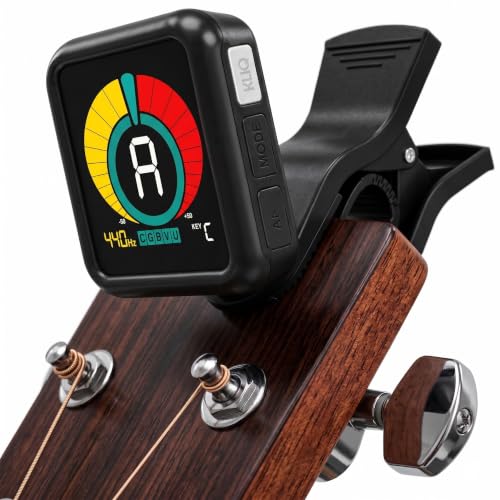 KLIQ UberTuner (clip-on, black)The original UberTuner: accurate to within 1 cent per the maker, a 360-degree color display, dedicated ukulele and mandolin modes, 430-450 Hz calibration and a padded clip. | A published accuracy figure for under thirty dollarsEnough | 8.6 | $26.99 · View on Amazon #ad How we’re funded |
If it is for a classroom or a noisy room
Switchable mic or vibration sensor with the widest calibration range here, 415-466 Hz, about $22. For: a teacher with twenty ukuleles tuning at once. Skip if: you need a published cent figure, which Snark does not give.
| # | Product | Best for | Score | Price |
|---|---|---|---|---|
| 1 | 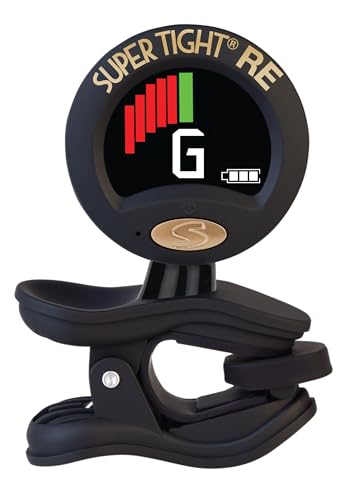 Snark ST-8 Super Tight Clip-On TunerSnark's current flagship clip-on: a switchable microphone or vibration sensor, 415-466 Hz calibration, a 360-degree color display and a rechargeable battery. | A noisy room, or a classroom full of ukulelesEnough | 8.4 | $20.89 · View on Amazon #ad How we’re funded |
If the tuner should be invisible
A micro tuner that hides behind the headstock, about $22. For: a player who performs, or anybody annoyed by a lump on the headstock of a small instrument. Skip if: you want a big display a child can read.
| # | Product | Best for | Score | Price |
|---|---|---|---|---|
| 1 | 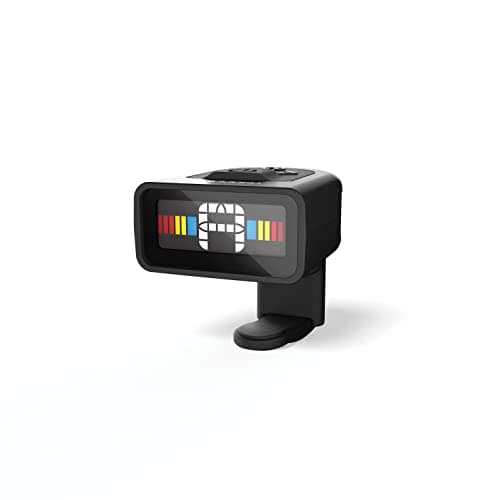 D'Addario Micro Headstock Tuner (PW-CT-12)The tuner that disappears. | Staying on the headstockThe honest floor | 7.4 | $21.99 · View on Amazon #ad How we’re funded |
If it is a stocking filler
A full-color clip-on at about $15 whose published frequency range is tailored to guitar and bass. For: a spare in the case. Skip if: it is the player's only tuner, because a ukulele's high A sits at the edge of that range.
| # | Product | Best for | Score | Price |
|---|---|---|---|---|
| 1 | 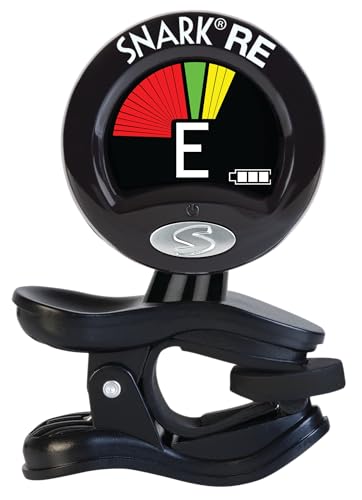 Snark SN5X Clip-On TunerA full-color clip-on with a frequency range tailored to guitar and bass, usable on the front or back of a headstock. | The cheapest one worth buyingThe honest floor | 7.0 | $21.99 · View on Amazon #ad How we’re funded |
If they argue about intonation
A real strobe tuner, plus or minus 0.1 cent, with more than 50 sweetened tuning presets including ukulele, about $60. For: a player setting up instruments. Skip if: this would be a first tuner — the money belongs in lessons or a better ukulele.
| # | Product | Best for | Score | Price |
|---|---|---|---|---|
| 1 | 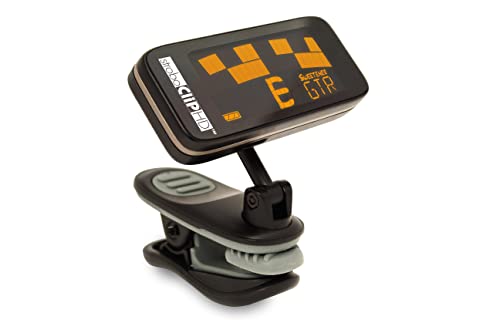 Peterson StroboClip HDA real strobe tuner in a clip-on body: plus or minus 0. | Sweetened ukulele tuning, and intonation workWhere overspending starts | 8.0 | $59.99 · View on Amazon #ad How we’re funded |
The picks in full
KLIQ UberTuner PDQ (rechargeable)
KLIQ Music GearBest for: The one to buy for a ukulele
Vibration-sensing clip-on with a full-color display, dedicated instrument modes, 430-450 Hz calibration and a rechargeable battery rather than a coin cell. Eighteen dollars, and the battery is the reason it wins.
Published specifications
- Model:
- KLIQ UberTuner PDQ
- Sensing:
- Piezo vibration sensor — reads pitch through the wood, ignores room noise
- Instruments:
- Dedicated modes for guitar, bass, ukulele, violin, mandolin, banjo plus chromatic
- Calibration:
- 430-450 Hz, with transpose settings
- Power:
- Rechargeable — no CR2032 to find
- Display:
- Full-color LED with 3-point adjustment
What it gets right
- Rechargeable, which removes the single most common reason a cheap tuner gets thrown away
- Vibration sensing works through a ukulele's thin top in a room with a television on
- Dedicated ukulele mode as well as chromatic, so a child is not reading sharps and flats
Where it gives ground
- No published cent accuracy figure, unlike KLIQ's own UberTuner and the Peterson
- A rechargeable tuner that has gone flat needs a cable, not a coin cell from a drawer
What it is not good at
Wind and brass. Like every clip-on vibration tuner it needs something solid to clip to and a vibrating body to read.
How the specs score against a beginner’s needs
Scores are our reading of the published specifications above against what a beginner physically needs. They are not test results — we have not played this instrument.
Snark clip-on chromatic tuner
SnarkBest for: Tuning anything with strings
$21.995% off · Price as of November 12, 2026
Amazon stocks this as the Snark ST-2, the multi-instrument model in the range.
#ad How we’re funded
Clips to the headstock and reads pitch from the vibration of the wood, so it works in a noisy room and an adult who plays nothing can tune the instrument in twenty seconds.
Published specifications
- Type:
- Clip-on chromatic
- Sensing:
- Switchable — vibration through the headstock, or the built-in mic
- Fits:
- Guitar, bass, ukulele, violin, mandolin
- Display:
- Full-color rotating screen
What it gets right
- Vibration sensing means it works in a room with a television on, which a microphone tuner does not
- Chromatic, so one tuner covers every instrument in the house
- The rotating display means it reads correctly whichever way the instrument is held
Where it gives ground
- The clip is plastic and it is the part that eventually breaks
- Rechargeable rather than battery-swappable, so a flat tuner means finding a cable rather than a coin cell
What it is not good at
Wind and brass instruments. It reads vibration through a solid body, so there is nothing for it to clip to on a flute or a trumpet.
How the specs score against a beginner’s needs
Scores are our reading of the published specifications above against what a beginner physically needs. They are not test results — we have not played this instrument.
Specifications from Snark ST-2 chromatic tuner (retail listing with published feature set).
KLIQ UberTuner (clip-on, black)
KLIQ Music GearBest for: A published accuracy figure for under thirty dollars
The original UberTuner: accurate to within 1 cent per the maker, a 360-degree color display, dedicated ukulele and mandolin modes, 430-450 Hz calibration and a padded clip. It runs on a CR2032 you can replace anywhere.
Published specifications
- Model:
- KLIQ UberTuner (clip-on)
- Accuracy:
- Within 1 cent, per the maker
- Sensing:
- Piezo vibration, no microphone
- Instruments:
- Modes for guitar, bass, violin, ukulele, mandolin, banjo plus chromatic
- Calibration:
- 430-450 Hz, with Bb/Eb/F/D transposition
- Power:
- Included CR2032 coin cell
- Clip:
- Padded, stated not to scratch the finish
What it gets right
- A published accuracy number, which most tuners in this price band do not give
- Display rotates 360 degrees and the clip works on front or back of a headstock, which matters on a small ukulele head
- Replaceable coin cell: a flat tuner is fixed in ten seconds
Where it gives ground
- Half again the price of the rechargeable PDQ for a battery you have to buy
- Transposition keys are aimed at wind players and do nothing for a ukulele
What it is not good at
Being pocket-discreet. It is a chunky clip-on, and a player who wants the tuner invisible on stage wants the D'Addario micro instead.
How the specs score against a beginner’s needs
Scores are our reading of the published specifications above against what a beginner physically needs. They are not test results — we have not played this instrument.
Snark ST-8 Super Tight Clip-On Tuner
SnarkBest for: A noisy room, or a classroom full of ukuleles
Snark's current flagship clip-on: a switchable microphone or vibration sensor, 415-466 Hz calibration, a 360-degree color display and a rechargeable battery. The switchable sensor is why it belongs in a room with twenty ukuleles in it.
Published specifications
- Model:
- Snark ST-8 Super Tight
- Sensing:
- Switchable — built-in microphone OR vibration sensor
- Calibration:
- 415-466 Hz, the widest range here
- Display:
- Full-color, 360-degree rotation
- Power:
- Rechargeable
- Clip:
- Snark's "stay put" clip
What it gets right
- Vibration mode is the one that works when fifteen other people are tuning at the same time
- 415-466 Hz covers playing with an instrument tuned away from A440
- Rechargeable, and Snark clips are the ones music teachers already recognize
Where it gives ground
- No published cent-accuracy figure
- The plastic clip is the part that breaks on every Snark eventually
What it is not good at
Precision intonation work. For setting a nut slot or checking a ukulele's intonation across the fretboard, a strobe tuner is a different class of tool.
How the specs score against a beginner’s needs
Scores are our reading of the published specifications above against what a beginner physically needs. They are not test results — we have not played this instrument.
D'Addario Micro Headstock Tuner (PW-CT-12)
D'AddarioBest for: Staying on the headstock
The tuner that disappears. It clips behind the headstock, reads vibration through the wood rather than through a microphone, and the screen rotates to four positions so it can be read from wherever it ends up.
Published specifications
- Type:
- Clip-on chromatic headstock tuner
- Sensing:
- Piezo — D'Addario cites improved piezo control for noisy environments
- Display:
- Full color, 4 screen orientations (2 vertical, 2 horizontal)
- Calibration:
- 410-480 Hz
- Power:
- CR2032 battery included
- Mounting:
- Ratchet clamp
- Accuracy:
- Not published by D'Addario
What it gets right
- Four screen orientations, so it reads correctly clipped to the front or the back of a headstock
- Calibration from 410 to 480 Hz covers ensembles that do not tune to A440
- Vibration sensing rather than a microphone, which is why it still works in a room with a television on
- Small enough to leave clipped on permanently
Where it gives ground
- CR2032 coin cell — a battery you have to go and find when it dies, and there is no rechargeable option in this model
- D'Addario publishes no accuracy figure in cents, so its precision cannot be compared on paper with tuners that do
- No weight or dimensions published, despite the size being the selling point
What it is not good at
Wind and brass. It reads vibration through a solid headstock, so there is nothing for it to clip to on a flute or a trumpet.
How the specs score against a beginner’s needs
Scores are our reading of the published specifications above against what a beginner physically needs. They are not test results — we have not played this instrument.
Specifications from D'Addario — Micro Headstock Tuner product page.
Snark SN5X Clip-On Tuner
SnarkBest for: The cheapest one worth buying
A full-color clip-on with a frequency range tailored to guitar and bass, usable on the front or back of a headstock. Fifteen dollars — the right answer when the tuner is a stocking filler rather than the gift.
Published specifications
- Model:
- Snark SN5X
- Display:
- Full color; works on the front or back of a headstock
- Range:
- Frequency range tailored to guitar and bass, per the maker
- Weight:
- About 1.6 oz
What it gets right
- Cheapest tuner here and still from a brand a music teacher recognizes
- Mounts either side of the headstock, which is how you keep it out of the way on a small instrument
- Low enough cost to buy two and keep one in each case
Where it gives ground
- The published range is tailored to guitar and bass — a ukulele's high A is at the edge of its comfort zone
- No calibration range or accuracy figure published, and no rechargeable battery
What it is not good at
A ukulele player who wants certainty. For a few dollars more the UberTuner PDQ publishes a ukulele mode and the ST-8 publishes a calibration range; this one publishes neither.
How the specs score against a beginner’s needs
Scores are our reading of the published specifications above against what a beginner physically needs. They are not test results — we have not played this instrument.
Peterson StroboClip HD
PetersonBest for: Sweetened ukulele tuning, and intonation work
A real strobe tuner in a clip-on body: plus or minus 0.1 cent, 192 strobe segments and more than 50 sweetened tuning presets, including ukulele. Sixty dollars is absurd next to a $20 ukulele tuner, and it is the only one here that can set intonation.
Published specifications
- Model:
- Peterson StroboClip HD (403868)
- Accuracy:
- ±0.1 cent — one thousandth of a semitone
- Display:
- Backlit HD with 192 strobe segments, readable in direct sunlight
- Presets:
- 50+ Sweetened Tunings, including ukulele, plus capo and drop-tuning transposition
- Instruments:
- Guitar, bass, ukulele, violin, viola, cello, banjo, mandolin, brass and woodwind
- Power:
- CR2032, up to 24 hours
What it gets right
- Sweetened presets exist because equal temperament makes open chords sound sour — on a re-entrant ukulele that is audible
- ±0.1 cent makes it the only tuner here that can check intonation rather than just tune
- Rubber-lined clamp and an articulated arm, so it sits where you can read it
Where it gives ground
- Three times the price of the tuner we recommend, for accuracy a beginner's ear cannot use yet
- The feature list is aimed at a working player and reads as noise to a first-year student
What it is not good at
Being a first tuner. Buy this when a player starts arguing about intonation; before that, the money belongs in lessons or a better ukulele.
How the specs score against a beginner’s needs
Scores are our reading of the published specifications above against what a beginner physically needs. They are not test results — we have not played this instrument.
Questions people actually ask
What is the best clip-on tuner for a ukulele?
The KLIQ UberTuner PDQ#ad at about eighteen dollars: vibration sensing so it works in a noisy room, a dedicated ukulele mode, 430 to 450 Hz calibration, and a rechargeable battery rather than a coin cell. The battery is the deciding feature in practice — most cheap clip-on tuners are thrown away with a flat CR2032 in them rather than repaired.
Do I need a ukulele-specific tuner?
No, you need a chromatic one, which almost all of these are. A chromatic tuner reads whatever note it hears, so it handles standard GCEA, low-G, baritone DGBE and any re-entrant oddity. What a dedicated ukulele mode adds is that it names the string rather than the note, which matters for a child who does not yet know that the fourth string is a G. Our tunings page explains why re-entrant tuning confuses tuners that are not chromatic.
Why does my ukulele go out of tune so fast?
Mostly because of the strings rather than the instrument. Nylon and fluorocarbon ukulele strings stretch for days or weeks after fitting, and they respond to temperature and humidity more than steel strings do. A new ukulele needs tuning several times a day for the first week and that is normal. If it still will not hold after a fortnight, suspect the tuners or the nut — see how to tune a ukulele and ukulele strings.
What does "sweetened tuning" mean, and does a ukulele need it?
Equal temperament tunes every string to a mathematically even scale, which makes some chords sound slightly sour — most audibly on open chords. A sweetened preset offsets individual strings by a few cents so those chords sit better. On a re-entrant ukulele, where the fourth string is tuned up rather than down, this is more noticeable than on a guitar. The Peterson StroboClip HD#ad publishes more than fifty such presets including ukulele. It is a refinement, not a beginner need.
Will a clip-on tuner mark the finish on a ukulele?
A padded clip will not, and both KLIQ models and the Peterson publish a padded or rubber-lined clamp. What does cause marks is leaving a tuner clipped on in a case for months, where the pressure sits in one place against a thin finish. Take it off and put it in the case pocket. On a small soprano headstock the other issue is simply physical room, which is the argument for the micro tuner#ad.
Is a tuner app good enough instead?
For one player in a quiet room, yes, and it costs nothing. Two situations break it: a room with other noise in it, because a phone microphone cannot separate your ukulele from the television, and a classroom, where twenty instruments tune at once. A clip-on reading vibration through the wood ignores both. That is also the reason we recommend the switchable-sensor Snark ST-8#ad for teachers.
Sources
- KLIQ UberTuner PDQ — published listing: piezo sensor with vibration-based detection, full-color LED display with 3-point adjustment, instrument tuning modes, calibration 430-450 Hz, transpose settings, rechargeable
- KLIQ UberTuner — published listing: accurate to within 1 cent, 360-degree color display, dedicated modes for guitar, bass, violin, ukulele, mandolin and banjo, calibration 430-450 Hz, CR2032 included, padded clip
- Snark ST-8 Super Tight — published listing: switchable built-in mic or vibration sensor, pitch calibration 415-466 Hz, full-color 360-degree display, rechargeable
- Snark SN5X — published listing: full-color display, frequency range tailored to guitar and bass, mounts front or back of headstock
- Peterson StroboClip HD (403868) — published listing: ±0.1 cent accuracy, 50+ Sweetened Tuning presets, 192-segment backlit display, CR2032 for up to 24 hours, rubber-lined clamp
Still deciding?
Every recommendation on this site is built the same way, and the method is published in full — including what we do not do and what would get a pick dropped.
Read next
- How to tune a ukulele
GCEA explained, using a clip-on tuner, why new strings drift for a week, and when tuning is not the problem.
- Ukulele accessories you actually need
The three items that genuinely matter, the best cheap upgrade, and what a bundle is really padding with.
- Best ukulele brands for beginners
Kala, Cordoba, Enya and the rest, what each is known for at the beginner end, and the specification that outranks the badge entirely.
- Best ukulele strings for beginners
Nylgut against fluorocarbon, why size-specific sets matter, and three sets with published gauges and tensions.
- Best clip-on tuners for beginners
Why a clip-on beats a phone app, the four specs that separate them, and three tuners for guitar, ukulele and band instruments.
- Best beginner ukuleles: what's worth it from $60 to $120
Segmented by hand size rather than price, with the nut-material spec that separates a real ukulele from a decoration.