Ukuleles
Are cheap ukuleles worth it?
There is one failure that separates a cheap ukulele from a useless one, it cannot be fixed by a setup, and almost nobody explains it.
By Sawyer V. · Published · Last updated
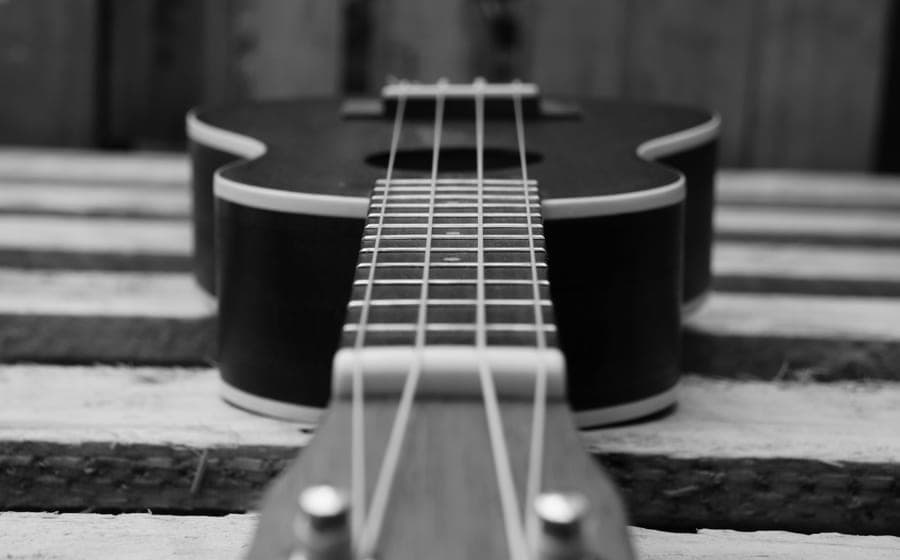
Cheap ukuleles are worth it above roughly $60. Below about $40 the instrument usually has an intonation error — it plays progressively sharper up the neck — caused by a saddle in the wrong position. Unlike almost every other budget instrument fault, this cannot be corrected by a setup.
The failure that cannot be repaired
Most cheap-instrument problems are fixable. A cheap guitar with high action can be set up. A cheap keyboard with poor sounds can be plugged into headphones. Intonation error on a ukulele is different, and it is worth understanding because it is the specific reason inexpensive ukuleles get abandoned.
Here is the mechanism. When you press a string down onto a fret, you stretch it very slightly, which raises its pitch a little. Instrument makers compensate by placing the saddle a fraction further from the nut than pure arithmetic would suggest, so that the stretching is canceled out. That compensation distance depends on string gauge, string material and action height.
On a well-made instrument the saddle is positioned and often angled to get this right. On a cheap one the saddle slot is routed in a fixed place with no compensation, or is compensated for a different string set entirely.
The result: the open strings tune perfectly, the first few frets sound fine, and from about the fifth fret upward everything is progressively sharp. Chords in the middle of the neck sound sour. And because the slot is cut into the wood, correcting it means re-routing the bridge — work that costs several times what the instrument did.
What a beginner experiences
Not “my instrument has an intonation problem.” They do not have that vocabulary. What they experience is that some chords sound good and others sound bad, unpredictably, and that the ones that sound bad keep sounding bad no matter how carefully they place their fingers.
The conclusion available to them is that they are doing it wrong. This is the same mechanism as the out-of-tune guitar, and it is the reason the “below the floor” band on this site is defined by things that cannot be fixed rather than by things that are merely poor.
The other two failures
Friction tuners that slip. A friction tuner is a plain peg held by friction between the peg and the headstock. Nylon strings stretch a great deal more than steel, so they exert a constant unwinding force, and a cheap friction peg gradually gives. The instrument is out of tune again within a day. Geared tuners — with a worm drive that cannot be back-driven — solve this completely and cost the manufacturer very little.
A molded plastic nut. Soft plastic slots bind the string, so tuning happens in jumps rather than smoothly. It is impossible to land precisely on a pitch. A NuBone, Graph Tech or bone nut is dense and slippery and does not do this.
Where cheap is fine
Laminate wood. Solid tops are better and the difference on an instrument this small is much less pronounced than on a guitar. A laminate mahogany ukulele at the floor band is a perfectly good instrument.
Cosmetics. Binding, rosettes, finish quality — all decorative.
Factory strings, sort of. Poor strings make an instrument sound dull, and unlike intonation this is a $12 fix. If everything else is right, a ukulele with bad strings is a good instrument wearing bad shoes.
Composite bodies. A carbon-fiber and polycarbonate instrument is not a cheap wooden one; it is a different material with genuine advantages in humidity resistance. Judge it on its nut and tuners like anything else.
The two-specification test
Before buying any ukulele, find two things in the listing: the nut and saddle material, and whether the tuners are geared.
If the listing states NuBone, Graph Tech, bone or a similar named material, and geared or die-cast tuners, the instrument is above the floor regardless of price.
If the listing does not mention either, that is not an editorial oversight. Those are the two specifications a manufacturer omits when the answers are molded plastic and friction pegs.
What we would buy
Kala KA-15S
Kala Brand MusicBest for: The honest floor, soprano
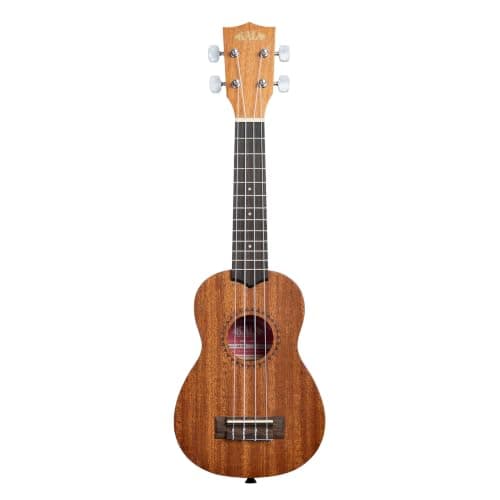
Mahogany throughout, a GraphTech NuBone nut and saddle, and Aquila strings fitted from the factory. The nut material is the spec that separates this from the pile of look-alikes.
Published specifications
- Size:
- Soprano
- Top / back / sides:
- Mahogany
- Neck / fretboard:
- Mahogany neck, rosewood fretboard
- Nut and saddle:
- GraphTech NuBone
- Scale length:
- 13.625"
- Frets:
- 12
- Nut width:
- 1.375"
- Overall length:
- 21.062"
- Strings:
- Aquila Super Nylgut
What it gets right
- NuBone nut and saddle rather than molded plastic — this is what decides whether the instrument plays in tune up the neck
- Aquila strings fitted at the factory, so the first thing you would otherwise replace is already done
- 21 inches overall and light enough for a small child to hold unsupported
Where it gives ground
- 12 frets only, and the body joint stops you well short of the high notes
- Soprano scale means less room between frets — adult fingers with wide fingertips will find it cramped
What it is not good at
Adult hands, sometimes. A 13.625 inch scale is genuinely tight. If the player is a grown-up with large hands, read our soprano-versus-concert comparison before buying this size.
How the specs score against a beginner’s needs
Scores are our reading of the published specifications above against what a beginner physically needs. They are not test results — we have not played this instrument.
Specifications from Kala Brand Music — KA-15S specifications.
Cordoba 15CM
CordobaBest for: Adult hands, concert size
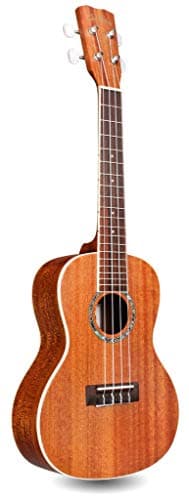
A 375 mm concert scale with 18 frets and a 35 mm nut. The extra inch and a bit of scale over a soprano is the difference between cramped and comfortable for most adults.
Published specifications
- Size:
- Concert
- Top / back / sides:
- Mahogany
- Fingerboard:
- Rosewood
- Scale length:
- 375 mm (14-3/4")
- Frets:
- 18
- Nut width:
- 35 mm (1-3/8")
- Body / overall:
- 280 mm body, 610 mm (24") overall
- Strings / finish:
- Aquila, satin finish, abalone rosette
What it gets right
- 18 frets against a soprano's 12 — a whole extra register that a soprano simply does not have
- The 375 mm scale gives noticeably more room between frets without becoming a tenor-sized instrument
- Aquila strings and an abalone rosette; it looks considerably more expensive than it is
Where it gives ground
- Identical 35 mm nut width to the Kala soprano — the extra room is between the frets, not across the neck
- 24 inches overall is a lot of instrument for a small child
What it is not good at
Sounding like a ukulele in the postcard sense. The concert body is fuller and rounder; the bright, plinky voice people picture is the soprano's.
How the specs score against a beginner’s needs
Scores are our reading of the published specifications above against what a beginner physically needs. They are not test results — we have not played this instrument.
Specifications from Cordoba Guitars — 15CM.
Questions people actually ask
Are cheap ukuleles worth it?
Above roughly $60, yes — that is where a bone-substitute nut and saddle and geared tuners appear together. Below about $40 the instrument usually has intonation errors built into its geometry, which no setup and no string change can correct.
Why does my ukulele sound out of tune higher up the neck?
Intonation error, and the usual cause is a saddle in the wrong position. The instrument can be perfectly tuned at the open strings and still play sharp at the seventh fret, because the vibrating length is wrong. On a cheap instrument the saddle slot is often cut in a fixed position that does not account for the string stretching when it is pressed down.
Can a cheap ukulele be fixed with new strings?
New strings fix a dull sound and they do not fix intonation. If the geometry is wrong, better strings simply make the wrongness clearer. Strings are worth changing on any instrument above the floor; they will not rescue one below it.
Is Kala a good beginner brand?
Yes. Kala publishes full specifications including nut and saddle material, fits Aquila strings from the factory, and builds to a consistent standard at the entry price. Publishing the specifications at all is itself a useful signal at this tier.
Sources
Still deciding?
Every recommendation on this site is built the same way, and the method is published in full — including what we do not do and what would get a pick dropped.
Read next
- How much should a beginner ukulele cost?
Four bands from $30 to $200, defined by nut material and tuner type rather than by brand, with the accessory list included.
- Best beginner ukuleles: what's worth it from $60 to $120
Segmented by hand size rather than price, with the nut-material spec that separates a real ukulele from a decoration.
- Are cheap guitars worth it?
The line between cheap and too cheap, named part by part, with what each failure does to a beginner who cannot diagnose it.
- Are cheap keyboards worth it?
Why cheap keyboards fail invisibly rather than mechanically, and the three specs that separate a cheap board from a too-cheap one.
- What comes with a ukulele, and what you still need
What is really in the box, what the bundle accessories are worth, and the three things you genuinely need.
- Best ukulele brands for beginners
Kala, Cordoba, Enya and the rest, what each is known for at the beginner end, and the specification that outranks the badge entirely.