Guitars
Best clip-on tuners for beginners
The cheapest accessory on this site and the one that changes the most. Nobody can practice usefully on an instrument that is out of tune.
By Sawyer V. · Published · Last updated

A tuner is the least interesting purchase on this site and the one we would make first. The reason is simple: a beginner cannot hear that the instrument is out of tune, so they conclude the problem is them. Weeks of that is how people decide they have no musical ear and stop.
The good news is the category is cheap and largely solved. What follows is our reading of published specifications rather than test results, and the method is on how we pick.
Buy a clip-on chromatic tuner. If you want it to disappear behind the headstock, the D’Addario Micro. If you want the cheapest thing that works on every stringed instrument in the house, a Snark. If the player is in a school band or orchestra, buy the Korg TM-70T instead, because it is also the metronome they will be told to bring.
Why clip-on, and not the phone
Phone apps are genuinely accurate. They listen through the microphone, which is the problem: the microphone hears the room as well as the instrument.
A clip-on tuner clamps to the headstock and reads the vibration coming through the wood. A television, a dishwasher, a sibling on drums — none of it registers. In a music shop or a band room, where everyone tunes at once, it is the only thing that works at all.
The second reason is friction. A tuner that lives clipped to the headstock gets used every session. A tuner that lives in an app behind a lock screen gets used when somebody remembers.
The four specs that matter
1. How it senses pitch. Vibration through a clip is what makes a tuner usable in a noisy room. A built-in microphone is what lets a tuner serve a flute or a trumpet. Some units offer both, usually by adding a contact microphone as an accessory.
2. Whether accuracy is published. Most clip-on tuners do not publish an accuracy figure in cents at all. That is worth knowing rather than worrying about: for a beginner, any of these is far more accurate than their ear. It matters when a player moves into an ensemble where everyone must agree.
3. Calibration range. Standard pitch is A440, and most beginners never touch this. A player joining an orchestra or playing with an old piano may need to shift the reference, and a tuner that calibrates from 410 to 480 Hz covers it.
4. The display, and which way it faces. A tuner is clipped to the front or the back of a headstock depending on the instrument and the player’s handedness. Rotating screens exist because a tuner you cannot read is a tuner you stop using.
How we ranked these
Accuracy on paper first, because it is the only quality claim any of these makers quantifies. Then whether it works in a noisy room, since that is the practical difference from a phone. Then whether it fits every instrument in the house, then power and battery, then room to grow.
The picks
The D'Addario Micro Headstock Tuner (PW-CT-12)#ad is the one we would clip on and forget. It is small enough to sit behind the headstock out of sight, the full-color screen rotates to four positions so it reads correctly from either side, and it calibrates across 410 to 480 Hz. It runs on a CR2032 coin cell, which is the honest cost: when it dies you need a specific battery rather than the two AAAs in a kitchen drawer.
D’Addario publishes no accuracy figure in cents, so its precision cannot be compared on paper with the Korg. For tuning a guitar to itself and to records, that is not the constraint.
The Snark clip-on chromatic tuner#ad is the one most people already own, and for good reason. It reads vibration through the headstock, it is chromatic so it handles the ukulele and the violin as well as the guitar, and the display rotates so it is readable whichever way the instrument is held. The clip is plastic and it is the part that eventually breaks, and the battery will be flat the one time you are in a hurry.
The Korg TM-70T Tuner and Metronome#ad is the pick for a school musician, and it is a different kind of product: a tuner and a metronome in one box, with published accuracy better than one cent from C1 to C8, a 30 to 252 bpm metronome with fifteen rhythm variations, and a headphone jack. At 79 grams it sits on a music stand and still fits a case pocket.
Two honest limits. It listens through its own microphone, so in a loud band room it is beaten by a clip-on unless you add the contact mic — which is the TM-70C package, not this one. And it runs on two AAA batteries rather than a rechargeable cell.
Using it properly
Always tune up to the note, never down. If a string is sharp, go below the target and come back up. Tuning down leaves slack in the machine head and the string drifts flat within minutes.
Expect new strings to move. For the first few days a new set stretches constantly. That is normal, and it is why people think new strings will not hold tune. The full routine is in how to change guitar strings.
Tune with the guitar in playing position. The neck flexes slightly depending on how the instrument is held.
If it will not stay in tune, it is rarely the tuner. It is old strings, badly wound strings, a cheap machine head slipping, or a nut binding the string. That diagnosis is in guitar maintenance for beginners.
A tuner is one of four things we think a beginner should buy on day one; the rest of the list is in guitar accessories you actually need. For the ukulele version of this job, see how to tune a ukulele.
Quick picks
The cheap one that works on everything
Vibration sensing and a big rotating display. Chromatic, so one tuner covers the guitar, the ukulele and the violin in the same house.
| # | Product | Best for | Score | Price |
|---|---|---|---|---|
| 1 | No image Snark clip-on chromatic tunerClips to the headstock and reads pitch from the vibration of the wood, so it works in a noisy room and an adult who plays nothing can tune the instrument in twenty seconds. | Tuning anything with stringsThe honest floor | 9.0 | Check price on Amazon → #ad How we’re funded |
The one to leave clipped on
Small enough to live behind the headstock permanently, with a screen that rotates to four positions so it reads correctly whichever way you clip it.
| # | Product | Best for | Score | Price |
|---|---|---|---|---|
| 1 | 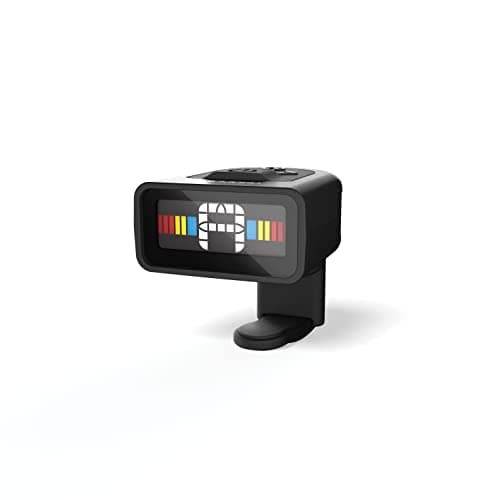 D'Addario Micro Headstock Tuner (PW-CT-12)The tuner that disappears. | Staying on the headstockThe honest floor | 7.4 | $21.99 · View on Amazon #ad How we’re funded |
Band and orchestra students
A tuner and a metronome in one card-sized box with published accuracy figures and a headphone jack. What a school program will ask for.
| # | Product | Best for | Score | Price |
|---|---|---|---|---|
| 1 | 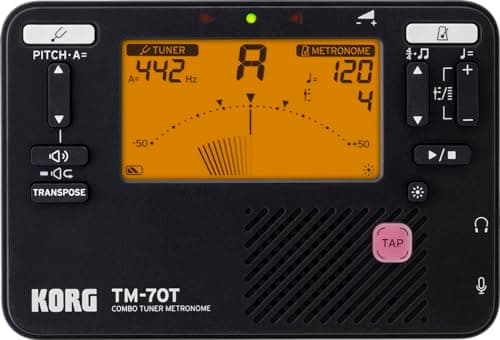 Korg TM-70T Tuner and MetronomeA tuner and a metronome in one card-sized box, with a published accuracy figure and a headphone jack. | Band and orchestra studentsEnough | 8.6 | $38.99 · View on Amazon #ad How we’re funded |
The picks in full
Snark clip-on chromatic tuner
SnarkBest for: Tuning anything with strings
Clips to the headstock and reads pitch from the vibration of the wood, so it works in a noisy room and an adult who plays nothing can tune the instrument in twenty seconds.
Published specifications
- Type:
- Clip-on chromatic
- Sensing:
- Vibration through the headstock, not the microphone
- Fits:
- Guitar, bass, ukulele, violin, mandolin
- Display:
- Full-color rotating screen
What it gets right
- Vibration sensing means it works in a room with a television on, which a microphone tuner does not
- Chromatic, so one tuner covers every instrument in the house
- The rotating display means it reads correctly whichever way the instrument is held
Where it gives ground
- The clip is plastic and it is the part that eventually breaks
- Battery-powered, and it will be flat the one time you need it in a hurry
What it is not good at
Wind and brass instruments. It reads vibration through a solid body, so there is nothing for it to clip to on a flute or a trumpet.
How the specs score against a beginner’s needs
Scores are our reading of the published specifications above against what a beginner physically needs. They are not test results — we have not played this instrument.
Specifications from Snark tuners (retail listing with published feature set).
Korg TM-70T Tuner and Metronome
KorgBest for: Band and orchestra students
A tuner and a metronome in one card-sized box, with a published accuracy figure and a headphone jack. The unit school band and orchestra programs tend to standardize on.
Published specifications
- Detection range:
- C1 (30.47 Hz) to C8 (4566.56 Hz), sine wave
- Accuracy:
- Better than +/-1 cent; tempo accuracy +/-0.3%
- Calibration:
- A4 = 410-480 Hz in 1 Hz steps
- Metronome:
- Quarter note = 30-252 bpm, 0-9 beats, 15 rhythm variations
- Modes:
- Meter, Sound Out, Sound Back, transpose (F, B-flat, E-flat, chromatic)
- Connections:
- 3.5 mm input, 3.5 mm headphone jack, 23 mm speaker
- Power / size:
- Two AAA batteries, approx. 250 h tuner-only; 79 g
What it gets right
- Tuner and metronome in one unit, which is exactly what a band or orchestra student is told to bring
- Published accuracy of better than 1 cent across C1 to C8 — a figure most clip-on tuners do not state at all
- Sound Out and Sound Back modes play reference pitches, so it trains the ear rather than only the eyes
- 79 g with a fold-out stand: it sits on a music stand and still fits a case pocket
Where it gives ground
- Runs on two AAA batteries with no rechargeable cell, so batteries are a running cost
- The contact microphone that makes it work in a loud room is not included — that is the TM-70C package
- Without the contact mic it listens through its built-in microphone, which a clip-on vibration tuner beats in a noisy band room
What it is not good at
Being left clipped to an instrument. It is a box that sits on a stand, not a headstock tuner you forget about.
How the specs score against a beginner’s needs
Scores are our reading of the published specifications above against what a beginner physically needs. They are not test results — we have not played this instrument.
Specifications from Korg — TM-70T specifications, Korg — TM-70T product page.
D'Addario Micro Headstock Tuner (PW-CT-12)
D'AddarioBest for: Staying on the headstock
The tuner that disappears. It clips behind the headstock, reads vibration through the wood rather than through a microphone, and the screen rotates to four positions so it can be read from wherever it ends up.
Published specifications
- Type:
- Clip-on chromatic headstock tuner
- Sensing:
- Piezo — D'Addario cites improved piezo control for noisy environments
- Display:
- Full color, 4 screen orientations (2 vertical, 2 horizontal)
- Calibration:
- 410-480 Hz
- Power:
- CR2032 battery included
- Mounting:
- Ratchet clamp
- Accuracy:
- Not published by D'Addario
What it gets right
- Four screen orientations, so it reads correctly clipped to the front or the back of a headstock
- Calibration from 410 to 480 Hz covers ensembles that do not tune to A440
- Vibration sensing rather than a microphone, which is why it still works in a room with a television on
- Small enough to leave clipped on permanently
Where it gives ground
- CR2032 coin cell — a battery you have to go and find when it dies, and there is no rechargeable option in this model
- D'Addario publishes no accuracy figure in cents, so its precision cannot be compared on paper with tuners that do
- No weight or dimensions published, despite the size being the selling point
What it is not good at
Wind and brass. It reads vibration through a solid headstock, so there is nothing for it to clip to on a flute or a trumpet.
How the specs score against a beginner’s needs
Scores are our reading of the published specifications above against what a beginner physically needs. They are not test results — we have not played this instrument.
Specifications from D'Addario — Micro Headstock Tuner product page.
Questions people actually ask
Do I need a tuner if I have a phone app?
An app works in a quiet room. A clip-on tuner reads the vibration of the instrument itself, so it also works with a television on, a sibling practicing, or a band setting up. For a beginner who tunes several times a session, that difference decides whether the thing gets used.
What does chromatic mean on a tuner?
It reads every note rather than only the six of standard guitar tuning. That matters more than it sounds: a chromatic tuner handles a ukulele, a violin, a capo, a dropped tuning and a band instrument, so one tuner serves a whole house.
How often should a beginner tune?
Every time you pick the instrument up, and again after fifteen minutes if the strings are new. New strings stretch for the first few days, and a guitar that was perfect yesterday will not be today.
Why is my guitar in tune but chords still sound wrong?
Usually intonation: the open strings are right but fretted notes are sharp, which is a setup question rather than a tuning one. It can also be the way you press. If it persists, read what a guitar setup is.
Will a clip-on tuner work on a flute or a trumpet?
No. A clip-on reads vibration through a solid body, and there is nothing on a wind instrument to clip to. Band and orchestra players need a tuner with a microphone or a contact mic, which is why the Korg here is the pick for them.
Sources
Still deciding?
Every recommendation on this site is built the same way, and the method is published in full — including what we do not do and what would get a pick dropped.
Read next
- Guitar accessories you actually need
The four accessories that change how a beginner's guitar plays, the ones that can wait, and the ones that are pure margin.
- How to tune a ukulele
GCEA explained, using a clip-on tuner, why new strings drift for a week, and when tuning is not the problem.
- How to tune a violin
Fine tuners versus pegs, the correct order, how to stop a peg slipping, and the two mistakes that cause real damage.
- How to change guitar strings
The full sequence for electric and acoustic, the three common mistakes, and why new strings drift for a day.
- Instrument gifts that actually get played
What to give when you cannot ask the recipient first: four instruments that work out of the box, plus the ten-dollar accessory that saves any of them.