Ukuleles
Best ukulele strings for beginners
The cheapest thing that transforms an inexpensive ukulele, and the first thing to change on one that sounds dull or will not stay in tune.
By Sawyer V. · Published · Last updated
A set of ukulele strings costs less than almost anything else on this site, and on an inexpensive instrument it does more. The ukuleles people buy for under a hundred dollars are usually assembled well enough and strung with something generic, and that string is the single biggest limit on how the instrument sounds.
That is the whole case for this page: it is the cheapest real upgrade there is, and the first thing to try before concluding an instrument is disappointing.
We have not played these sets. What we compared is the material, gauges and tension each maker publishes; the method is on how we pick.
If your ukulele sounds dull, fit a synthetic set in the correct size for your body. Aquila Super Nylgut is the default and what many good ukuleles ship with. D’Addario EJ99SC is the choice if you want published tensions and a brighter, more precise carbon sound. Martin’s fluorocarbon set is the cheapest way to hear the difference.
Why the factory strings are the problem
A ukulele at the entry price has to hit a number, and strings are one of the easiest places to save. What you get is a plain nylon set that sounds muted, stretches for a long time before it settles, and makes the first week a cycle of constant retuning.
Change them and the instrument typically gets louder, clearer and quicker to settle. None of that requires spending more on the ukulele itself, which is why we treat strings as the first move rather than as maintenance.
The materials, briefly
Nylon. The traditional cheap string, and what most budget instruments ship with. Soft, warm, and usually dull.
Nylgut and similar synthetics. Engineered to imitate the gut strings ukuleles originally used, with more volume and a warmer, more traditional voice than plain nylon. This is the default upgrade, and what many reputable ukuleles are fitted with at the factory.
Fluorocarbon and carbon. Denser material, usually described by their makers as brighter and more precise in intonation. They are thinner for the same pitch, which some players prefer under the fingers and others do not.
Wound strings. Metal-wound over a synthetic core, used on low-G sets and on baritone ukuleles for the lower strings. They add depth and they also add finger noise.
Size is not optional
The one mistake worth avoiding. Ukulele strings are sold by body size, because the scale length — the vibrating length of the string — changes between a soprano, a concert, a tenor and a baritone.
Fit a soprano set to a tenor and the strings are either too short to reach the tuners or under noticeably lower tension than intended, which feels slack and sounds flabby. Several makers, including both D’Addario and Martin here, sell one set covering soprano and concert, because those two scales are close enough to share.
The other decision is high G or low G. Standard ukulele tuning puts the fourth string above the third, which is the sound most people recognize. A low G set replaces it with a proper bass note, which suits fingerpicking and makes melody playing easier to follow. Sets are sold specifically for one or the other, and that is covered in ukulele tunings explained.
How we ranked these
Holds tune first, then intonation, then how clearly the size fit is published, then what the change does for setup, then room to grow. Every figure below comes from the maker’s own page.
The picks
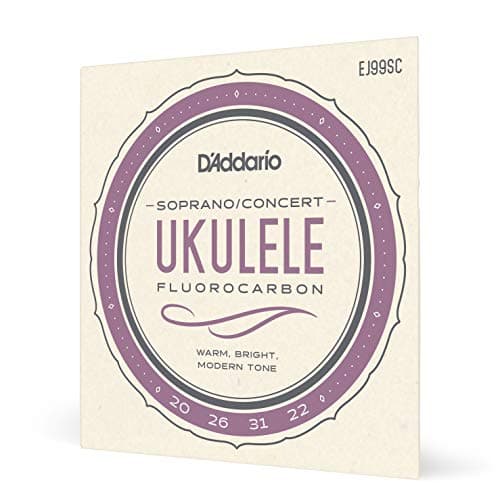
The D'Addario Pro-Arte Carbon EJ99SC#ad is the set we would buy for a player who wants to know what they are fitting. D’Addario publishes the gauge and the tension of every individual string — 7.2 lb on the A, 6.8 on the G, 6.5 on the E, 6.2 on the C — which nobody else here does. It is carbon monofilament, which D’Addario ties to intonation accuracy and a bright modern tone, and one set covers soprano and concert.
The limits are practical. It is tie-end only, so it needs a knot at the bridge rather than dropping into a ball-end bridge, and D’Addario publishes no low-G option in this size.
The Aquila Super Nylgut ukulele strings#ad is the default, and it is the string most good ukuleles arrive wearing. If your instrument came with something generic, this is the change that makes it sound like the ukuleles in the shop: louder and brighter than plain nylon, with more sustain, and quicker to settle than you expect.
Sets are size-specific, so buy the one that names your body, and any new string stretches for a few days before it stops moving.
The Martin M600 ukulele strings#ad is the cheapest way to hear what a material change does. Clear high-tensile fluorocarbon across all four strings, with the gauges published individually and a set tension figure, for soprano and concert bodies. There is no wound string in this size, so nothing to wear through.
Two things Martin does not publish: the end type, so bridge compatibility has to be checked on the instrument, and whether the set is high G or low G. If either matters to you, the D’Addario set is the better-documented purchase.
Fitting them, and what to expect
Change one string at a time if you are nervous, though on a ukulele there is no soundpost or floating bridge to disturb, so taking them all off is safe.
Expect several days of stretching. New ukulele strings go out of tune quickly at first. Tune, play, tune again. After three or four days they settle and stay settled. The full procedure is in how to change ukulele strings.
Do not expect a fix for a bad instrument. Strings cure dullness. They do not cure intonation error, a warped neck or a high action, which is why we are cautious about the very cheap end in are cheap ukuleles worth it.
Quick picks
If you want the numbers published
Carbon monofilament with the tension of every individual string published, so you know exactly what load the instrument is under.
| # | Product | Best for | Score | Price |
|---|---|---|---|---|
| 1 | D'Addario Pro-Arte Carbon EJ99SCCarbon monofilament strings for soprano and concert ukuleles, and the only set here that publishes the tension of every individual string, so you know exactly what load the instrument is under. | Published tension figuresEnough | 8.6 | $10.99 · View on Amazon #ad How we’re funded |
The default upgrade
The synthetic set most good ukuleles ship with from the factory, and the obvious first change on any that did not.
| # | Product | Best for | Score | Price |
|---|---|---|---|---|
| 1 | No image Aquila Super Nylgut ukulele stringsThe string set most good ukuleles ship with from the factory, and the single most transformative thing you can do to an inexpensive one that did not. | The cheapest real upgradeThe honest floor | 8.4 | Check price on Amazon → #ad How we’re funded |
The cheapest way to hear the difference
Clear fluorocarbon with published gauges and set tension, at the lowest price of the three.
| # | Product | Best for | Score | Price |
|---|---|---|---|---|
| 1 | 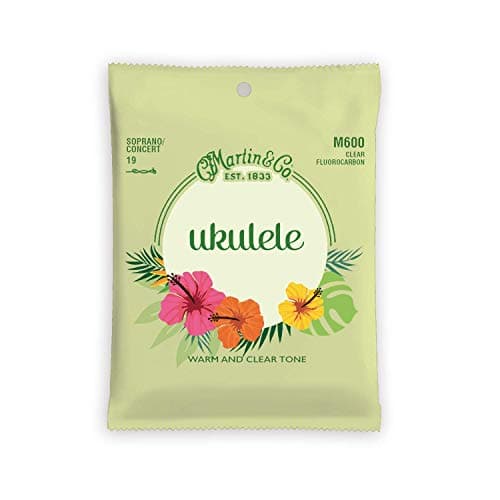 Martin M600 ukulele stringsClear fluorocarbon strings for soprano and concert ukuleles with the gauges and set tension published. | The cheapest real upgradeThe honest floor | 7.8 | $6.49 · View on Amazon #ad How we’re funded |
The picks in full
D'Addario Pro-Arte Carbon EJ99SC
D'AddarioBest for: Published tension figures
Carbon monofilament strings for soprano and concert ukuleles, and the only set here that publishes the tension of every individual string, so you know exactly what load the instrument is under.
Published specifications
- Material:
- Pro-Arte Carbon (carbon monofilament)
- Gauges:
- .0205, .026, .0319, .0224
- Tuning:
- Optimized for standard GCEA
- Fits:
- Soprano and concert
- End type:
- Tie-end (no ball end published)
- Tension:
- A4 7.200 lb, E4 6.500 lb, C4 6.200 lb, G4 6.800 lb
- Made in:
- New York, USA
What it gets right
- Per-string tension is published for all four strings, which no other set here does
- Carbon monofilament, which D'Addario ties to intonation accuracy and a bright modern tone
- One set covers both soprano and concert scales
Where it gives ground
- Tie-end only, so it needs a knot at the bridge rather than dropping into a ball-end bridge
- Size-specific: tenor, low-G tenor and baritone are all separate sets
- Published for standard high-G tuning only in this size — D'Addario lists a low-G set for tenor, not for soprano or concert
What it is not good at
A bridge that needs ball ends, or a player who wants low-G on a concert ukulele — neither is published for this set.
How the specs score against a beginner’s needs
Scores are our reading of the published specifications above against what a beginner physically needs. They are not test results — we have not played this instrument.
Specifications from D'Addario — EJ99SC Pro-Arte Carbon ukulele strings.
Aquila Super Nylgut ukulele strings
AquilaBest for: The cheapest real upgrade
The string set most good ukuleles ship with from the factory, and the single most transformative thing you can do to an inexpensive one that did not.
Published specifications
- Material:
- Super Nylgut synthetic
- Tuning:
- Standard GCEA
- Fits:
- Soprano, concert or tenor — buy the set for your size
What it gets right
- Louder and brighter than the generic nylon fitted to cheap ukuleles, with far more sustain
- They settle and hold pitch faster than plain nylon, which shortens the miserable first week of constant retuning
- Cheap enough that it is the obvious first upgrade on any instrument that did not come with them
Where it gives ground
- Sets are size-specific, and a soprano set on a tenor will not reach
- New strings of any kind stretch for a few days before they settle
What it is not good at
Fixing a bad instrument. New strings cure a dull sound; they do nothing for intonation error, which is built into the bridge position and cannot be strung out.
How the specs score against a beginner’s needs
Scores are our reading of the published specifications above against what a beginner physically needs. They are not test results — we have not played this instrument.
Specifications from Kala Brand Music — KA-15S, fitted with Aquila Super Nylgut from the factory.
Martin M600 ukulele strings
MartinBest for: The cheapest real upgrade
Clear fluorocarbon strings for soprano and concert ukuleles with the gauges and set tension published. The least expensive way to hear what a cheap ukulele is actually capable of.
Published specifications
- Material:
- High-tensile clear fluorocarbon, no wound strings in this set
- Model:
- M600 (M620 tenor, M630 baritone)
- Gauges:
- A .019, E .025, C .034, G .022
- Set tension:
- 35.4 (Martin's published figure for soprano/concert)
- Fits:
- Soprano and concert
- End type:
- Not published by Martin
- High-G or low-G:
- Not published by Martin
What it gets right
- Full published gauges plus a set tension figure, straight from Martin
- All four strings are fluorocarbon in this size — no wound string to wear through
- One part number spans both soprano and concert bodies
Where it gives ground
- Martin does not publish the end type, so bridge compatibility has to be checked on the instrument
- No high-G or low-G designation is published — only the raw gauges
- Tenor and baritone need different part numbers with different gauges and tensions
What it is not good at
Tenor or baritone ukuleles. Martin assigns those scales to M620 and M630, and the gauges are not interchangeable.
How the specs score against a beginner’s needs
Scores are our reading of the published specifications above against what a beginner physically needs. They are not test results — we have not played this instrument.
Specifications from Martin Guitar — ukulele strings, M600 soprano/concert.
Questions people actually ask
Will new strings make a cheap ukulele sound better?
Usually yes, and by more than any other purchase at the price. The generic nylon fitted to inexpensive ukuleles is dull and slow to settle. A good synthetic or fluorocarbon set is louder, clearer and holds pitch sooner.
How do I know which size set to buy?
Buy the set that names your body size: soprano, concert, tenor or baritone. The scale lengths differ, so a soprano set on a tenor will be under the wrong tension or simply not reach. Several makers sell one set covering soprano and concert together.
What is the difference between Nylgut and fluorocarbon?
Both are synthetics replacing old gut strings. Nylgut is marketed for a warmer, more traditional tone; fluorocarbon and carbon sets are denser, usually described as brighter and more precise in intonation. Neither is wrong — it is a taste and a price question.
How often should a beginner change ukulele strings?
About once a year for a regular player, or when they go dull, look dirty, or stop holding pitch. Ukulele strings rarely break; they simply go lifeless slowly enough that you do not notice.
Do new strings fix intonation problems?
No. If chords go sharp as you move up the neck, that is the bridge position or the nut, and it is built into the instrument. New strings cure a dull sound, not a design fault.
Sources
Still deciding?
Every recommendation on this site is built the same way, and the method is published in full — including what we do not do and what would get a pick dropped.
Read next
- How to change ukulele strings
Tie-bar and slotted bridges step by step, why new strings drift for days, and the stretching trick that halves the settling time.
- Are cheap ukuleles worth it?
The intonation failure that cannot be repaired, what causes it, and the two specs that tell you whether an instrument has it.
- Ukulele accessories you actually need
The three items that genuinely matter, the best cheap upgrade, and what a bundle is really padding with.
- Ukulele tunings, and which one to use
Standard GCEA, what re-entrant tuning does, high-G versus low-G, and the baritone exception that changes every chord shape.
- Best beginner ukuleles: what's worth it from $60 to $120
Segmented by hand size rather than price, with the nut-material spec that separates a real ukulele from a decoration.