Ukuleles
How to tune a ukulele
The first thing to do every single time, the thing a beginner cannot do by ear yet, and the twenty-second job any adult in the house can learn.
By Sawyer V. · Published · Last updated
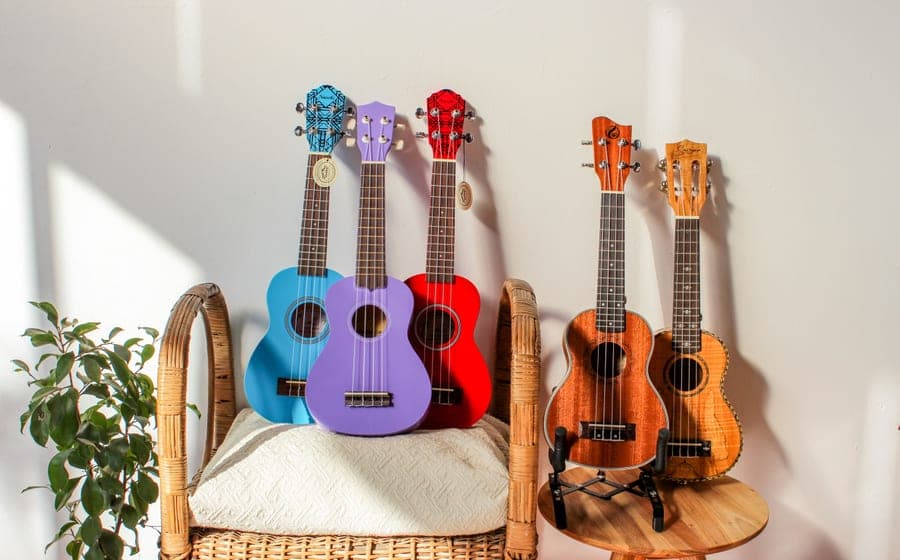
A ukulele needs tuning every time it is picked up, and far more often than that in its first week. This is not a defect — nylon strings stretch enormously compared with steel, and that is part of why the instrument is so gentle to play.
Standard ukulele tuning is G, C, E, A from the top string down. Clip a chromatic tuner to the headstock, pluck one string at a time, and turn its peg until the tuner shows the right letter and centers. On a new instrument expect to repeat this several times a day for about a week while the strings settle.
What the four strings are
Holding the ukulele in playing position, the string closest to your face is G, then C, then E, then A closest to the floor.
The surprise for anyone coming from guitar: the G is usually higher in pitch than the C beside it, not lower. That is called reentrant or “high G” tuning and it is deliberate — it is a large part of why a ukulele sounds bright and jangly rather than like a small guitar.
Soprano, concert and tenor all use GCEA. A baritone is DGBE, matching a guitar’s top four strings, which makes it a different instrument for teaching purposes — covered in the size comparison and, for this size specifically, in baritone vs tenor ukulele.
The method
1. Clip the tuner to the headstock
A clip-on chromatic tuner#ad reads pitch from the vibration of the wood rather than through a microphone, so it works in a room with a television on and it ignores everyone else in the house. That is why it is the right tool and a phone app is a poor substitute in a noisy room.
Set it to chromatic mode if it has one. Some tuners have a dedicated ukulele setting, which is fine; chromatic simply means it will name whatever note it hears.
2. One string at a time, lowest to highest
Pluck the G string and let it ring. The tuner shows a letter and a needle. If it says G and the needle is centered, that string is done.
If it shows a different letter, turn that string’s peg slowly and watch the display move. Always tune upward to the note — if the string is sharp, loosen it well below the target and then come back up. Approaching from below takes up the slack in the tuner gear and the string holds much better.
Then C, then E, then A.
3. Go around again
Tightening one string changes the tension on the neck slightly, which detunes the others. On a ukulele this effect is noticeable. Do a second pass, and on a new instrument a third.
Which way to turn the peg
The honest answer is that it depends on which side of the headstock the peg is on and how the string was wound. Rather than memorising a rule, do this: turn the peg a small amount and watch the tuner. If the pitch went down and you wanted it up, turn the other way.
Small movements. A quarter turn on a ukulele is a large pitch change, and beginners routinely overshoot and break a string by continuing past the note.
The first week
A new ukulele, or one with fresh strings, will go flat repeatedly for about a week. Nylon and Nylgut stretch a great deal before they settle.
You can speed this up. After tuning, gently pull each string away from the fretboard — firmly, not violently — then retune. It will have dropped. Repeat three or four times per string. Doing this on day one turns a week of drift into about two days.
If the instrument came with generic strings rather than Aquila Super Nylgut#ad, this is also the moment to consider changing them — new strings need settling anyway, so you may as well settle good ones.
When tuning is not the problem
Two faults get mistaken for bad tuning, and neither is fixed by tuning.
Slipping friction pegs. If the instrument is in tune and flat again within an hour with nobody touching it, the pegs are not holding. Some friction pegs have a small screw in the center that can be tightened a fraction. Geared tuners do not have this problem, which is why we treat them as part of the floor.
Intonation error. The open strings tune perfectly, first-position chords sound fine, and anything past the fifth fret sounds sour. This is the saddle being in the wrong place, it is built into the instrument, and it cannot be tuned or set up out. It is the defining fault of very cheap ukuleles and the main reason we put a floor under the category — the full mechanism is in are cheap ukuleles worth it.
What we would buy
Snark clip-on chromatic tuner
SnarkBest for: Tuning anything with strings
Clips to the headstock and reads pitch from the vibration of the wood, so it works in a noisy room and an adult who plays nothing can tune the instrument in twenty seconds.
Published specifications
- Type:
- Clip-on chromatic
- Sensing:
- Vibration through the headstock, not the microphone
- Fits:
- Guitar, bass, ukulele, violin, mandolin
- Display:
- Full-color rotating screen
What it gets right
- Vibration sensing means it works in a room with a television on, which a microphone tuner does not
- Chromatic, so one tuner covers every instrument in the house
- The rotating display means it reads correctly whichever way the instrument is held
Where it gives ground
- The clip is plastic and it is the part that eventually breaks
- Battery-powered, and it will be flat the one time you need it in a hurry
What it is not good at
Wind and brass instruments. It reads vibration through a solid body, so there is nothing for it to clip to on a flute or a trumpet.
How the specs score against a beginner’s needs
Scores are our reading of the published specifications above against what a beginner physically needs. They are not test results — we have not played this instrument.
Specifications from Snark tuners (retail listing with published feature set).
Aquila Super Nylgut ukulele strings
AquilaBest for: The cheapest real upgrade
The string set most good ukuleles ship with from the factory, and the single most transformative thing you can do to an inexpensive one that did not.
Published specifications
- Material:
- Super Nylgut synthetic
- Tuning:
- Standard GCEA
- Fits:
- Soprano, concert or tenor — buy the set for your size
What it gets right
- Louder and brighter than the generic nylon fitted to cheap ukuleles, with far more sustain
- They settle and hold pitch faster than plain nylon, which shortens the miserable first week of constant retuning
- Cheap enough that it is the obvious first upgrade on any instrument that did not come with them
Where it gives ground
- Sets are size-specific, and a soprano set on a tenor will not reach
- New strings of any kind stretch for a few days before they settle
What it is not good at
Fixing a bad instrument. New strings cure a dull sound; they do nothing for intonation error, which is built into the bridge position and cannot be strung out.
How the specs score against a beginner’s needs
Scores are our reading of the published specifications above against what a beginner physically needs. They are not test results — we have not played this instrument.
Specifications from Kala Brand Music — KA-15S, fitted with Aquila Super Nylgut from the factory.
Questions people actually ask
What is standard ukulele tuning?
GCEA, from the string nearest your face to the one nearest the floor. On a soprano, concert and tenor the G is usually a “high G” — higher in pitch than the C next to it, which is why a ukulele sounds the way it does. A baritone is tuned differently, to DGBE.
Why does my ukulele keep going out of tune?
If the strings are new, because they are still stretching — expect a week of constant retuning and it is completely normal. If they are not new, the usual culprits are friction tuning pegs slipping or a plastic nut binding the string.
Can I tune a ukulele without a tuner?
You can tune it to itself by ear using the fifth fret, but a beginner has no reference pitch and no trained ear, so the instrument ends up internally consistent and wrong against everything else. A clip-on tuner costs very little and removes the problem entirely.
My ukulele is in tune but chords still sound wrong. Why?
Almost certainly intonation: the instrument plays progressively sharper up the neck because the saddle is in the wrong position. Open strings tune fine, chords past the fifth fret sound sour, and no amount of tuning fixes it. This is the defining fault of very cheap ukuleles and it cannot be corrected.
Sources
Still deciding?
Every recommendation on this site is built the same way, and the method is published in full — including what we do not do and what would get a pick dropped.
Read next
- Ukulele accessories you actually need
The three items that genuinely matter, the best cheap upgrade, and what a bundle is really padding with.
- Are cheap ukuleles worth it?
The intonation failure that cannot be repaired, what causes it, and the two specs that tell you whether an instrument has it.
- Best beginner ukuleles: what's worth it from $60 to $120
Segmented by hand size rather than price, with the nut-material spec that separates a real ukulele from a decoration.
- What comes with a ukulele, and what you still need
What is really in the box, what the bundle accessories are worth, and the three things you genuinely need.
- How to change guitar strings
The full sequence for electric and acoustic, the three common mistakes, and why new strings drift for a day.