Ukuleles
Ukulele tunings, and which one to use
The ukulele's fourth string is tuned higher than its third, which is unusual, deliberate, and responsible for most of the instrument's character.
By Sawyer V. · Published · Last updated
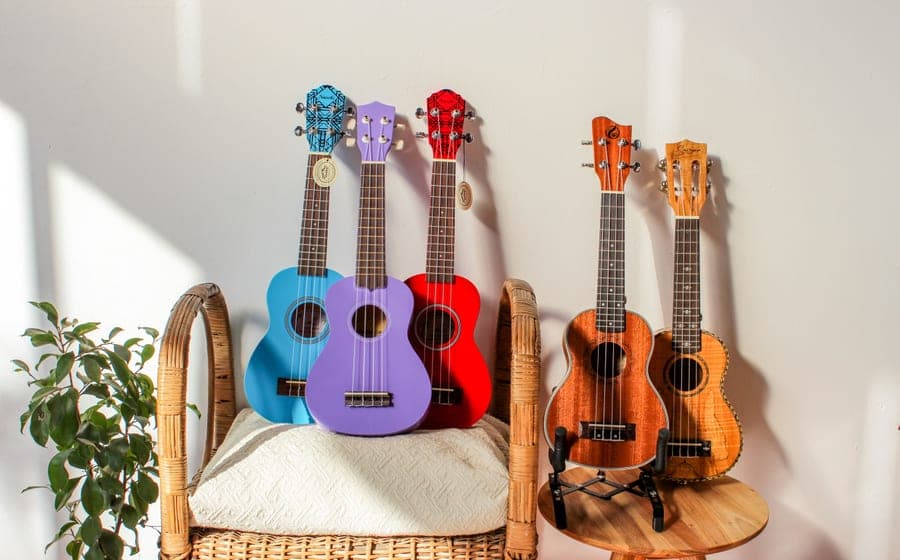
The ukulele has one genuinely strange feature and almost nobody explains it to beginners: the strings are not in order of pitch. The string closest to your face is tuned higher than the one next to it.
That is not a mistake and it is not something to fix. It is the reason a ukulele sounds like a ukulele.
Standard tuning is GCEA with the G tuned high — above the C beside it. That is called re-entrant tuning and it produces the instrument’s bright, jangly strum. Use it. Low-G is a later, deliberate change that needs a different string, and baritone ukuleles use DGBE instead.
Standard GCEA
Reading from the string nearest your face to the one nearest the floor: G, C, E, A.
The C is the lowest note. The G above it is tuned an octave up from where you would expect in an ascending sequence, which puts it higher in pitch than both the C and the E.
Soprano, concert and tenor ukuleles all use this. That is the single most useful fact for a beginner choosing a size, because it means every chord shape works on all three and moving up later costs nothing. Which size to pick is in soprano versus concert versus tenor.
Why re-entrant tuning matters
On a guitar, strumming across the strings sweeps from low to high. On a ukulele it does not: the pitch jumps around within the strum.
Three consequences follow, and all three are things people like about the instrument.
The bright, jangly strum. No low bass note anchoring the chord means the sound sits in a narrow, cheerful range. That is the ukulele character.
Chords sound the same wherever you play them. Because there is no bass string, inversions blur together and a chord shape sounds consistent up and down the neck.
Fingerpicking gets interesting. A picking pattern that would ascend on a guitar bounces around on a ukulele, which produces the harp-like effect used in a lot of arrangements.
High-G versus low-G
Low-G means replacing the G string with a thicker, often wound one and tuning it an octave down, so the strings do run low to high.
| High-G (standard) | Low-G | |
|---|---|---|
| Sound | Bright, jangly, traditional | Fuller, wider range, more guitar-like |
| Strumming | The classic ukulele sound | Heavier, less distinctive |
| Fingerpicking | Bouncy, harp-like | Melodic lines have more range |
| Needs | Standard string set | A specific low-G string or set |
| Suits | Every beginner | Solo instrumental players, guitarists |
The important practical point: you cannot simply tune your existing G string down an octave. It will be far too slack to produce a usable note. Low-G requires a string made for it, and on some instruments the nut slot needs widening to take a thicker wound string.
Start with high-G. It is what a Kala KA-15S#ad ships with, it is what chord charts assume, and it is what makes the instrument sound like the thing you bought.
The baritone exception
A baritone ukulele is tuned D, G, B, E — identical to the top four strings of a guitar, and not re-entrant.
That makes it a genuinely different instrument in one specific way: ukulele chord charts do not apply. A shape that gives you C on a soprano gives you G on a baritone. Everything you learn on one has to be renamed on the other.
For a guitarist this is a feature rather than a bug — every chord shape they already know transfers directly. For a beginner with no guitar background it is an unnecessary complication, and it means most ukulele learning material is written for a different instrument to the one they own. The crossover case is in ukulele for guitar players.
Other tunings you may run into
ADF#B. An older standard, a whole tone above GCEA, still used in some traditional and older sheet music. The chord shapes are identical; only the resulting note names change. If a chord chart sounds wrong against a recording, this is sometimes why.
Slack-key and open tunings. Used in Hawaiian playing and by individual performers. Interesting later; not a beginner concern.
DGBE on a tenor. Some players tune a tenor as a baritone. It works with the right strings and is a deliberate choice rather than something to stumble into.
Practical points
Tune it every time you play. Nylon strings move with temperature and humidity, and a beginner cannot distinguish an out-of-tune instrument from their own mistakes. A Snark clip-on chromatic tuner#ad reads vibration through the headstock and works in a noisy room. The method is in how to tune a ukulele.
Buy the right string set for your size. Soprano, concert and tenor sets are made for different scale lengths. A soprano set on a tenor sits at the wrong tension even though the tuning is the same. A set of Aquila Super Nylgut ukulele strings#ad in the correct size is the cheapest real upgrade available to any inexpensive ukulele.
Expect drift after a string change. New nylon stretches for two to four days. That is the strings settling, not the tuning being wrong.
What we would buy
Kala KA-15S
Kala Brand MusicBest for: The honest floor, soprano
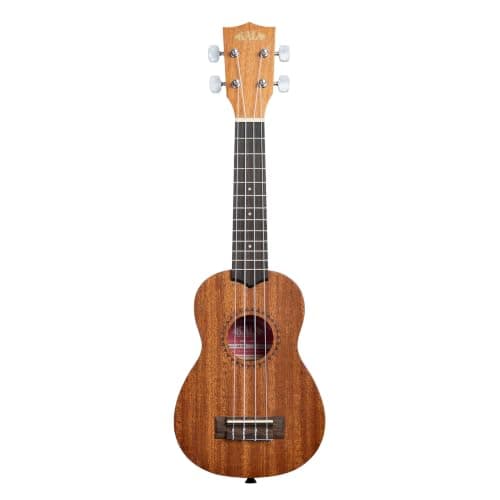
Mahogany throughout, a GraphTech NuBone nut and saddle, and Aquila strings fitted from the factory. The nut material is the spec that separates this from the pile of look-alikes.
Published specifications
- Size:
- Soprano
- Top / back / sides:
- Mahogany
- Neck / fretboard:
- Mahogany neck, rosewood fretboard
- Nut and saddle:
- GraphTech NuBone
- Scale length:
- 13.625"
- Frets:
- 12
- Nut width:
- 1.375"
- Overall length:
- 21.062"
- Strings:
- Aquila Super Nylgut
What it gets right
- NuBone nut and saddle rather than molded plastic — this is what decides whether the instrument plays in tune up the neck
- Aquila strings fitted at the factory, so the first thing you would otherwise replace is already done
- 21 inches overall and light enough for a small child to hold unsupported
Where it gives ground
- 12 frets only, and the body joint stops you well short of the high notes
- Soprano scale means less room between frets — adult fingers with wide fingertips will find it cramped
What it is not good at
Adult hands, sometimes. A 13.625 inch scale is genuinely tight. If the player is a grown-up with large hands, read our soprano-versus-concert comparison before buying this size.
How the specs score against a beginner’s needs
Scores are our reading of the published specifications above against what a beginner physically needs. They are not test results — we have not played this instrument.
Specifications from Kala Brand Music — KA-15S specifications.
Aquila Super Nylgut ukulele strings
AquilaBest for: The cheapest real upgrade
The string set most good ukuleles ship with from the factory, and the single most transformative thing you can do to an inexpensive one that did not.
Published specifications
- Material:
- Super Nylgut synthetic
- Tuning:
- Standard GCEA
- Fits:
- Soprano, concert or tenor — buy the set for your size
What it gets right
- Louder and brighter than the generic nylon fitted to cheap ukuleles, with far more sustain
- They settle and hold pitch faster than plain nylon, which shortens the miserable first week of constant retuning
- Cheap enough that it is the obvious first upgrade on any instrument that did not come with them
Where it gives ground
- Sets are size-specific, and a soprano set on a tenor will not reach
- New strings of any kind stretch for a few days before they settle
What it is not good at
Fixing a bad instrument. New strings cure a dull sound; they do nothing for intonation error, which is built into the bridge position and cannot be strung out.
How the specs score against a beginner’s needs
Scores are our reading of the published specifications above against what a beginner physically needs. They are not test results — we have not played this instrument.
Specifications from Kala Brand Music — KA-15S, fitted with Aquila Super Nylgut from the factory.
Snark clip-on chromatic tuner
SnarkBest for: Tuning anything with strings
Clips to the headstock and reads pitch from the vibration of the wood, so it works in a noisy room and an adult who plays nothing can tune the instrument in twenty seconds.
Published specifications
- Type:
- Clip-on chromatic
- Sensing:
- Vibration through the headstock, not the microphone
- Fits:
- Guitar, bass, ukulele, violin, mandolin
- Display:
- Full-color rotating screen
What it gets right
- Vibration sensing means it works in a room with a television on, which a microphone tuner does not
- Chromatic, so one tuner covers every instrument in the house
- The rotating display means it reads correctly whichever way the instrument is held
Where it gives ground
- The clip is plastic and it is the part that eventually breaks
- Battery-powered, and it will be flat the one time you need it in a hurry
What it is not good at
Wind and brass instruments. It reads vibration through a solid body, so there is nothing for it to clip to on a flute or a trumpet.
How the specs score against a beginner’s needs
Scores are our reading of the published specifications above against what a beginner physically needs. They are not test results — we have not played this instrument.
Specifications from Snark tuners (retail listing with published feature set).
Questions people actually ask
What is standard ukulele tuning?
G, C, E, A, from the string nearest your face to the one nearest the floor. Soprano, concert and tenor ukuleles all use it, which is why chord shapes transfer between the three sizes with no changes.
What is re-entrant tuning?
A tuning where the strings are not in ascending pitch order. On a standard ukulele the G string is tuned higher than the C next to it, so strumming produces the bright, jangly sound the instrument is known for.
Should a beginner use high-G or low-G?
High-G, which is standard and what nearly every instrument ships with. Low-G is a deliberate choice made later for a fuller range, and it needs a specific string rather than just retuning the one you have.
Why is a baritone ukulele tuned differently?
Its longer scale suits a lower pitch, so it is tuned DGBE — the same as the top four strings of a guitar. That makes it easy for guitarists and means ukulele chord charts do not apply.
Sources
Still deciding?
Every recommendation on this site is built the same way, and the method is published in full — including what we do not do and what would get a pick dropped.
Read next
- How to tune a ukulele
GCEA explained, using a clip-on tuner, why new strings drift for a week, and when tuning is not the problem.
- Soprano vs concert vs tenor ukulele
Real scale lengths and fret counts across all four sizes, with the hand-size rule and buy paths for the two that matter.
- How to change ukulele strings
Tie-bar and slotted bridges step by step, why new strings drift for days, and the stretching trick that halves the settling time.
- Picking up a ukulele as a guitar player
The capo-five relationship, which size guitarists should buy, what re-entrant tuning breaks, and the low-G option.
- Best concert ukuleles
Why concert is the default adult size, what changes against a soprano, and the picks either side of the size line.