Start Here
Best gifts for music teachers
Music teachers receive a lot of mugs. The useful gifts are the bits of studio kit they are quietly funding out of their own pocket.
By Sawyer V. · Published · Last updated
The useful gift for a music teacher is studio equipment they are currently buying themselves. Private teachers are usually self-employed, and every stand, board, metronome and shelf copy in the teaching room came out of their own income. A second proper music stand is the safe pick — almost no teacher has two good ones and any teacher who plays alongside a student needs two. A large magnetic staff board is the one most studios do not have and most would use every lesson. Avoid anything for their own instrument.
Every pick states its Starter Path band, and we have not tested any of them — the method is on how we pick. Published dimensions and specifications are cited at the bottom.
Buy teaching equipment, not instrument accessories. The safe pick is a second proper folding music stand: every teacher who plays alongside a student needs two and almost none has two good ones. The best pick, if they have a fixed studio, is a large magnetic dry-erase staff board. The question that decides between them is whether they teach in one room or travel to students — a 45-inch board is useless to a teacher who drives between houses.
Why the obvious instinct is wrong
The natural move is to buy something for the instrument they play. It is almost always the weaker choice, for a reason that is easy to miss: a professional player has made every one of those decisions already, with far more information than you have.
A violin teacher has a rosin, a shoulder rest and a set of strings they have settled on after years. A saxophone teacher has a mouthpiece and a reed strength that are effectively part of their sound. Giving a different one is not a gift, it is a suggestion — and a mildly presumptuous one.
Teaching equipment escapes that entirely, because it is about the room rather than the player. A stand is a stand. A whiteboard is a whiteboard. Nobody has a deeply held position on a magnetic staff sheet, and almost everybody who teaches could use one.
There is also a practical argument. Most private music teaching is self-employed, which means that everything in the teaching room is an expense the teacher has carried personally. The gap between “things that would help” and “things worth buying out of my own income” is exactly where good gifts live.
The question that decides: studio or traveling?
Ask this before buying anything on this page, because it splits the answers completely.
A teacher with a fixed studio or classroom wants things for the room. Wall-mounted or large items are good. A staff board, a second stand, shelf copies of method books, a decent chair. Size is not a problem and permanence is a feature.
A teacher who travels to students' homes wants the opposite: everything they own has to go in a car and then into somebody's living room. For them a 45-inch magnetic board is actively unhelpful, and the good gifts are small — a compact folding stand, a tuner that fits in a bag, a portable metronome, a laminated set of flashcards.
School music teachers are usually in the first category and often on a departmental budget that covers less than you would expect, which is why classroom items land well.
The picks
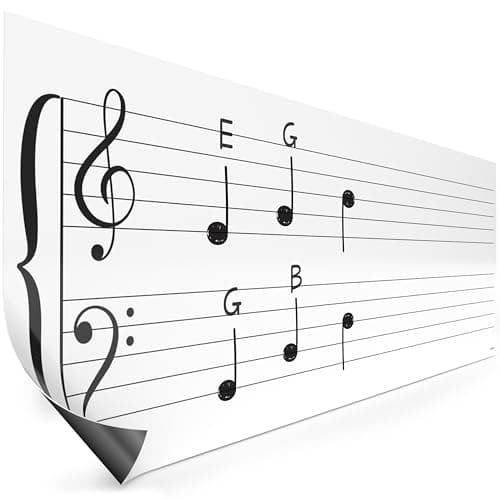
The SCRIBBLEDO magnetic dry-erase staff#ad is 45 by 17 inches with a magnetic backing, printed with blank staff lines. Teachers write notation constantly — a scale, a rhythm, a chord — and most do it on whatever paper is to hand, where it is invisible from across the room and thrown away after. Buy this if they teach in a fixed room and have a magnetic surface or a board to put it on. Skip it if they travel, or if their studio is a corner of a living room where a permanent board is not welcome.
The On-Stage SM7211B#ad is the safe pick and the one most likely to be used daily. A solid-desk folding orchestral stand — not the wire collapsible kind, which will not hold an open method book and tips when a page turns. The reason teachers need two is simple: one for the student and one for themselves when they play along. Buy this if they teach anybody at all. Skip it if you happen to know they already have a pair of proper stands. Our music stands roundup covers the sturdier Manhasset alternative if the budget stretches.
Alfred's Essentials of Music Theory, Complete#ad is Books 1 to 3 spiral-bound into 120 pages. A spare copy on a teacher's shelf is what lets them start a student on theory the week the student asks, instead of waiting on a delivery. Buy this if they teach piano or general musicianship. Skip it if their studio has standardised on a different course, which is worth asking about — teachers tend to be committed to one. Our theory books roundup compares the options.
The Korg TM-70T#ad is a combined tuner and metronome with a built-in speaker, which is the detail that makes it a teaching tool rather than a personal one: it can be heard across a room by a student holding an instrument, rather than clipping silently to one headstock. Buy this if they teach wind or string students. Skip it if they teach piano exclusively, where tuning is not the student's problem and the instrument has a metronome in it.
What we did not list, and why
Anything for their own instrument. Covered above and worth repeating as the main thing to avoid: strings, reeds, mouthpieces, rosin, bows and cases are all settled personal choices for a professional.
Novelty and sentiment items. The treble-clef mug, the “world's best music teacher” plaque, the music-note scarf. Teachers receive a great many of these and they are given with real affection. They are simply not what somebody searching for a useful teacher gift is looking for, which is what this page is for.
A conductor's baton. It looks like the perfect gift for a band or choral director and it is a personal tool chosen by length and balance, like a bow. The market at gift prices is also almost entirely unbranded with no published specification, which fails our own sourcing standard.
Studio furniture and monitors. Genuinely wanted, genuinely above single-family gift budgets, and dependent on the room. This is the category where a group gift from several families works, and where asking the teacher directly is the right move rather than a failure of imagination.
A gift card to a sheet-music retailer. Not a product we can link to and honestly one of the best options, because printed music is a teacher's real ongoing expense and only they can choose the titles.
If you are a parent buying for your child's teacher
A short note, because this is who most of this page's readers are.
You are better placed than you think. You have seen the teaching room, which answers the studio-or-traveling question immediately, and you have probably noticed whether there are two stands or one, and what the student's book is. That is most of the information this page asks for.
You have also almost certainly been told, in passing, about something that does not work — a stand that collapses, a keyboard without a sustain pedal, a room with nothing to write on. Those remarks are the gift list.
And if the honest answer is that the teacher has everything they need, the thing most teachers say they actually value is a straightforward note about what the lessons have done for the child. Our page on lessons against teaching yourself is about why that work is worth more than any object on this page.
Quick picks
The one most studios do not have
A large magnetic dry-erase staff. Teachers write notation constantly and most do it on scrap paper. For: a teacher with a fixed studio or classroom. Skip if: they travel to students, where a 45-inch board is not portable.
| # | Product | Best for | Score | Price |
|---|---|---|---|---|
| 1 | SCRIBBLEDO Magnetic Dry-Erase Music Staff, 45 x 17 inchA 45 by 17 inch magnetic dry-erase sheet printed with a blank staff. | The music teacher's actual wish listEnough | 8.0 | $27.99 · View on Amazon #ad How we’re funded |
The thing they never have enough of
A second proper music stand. Any teacher who plays alongside a student needs two, and almost nobody has two good ones. For: any teacher. Skip if: nothing much — this is the safe pick.
| # | Product | Best for | Score | Price |
|---|---|---|---|---|
| 1 | 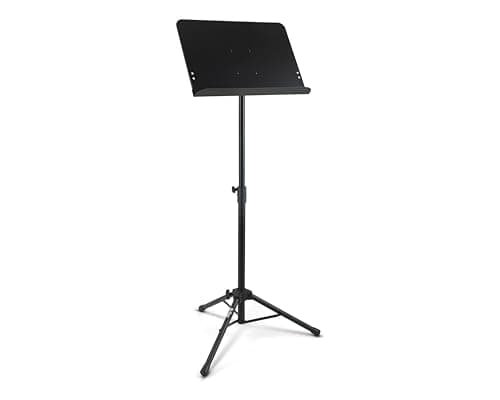 On-Stage SM7211BA steel desk of 13. | A first stand that foldsThe honest floor | 7.4 | $52.95 · View on Amazon #ad How we’re funded |
If they teach theory alongside lessons
The spiral-bound complete theory course, Books 1 to 3 in 120 pages. A spare copy on the shelf is what lets a teacher start a student on theory the same week they ask. For: piano and general-musicianship teachers. Skip if: their studio already standardises on a different course.
| # | Product | Best for | Score | Price |
|---|---|---|---|---|
| 1 | 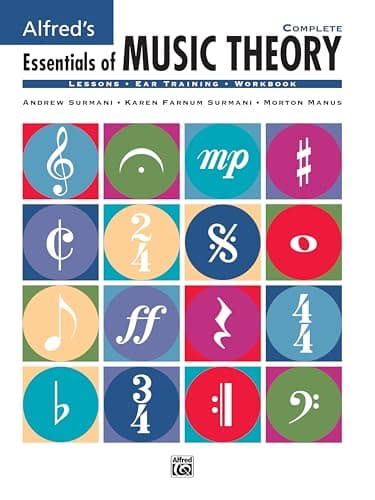 Alfred's Essentials of Music Theory, CompleteBooks 1, 2 and 3 spiral-bound into 120 pages. | The whole course, bought onceEnough | 8.4 | $16.19 · View on Amazon #ad How we’re funded |
For a teacher who works with wind or strings
A tuner and metronome in one unit with a built-in speaker, so it works across a room rather than only clipped to one instrument. For: band and orchestra teachers. Skip if: they teach piano only, where the instrument is already in tune.
| # | Product | Best for | Score | Price |
|---|---|---|---|---|
| 1 | 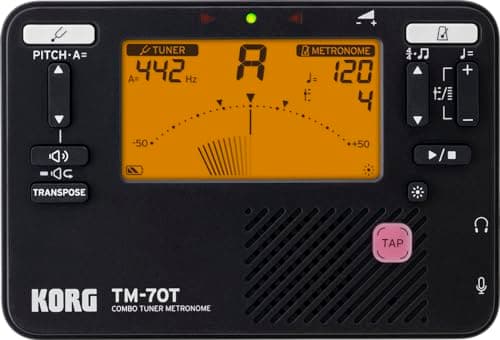 Korg TM-70T Tuner and MetronomeA tuner and a metronome in one card-sized box, with a published accuracy figure and a headphone jack. | Band and orchestra studentsEnough | 8.6 | $38.49 · View on Amazon #ad How we’re funded |
The picks in full
SCRIBBLEDO Magnetic Dry-Erase Music Staff, 45 x 17 inch
SCRIBBLEDOBest for: The music teacher's actual wish list
A 45 by 17 inch magnetic dry-erase sheet printed with a blank staff. It is the single most-used object in a lot of teaching studios and the kind of thing teachers buy out of their own pocket, which is exactly what makes it a good gift.
Published specifications
- Size:
- 45" x 17"
- Surface:
- Dry erase, printed with blank staff lines
- Mounting:
- Magnetic backing sheet
- Use:
- Writing notation during a lesson and wiping it between students
What it gets right
- Teachers use a staff board constantly and most studios do not have one, because nobody thinks to give one
- Magnetic backing means it goes up without screws, which matters in a rented teaching room
- Large enough to be read from across a room, which a notebook is not
- A genuinely useful gift rather than a novelty mug, which is most of what music teachers receive
Where it gives ground
- Needs a magnetic surface or a separately bought board to attach to
- Works best for keyboard and theory teaching; a one-on-one violin teacher may want something smaller
- No manufacturer spec sheet beyond the published dimensions and the dry-erase magnetic construction
- Dry-erase surfaces ghost over time if cheap markers are used
What it is not good at
Teachers who travel to students. At 45 inches across this is studio equipment, not something carried between house calls.
How the specs score against a beginner’s needs
Scores are our reading of the published specifications above against what a beginner physically needs. They are not test results — we have not played this instrument.
Specifications from Amazon listing — SCRIBBLEDO large 45 x 17 inch dry-erase magnetic music staff sheet, published dimensions and construction.
On-Stage SM7211B
On-StageBest for: A first stand that folds
A steel desk of 13.5 by 19 inches with a two inch lip, on a tripod whose legs fold flat. It holds a thick method book open and still goes in a car.
Published specifications
- Desk:
- 13.5" x 19" with a 2" return lip
- Desk material:
- Steel
- Height range:
- 24" to 45" (lip to floor 22" to 40")
- Base:
- Tripod, legs fold flat, nonslip feet
- Shafts:
- 1.875" lower, 0.875" upper
- Weight:
- Not published by On-Stage
- Bag:
- Not included
What it gets right
- A steel desk with a 2 inch return lip holds everything from single sheets to heavy score books
- 24 to 45 inches covers a seated child through a standing adult, so it lasts past middle school
- The legs fold flat, so it genuinely stores under a bed or in a trunk
Where it gives ground
- The desk is one solid steel piece and does not fold in half, so the packed width stays about 19 inches
- On-Stage publishes no weight, so portability cannot be confirmed from the spec sheet
- No carrying bag included
What it is not good at
Fitting inside an instrument case or a backpack. The steel desk stays full width however the legs fold.
How the specs score against a beginner’s needs
Scores are our reading of the published specifications above against what a beginner physically needs. They are not test results — we have not played this instrument.
Specifications from On-Stage — SM7211B music stand with tripod base.
Alfred's Essentials of Music Theory, Complete
Alfred MusicBest for: The whole course, bought once
Books 1, 2 and 3 spiral-bound into 120 pages. It runs from the staff all the way through key signatures, scales, intervals, chords and basic harmony, and buying the three volumes separately costs more than this does.
Published specifications
- Authors:
- Andrew Surmani, Karen Farnum Surmani and Morton Manus
- Pages:
- 120 (Books 1, 2 and 3)
- Binding:
- Spiral bound
- Lessons:
- Books 1-3 of the Essentials of Music Theory course
- Format:
- Lessons, exercises, ear-training references and unit reviews
- ISBN:
- 978-0-88284-897-6
What it gets right
- Spiral binding, so it lies flat beside an instrument while you write in it
- Covers the whole beginner arc including key signatures, intervals and chords - the part Book 1 stops short of
- Cheaper than buying Books 1, 2 and 3 as separate volumes
- Still instrument-neutral, so one copy serves a whole household
Where it gives ground
- 120 pages is enough to defeat someone who would have finished the 40-page Book 1
- The ear-training CDs it is written around are a separate purchase
- No answer key, which matters more here because the later material is harder to self-check
- Written in, so it is a one-student book
What it is not good at
Being read. It is a workbook: someone has to do the exercises for it to have any effect, and the complete edition is three times as much work as Book 1 for the same amount of willpower.
How the specs score against a beginner’s needs
Scores are our reading of the published specifications above against what a beginner physically needs. They are not test results — we have not played this instrument.
Specifications from Alfred Music — Alfred's Essentials of Music Theory: Complete: Book (item 00-17234): Surmani, Surmani and Manus, 120 pages, spiral bound, Books 1-3, ISBN 978-0-88284-897-6.
Korg TM-70T Tuner and Metronome
KorgBest for: Band and orchestra students
A tuner and a metronome in one card-sized box, with a published accuracy figure and a headphone jack. The unit school band and orchestra programs tend to standardize on.
Published specifications
- Detection range:
- C1 (30.47 Hz) to C8 (4566.56 Hz), sine wave
- Accuracy:
- Better than +/-1 cent; tempo accuracy +/-0.3%
- Calibration:
- A4 = 410-480 Hz in 1 Hz steps
- Metronome:
- Quarter note = 30-252 bpm, 0-9 beats, 15 rhythm variations
- Modes:
- Meter, Sound Out, Sound Back, transpose (F, B-flat, E-flat, chromatic)
- Connections:
- 3.5 mm input, 3.5 mm headphone jack, 23 mm speaker
- Power / size:
- Two AAA batteries, approx. 250 h tuner-only; 79 g
What it gets right
- Tuner and metronome in one unit, which is exactly what a band or orchestra student is told to bring
- Published accuracy of better than 1 cent across C1 to C8 — a figure most clip-on tuners do not state at all
- Sound Out and Sound Back modes play reference pitches, so it trains the ear rather than only the eyes
- 79 g with a fold-out stand: it sits on a music stand and still fits a case pocket
Where it gives ground
- Runs on two AAA batteries with no rechargeable cell, so batteries are a running cost
- The contact microphone that makes it work in a loud room is not included — that is the TM-70C package
- Without the contact mic it listens through its built-in microphone, which a clip-on vibration tuner beats in a noisy band room
What it is not good at
Being left clipped to an instrument. It is a box that sits on a stand, not a headstock tuner you forget about.
How the specs score against a beginner’s needs
Scores are our reading of the published specifications above against what a beginner physically needs. They are not test results — we have not played this instrument.
Specifications from Korg — TM-70T specifications, Korg — TM-70T product page.
Questions people actually ask
What do music teachers actually want as a gift?
Studio equipment they are currently funding themselves. Private music teachers are usually self-employed and every stand, book, board and metronome in the room came out of their own income. A second proper music stand#ad or a staff board#ad gets used in every lesson. A mug does not.
Should I buy them something for their own instrument?
Usually not, and this is the common instinct to resist. A teacher's own instrument and accessories are chosen with far more knowledge than a gift buyer has, and a professional player has strong, specific preferences about strings, reeds, mouthpieces and bows. Teaching equipment is the safer category because it is about the room rather than the player.
What is the one question that changes the answer?
Whether they have a fixed studio or travel to students' homes. A teacher with a studio wants things for the room — a staff board, a second stand, shelf copies of method books. A teacher who drives between houses wants things that are small and portable, and a 45-inch magnetic board is the opposite of that.
Is sheet music a good gift for a teacher?
Method and theory books are, repertoire is harder. A teacher benefits from spare copies of the courses they already use, because it lets them start a new student the same week rather than waiting on an order. Choosing which course is the problem, since studios standardise on one — which is worth asking about rather than guessing.
What about a gift card?
For music teachers specifically, a gift card to a sheet-music retailer is one of the better gifts rather than a cop-out. Their consumable spend is genuinely on printed music and they buy it constantly, in titles only they can choose. It is not a product we can link to, and it is the honest answer for somebody you do not know well.
Is a group gift from several families a good idea?
Yes, and it unlocks the things an individual family will not buy. Studio items with real cost — a good keyboard bench, a decent set of monitors, a proper whiteboard — sit above what one family would spend and are exactly what a self-funded teacher has been putting off. If a group is coordinating, asking the teacher directly is reasonable and usually welcomed.
Sources
- Amazon listing — SCRIBBLEDO large 45 x 17 inch dry-erase magnetic music staff sheet, published dimensions and construction
- On-Stage — SM7211B professional folding orchestral music stand
- Alfred Music — Alfred's Essentials of Music Theory: Complete (item 00-17234): 120 pages, spiral bound, Books 1-3
- Korg — TM-70TR tuner and metronome specifications
Still deciding?
Every recommendation on this site is built the same way, and the method is published in full — including what we do not do and what would get a pick dropped.
Read next
- Best music stands for beginners
Why cheap wire stands fail, the three specs that matter, and three stands for home, for school and for carrying.
- Best metronomes for beginners
Why an app is not always enough, the four specs that matter, and three metronomes from a card-sized digital to a wind-up mechanical.
- Best music theory books for beginners
Workbook or prose, and how much theory you actually need. Four books with published page counts and contents, including the one that costs double for two CDs nobody can play.
- Best stocking stuffers for musicians
Under about twenty-five dollars and useful whatever they play. Four that pass, three that are usually duplicates, and the one segment where you do need to know the instrument.
- Lessons or teaching yourself?
Which instruments are self-teachable and which are not, what a teacher actually provides, and the hybrid most adults should use.
- Best gifts for band students
Woodwind, brass and percussion need completely different accessories. The one gift that works for all three, the two that are family-specific, and what to avoid on a rented instrument.