Start Here
Best gifts for teenage musicians
They already have the instrument. What they do not have is anywhere to play it without somebody telling them to stop.
By Sawyer V. · Published · Last updated
Buy them a way to practice silently. That is the whole page, and it is the thing nearly every gift list for teenage musicians gets wrong. A teenager who plays already owns an instrument. What they do not own is permission to use it at half past eleven on a Tuesday in a house with other people in it, and that — not a shortage of equipment — is the constraint that actually limits how much they play. A headphone amp#ad and a pair of closed-back headphones#ad convert unusable hours into practice hours, which is a better gift than it sounds.
Every pick states its Starter Path band, and we have not tested any of them — the method is on how we pick. Nothing on this page is an instrument, on purpose.
For a teenager who already plays, buy silent practice rather than more gear. Electric guitar or bass: a headphone amp that plugs into the instrument, so there is no amplifier in the room at all. Anything with a headphone socket — keys, electronic drums, an audio interface: closed-back over-ear headphones (closed-back is the specification that matters; open-back leaks sound and defeats the purpose). Filtered musicians’ earplugs are the gift nobody this age buys themselves and everybody who rehearses needs. Do not buy an instrument as a surprise at this age — teenagers have opinions about brand and look, and an instrument chosen for them is the gift most likely to go unused.
Why the constraint is the house, not the instrument
It is worth laying out the actual problem, because it explains all four picks.
Teenage practice is late, loud and repetitive. It happens after homework, which means after everyone else has settled; it involves playing the same eight bars forty times, which is specifically the kind of noise other people find hardest to ignore; and it happens in a bedroom with a wall shared with somebody who has work in the morning.
The result is a negotiation that the teenager loses. Practice gets displaced into the narrow window when the house is empty, which is rarely when they feel like playing, and the amount of playing collapses. None of that is a motivation problem and none of it is solved by better gear.
Anything that removes the volume removes the negotiation. That is why a thirty-dollar object can be a better gift here than a two-hundred-dollar one, and it is also why this page overlaps our pages on instruments for small apartments and setting up a home practice space rather than our teen instrument pages.
The picks
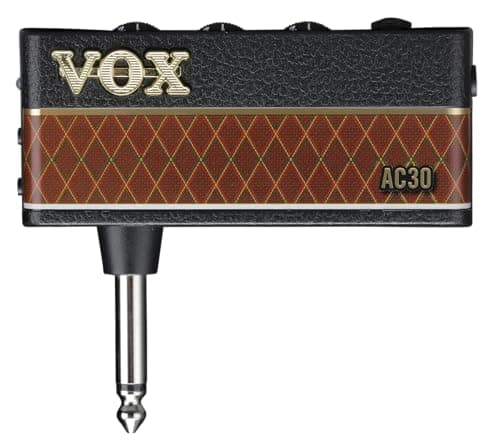
The Vox amPlug 3 AC30#ad is the pick if they play electric guitar or bass, and it is the most direct solution to the problem above: it plugs into the instrument’s output jack, headphones plug into it, and there is no amplifier and no cable run at all. It fits in a pocket, which also makes it the thing they take to a friend’s house. Buy this if there is an electric guitar or bass and the amp is the reason practice is restricted. Skip it if they already own a headphone amp, or their amp has a headphone socket they are already using — this is a duplicate risk worth checking.
The Audio-Technica ATH-M20x#ad is the pick that works regardless of instrument, and the reason it is here rather than a cheaper pair is the closed-back design. Closed-back headphones seal against the head so sound does not escape into the room; open-back models leak on purpose. For silent practice that is not a preference, it is the requirement. They also work for recording, for electronic drums and for a digital piano, so they outlive whatever the teenager is currently into. Buy these if they do not already own over-ear closed-back headphones — and most teenagers own earbuds, which are not the same thing. Skip them if there is already a pair in the house.
Alpine MusicSafe Pro#ad earplugs are the gift in the “they will never buy this themselves” category, and the argument for them is uncomfortable and correct. Hearing damage from loud music is cumulative and permanent, it produces no symptoms a teenager would notice, and rehearsing in a small room with a drum kit is genuinely loud. Filtered musicians’ earplugs are not foam plugs: they reduce level across the frequency range reasonably evenly, so the music still sounds like music instead of like it is behind a wall, which is the only reason anybody wears them twice. Buy these if they play in a band, play drums, or go to gigs. Skip them if nothing — this is the safe pick on the page. Our hearing protection page covers the filtered-against-foam distinction in more detail.
The Enya Nova U Mini#ad is the pick if you want to give an actual instrument without the problems of giving an actual instrument. It is a small carbon-fiber soprano travel ukulele: it goes in a backpack, it does not care about being knocked about or left in a cold car, and it is quiet enough to play on a sofa at night. Because it is a second instrument rather than a replacement for the one they chose, it dodges the opinion problem entirely. Buy this if they travel, share a room, or would find a second instrument fun. Skip it if they would read it as a suggestion that their real instrument is too loud — that is a judgment about the person, and you are better placed to make it than we are.
What not to buy, and why
An instrument, as a surprise. The single most expensive mistake on this page. A teenage player has views about brand, finish and what their friends use, and the gap between “a guitar” and “the guitar they wanted” is the whole gift. Go together, or put the money toward the one they pick. The same applies to an upgrade: a player a year or two in usually knows exactly which single thing they want next, and it is rarely what an onlooker would guess.
Lesson books, unprompted. A teenager with a teacher already has the book that teacher assigned, and a teenager without one has usually chosen YouTube deliberately. A book they did not ask for reads as homework.
Anything requiring a measurement you do not have. Straps for an instrument with one strap button, cases sized to a body shape, drum thrones, keyboard benches. Our guitar gift page goes through the fit traps in detail; the short version is that if the gift has a size, you need the size.
Practice aids that imply a criticism. A metronome is a useful object and, given to a teenager unasked, a comment on their timing. Our metronome page exists for players buying their own.
A pedal, unless they named it. Effects pedals are the most personal purchase in music and the most frequently wrong gift. If a teenager wants a particular overdrive, they will have mentioned it eleven times.
If the budget is larger
Two things are worth more than another object.
Lessons. Unfashionable as a gift and consistently the highest-value spend at this age, particularly for anybody self-teaching from videos, who will have developed two or three habits that are quietly limiting them and that nobody has mentioned.
Contributing to the thing they have chosen. A teenager saving for a specific instrument or amplifier does not want a different one bought for them; they want to get there sooner. It is a less photogenic gift and a better one.
Quick picks
If they play electric guitar or bass
A headphone amp that plugs straight into the guitar — no amplifier, no cable, no noise in the room at all. For: an electric player in a shared house. Skip if: they already have a headphone amp or a modeling amp with a headphone socket.
| # | Product | Best for | Score | Price |
|---|---|---|---|---|
| 1 | Vox amPlug 3 AC30A plug that turns a guitar into a headphone rig for the price of a couple of sets of strings. | The cheapest way to play silentlyThe honest floor | 7.0 | $39.98 · View on Amazon #ad How we’re funded |
The one that works whatever they play
Closed-back studio headphones, which is the thing every silent-practice setup needs and almost no teenager owns. For: keys, electronic drums, electric guitar, recording — anything with a headphone socket. Skip if: they already have over-ear closed-back headphones.
| # | Product | Best for | Score | Price |
|---|---|---|---|---|
| 1 | 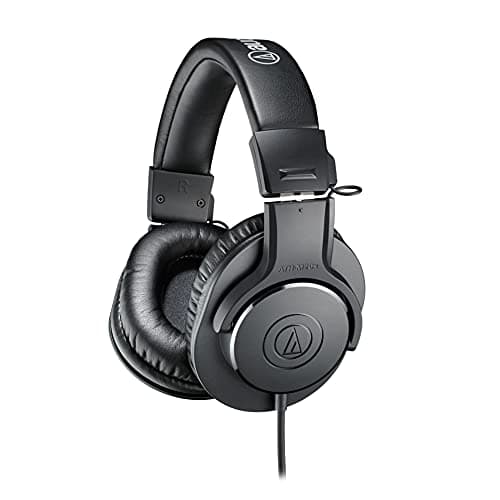 Audio-Technica ATH-M20xClosed-back 40 mm drivers with a 1/4 inch adapter included, which is the socket most digital pianos actually have. | Practice headphonesThe honest floor | 8.7 | $59.00 · View on Amazon #ad How we’re funded |
The gift they will not buy themselves
Filtered musician's earplugs that lower the volume without muffling the sound. For: a drummer, a band rehearsal, a first gig. Skip if: nothing — nobody this age buys these and everybody this age should have them.
| # | Product | Best for | Score | Price |
|---|---|---|---|---|
| 1 | 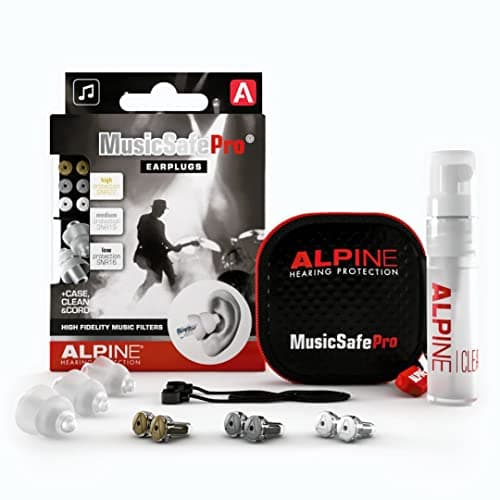 Alpine MusicSafe ProThe filtered plug that ships with three interchangeable filter sets rather than one fixed filter, published at 22, 19 and 16 dB SNR. | Choosing your own attenuationEnough | 8.5 | $29.95 · View on Amazon #ad How we’re funded |
If they want something that is not plugged in
A small carbon-fiber travel ukulele that can be thrown in a bag and is genuinely quiet. For: a teenager who takes things places, or shares a room. Skip if: they are not interested in a second instrument.
| # | Product | Best for | Score | Price |
|---|---|---|---|---|
| 1 | 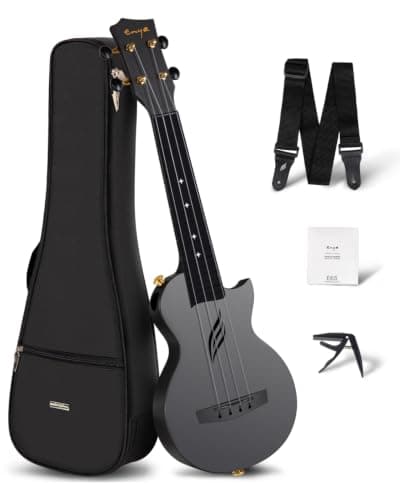 Enya Nova U MiniA 21 inch carbon-fiber-and-polycarbonate body weighing 430 grams. | Young kids, survives anythingThe honest floor | 8.0 | $59.14 · View on Amazon #ad How we’re funded |
The picks in full
Vox amPlug 3 AC30
VoxBest for: The cheapest way to play silently
A plug that turns a guitar into a headphone rig for the price of a couple of sets of strings. Two channels, built-in rhythms, a wired aux jack, and two AAA batteries you can replace anywhere.
Published specifications
- Voices:
- Two channels — normal and Top Boost
- Effects:
- Tremolo, chorus, delay, reverb (per the amPlug 3 manual)
- Rhythm:
- 9 patterns plus metronome, 40-240 bpm
- Jacks:
- 3.5 mm headphone out, 3.5 mm TRRS aux in
- Power:
- Two AAA batteries; Vox publishes 11 h / 17 h alkaline in the manual and 10 h / 16 h on its site
- Size / weight:
- 87 x 33 x 39 mm folded; 40 g without batteries
- Bluetooth / USB:
- None published
What it gets right
- A wired aux jack means any phone or laptop feeds backing tracks with no pairing and no latency
- The longest published runtime here, and a flat battery is fixed by two AAAs from any shop
- Nine rhythm patterns plus a metronome give a timing reference without opening an app
- 40 g and it folds — it lives in a gig bag pocket
Where it gives ground
- No Bluetooth and no USB, so it cannot record into a computer or stream wirelessly
- Headphones and batteries are both excluded — Vox lists only a quick start guide in the box
- Vox's own site and manual disagree about battery life (10/16 h against 11/17 h)
What it is not good at
Recording. There is no digital output of any kind, so what you play through it stays in the headphones.
How the specs score against a beginner’s needs
Scores are our reading of the published specifications above against what a beginner physically needs. They are not test results — we have not played this instrument.
Specifications from Vox — amPlug 3 product page, Vox UK — amPlug 3 AC30.
Audio-Technica ATH-M20x
Audio-TechnicaBest for: Practice headphones
Closed-back 40 mm drivers with a 1/4 inch adapter included, which is the socket most digital pianos actually have. The cheapest headphones we would put on a practicing student.
Published specifications
- Type:
- Closed-back, circumaural (over-ear)
- Drivers:
- 40 mm, copper-clad aluminum voice coils
- Frequency response:
- 15 Hz - 20,000 Hz
- Cable:
- 9.8 ft (3.0 m), single-sided, straight
- Weight:
- 6.7 oz (190 g) without cable
- In the box:
- 6.3 mm (1/4") snap-on adapter
What it gets right
- Closed-back, so the sound stays in and the room stays out — the whole point of practice headphones
- The 1/4 inch adapter is included, and that is the socket most digital pianos have rather than the 1/8 inch a phone uses
- Under 200 grams, which matters over an hour of practice on a child's head
Where it gives ground
- The cable is fixed, not detachable, so a damaged cable means new headphones
- A 3 meter cable is generous at a piano and a trip hazard anywhere else
What it is not good at
Portability. They do not fold flat and there is no case. These live at the instrument.
How the specs score against a beginner’s needs
Scores are our reading of the published specifications above against what a beginner physically needs. They are not test results — we have not played this instrument.
Specifications from Audio-Technica ATH-M20x published specifications.
Alpine MusicSafe Pro
AlpineBest for: Choosing your own attenuation
The filtered plug that ships with three interchangeable filter sets rather than one fixed filter, published at 22, 19 and 16 dB SNR. A drummer can start with the heaviest filter for the kit and drop to a lighter one for a quiet rehearsal.
Published specifications
- Type:
- High-fidelity filtered earplug, reusable
- Filters:
- Three interchangeable sets — Gold 22 dB, Silver 19 dB, White 16 dB (SNR, as published by Alpine)
- Material:
- AlpineThermoShape — silicone-free and hypoallergenic, softens with body heat to the ear canal
- In the kit:
- Three filter sets, storage case, carrying cord, cleaning spray and a spare earplug
- Maximum attenuation:
- 22 dB SNR, against 19 dB on Alpine's non-Pro MusicSafe
What it gets right
- Three filter sets means one purchase covers a loud acoustic kit, a quieter rehearsal and a lesson, instead of committing to a single attenuation figure
- Alpine publishes an SNR number for every filter, so the choice can be made on paper rather than by feel
- The thermoplastic body softens at body temperature and takes the shape of the canal, which is what makes the seal repeatable
- Comes with a case and a cord, which is the difference between plugs that live in the stick bag and plugs that get lost
Where it gives ground
- Half again the price of the fixed-filter Etymotic, for flexibility a drummer who only ever plays their own kit may not use
- Small interchangeable filters are easy to lose, and a lost filter is not individually replaceable
- Same seal-dependence as any plug: fitted badly, they barely work
- Alpine's SNR figures are manufacturer numbers; we found no independent lab testing of them
What it is not good at
Replacing over-ear protection for a child. Small ears and filtered plugs are an awkward combination — children's ear defenders are the better route.
How the specs score against a beginner’s needs
Scores are our reading of the published specifications above against what a beginner physically needs. They are not test results — we have not played this instrument.
Specifications from Alpine Hearing Protection — MusicSafe Pro product page (three interchangeable filter sets at 16, 19 and 22 dB, AlpineThermoShape material, kit contents).
Enya Nova U Mini
EnyaBest for: Young kids, survives anything
A 21 inch carbon-fiber-and-polycarbonate body weighing 430 grams. It is water resistant and it does not care about humidity, which is the honest reason to buy it for a six-year-old.
Published specifications
- Size:
- Soprano, 21"
- Top / back / sides:
- 30% carbon fiber and polycarbonate composite
- Weight:
- 430 g (0.9 lb)
- Overall length:
- 22"
- Nut width:
- 1-3/8"
- Body:
- Arched back, radius fretboard, cutaway
- In the box:
- Semi-hard case, strap, capo, spare strings
What it gets right
- Composite body — it does not crack in a dry house or swell in a damp one, which is what actually kills cheap wooden ukuleles
- 430 grams; a five-year-old can carry it around by the neck all day, and they will
- Case, strap, capo and spare strings included
Where it gives ground
- It does not sound like wood, and no amount of playing will change that
- The composite body is a fixed quantity — there is no breaking-in and no improvement over time
What it is not good at
Tone. A mahogany Kala sounds warmer and fuller, plainly. You are buying survivability, and that is a legitimate thing to buy for a young child, but be clear that is the trade.
How the specs score against a beginner’s needs
Scores are our reading of the published specifications above against what a beginner physically needs. They are not test results — we have not played this instrument.
Specifications from Enya Music — Nova carbon fiber ukulele collection.
Questions people actually ask
What do you buy a teenager who already has an instrument?
Something that lets them play it at an hour when they are currently not allowed to. Teenagers practice late, badly, repetitively and in a house containing other people, and almost every friction point in a musical teenager’s life is about volume rather than about gear. A headphone amp#ad or a pair of closed-back headphones#ad buys them hours they do not currently have.
Can I buy them a new instrument as a surprise?
We would not, and this is the one piece of advice on the page that might save you several hundred dollars. By the teenage years a player has opinions — about brand, about color, about what their friends play — and an instrument chosen by somebody else is the gift most likely to be quietly resented and never mentioned. If an instrument is genuinely the goal, go together, or contribute. Our page on instruments for teenagers is written to be read before that trip.
Are closed-back headphones really different?
For this purpose, yes, and it is the one specification worth caring about. Closed-back headphones seal around the ear so sound does not leak out — which is the entire point when the household is asleep. Open-back headphones, which many people own, leak deliberately for a more natural sound and defeat the object. If you are buying headphones for silent practice, closed-back is the requirement.
Why earplugs? That seems like a strange gift.
Because hearing damage is cumulative, irreversible and completely invisible at seventeen, and because no teenager has ever spent their own money on earplugs. Musicians’ earplugs are not foam — they use a filter to reduce the volume fairly evenly across frequencies, so music still sounds like music rather than like it is underwater. A drummer, or anybody who rehearses in a small room with a drummer, needs them.
What if they play acoustic guitar or piano?
The headphones still apply if there is a digital piano in the house. For acoustic guitar there is no silent option, which is worth knowing rather than working around — so the useful gifts there are the ordinary ones: a stand so it stays out and gets picked up, a capo, strings. Our guitar gift page covers that properly, including the two gifts that most often go wrong.
Is a ukulele a condescending gift for a teenager?
It can be, and it depends entirely on framing. As a replacement for the instrument they actually play, yes. As a second thing that fits in a backpack, survives a festival and can be played on a sofa without an amplifier, no — that is a different and quite appealing object. Judge whether they would find it fun or patronizing; you know them and we do not.
Still deciding?
Every recommendation on this site is built the same way, and the method is published in full — including what we do not do and what would get a pick dropped.
Read next
- Best instruments for a teenager to start
Four picks matched to what teenagers actually want to play, plus the noise and cost problems that end teenage instruments.
- Best guitars for teenagers
Why body size matters more than scale length at this age, what a teenager should be able to grow into, and the guitars we would buy.
- Best keyboards for teenagers
Why headphones and music taste decide this purchase, what to check before buying, and four keyboards for four kinds of teenager.
- Best drum sets for teenagers
Full-size acoustic against mesh-pad electronic, the noise conversation to have first, and three kits that suit a teenage player.
- Best stocking stuffers for musicians
Under about twenty-five dollars and useful whatever they play. Four that pass, three that are usually duplicates, and the one segment where you do need to know the instrument.
- Setting up a practice space that gets used
Why the instrument should never live in its case, the seat height that prevents wrist problems, and the two cheap accessories that matter most.