Keys
Best keyboards for teenagers
A teenager will practice on an instrument that fits the music they already listen to, at a volume nobody else in the house controls.
By Sawyer V. · Published · Last updated
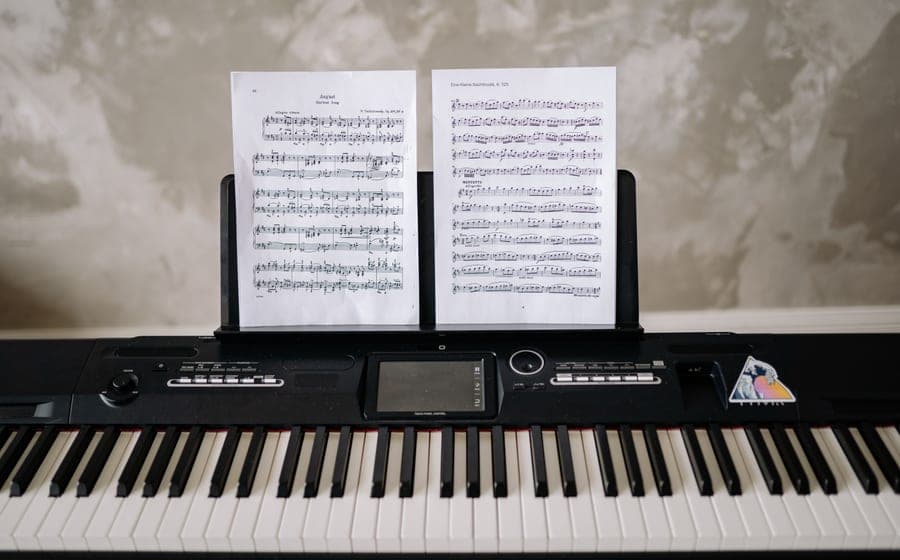
Buying a keyboard for a teenager is a different problem from buying one for a child or for yourself. The instrument is not the obstacle — motivation is, and motivation is mostly about two things: whether the keyboard can play the music they actually like, and whether they can practice without an audience.
Get those two right and the specification list is short. Get them wrong and the best keyboard in the world sits under a pile of clothes.
We have not played these instruments. What follows is our reading of published specifications against what a teenager needs, and the method is on how we pick.
For a teenager in lessons, buy 88 weighted keys: the Yamaha P-145. For one who wants to play songs, the Casio CT-S1 sounds better than its price suggests. For one learning alone, the Yamaha PSR-E383’s lesson system does real work. For one making beats, buy a controller instead. All of them need decent headphones.
What to look for
1. A headphone socket, non-negotiable. Every pick here has one. It is the difference between a teenager practicing badly in private and not practicing at all.
2. Full-size, touch-sensitive keys. Full-size because their hands are adult-sized, touch-sensitive so the volume responds to how hard they play. A board without touch response teaches nothing about dynamics.
3. 61 keys minimum. Below that, method material and two-handed playing run off the end of the keyboard. The reasoning is in 49 vs 61 keys.
4. Weighted keys only if there is a teacher. Hammer action matters for classical study and exams. For pop, songwriting and production it is weight and cost you do not need yet.
5. A sustain pedal input. Cheap boards omit the jack entirely, and most method material asks for a pedal within months.
6. Whether it can connect to a computer. For a teenager, USB-MIDI is the bridge between playing and recording, and recording is often what keeps them interested.
How we ranked these
Key action first, then whether the key count supports real material, then how it sounds at the low volumes a bedroom demands, then room to grow, then what else you still have to buy.
The picks
The Yamaha P-145#ad is the buy-once answer for a teenager who is taking lessons. 88 keys with a graded hammer action, a CFIIIS concert grand sample, and a compact 52 inch footprint that fits a bedroom. A student who practices on this will not be ambushed by the feel of a real piano at a lesson.
The costs are real: 64-note polyphony rather than 128, modest 7 W speakers, and it is the most expensive pick here. It is also heavier to move than any other option on this page.
The Casio Casiotone CT-S1#ad is the one we would buy for a teenager who wants to play songs rather than study. 61 full-size keys, a deliberately small set of good sounds rather than a menu of hundreds, and light enough to move between a desk and a bed without ceremony.
What it gives up: the keys are not weighted, so it is not the instrument for someone heading toward exams, and it has fewer built-in learning features than the Yamaha below.
The Yamaha PSR-E383#ad suits the teenager teaching themselves. Touch-sensitive keys plus a substantial built-in lesson system means the instrument itself supplies structure when nobody else is doing it. For a self-directed learner that is worth more than a slightly better piano sample.
Its trade is busyness: it is a bigger, more menu-driven machine, and a large share of its feature list will never be touched.
The Akai MPK Mini MK3#ad is here because for a lot of teenagers the honest answer is that they do not want a piano. They want to make beats. Twenty-five keys, eight pressure-sensitive pads, knobs, and a USB cable to a laptop.
Be clear about what it is not: no speakers, no sounds of its own, useless without a computer, and no help at all for learning piano. Bought for the right teenager it gets used daily; bought for the wrong one it is a disappointment.
What else to budget for
Headphones. The most important accessory on this page. Closed-back, wired, comfortable enough for an hour — the options are in best headphones for a digital piano.
A stand and a bench at the right height. A keyboard on a bed teaches bad posture. Options are in keyboard stands and benches.
A sustain pedal. Cheap, and required by most method material sooner than people expect — see best sustain pedals for keyboards.
If the instrument itself is still undecided, the cross-instrument version of this question is in best instruments for teenagers.
Quick picks
If they are taking lessons
88 fully weighted graded hammer keys and a concert grand sample. The one that will not have to be replaced when they get serious.
| # | Product | Best for | Score | Price |
|---|---|---|---|---|
| 1 | No image Yamaha P-14588 graded hammer keys, a concert grand sample and 24 pounds. | Buy once, 88 weighted keysEnough | 9.0 | Check price on Amazon → #ad How we’re funded |
If they want to play songs, not scales
61 keys built around a small number of good sounds rather than hundreds of mediocre ones, and light enough to move around a bedroom.
| # | Product | Best for | Score | Price |
|---|---|---|---|---|
| 1 | 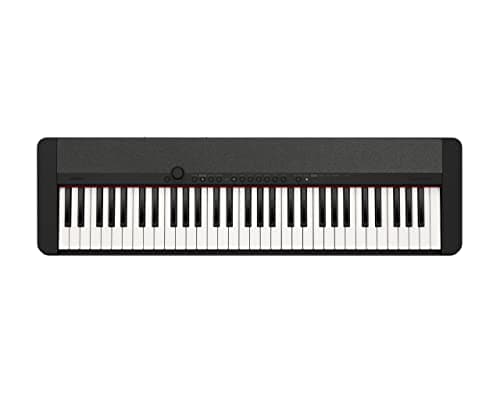 Casio Casiotone CT-S161 full-size touch-sensitive keys, 61 tones and no arranger clutter. | 61 keys, piano sound firstThe honest floor | 7.8 | $219.99 · View on Amazon #ad How we’re funded |
If they want the instrument to teach them
Touch-sensitive keys and a large built-in lesson system, for a teenager learning without a teacher.
| # | Product | Best for | Score | Price |
|---|---|---|---|---|
| 1 | 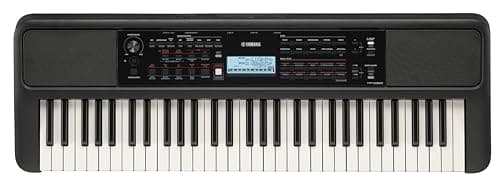 Yamaha PSR-E38361 touch-sensitive keys and 125 lesson songs with hand-separate practice and scoring. | Learning tools, 61 keysThe honest floor | 7.6 | $199.99 · View on Amazon #ad How we’re funded |
If they are making beats on a laptop
Pads, knobs and 25 keys. Not a piano at all, and exactly right for a teenager whose music lives in software.
| # | Product | Best for | Score | Price |
|---|---|---|---|---|
| 1 | No image Akai MPK Mini MK325 slim keys and eight genuinely good backlit pads. | Beat-making and finger drummingThe honest floor | 8.2 | Check price on Amazon → #ad How we’re funded |
The picks in full
Yamaha P-145
YamahaBest for: Buy once, 88 weighted keys
88 graded hammer keys, a concert grand sample and 24 pounds. If the plan is piano lessons rather than keyboard playing, this is where the shopping actually starts.
Published specifications
- Keys:
- 88, GHC (Graded Hammer Compact), fully weighted and graded
- Polyphony:
- 64 notes
- Sound:
- Yamaha CFIIIS concert grand sample, damper resonance DSP
- Speakers:
- 7 W built-in
- Dimensions:
- 1,326 x 268 x 129 mm (52-3/16" x 10-9/16" x 5-1/16")
- Weight:
- 11.1 kg (24 lb 8 oz)
- In the box:
- Music rest, sustain foot switch
What it gets right
- Graded hammer action — the low keys are heavier than the high ones, which is the thing an unweighted keyboard cannot teach
- All 88 keys, so no method book ever runs off the end of the instrument
- Genuinely portable at 24 pounds and 268 mm deep; it fits on a desk
Where it gives ground
- 64-note polyphony is the entry-tier number; heavy sustain-pedal passages will drop notes eventually
- A single sustain footswitch, not a proper piano-style pedal — most players replace it
What it is not good at
Anything other than piano. There are only a handful of voices and no arranger features, so if the player wants to make beats or layer sounds, a PSR-E383 will make them happier for less money.
How the specs score against a beginner’s needs
Scores are our reading of the published specifications above against what a beginner physically needs. They are not test results — we have not played this instrument.
Specifications from Yamaha USA — P-145 specifications.
Casio Casiotone CT-S1
CasioBest for: 61 keys, piano sound first
61 full-size touch-sensitive keys, 61 tones and no arranger clutter. It is the 61-key board for someone who wants to play piano rather than operate a keyboard.
Published specifications
- Keys:
- 61, full-size, touch-sensitive
- Polyphony:
- 64 notes
- Tones:
- 61, including a stereo grand piano
- Weight:
- 9.9 lb
- Dimensions:
- 36.61" W x 10.15" D x 3.30" H
- Connectivity:
- USB-MIDI
What it gets right
- Deliberately few sounds and a clean panel, which removes the single biggest distraction from actual practice
- 9.9 pounds and 3.3 inches tall — it can live on a shelf between sessions, and an instrument that lives out of the way gets played less
- 64-note polyphony, higher than the PSR-E383's 48
Where it gives ground
- No lesson mode at all, unlike the PSR-E383
- Unweighted keys, same fundamental limit as any 61-key board
What it is not good at
Entertaining a young child. There is no light-up key guidance, no play-along scoring and only 61 sounds. That restraint is the point for an adult beginner and a drawback for a seven-year-old.
How the specs score against a beginner’s needs
Scores are our reading of the published specifications above against what a beginner physically needs. They are not test results — we have not played this instrument.
Specifications from Casio — CT-S1 product page.
Yamaha PSR-E383
YamahaBest for: Learning tools, 61 keys
61 touch-sensitive keys and 125 lesson songs with hand-separate practice and scoring. The touch response is the spec that matters; the 650 tones are the spec that sells it.
Published specifications
- Keys:
- 61, organ-style (unweighted), touch-sensitive
- Touch response:
- Soft / medium / hard / off
- Polyphony:
- 48 notes
- Tones:
- 650 (258 panel, 25 drum/SFX, 20 arpeggio, 347 XGlite)
- Lessons:
- 125 lesson songs, right/left/both-hand practice with evaluation
- In the box:
- Music rest, PA130 power adapter
What it gets right
- Touch-sensitive keys — playing harder makes it louder, which is the thing a beginner has to learn early and a non-touch keyboard cannot teach
- The lesson mode with hand-separate practice and scoring is genuinely useful, not a gimmick
- Power adapter included, which is not a given at this tier
Where it gives ground
- Unweighted organ-style keys — this will not build the finger strength a piano needs
- 61 keys, so a method book that assumes 88 will eventually run out of instrument
What it is not good at
Preparing anyone for an acoustic piano. If there is a real piano in the child's future, the unweighted action is a habit to unlearn later. Read our 61-versus-88 comparison before deciding.
How the specs score against a beginner’s needs
Scores are our reading of the published specifications above against what a beginner physically needs. They are not test results — we have not played this instrument.
Specifications from Yamaha — PSR-E383 specifications.
Akai MPK Mini MK3
Akai ProfessionalBest for: Beat-making and finger drumming
25 slim keys and eight genuinely good backlit pads. The pads are the reason to buy it — this is an MPC workflow shrunk onto a desk, and it makes no sound on its own.
Published specifications
- Keys:
- 25 slim, velocity-sensitive
- Pads:
- 8 RGB backlit, pressure-sensitive
- Connection:
- USB — requires a computer, tablet or phone
- Sound engine:
- None — controller only
- Notable:
- Note repeat, MPC-style workflow
What it gets right
- The best pads in this class — responsive, backlit, and the reason most people choose this over the Arturia
- Note repeat is genuinely useful for programming hi-hats and rolls
- Compact enough to sit in front of a laptop permanently
- Sprung keybed that feels comparable to the Arturia despite the price
Where it gives ground
- Makes NO sound by itself — a computer and software are mandatory, which beginners buying a 'keyboard' routinely miss
- 25 slim keys are not full-size and teach a hand span that is wrong on a real piano
- No aftertouch on the keys, unlike the Arturia
- Pads need slightly more force than the Arturia's to trigger
What it is not good at
Learning piano. This is a studio input device with keys attached. A student who needs to build piano technique needs full-size weighted keys and an instrument that makes a sound when a computer is not running.
How the specs score against a beginner’s needs
Scores are our reading of the published specifications above against what a beginner physically needs. They are not test results — we have not played this instrument.
Specifications from B&H — Arturia MiniLab 3 vs Akai MPK Mini MK3 published spec comparison, Melodics — Arturia MiniLab 3 vs Akai MPK Mini MK3.
Questions people actually ask
What size keyboard does a teenager need?
61 full-size keys is the floor; 88 if they are taking lessons or playing classical repertoire. Teenagers have adult-sized hands, so the mini-key boards sold for children are the wrong purchase.
Do they need weighted keys?
If there is a teacher, yes. If they are playing pop, writing songs or producing, touch-sensitive unweighted keys are fine and the money is better spent elsewhere.
Why do headphones matter so much for this age?
Because practice that can be overheard does not happen. A teenager who is self-conscious will play far less on a keyboard that everyone in the house can hear. A headphone socket converts a shared room into a private one.
Is a keyboard with hundreds of sounds better?
No, and it is usually a warning sign. Six hundred tones on a cheap board means six hundred mediocre ones. A smaller number of good sounds gets played; a huge menu gets scrolled once.
What if they want to produce music rather than play piano?
Then buy a MIDI controller, not a keyboard. It is a different instrument for a different job, and the comparison is in Akai MPK Mini vs Arturia MiniLab.
Still deciding?
Every recommendation on this site is built the same way, and the method is published in full — including what we do not do and what would get a pick dropped.
Read next
- Best instruments for a teenager to start
Four picks matched to what teenagers actually want to play, plus the noise and cost problems that end teenage instruments.
- Best beginner keyboards: 61 keys that suit real lessons
Touch response over tone count, segmented for children and adult learners, with the 61-key ceiling stated plainly.
- Best keyboards for bedroom producers
Controller versus standalone-with-USB, the latency problem nobody budgets for, and three boards covering both approaches.
- Best headphones for a digital piano
Closed-back over-ear picks, the quarter-inch adapter problem, and why open-back headphones are the wrong tool here.
- 61 vs 88 key keyboard
When 61 keys stops being enough, what 88 actually costs in money and floor space, and buy paths for both answers.