Start Here
What should your second instrument be?
Almost everything you learned transfers, and the parts that do not are exactly the parts worth adding.
By Sawyer V. · Published · Last updated
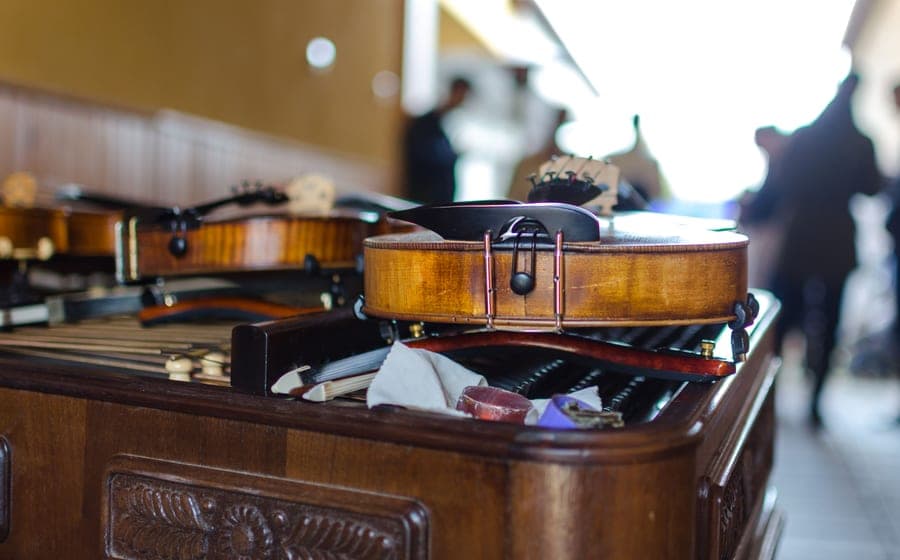
Adding an instrument feels like starting over and mostly is not. The largest part of what took a year the first time — reading, rhythm, ear, understanding what a chord is — comes with you.
What has to be rebuilt is the physical technique, and that is the honest cost.
Add a second instrument once practice on the first is a settled habit, usually past the first year. Choose one that fills a gap: keys if you do not understand harmony, bass if you want to play with people, ukulele if you want the fastest possible second instrument.
What transfers
Reading music. Notation is notation. A different clef is a few weeks of adjustment rather than a new skill.
Rhythm and pulse. Entirely portable, and one of the hardest things to build from nothing.
Your ear. Recognizing intervals, hearing when something is out of tune, following a chord progression. All of it comes with you.
Theory. Keys, scales, chord construction. The theory does not change; only the layout it sits on does.
Knowing how to practice. Underrated and substantial. A second-instrument beginner already knows to slow down, isolate the hard part, and be patient with a plateau.
What does not
Physical technique. Embouchure, bow arm, fretting hand, stick control. Every one has to be built again from nothing.
The instrument’s layout. Where the notes are, in your hands rather than your head.
Calluses and stamina, on anything that needs them.
Which means the useful rule of thumb: expect the conceptual side to go two or three times faster, and the physical side to take about as long as it did the first time.
If you play guitar
Ukulele is the fastest second instrument available to you. It is tuned like the top four strings of a guitar with a capo at the fifth fret, so every chord shape transfers with only the name changing. A Kala KA-15S#ad is playable within an afternoon — the translation is in ukulele for guitar players.
Bass if you want to be asked to play with people. The bottom four strings of a guitar are tuned to the same notes an octave up, so the fretboard logic is familiar, and there are far more guitarists than bassists everywhere. A Squier Affinity Precision Bass PJ#ad is the standard entry — see guitar or bass.
Keyboard if you want to understand music rather than just play it. The guitar fretboard hides harmony; a keyboard displays it. Most guitarists who write music end up at one — see keyboard versus guitar.
If you play keys
Guitar or ukulele for portability and for playing with other people. You already understand harmony completely; what you are adding is an instrument you can carry. Ukulele is much faster to reach a usable level on.
Drums is a genuinely useful pairing. Keyboard players are frequently strong on harmony and weaker on rhythmic feel, and time spent on a practice pad improves the piano playing measurably.
If you play a band or orchestral instrument
Keyboard is the standard second instrument and for good reason. Wind and bowed instruments play one note at a time, so their players often have excellent line and tone and little practical experience of harmony. A Casio Casiotone CT-S1#ad fixes that faster than any amount of theory study.
Within your own family is the easy option: clarinet to saxophone, violin to viola, trumpet to another brass instrument. Fingering and embouchure largely carry, and doubling is common and useful in real ensembles — see saxophone or clarinet.
Mandolin, if you play violin. Identical tuning, identical pitches, the same repertoire. You already know where every note is — see mandolin or ukulele.
If you play drums
Bass is the natural partner. Drums and bass lock together, and a drummer who understands what the bassist is doing becomes a better drummer immediately.
Keyboard for harmony, which is the thing drumming does not teach at all.
When not to add one
While the first is still fragile. If practice is still a struggle, a second instrument becomes the interesting new thing that replaces the difficult old thing.
During a plateau. The three-to-six-month flattening is the point at which a new instrument is most tempting and least advisable, because the plateau is exactly what you have to get through — more in how to stop a beginner quitting.
If practice time is already short. Twenty minutes split across two instruments is ten minutes each, which is below the useful threshold on both.
Doing it well
Keep the first one going. Even a short session. Skills decay faster than people expect.
Expect the physical side to be slow. Being conceptually ahead makes the physical lag more frustrating, not less. Knowing what should happen and being unable to do it is the specific discomfort of a second instrument.
Pick something cheap to start. A second instrument is a test of whether you want a second instrument. The cost picture is in what it really costs to start an instrument.
What we would buy
Casio Casiotone CT-S1
CasioBest for: 61 keys, piano sound first
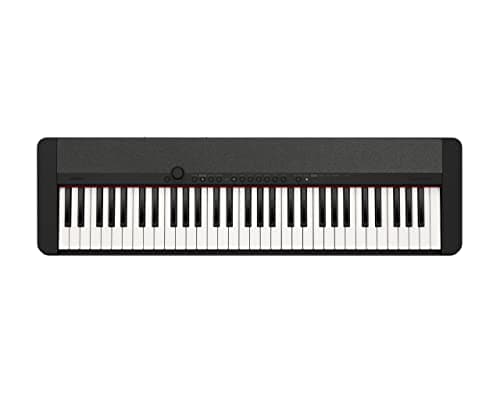
61 full-size touch-sensitive keys, 61 tones and no arranger clutter. It is the 61-key board for someone who wants to play piano rather than operate a keyboard.
Published specifications
- Keys:
- 61, full-size, touch-sensitive
- Polyphony:
- 64 notes
- Tones:
- 61, including a stereo grand piano
- Weight:
- 9.9 lb
- Dimensions:
- 36.61" W x 10.15" D x 3.30" H
- Connectivity:
- USB-MIDI
What it gets right
- Deliberately few sounds and a clean panel, which removes the single biggest distraction from actual practice
- 9.9 pounds and 3.3 inches tall — it can live on a shelf between sessions, and an instrument that lives out of the way gets played less
- 64-note polyphony, higher than the PSR-E383's 48
Where it gives ground
- No lesson mode at all, unlike the PSR-E383
- Unweighted keys, same fundamental limit as any 61-key board
What it is not good at
Entertaining a young child. There is no light-up key guidance, no play-along scoring and only 61 sounds. That restraint is the point for an adult beginner and a drawback for a seven-year-old.
How the specs score against a beginner’s needs
Scores are our reading of the published specifications above against what a beginner physically needs. They are not test results — we have not played this instrument.
Specifications from Casio — CT-S1 product page.
Kala KA-15S
Kala Brand MusicBest for: The honest floor, soprano
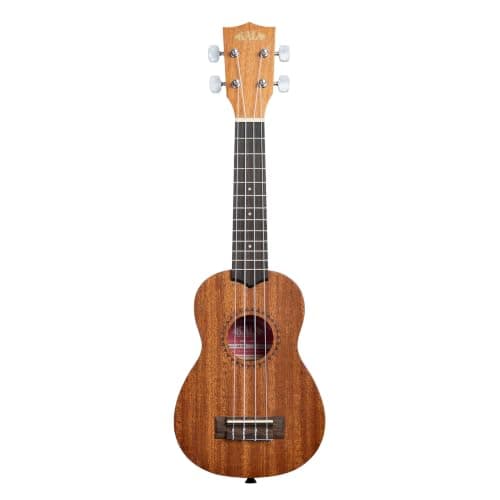
Mahogany throughout, a GraphTech NuBone nut and saddle, and Aquila strings fitted from the factory. The nut material is the spec that separates this from the pile of look-alikes.
Published specifications
- Size:
- Soprano
- Top / back / sides:
- Mahogany
- Neck / fretboard:
- Mahogany neck, rosewood fretboard
- Nut and saddle:
- GraphTech NuBone
- Scale length:
- 13.625"
- Frets:
- 12
- Nut width:
- 1.375"
- Overall length:
- 21.062"
- Strings:
- Aquila Super Nylgut
What it gets right
- NuBone nut and saddle rather than molded plastic — this is what decides whether the instrument plays in tune up the neck
- Aquila strings fitted at the factory, so the first thing you would otherwise replace is already done
- 21 inches overall and light enough for a small child to hold unsupported
Where it gives ground
- 12 frets only, and the body joint stops you well short of the high notes
- Soprano scale means less room between frets — adult fingers with wide fingertips will find it cramped
What it is not good at
Adult hands, sometimes. A 13.625 inch scale is genuinely tight. If the player is a grown-up with large hands, read our soprano-versus-concert comparison before buying this size.
How the specs score against a beginner’s needs
Scores are our reading of the published specifications above against what a beginner physically needs. They are not test results — we have not played this instrument.
Specifications from Kala Brand Music — KA-15S specifications.
Squier Affinity Precision Bass PJ
Squier by FenderBest for: First bass, most versatile
A full 34 inch scale with both a Precision split-coil and a Jazz bridge pickup, so one bass covers the thick sound and the bright one. The standard first bass for good reason.
Published specifications
- Scale length:
- 34" — full size
- Body:
- Poplar or alder, polyurethane finish
- Neck:
- Maple, "C" shape
- Fingerboard:
- Laurel or maple, 9.5" radius
- Frets:
- 20, medium jumbo
- Nut width:
- 1.5" (38.1 mm), synthetic bone
- Pickups:
- Split single-coil P (middle) + single-coil J (bridge), separate volumes, master tone
- Bridge:
- 4-saddle standard, chrome hardware
What it gets right
- Two pickup voices in one instrument, so a beginner is not locked into a single sound before they know what they want
- 34 inch scale is the standard every bass method book and every bandmate assumes
- Separate volume controls let you blend the two pickups rather than just switching
Where it gives ground
- A 34 inch scale is a long reach at the first fret for a smaller player
- Basses are heavy, and this one is not an exception — a wide strap matters
What it is not good at
Small hands and young players. There is no 3/4 version of this in the line, so a player under about 12 should look at a short-scale bass instead.
How the specs score against a beginner’s needs
Scores are our reading of the published specifications above against what a beginner physically needs. They are not test results — we have not played this instrument.
Specifications from Fender — Affinity Series Precision Bass PJ, Squier Wiki — Affinity Precision Bass PJ.
Questions people actually ask
When should you learn a second instrument?
Once the first one is comfortable enough that practice is a habit rather than a struggle — usually somewhere past the first year. Adding a second during the three-month plateau tends to mean abandoning the first.
What transfers between instruments?
A great deal: reading music, rhythm, a trained ear, understanding of chords and keys, and the discipline of practicing. What does not transfer is the physical technique, which has to be built again.
What is the best second instrument for a guitarist?
Keyboard, for understanding harmony, or bass, for playing with other people. Ukulele is the easiest and quickest, because guitar chord shapes transfer directly with a change of name.
Does learning a second instrument hurt the first?
Not usually, and it splits your practice time. If the first instrument is still fragile, the second one tends to become the excuse. If it is solid, the second frequently improves it by teaching you music from a different angle.
Sources
Still deciding?
Every recommendation on this site is built the same way, and the method is published in full — including what we do not do and what would get a pick dropped.
Read next
- What instrument should I learn?
Four practical constraints instead of a personality quiz, each one routing straight to the instrument that fits.
- Picking up a ukulele as a guitar player
The capo-five relationship, which size guitarists should buy, what re-entrant tuning breaks, and the low-G option.
- Keyboard or guitar to start on?
Which is genuinely easier in month one, the total cost of each, noise, portability, and what each instrument leads to.
- Guitar or bass for a first instrument?
Which one is genuinely easier, why bassists get into bands faster, and the physical differences that decide it for small hands.
- What it really costs to start an instrument
Complete first-year cost by instrument family, the recurring items nobody quotes, and where the cheapest total actually is.