Ukuleles
Picking up a ukulele as a guitar player
A ukulele is tuned exactly like the top four strings of a guitar with a capo at the fifth fret. That one sentence is most of what you need.
By Sawyer V. · Published · Last updated

Guitarists tend to approach the ukulele either as a toy or as a whole new instrument to learn. It is neither. It is a guitar with two strings missing and a capo at the fifth fret, and once you see that, the instrument takes about twenty minutes to become playable.
A ukulele is tuned like the top four strings of a guitar, five semitones higher. Every chord shape transfers exactly; the name changes by a perfect fourth. D becomes G, A becomes D, E becomes A, G becomes C. Buy a tenor if your hands are used to a guitar neck.
The relationship, stated precisely
A guitar’s top four strings, from low to high, are D, G, B, E. A ukulele is tuned G, C, E, A.
The intervals between the strings are identical. The ukulele simply sits five semitones higher, which is exactly what a capo at the fifth fret does to those four guitar strings.
So: put your capo on the fifth fret, ignore the bottom two strings, and you are playing a ukulele. The fingering, the shapes, the relative positions of everything — all identical.
The translation table
Play a guitar shape on a ukulele and you get a chord a perfect fourth higher.
| Guitar shape you play | Chord you actually get |
|---|---|
| D | G |
| A | D |
| E | A |
| G | C |
| C | F |
| Em | Am |
| Am | Dm |
The two most useful entries are the first and the fourth. The ukulele’s C chord — one finger on the third fret of the bottom string — is your guitar G shape reduced to four strings. The ukulele’s F is your guitar C shape. Both are the first chords any ukulele beginner learns, and you already know them.
The one thing that will confuse you
Re-entrant tuning. The ukulele’s G string — the one nearest your face — is tuned higher than the C next to it.
For a guitarist this feels wrong in a specific way: strumming does not sweep from low to high, and the bass note you expect at the bottom of a chord is not there. Fingerpicking patterns that ascend on a guitar bounce around unpredictably.
It is also the entire reason a ukulele sounds like a ukulele rather than like a small guitar. Persist with it for a week before deciding. The full explanation is in ukulele tunings explained.
Low-G, the guitarist’s option
Replacing the G with a thicker, often wound string tuned an octave down restores the familiar low-to-high order.
What you gain: an extra fourth of range at the bottom, bass notes under chords, and fingerpicking that behaves the way your hands expect. Solo instrumental ukulele playing very often uses low-G for exactly these reasons.
What you lose: the jangly re-entrant character that made the instrument appealing. It starts to sound like a small nylon-string guitar, which is a fine thing to be and is not what most people buy a ukulele for.
Two practicalities: you need a string made for low-G rather than a retuned standard one, and on some instruments the nut slot must be widened to accept a thicker wound string.
Which size to buy
Tenor is the usual answer for guitarists. A 17 inch scale gives the most space between frets, the deepest voice of the standard sizes, and a neck that does not feel like a toy in a hand used to 25.5 inches. The Kala KA-15T#ad is our pick and the field is in best tenor ukuleles.
Concert is the compromise if portability matters. Noticeably more room than a soprano while staying small — the Cordoba 15CM#ad is the one we would buy, and the case for the size is in best concert ukuleles.
Soprano will feel cramped. Buy one if you specifically want the brightest traditional sound and can live with the fret spacing.
Baritone is tuned DGBE with no transposition at all, so your guitar chord names carry over unchanged. Easiest of all for a guitarist, and furthest from what most people mean by a ukulele.
What will feel different physically
String tension is much lower. Fretting takes almost no force. Guitarists routinely press far too hard at first and push notes sharp.
Nylon feels wide and soft. Different under the fingers, and gentler — no calluses required.
Do not use a guitar pick. A hard plastic pick on nylon strings sounds thin and clicky and can mark a soft top. Use your index finger, or a felt pick made for the instrument.
Strum over the fretboard. Guitarists strum over the soundhole out of habit; on a ukulele that is harsh. Move up over the neck joint.
Strum much more lightly. A small body with a light top does not respond well to guitar-strength attack.
What it is genuinely good for
Beyond novelty, a ukulele earns its place for a guitarist in three ways.
It is the instrument you take places a guitar will not go. It is a genuinely different harmonic texture for writing, because four strings and no bass note push you toward different voicings. And it is the most reliable instrument in the house for handing to someone who has never played anything — which is why it comes up so often in ukulele versus guitar.
One practical note: replace the factory strings. On inexpensive ukuleles they are usually the weakest component, and a set of Aquila Super Nylgut ukulele strings#ad is the cheapest meaningful upgrade the instrument can receive.
What we would buy
Kala KA-15T
Kala Brand MusicBest for: Tenor, adult hands
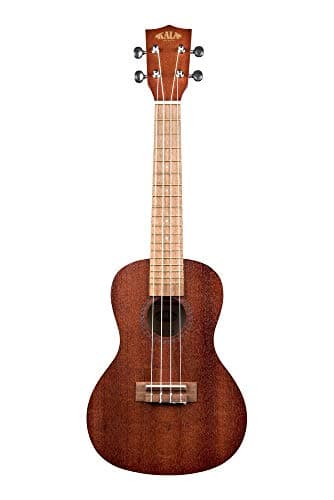
A 17 inch tenor scale with 18 frets, a NuBone nut and saddle and Aquila strings fitted. The most room between frets of any standard-tuned ukulele.
Published specifications
- Size:
- Tenor
- Scale length:
- 17"
- Overall length:
- 26.125"
- Body length:
- 11.75"
- Frets:
- 18, brass
- Top / back / sides:
- Mahogany
- Neck / fingerboard:
- Mahogany neck, walnut fingerboard and bridge
- Nut and saddle:
- GraphTech NuBone
- Nut width:
- 1.39"
- Body depth:
- 3.12"
- Strings:
- Aquila Super Nylgut
What it gets right
- 17 inches of scale is the most fret spacing available in standard GCEA tuning, which is exactly what adult fingers want
- 1.39 inch nut is marginally wider than the soprano and concert in the same line, so strings are less crowded across the neck too
- Same NuBone nut and factory Aquilas as the rest of the KA-15 series
Where it gives ground
- 26 inches overall is a large instrument, and it loses the pocket-sized charm people buy ukuleles for
- The bigger body is fuller and warmer, which means less of the bright plink that says 'ukulele'
What it is not good at
Children, and anyone who wants the classic sound. If the appeal is the small bright instrument, size down to a soprano — the tenor is a different experience.
How the specs score against a beginner’s needs
Scores are our reading of the published specifications above against what a beginner physically needs. They are not test results — we have not played this instrument.
Specifications from Kala Brand Music — KA-15T tenor specifications.
Cordoba 15CM
CordobaBest for: Adult hands, concert size
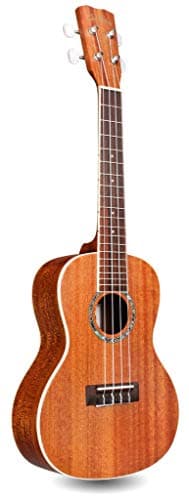
A 375 mm concert scale with 18 frets and a 35 mm nut. The extra inch and a bit of scale over a soprano is the difference between cramped and comfortable for most adults.
Published specifications
- Size:
- Concert
- Top / back / sides:
- Mahogany
- Fingerboard:
- Rosewood
- Scale length:
- 375 mm (14-3/4")
- Frets:
- 18
- Nut width:
- 35 mm (1-3/8")
- Body / overall:
- 280 mm body, 610 mm (24") overall
- Strings / finish:
- Aquila, satin finish, abalone rosette
What it gets right
- 18 frets against a soprano's 12 — a whole extra register that a soprano simply does not have
- The 375 mm scale gives noticeably more room between frets without becoming a tenor-sized instrument
- Aquila strings and an abalone rosette; it looks considerably more expensive than it is
Where it gives ground
- Identical 35 mm nut width to the Kala soprano — the extra room is between the frets, not across the neck
- 24 inches overall is a lot of instrument for a small child
What it is not good at
Sounding like a ukulele in the postcard sense. The concert body is fuller and rounder; the bright, plinky voice people picture is the soprano's.
How the specs score against a beginner’s needs
Scores are our reading of the published specifications above against what a beginner physically needs. They are not test results — we have not played this instrument.
Specifications from Cordoba Guitars — 15CM.
Aquila Super Nylgut ukulele strings
AquilaBest for: The cheapest real upgrade
The string set most good ukuleles ship with from the factory, and the single most transformative thing you can do to an inexpensive one that did not.
Published specifications
- Material:
- Super Nylgut synthetic
- Tuning:
- Standard GCEA
- Fits:
- Soprano, concert or tenor — buy the set for your size
What it gets right
- Louder and brighter than the generic nylon fitted to cheap ukuleles, with far more sustain
- They settle and hold pitch faster than plain nylon, which shortens the miserable first week of constant retuning
- Cheap enough that it is the obvious first upgrade on any instrument that did not come with them
Where it gives ground
- Sets are size-specific, and a soprano set on a tenor will not reach
- New strings of any kind stretch for a few days before they settle
What it is not good at
Fixing a bad instrument. New strings cure a dull sound; they do nothing for intonation error, which is built into the bridge position and cannot be strung out.
How the specs score against a beginner’s needs
Scores are our reading of the published specifications above against what a beginner physically needs. They are not test results — we have not played this instrument.
Specifications from Kala Brand Music — KA-15S, fitted with Aquila Super Nylgut from the factory.
Questions people actually ask
Is ukulele easy for guitar players?
Very. The four ukulele strings are tuned to the same intervals as the top four guitar strings, five semitones higher. Every chord shape you know already works — the resulting chord just has a different name.
What ukulele chord is a guitar D shape?
G. The relationship is a perfect fourth: play a guitar shape on a ukulele and the chord comes out five semitones higher. D becomes G, A becomes D, E becomes A, G becomes C.
What size ukulele should a guitarist buy?
Tenor, usually. It has the most room between frets and the fullest sound, which suits hands used to a guitar neck. Concert is the compromise if you want something more portable.
Should a guitarist get a low-G ukulele?
Many do, because a low-G string restores the low-to-high string order a guitarist expects and gives fingerpicking more range. Try standard high-G first — the re-entrant sound is what makes the instrument distinctive.
Sources
Still deciding?
Every recommendation on this site is built the same way, and the method is published in full — including what we do not do and what would get a pick dropped.
Read next
- Ukulele vs guitar for beginners
Why the ukulele is genuinely easier, exactly which skills transfer to guitar, and when the stepping-stone plan is a detour.
- Best tenor ukuleles
Who a 17-inch tenor scale is genuinely for, what it trades away in tone, and the pick worth buying.
- Ukulele tunings, and which one to use
Standard GCEA, what re-entrant tuning does, high-G versus low-G, and the baritone exception that changes every chord shape.
- Best concert ukuleles
Why concert is the default adult size, what changes against a soprano, and the picks either side of the size line.
- Best beginner guitars: one pick each for adults, teens and kids
Acoustic and electric in one place, segmented by player rather than price, with a single clear pick for each situation.