Strings
Mandolin or ukulele to start on?
Two small stringed instruments with almost nothing in common except their size, and the difference that matters is what they do to your fingertips.
By Sawyer V. · Published · Last updated
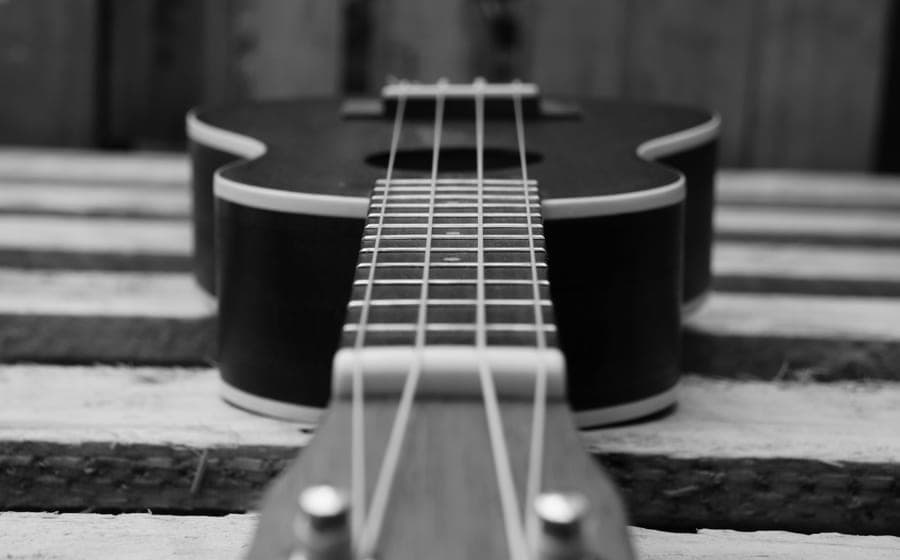
These two get compared because they are both small, both fretted and both cheaper than a guitar. Past that they have almost nothing in common, and the difference that decides it is not musical. It is what they do to your fingers.
Choose the ukulele if you want to be playing songs this week, if the player is a child, or if soft nylon strings matter. Choose the mandolin if you want to play folk or bluegrass with other people, if you already play violin, or if you want an instrument with a defined ensemble role.
The physical difference
| Ukulele | Mandolin | |
|---|---|---|
| Strings | Four, nylon, low tension | Eight in four pairs, steel, high tension |
| Fretting a note | One soft string | Two steel strings at once |
| Calluses needed | No | Yes |
| Tuning | GCEA, re-entrant | GDAE in fifths, like a violin |
| Played with | Fingers | A pick |
| Time to a first song | Days | Weeks |
The second row is the whole comparison. Every note on a mandolin means pressing two steel strings down together, and steel under high tension on an uncalloused fingertip hurts. It is the same adjustment a guitar beginner makes, and it is more demanding because of the doubled strings.
A Kala KA-15S#ad uses nylon strings under low tension that a four-year-old can fret. That is not a small difference for a beginner, and it is why the ukulele appears so often in our recommendations for children.
Time to the first real song
The ukulele’s biggest advantage, and it is about retention rather than difficulty.
Several usable ukulele chords need exactly one finger. That means a recognizable song within the first week, and early musical output is the strongest predictor of whether anyone continues.
A mandolin makes you wait. Chords need two or three fingers pressing doubled steel strings, and the first two weeks are spent building calluses rather than making music. For a motivated adult that is fine; for a child it is often the whole story.
Where the mandolin wins
It has a job. In bluegrass, old-time and Celtic music, the mandolin has a defined role — the chop chord on the offbeat, and melody lines between vocal phrases. There are sessions and jams where a competent beginner mandolinist is welcome and needed.
The fifths tuning is logical. Tuned GDAE, every string is a fifth apart, which makes scale patterns identical across the whole neck. Once a shape is learned it works everywhere, which is a real advantage over the guitar’s irregular tuning.
Violinists already know it. Same tuning, same pitches, same repertoire. A fiddle player picking up a Kentucky KM-150#ad already knows where every note is and needs only to learn to fret and hold a pick.
It cuts through. Eight steel strings produce a bright, percussive sound that is audible in a room full of guitars. A ukulele in the same room disappears.
Where the ukulele wins
Nobody is excluded by hand strength. Children, older players and anyone with hand or joint issues can play a ukulele comfortably. That is a genuinely wide door.
It accompanies singing beautifully. Strummed chords under a voice is the most useful amateur musical skill there is, and the ukulele does it with almost no barrier to entry.
It is cheaper and it travels. A soprano is around 21 inches, lives on a shelf, and goes in a bag — see best travel ukuleles.
Ukulele groups exist everywhere. They are unusually welcoming to complete beginners in a way that instrumental sessions frequently are not.
Tuning and maintenance
Neither is difficult and the mandolin is fiddlier.
Eight strings in unison pairs means a course can be perfectly in tune against a tuner and still wobble, because the two strings are a hair apart. There is a method for this and it is in how to tune a mandolin.
A ukulele has four strings and no pairs, and its main quirk is that new nylon stretches for days — see how to tune a ukulele.
Both want a Snark clip-on chromatic tuner#ad, and both should be tuned every single time they are picked up.
Cost and what else you need
A ukulele is cheaper as an instrument and needs less: a tuner and, ideally, a strap.
A mandolin costs more at the honest floor, because the bridge, tailpiece and eight tuners are all under real load and cheap versions of them fail. It also needs picks and spare strings as consumables. What to look for is in best beginner mandolins.
Choosing
Ask what you want to be doing in six months.
Singing songs with an instrument in your hands, or handing something to a child — ukulele. Sitting in a folk session playing tunes with other people, or bringing a violin background across to a fretted instrument — mandolin.
If neither is settled and you are weighing the wider string family, start at bowed versus fretted strings.
What we would buy
Kentucky KM-150
KentuckyBest for: First mandolin, all solid wood
An all-solid A-style mandolin with a hand-carved spruce top and solid maple back and sides, at the tier where laminate is still the norm.
Published specifications
- Style:
- A-style, traditional design
- Top:
- Select solid spruce, hand-carved and graduated
- Back / sides:
- Select solid maple
- Neck:
- Solid maple
- Fingerboard:
- Rosewood
- Peghead:
- Traditional snakehead shape
- Neck joint:
- Modified dovetail
What it gets right
- All-solid construction — a carved, graduated top is what gives a mandolin its bark, and laminate cannot do it
- A dovetail neck joint rather than a bolt, which is the traditional construction and holds its geometry
- A-style bodies are simpler and cheaper to build than F-style, so the money goes into the wood rather than the scroll
Where it gives ground
- A-style has no scroll, which is purely cosmetic and matters to some players anyway
- Mandolin strings are under high tension and the instrument needs a setup to play comfortably
What it is not good at
Small hands. A mandolin neck is narrow but the string pairs are close together and the tension is high, which is hard on soft fingertips at first.
How the specs score against a beginner’s needs
Scores are our reading of the published specifications above against what a beginner physically needs. They are not test results — we have not played this instrument.
Specifications from Saga Music — Kentucky KM-150 standard A-model mandolin.
Kala KA-15S
Kala Brand MusicBest for: The honest floor, soprano
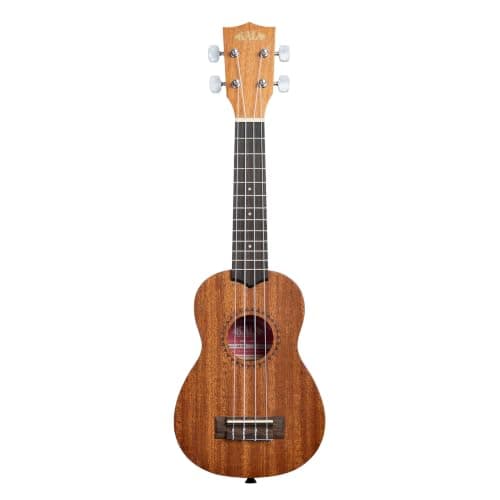
Mahogany throughout, a GraphTech NuBone nut and saddle, and Aquila strings fitted from the factory. The nut material is the spec that separates this from the pile of look-alikes.
Published specifications
- Size:
- Soprano
- Top / back / sides:
- Mahogany
- Neck / fretboard:
- Mahogany neck, rosewood fretboard
- Nut and saddle:
- GraphTech NuBone
- Scale length:
- 13.625"
- Frets:
- 12
- Nut width:
- 1.375"
- Overall length:
- 21.062"
- Strings:
- Aquila Super Nylgut
What it gets right
- NuBone nut and saddle rather than molded plastic — this is what decides whether the instrument plays in tune up the neck
- Aquila strings fitted at the factory, so the first thing you would otherwise replace is already done
- 21 inches overall and light enough for a small child to hold unsupported
Where it gives ground
- 12 frets only, and the body joint stops you well short of the high notes
- Soprano scale means less room between frets — adult fingers with wide fingertips will find it cramped
What it is not good at
Adult hands, sometimes. A 13.625 inch scale is genuinely tight. If the player is a grown-up with large hands, read our soprano-versus-concert comparison before buying this size.
How the specs score against a beginner’s needs
Scores are our reading of the published specifications above against what a beginner physically needs. They are not test results — we have not played this instrument.
Specifications from Kala Brand Music — KA-15S specifications.
Snark clip-on chromatic tuner
SnarkBest for: Tuning anything with strings
Clips to the headstock and reads pitch from the vibration of the wood, so it works in a noisy room and an adult who plays nothing can tune the instrument in twenty seconds.
Published specifications
- Type:
- Clip-on chromatic
- Sensing:
- Vibration through the headstock, not the microphone
- Fits:
- Guitar, bass, ukulele, violin, mandolin
- Display:
- Full-color rotating screen
What it gets right
- Vibration sensing means it works in a room with a television on, which a microphone tuner does not
- Chromatic, so one tuner covers every instrument in the house
- The rotating display means it reads correctly whichever way the instrument is held
Where it gives ground
- The clip is plastic and it is the part that eventually breaks
- Battery-powered, and it will be flat the one time you need it in a hurry
What it is not good at
Wind and brass instruments. It reads vibration through a solid body, so there is nothing for it to clip to on a flute or a trumpet.
How the specs score against a beginner’s needs
Scores are our reading of the published specifications above against what a beginner physically needs. They are not test results — we have not played this instrument.
Specifications from Snark tuners (retail listing with published feature set).
Questions people actually ask
Is mandolin harder than ukulele?
Physically, clearly. A mandolin has eight steel strings at high tension, so you press two strings at once for every note and your fingertips need calluses. A ukulele has four soft nylon strings that a child can fret on day one.
Which is quicker to play a song on?
Ukulele, by weeks. Several usable ukulele chords need one finger, so a real song is available within days. A mandolin needs callus formation before chords are comfortable at all.
Is mandolin good for a guitarist?
The steel strings and pick technique feel familiar, and the tuning does not — a mandolin is tuned in fifths where a guitar is mostly in fourths, so no chord shape transfers. Violinists have the easier crossover.
Which is better for playing with other people?
Mandolin, in folk, bluegrass and old-time settings where it has a defined role. Ukulele is more of a self-accompaniment instrument, though ukulele groups are common and very welcoming.
Sources
Still deciding?
Every recommendation on this site is built the same way, and the method is published in full — including what we do not do and what would get a pick dropped.
Read next
- Best beginner mandolins
A-style versus F-style, why a carved solid top matters more here than on a guitar, and the setup a mandolin needs.
- Best beginner ukuleles: what's worth it from $60 to $120
Segmented by hand size rather than price, with the nut-material spec that separates a real ukulele from a decoration.
- How to tune a mandolin
GDAE in pairs, why unison courses are unforgiving, the tuning order that converges, and what to do when a course will not settle.
- Bowed or fretted strings for a beginner?
What frets actually do for a beginner, why bowing is a second instrument, and which family suits a child, an adult or a self-teacher.
- Ukulele vs guitar for beginners
Why the ukulele is genuinely easier, exactly which skills transfer to guitar, and when the stepping-stone plan is a detour.