Start Here
Best instruments to start later in life
Nothing about learning an instrument has an age limit. What does change is which instruments are comfortable to hold for half an hour.
By Sawyer V. · Published · Last updated
Advice for older beginners is usually either dismissive or relentlessly encouraging, and neither is useful. What actually helps is a straight answer about which instruments are comfortable to play for half an hour, and which ones are not.
Nothing here is about capability. Older beginners learn perfectly well, frequently faster than teenagers, because they practice deliberately and understand what they are doing.
Every pick states its Starter Path band, and we have not physically tested any of them — the method is on how we pick.
Ukulele if you want to be playing songs quickly with the least physical demand. Keyboard if you want to read music and play pieces, and it asks nothing of grip strength at all. Both can be practiced quietly and neither punishes hands that are not what they were.
What to weigh, and what not to
String tension and grip. The main physical variable. Pressing a steel guitar string is genuinely demanding on finger joints. Nylon ukulele strings at low tension are not, and a keyboard key requires no grip at all.
Weight and how it is held. Anything supported by the neck or held out to the side gets tiring. Instruments that rest on the lap or sit on a stand do not.
Fine finger movement. Small, precise finger placement is harder if joints are stiff. Wider spacing helps, which is one reason we point older beginners toward a concert ukulele rather than a soprano.
Not a factor: memory, aptitude, or the belief that musical learning closes off after childhood. That last one is folklore and it stops more people than any physical constraint does.
Ukulele: the gentlest real instrument
Three things line up and no other instrument has all three.
Nylon strings under low tension need very little finger strength. The body is small and light and rests on the lap. And several usable chords need only one finger, which means a recognizable song within the first week.
That last point does more work than it appears to. Early musical output is the strongest predictor of anyone continuing, at any age, and the ukulele delivers it faster than anything else we cover.
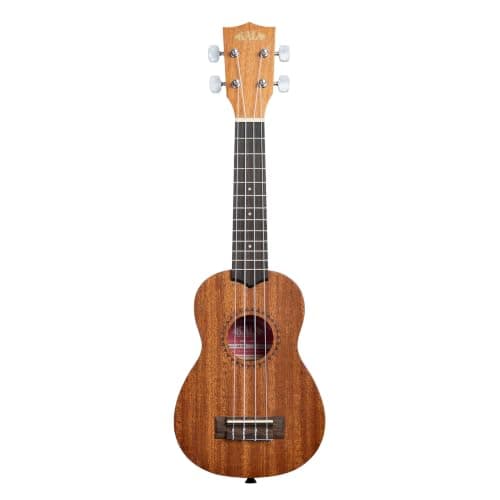
The Kala KA-15S#ad is the standard soprano and the smallest, lightest option. If your fingertips are wide or your joints are stiff, the Cordoba 15CM#ad concert size gives noticeably more room between frets for very little extra size — the case for it is in best concert ukuleles.
Keyboard: no grip required at all
Press a key, get a correct note. No strength, no tuning, no intonation, no calluses. It is the lowest physical barrier of anything on this site.
The Casio Casiotone CT-S1#ad is our pick for a start: 61 full-size touch-sensitive keys, a piano sound prioritized over a feature list, light enough to move, and battery capable. It also looks like an instrument rather than a toy, which matters more to adult buyers than manufacturers seem to realize.
If the goal is reading music and working through repertoire properly, the Yamaha P-145#ad gives 88 weighted keys — what a teacher is actually asking for. Note that a weighted action requires more finger strength than an unweighted one, which is a genuine consideration here rather than an abstract one. The trade-off is in weighted versus unweighted keys.
One thing to get right from day one: the height. A keyboard on a dining table is about four inches too high and bends the wrists upward, which is uncomfortable for anyone and worse for stiff joints. A stand and an adjustable bench are part of the instrument — see our stand and bench guide.
Instruments to approach carefully
Steel-string guitar. Not ruled out, and it asks considerably more of the fingers than a ukulele. If guitar is what you want, look at lighter string gauges and a properly set-up instrument — both reduce fretting effort substantially, and the detail is in why the guitar hurts your fingers. A nylon-string classical guitar is the gentler route into the instrument.
Violin. The hold is genuinely awkward — clamped between jaw and collarbone with the left arm rotated underneath. For anyone with neck or shoulder issues it is worth trying before committing. The cello, held between the knees with both arms relaxed, is frequently the better bowed instrument for an older beginner — see violin or cello.
Drums. Physically demanding in a whole-body way, and loud. Not a bad choice for someone in good health who wants it; not the easy option.
Wind instruments. Require sustained breath support, which varies a great deal between individuals. Worth a conversation with a doctor if there is any respiratory history.
Practical adjustments that help
Shorter, more frequent sessions. Fifteen or twenty minutes most days, rather than an hour twice a week. Better for learning and much better for joints.
Warm hands first. Warm water or simply moving the fingers for a minute. It makes a genuine difference to comfort.
Stop at joint pain. Fingertip soreness on a steel-string instrument is normal and passes. Pain in a joint is not, and playing through it is never the right call.
Use a strap or a stand. Anything that means your hands are playing rather than holding.
Get the instrument set up. On any fretted instrument, a proper setup lowers the effort required to fret. It is the cheapest comfort improvement available.
What older beginners have going for them
Patience, first. Practicing a hard passage slowly and repeatedly is exactly what works and exactly what teenagers refuse to do.
Clear motivation second. Nobody starts an instrument at seventy because a parent suggested it, and self-chosen learning is far more durable.
And frequently more available time, which over a year is worth more than any innate advantage. The realistic expectations are in learning an instrument as an adult.
Quick picks
The gentlest start of anything we cover
Nylon strings at low tension, a small light body, and real songs inside a week. Nothing else asks so little of the hands.
| # | Product | Best for | Score | Price |
|---|---|---|---|---|
| 1 | Kala KA-15SMahogany throughout, a GraphTech NuBone nut and saddle, and Aquila strings fitted from the factory. | The honest floor, sopranoThe honest floor | 8.7 | $69.00 · View on Amazon #ad How we’re funded |
| 2 | 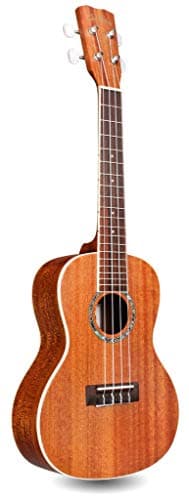 Cordoba 15CMA 375 mm concert scale with 18 frets and a 35 mm nut. | Adult hands, concert sizeEnough | 9.0 | $129.99 · View on Amazon #ad How we’re funded |
If reading music and playing pieces is the goal
No grip strength required at all, no tuning, and a headphone socket. The lowest physical barrier of any instrument here.
| # | Product | Best for | Score | Price |
|---|---|---|---|---|
| 1 | 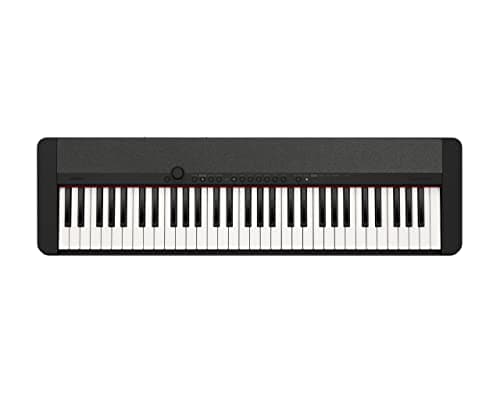 Casio Casiotone CT-S161 full-size touch-sensitive keys, 61 tones and no arranger clutter. | 61 keys, piano sound firstThe honest floor | 7.8 | $219.99 · View on Amazon #ad How we’re funded |
| 2 | No image Yamaha P-14588 graded hammer keys, a concert grand sample and 24 pounds. | Buy once, 88 weighted keysEnough | 9.0 | Check price on Amazon → #ad How we’re funded |
The picks in full
Kala KA-15S
Kala Brand MusicBest for: The honest floor, soprano
Mahogany throughout, a GraphTech NuBone nut and saddle, and Aquila strings fitted from the factory. The nut material is the spec that separates this from the pile of look-alikes.
Published specifications
- Size:
- Soprano
- Top / back / sides:
- Mahogany
- Neck / fretboard:
- Mahogany neck, rosewood fretboard
- Nut and saddle:
- GraphTech NuBone
- Scale length:
- 13.625"
- Frets:
- 12
- Nut width:
- 1.375"
- Overall length:
- 21.062"
- Strings:
- Aquila Super Nylgut
What it gets right
- NuBone nut and saddle rather than molded plastic — this is what decides whether the instrument plays in tune up the neck
- Aquila strings fitted at the factory, so the first thing you would otherwise replace is already done
- 21 inches overall and light enough for a small child to hold unsupported
Where it gives ground
- 12 frets only, and the body joint stops you well short of the high notes
- Soprano scale means less room between frets — adult fingers with wide fingertips will find it cramped
What it is not good at
Adult hands, sometimes. A 13.625 inch scale is genuinely tight. If the player is a grown-up with large hands, read our soprano-versus-concert comparison before buying this size.
How the specs score against a beginner’s needs
Scores are our reading of the published specifications above against what a beginner physically needs. They are not test results — we have not played this instrument.
Specifications from Kala Brand Music — KA-15S specifications.
Casio Casiotone CT-S1
CasioBest for: 61 keys, piano sound first
61 full-size touch-sensitive keys, 61 tones and no arranger clutter. It is the 61-key board for someone who wants to play piano rather than operate a keyboard.
Published specifications
- Keys:
- 61, full-size, touch-sensitive
- Polyphony:
- 64 notes
- Tones:
- 61, including a stereo grand piano
- Weight:
- 9.9 lb
- Dimensions:
- 36.61" W x 10.15" D x 3.30" H
- Connectivity:
- USB-MIDI
What it gets right
- Deliberately few sounds and a clean panel, which removes the single biggest distraction from actual practice
- 9.9 pounds and 3.3 inches tall — it can live on a shelf between sessions, and an instrument that lives out of the way gets played less
- 64-note polyphony, higher than the PSR-E383's 48
Where it gives ground
- No lesson mode at all, unlike the PSR-E383
- Unweighted keys, same fundamental limit as any 61-key board
What it is not good at
Entertaining a young child. There is no light-up key guidance, no play-along scoring and only 61 sounds. That restraint is the point for an adult beginner and a drawback for a seven-year-old.
How the specs score against a beginner’s needs
Scores are our reading of the published specifications above against what a beginner physically needs. They are not test results — we have not played this instrument.
Specifications from Casio — CT-S1 product page.
Cordoba 15CM
CordobaBest for: Adult hands, concert size
A 375 mm concert scale with 18 frets and a 35 mm nut. The extra inch and a bit of scale over a soprano is the difference between cramped and comfortable for most adults.
Published specifications
- Size:
- Concert
- Top / back / sides:
- Mahogany
- Fingerboard:
- Rosewood
- Scale length:
- 375 mm (14-3/4")
- Frets:
- 18
- Nut width:
- 35 mm (1-3/8")
- Body / overall:
- 280 mm body, 610 mm (24") overall
- Strings / finish:
- Aquila, satin finish, abalone rosette
What it gets right
- 18 frets against a soprano's 12 — a whole extra register that a soprano simply does not have
- The 375 mm scale gives noticeably more room between frets without becoming a tenor-sized instrument
- Aquila strings and an abalone rosette; it looks considerably more expensive than it is
Where it gives ground
- Identical 35 mm nut width to the Kala soprano — the extra room is between the frets, not across the neck
- 24 inches overall is a lot of instrument for a small child
What it is not good at
Sounding like a ukulele in the postcard sense. The concert body is fuller and rounder; the bright, plinky voice people picture is the soprano's.
How the specs score against a beginner’s needs
Scores are our reading of the published specifications above against what a beginner physically needs. They are not test results — we have not played this instrument.
Specifications from Cordoba Guitars — 15CM.
Yamaha P-145
YamahaBest for: Buy once, 88 weighted keys
88 graded hammer keys, a concert grand sample and 24 pounds. If the plan is piano lessons rather than keyboard playing, this is where the shopping actually starts.
Published specifications
- Keys:
- 88, GHC (Graded Hammer Compact), fully weighted and graded
- Polyphony:
- 64 notes
- Sound:
- Yamaha CFIIIS concert grand sample, damper resonance DSP
- Speakers:
- 7 W built-in
- Dimensions:
- 1,326 x 268 x 129 mm (52-3/16" x 10-9/16" x 5-1/16")
- Weight:
- 11.1 kg (24 lb 8 oz)
- In the box:
- Music rest, sustain foot switch
What it gets right
- Graded hammer action — the low keys are heavier than the high ones, which is the thing an unweighted keyboard cannot teach
- All 88 keys, so no method book ever runs off the end of the instrument
- Genuinely portable at 24 pounds and 268 mm deep; it fits on a desk
Where it gives ground
- 64-note polyphony is the entry-tier number; heavy sustain-pedal passages will drop notes eventually
- A single sustain footswitch, not a proper piano-style pedal — most players replace it
What it is not good at
Anything other than piano. There are only a handful of voices and no arranger features, so if the player wants to make beats or layer sounds, a PSR-E383 will make them happier for less money.
How the specs score against a beginner’s needs
Scores are our reading of the published specifications above against what a beginner physically needs. They are not test results — we have not played this instrument.
Specifications from Yamaha USA — P-145 specifications.
Questions people actually ask
What is the best instrument to learn at 60 or older?
Ukulele or keyboard. The ukulele asks almost nothing of hand strength and produces music within a week; the keyboard asks nothing of grip at all and gives a correct note the moment you press.
Is it too late to learn an instrument?
No. The evidence for a hard cutoff simply is not there for amateur playing, and older beginners bring patience, life experience and often more available practice time than anyone else.
What if I have arthritis in my hands?
Prioritize low string tension and short reaches. A ukulele with nylon strings is far gentler than a steel-string guitar, and a keyboard removes grip entirely. Speak to your doctor and stop at any joint pain rather than playing through it.
Does hearing loss make learning harder?
It changes what to prioritize rather than preventing it. A clip-on tuner removes any reliance on hearing pitch precisely, and a keyboard with headphones lets you set a comfortable level without affecting anyone else.
Sources
Still deciding?
Every recommendation on this site is built the same way, and the method is published in full — including what we do not do and what would get a pick dropped.
Read next
- Learning an instrument as an adult
What genuinely changes for an adult starter, which instruments suit it, and the three mistakes that end most attempts.
- Best beginner ukuleles: what's worth it from $60 to $120
Segmented by hand size rather than price, with the nut-material spec that separates a real ukulele from a decoration.
- Best keyboards for adult beginners
Why adults should weight the key action over the feature list, and four boards covering buy-once down to the honest floor.
- The easiest instruments to learn
Ranked by time to a first real song, with the ceiling each one trades away, and a pick for the top three.
- Lessons or teaching yourself?
Which instruments are self-teachable and which are not, what a teacher actually provides, and the hybrid most adults should use.
- Best keyboards for older beginners
What changes about the purchase when the player is older: weight, panel clarity, key resistance, and why the headphone socket matters most of all.