Strings
Violin or cello for a beginner?
Both are fretless, both are demanding, and the deciding factors are physical and logistical rather than musical.
By Sawyer V. · Published · Last updated
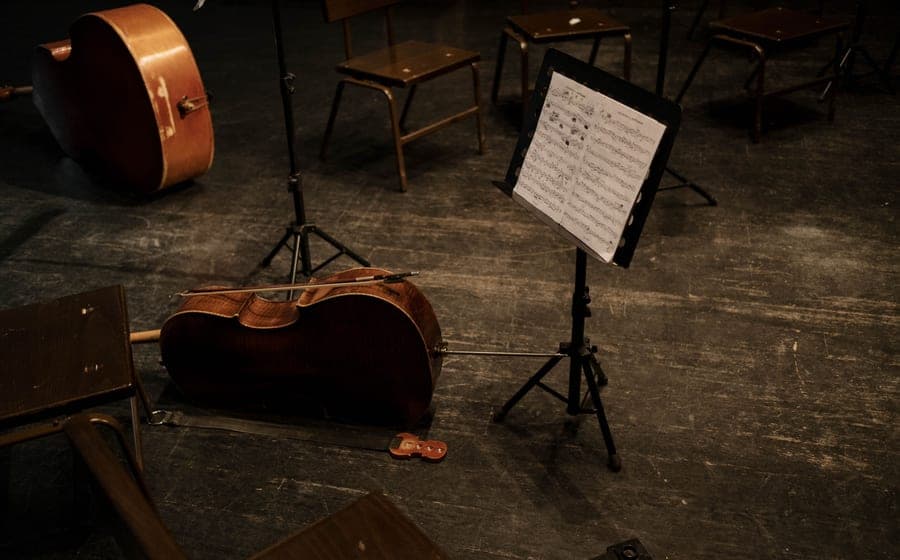
The violin and the cello are usually presented as different in character — bright and soaring against deep and mournful — and that is true and not very useful for deciding. Both are fretless bowed instruments played from written music, and both demand real patience in the first year.
What actually separates them for a beginner is physical and logistical.
Choose cello if the player finds the violin’s chin-and-shoulder hold awkward, if a more forgiving early tone matters in your house, and if you have somewhere to keep it and a way to move it. Choose violin if portability matters, if the budget is tight, or if the player carries it to school themselves.
The comparison
| Violin | Cello | |
|---|---|---|
| How it is held | Between chin and shoulder, left arm raised | Between the knees, seated, arms relaxed |
| Early tone | Thin and scratchy for months | More forgiving of an imperfect bow |
| String spacing | Narrow — precise fingers required | Wider — more margin per note |
| Portability | A child carries their own | An adult carries it, in a car |
| Cost | Lower at every level | Higher, including strings and rental |
| Fractional sizes | Many, measured by arm length | Fewer steps, still measured |
| Ensemble demand | Many players, more competition | Fewer players, more often needed |
The posture difference is the big one
A violin is held between the jaw and the collarbone with the left arm rotated underneath the instrument and lifted. It is not a natural position, it takes weeks to stop feeling strange, and for some people — particularly adults with neck or shoulder issues — it never becomes fully comfortable.
A cello is held between the knees while sitting. Both arms hang in something close to a natural position, the instrument supports its own weight on an endpin, and there is nothing clamped under the chin.
For an adult beginner in particular, this single difference decides it more often than musical preference does. Try holding each for ten minutes before choosing; the discomfort shows up quickly.
What the first six months sound like
Honesty helps here, because the first months of a bowed instrument are hard on everyone in the building.
A beginner violin is thin, scratchy and often sharp. The bow needs to travel at a constant speed, at a constant distance from the bridge, with constant weight, and getting all three wrong at once produces a sound that has ended more than one instrumental career by family consensus.
A cello has the same requirements and is more forgiving of failing them. The lower register and larger body mean an imperfect stroke still produces something warm rather than something shrill. It is not easier to play well; it is easier to listen to while it is being played badly.
Intonation is the mirror image. Neither instrument has frets, so every note is placed by hand and corrected by ear. The violin’s narrow string spacing demands more precision; the cello gives you more physical margin per note but the hand must travel further.
The logistics decide it more often than the music
Transport. A violin in a case is carried by a seven-year-old. A cello is carried by an adult and needs a car with the back seats down. If the instrument has to get to school twice a week, that is a real constraint on a real family.
Storage. A violin lives on a shelf. A cello needs a corner where it will not be knocked over, and cello endpins are very good at finding wooden floors.
Cost. Cellos cost more at every level — instrument, case, strings, rental, insurance. A Cecilio CCO-100 cello outfit#ad outfit is the entry point on our cello roundup and it still represents more outlay than a comparable violin.
Practice noise. Both are moderate; neither is a drum kit. The cello’s lower frequencies travel slightly better through a floor.
Sizing applies to both
Both instruments come in fractional sizes and both are sized by measurement rather than by age. A child on an instrument that is too large cannot reach the correct hand positions, and concludes they are bad at it rather than that the instrument is wrong.
Violins have more steps, which means more changes as a child grows. Cellos have fewer but each change is more expensive. The measuring method for violins is in violin sizes by age, and the same principle governs cellos.
This is also the reason both instruments sit firmly on the rent side of the buy-or-rent question for growing children, which we work through in rent or buy a first instrument.
Where each one takes you
Violin has the largest repertoire of any orchestral instrument and works in far more contexts — classical, folk, fiddle traditions, film sessions. It is also the most crowded: every school orchestra has more violinists than it needs.
Cello has a smaller repertoire, a beautiful one, and considerably less competition. A competent cellist gets asked to play in things. That matters more than it sounds, because playing with other people is the strongest predictor of anyone continuing with an instrument.
If you are starting from further back and are not yet sure that bowed strings are the family at all, our instrument chooser works through the whole field, and the violin picks themselves are in best beginner violins — where a Stentor Student II Violin Outfit#ad outfit is the standard first instrument.
What we would buy
Stentor Student II Violin Outfit
StentorBest for: First violin, every size
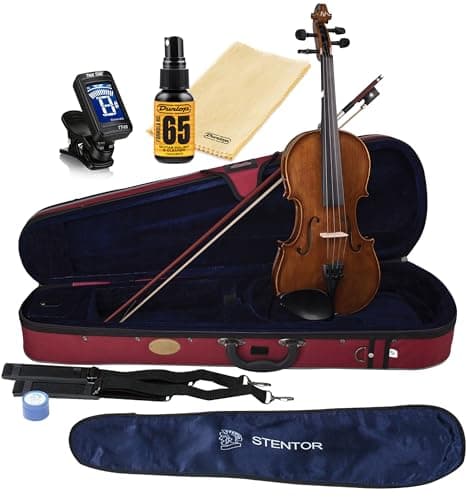
Solid carved spruce and maple with an ebony fingerboard, set up in a workshop before shipping, and made in five fractional sizes. The workshop setup is the specification that matters most on a beginner violin.
Published specifications
- Top:
- Solid carved spruce
- Back / sides:
- Solid figured maple
- Fingerboard:
- Ebony
- Pegs:
- Ebony or rosewood
- Sizes:
- 4/4, 3/4, 1/2, 1/4, 1/8
- Strings:
- Steel core, factory fitted
- Outfit:
- Wooden bow with ebony frog and natural horsehair, rosin, shaped lightweight case with music pocket and rucksack straps
What it gets right
- Ebony fingerboard and pegs, not stained hardwood — a stained fingerboard wears through and a soft peg will not hold a tuning
- Individually set up in a workshop before it ships, which is the single biggest variable on a cheap violin
- Available in five fractional sizes, so the same instrument family covers a child from about age five to adult
Where it gives ground
- The supplied steel-core strings are the first upgrade most teachers suggest
- The bow is functional rather than good; it is the second upgrade
What it is not good at
Being bought without measuring. Violin size is set by the player's arm length, not their age, and a violin one size too big is genuinely unplayable rather than merely awkward. Measure first.
How the specs score against a beginner’s needs
Scores are our reading of the published specifications above against what a beginner physically needs. They are not test results — we have not played this instrument.
Specifications from Stentor Music — Student II violin outfit.
Cecilio CCO-100 cello outfit
CecilioBest for: First cello, complete outfit
A spruce-top, maple-body cello that arrives with a hard case, a soft case, a bow, a stand, rosin and a spare string set. Cellos are expensive to complete, and this one is complete.
Published specifications
- Top:
- Spruce
- Back / neck / sides:
- Maple
- Bow:
- Brazilwood with unbleached horsehair
- In the outfit:
- Hard case, soft case, bow, cello stand, rosin, spare string set
- Sizes:
- Available in full and fractional sizes
- Warranty:
- 1 year against manufacturer defects
What it gets right
- Genuinely complete — a cello needs a bow, rosin, a stand and a case to be usable, and buying those separately costs more than the instrument
- Both a hard and a soft case, which for an instrument this size is a real convenience rather than a gimmick
- Available in fractional sizes, so a growing child stays within one family
Where it gives ground
- The supplied bow and strings are the first two things a teacher will suggest upgrading
- Set-up quality is the variable at this tier — budget for a shop check before the first lesson
What it is not good at
Arriving ready. A cello needs its bridge fitted and its soundpost checked, and at this price that work has not been done to the standard a teacher expects. Factor a setup in.
How the specs score against a beginner’s needs
Scores are our reading of the published specifications above against what a beginner physically needs. They are not test results — we have not played this instrument.
Specifications from Cecilio Music — CCO-100 cello outfit.
Questions people actually ask
Is cello easier to learn than violin?
Physically, in some ways yes. The cello is held by the body rather than balanced between the chin and shoulder, the strings are further apart, and the natural arm position is more comfortable. Musically the two are comparable in difficulty.
Which sounds better sooner, violin or cello?
Cello, generally. A beginner violin in the first months has a thin, scratchy tone that is hard on everyone in the house. A cello’s lower register is more forgiving of an imperfect bow stroke.
Is a cello more expensive than a violin?
Yes, at every level. More material, larger case, more expensive strings, and rental costs more too. Budget meaningfully more for a cello than for a violin of equivalent quality.
Which is better for a child?
Both work from about four or five with a correctly measured fractional size. The practical difference is transport — a child can carry their own violin to school, and a child cannot carry their own cello anywhere.
Sources
Still deciding?
Every recommendation on this site is built the same way, and the method is published in full — including what we do not do and what would get a pick dropped.
Read next
- Best beginner violins: measure first, then buy
Arm-length sizing chart, why workshop setup is the spec that matters most, and one pick available in five sizes.
- Best beginner cellos
Why outfit completeness is the spec that matters on a cello, sizing by height, and the setup cost to budget for.
- Violin sizes by age and arm length
The full fractional chart by arm length, how to measure, and why a violin one size too big cannot be played correctly.
- Should you rent or buy a first instrument?
Rent-or-buy answered per instrument family, with the two questions that decide it and the maintenance cost people miss.
- What instrument should I learn?
Four practical constraints instead of a personality quiz, each one routing straight to the instrument that fits.