Keys
Best keyboards for older beginners
Starting piano in your sixties or seventies is one of the most sensible things anyone does with an instrument. The buying advice written for teenagers does not transfer.
By Sawyer V. · Published · Last updated
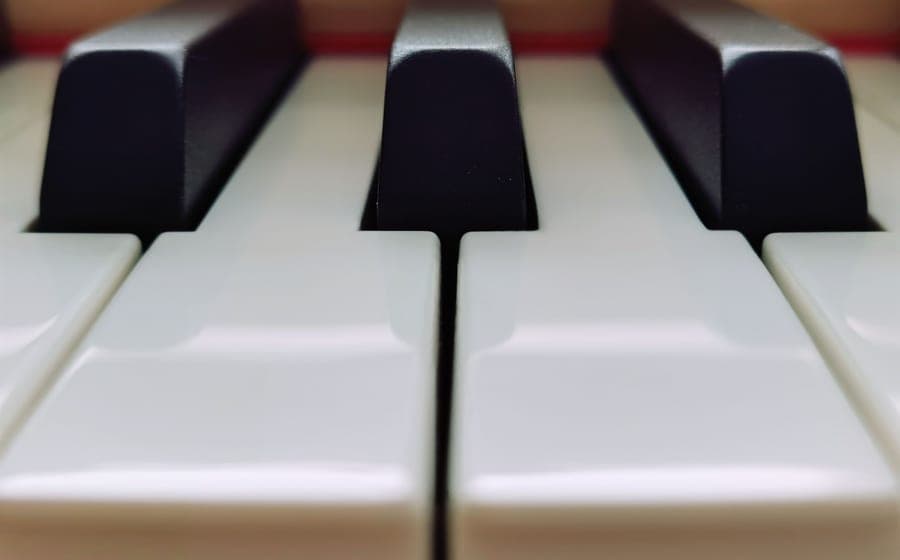
Keys is the instrument we recommend most often to people starting late, and the reasons are practical rather than sentimental. You sit down to play it. It makes a sound on the first day that is recognizably music. It does not require callused fingertips, an embouchure, or a neighbor’s tolerance.
What does not transfer from the usual advice is the shortlist, because the specifications that matter shift.
Every pick states its Starter Path band, and we have not physically tested any of them — the method is on how we pick.
The Casio CT-S1 is the simplest capable instrument: 61 full-size touch-sensitive keys, a panel with almost nothing on it, and 9.9 pounds. Choose the Yamaha P-145 instead if the goal is specifically piano rather than keyboard. Buy closed-back headphones either way.
What changes when the player is older
Weight, both kinds. The weight of the instrument, because it will be moved, and the weight of the keys, because that is what the hands have to push. The CT-S1’s 9.9 pounds against the P-145’s 24 is not a trivial difference if the keyboard moves between rooms.
Panel clarity. Small unlabeled buttons with layered shift functions are a barrier, and an instrument that requires a manual to change one setting gets used less. This is where Casio’s deliberately reduced panel becomes a genuine feature rather than a compromise.
Screen and legend size. Related and worth checking in a photograph before buying.
Hearing. A keyboard is played at whatever volume suits the player, which is a real advantage over every acoustic instrument, and headphones make it exact.
The simple one: Casio CT-S1
The Casio Casiotone CT-S1#ad has 61 full-size touch-sensitive keys, 61 tones, 64-note polyphony and a front panel with almost nothing on it. Casio left the arranger features out on purpose, and for this buyer the omission is the selling point.
It is 9.9 pounds and 3.3 inches tall, so it lives on a shelf, a sideboard or a dining table and comes out in seconds. An instrument that has to be assembled before it is played is an instrument that gets played less, and that is truer the busier the room is.
Touch sensitivity is the specification to insist on, at any age. Playing harder makes it louder. Without it the instrument cannot express anything, and an adult learner will hear that limitation long before a child does.
What it gives up: weighted keys, all 88 of them, and any lesson mode.
The piano one: Yamaha P-145
If the ambition is specifically piano — real repertoire, a method book, possibly a teacher — then the Yamaha P-145#ad is where the shopping starts. Eighty-eight graded hammer keys, a concert grand sample and 24 pounds.
Graded means the low keys are heavier than the high ones, exactly as on an acoustic piano. That is what builds piano touch, and it is the thing an unweighted keyboard cannot teach at any price.
There is one honest caveat for this reader, and it is the reason we would not recommend it blind: weighted keys take more force. For most players that is neutral or positive, because resistance gives control. For someone with arthritis or reduced grip strength it can be genuinely tiring. It is the one specification on this page worth testing with your own hands before buying, and we set out the full trade in weighted versus unweighted keys.
The accessory that matters more than the instrument
Headphones. Not for the neighbors — for the player.
Practicing badly in front of other people is the single most common reason adult beginners stop, and the ability to close the sound off entirely removes it. It also lets practice happen at any hour, which for a retired player is often when it actually suits.
The Audio-Technica ATH-M20x#ad is closed-back with 40 mm drivers and includes the quarter-inch adapter, which is the socket most digital pianos have rather than the smaller one a phone uses. They weigh 190 grams, which matters over an hour.
Where it goes, and what it sits on
Two things decide whether the instrument gets played, and neither appears on a spec sheet.
The first is height. A keyboard on a dining table is several inches too high, and playing with raised wrists is uncomfortable within twenty minutes. An adjustable X-stand or a proper bench fixes it for very little money, and the sizing detail is in keyboard stand and bench guide.
The second is visibility. An instrument in a case in a cupboard is an instrument nobody plays. Leave it out, plugged in, with the music already on the stand.
If keys is not the right answer
It usually is, for this player. Where it is not — because of hand mobility, room, or simply preference — the cross-instrument version of this decision is in best instruments for seniors, and the wider adult-beginner picks are in best keyboards for adult beginners.
Quick picks
The simplest instrument that is still serious
61 full-size touch-sensitive keys, a clean panel, 64-note polyphony and 9.9 pounds. Nothing to navigate and nothing to accidentally switch on.
| # | Product | Best for | Score | Price |
|---|---|---|---|---|
| 1 | No image Casio Casiotone CT-S161 full-size touch-sensitive keys, 61 tones and no arranger clutter. | 61 keys, piano sound firstThe honest floor | 7.8 | Check price on Amazon → #ad How we’re funded |
If it is piano you want to play
88 graded hammer keys and a concert grand sample. Heavier to press and heavier to move, and the only tier that teaches real piano touch.
| # | Product | Best for | Score | Price |
|---|---|---|---|---|
| 1 | No image Yamaha P-14588 graded hammer keys, a concert grand sample and 24 pounds. | Buy once, 88 weighted keysEnough | 9.0 | Check price on Amazon → #ad How we’re funded |
The accessory that changes everything
Closed-back headphones with a quarter-inch adapter included, which is the socket a digital piano actually has.
| # | Product | Best for | Score | Price |
|---|---|---|---|---|
| 1 | No image Audio-Technica ATH-M20xClosed-back 40 mm drivers with a 1/4 inch adapter included, which is the socket most digital pianos actually have. | Practice headphonesThe honest floor | 8.7 | Check price on Amazon → #ad How we’re funded |
The picks in full
Casio Casiotone CT-S1
CasioBest for: 61 keys, piano sound first
61 full-size touch-sensitive keys, 61 tones and no arranger clutter. It is the 61-key board for someone who wants to play piano rather than operate a keyboard.
Published specifications
- Keys:
- 61, full-size, touch-sensitive
- Polyphony:
- 64 notes
- Tones:
- 61, including a stereo grand piano
- Weight:
- 9.9 lb
- Dimensions:
- 36.61" W x 10.15" D x 3.30" H
- Connectivity:
- USB-MIDI
What it gets right
- Deliberately few sounds and a clean panel, which removes the single biggest distraction from actual practice
- 9.9 pounds and 3.3 inches tall — it can live on a shelf between sessions, and an instrument that lives out of the way gets played less
- 64-note polyphony, higher than the PSR-E383's 48
Where it gives ground
- No lesson mode at all, unlike the PSR-E383
- Unweighted keys, same fundamental limit as any 61-key board
What it is not good at
Entertaining a young child. There is no light-up key guidance, no play-along scoring and only 61 sounds. That restraint is the point for an adult beginner and a drawback for a seven-year-old.
How the specs score against a beginner’s needs
Scores are our reading of the published specifications above against what a beginner physically needs. They are not test results — we have not played this instrument.
Specifications from Casio — CT-S1 product page.
Yamaha P-145
YamahaBest for: Buy once, 88 weighted keys
88 graded hammer keys, a concert grand sample and 24 pounds. If the plan is piano lessons rather than keyboard playing, this is where the shopping actually starts.
Published specifications
- Keys:
- 88, GHC (Graded Hammer Compact), fully weighted and graded
- Polyphony:
- 64 notes
- Sound:
- Yamaha CFIIIS concert grand sample, damper resonance DSP
- Speakers:
- 7 W built-in
- Dimensions:
- 1,326 x 268 x 129 mm (52-3/16" x 10-9/16" x 5-1/16")
- Weight:
- 11.1 kg (24 lb 8 oz)
- In the box:
- Music rest, sustain foot switch
What it gets right
- Graded hammer action — the low keys are heavier than the high ones, which is the thing an unweighted keyboard cannot teach
- All 88 keys, so no method book ever runs off the end of the instrument
- Genuinely portable at 24 pounds and 268 mm deep; it fits on a desk
Where it gives ground
- 64-note polyphony is the entry-tier number; heavy sustain-pedal passages will drop notes eventually
- A single sustain footswitch, not a proper piano-style pedal — most players replace it
What it is not good at
Anything other than piano. There are only a handful of voices and no arranger features, so if the player wants to make beats or layer sounds, a PSR-E383 will make them happier for less money.
How the specs score against a beginner’s needs
Scores are our reading of the published specifications above against what a beginner physically needs. They are not test results — we have not played this instrument.
Specifications from Yamaha USA — P-145 specifications.
Audio-Technica ATH-M20x
Audio-TechnicaBest for: Practice headphones
Closed-back 40 mm drivers with a 1/4 inch adapter included, which is the socket most digital pianos actually have. The cheapest headphones we would put on a practicing student.
Published specifications
- Type:
- Closed-back, circumaural (over-ear)
- Drivers:
- 40 mm, copper-clad aluminum voice coils
- Frequency response:
- 15 Hz - 20,000 Hz
- Cable:
- 9.8 ft (3.0 m), single-sided, straight
- Weight:
- 6.7 oz (190 g) without cable
- In the box:
- 6.3 mm (1/4") snap-on adapter
What it gets right
- Closed-back, so the sound stays in and the room stays out — the whole point of practice headphones
- The 1/4 inch adapter is included, and that is the socket most digital pianos have rather than the 1/8 inch a phone uses
- Under 200 grams, which matters over an hour of practice on a child's head
Where it gives ground
- The cable is fixed, not detachable, so a damaged cable means new headphones
- A 3 meter cable is generous at a piano and a trip hazard anywhere else
What it is not good at
Portability. They do not fold flat and there is no case. These live at the instrument.
How the specs score against a beginner’s needs
Scores are our reading of the published specifications above against what a beginner physically needs. They are not test results — we have not played this instrument.
Specifications from Audio-Technica ATH-M20x published specifications.
Questions people actually ask
What is the best keyboard for an older beginner?
The Casio CT-S1 if you want the simplest capable instrument: 61 full-size touch-sensitive keys, a clean panel and 9.9 pounds. The Yamaha P-145 if it is specifically piano you want to play, with 88 weighted keys.
Are weighted keys harder for older hands?
They take more force, which some players find tiring and others find helps their control. If arthritis or grip strength is a factor, try a weighted action before committing to one — this is the one specification worth testing in person.
Is 61 keys enough for an adult learner?
For the first year or two, comfortably. A method book that assumes 88 will eventually run off the end of the instrument, but plenty of players never reach that point and never need to.
Is it too late to learn piano at 70?
No. Adults learn differently rather than worse: slower physical reflexes, much better pattern recognition and far better practice discipline. Piano in particular rewards the second two.
Sources
Still deciding?
Every recommendation on this site is built the same way, and the method is published in full — including what we do not do and what would get a pick dropped.
Read next
- Best instruments to start later in life
Four instruments chosen for hand comfort and low physical demand, plus honest notes on the ones that ask more.
- Best keyboards for adult beginners
Why adults should weight the key action over the feature list, and four boards covering buy-once down to the honest floor.
- Weighted vs unweighted keys
Hammer, semi-weighted and synth action explained by effect on the hands, with the one question that settles the choice.
- Best beginner digital pianos: 88 keys, honestly compared
Hammer action versus semi-weighted at the entry price, with the polyphony and weight trade-offs both stated.
- Keyboard stands and benches
How to set the correct playing height, X-stand versus Z-stand, and why the adjustable bench is the item to buy first.