Guitars
Best guitar straps for beginners
A strap is the cheapest thing you will buy for a guitar and the only one holding it off the floor. Two published numbers decide which one, and neither is the price.
By Sawyer V. · Published · Last updated
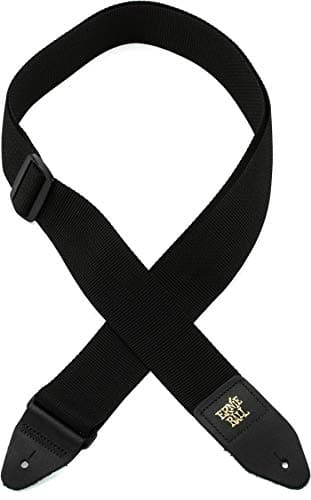
Buy a 2 inch Polypro strap for about nine dollars. If the guitar is an acoustic with no strap button at the neck, buy the Acoustic version instead for about eleven. That is the whole decision for most readers, and the surprising part is that the cheap strap is not a compromise: it adjusts across 31 inches, which is more than any other strap on this page, including the one that costs four times as much.
Every pick states its Starter Path band, and we have not handled any of them — the method is on how we pick. Widths, adjustment ranges, materials and the dimensions of the acoustic loop are all published figures, cited at the bottom. Three of the four come from Ernie Ball directly rather than a retailer, which is unusual and worth saying, because the retailer listings for the same strap disagree with each other.
Buy the 2 inch Polypro. 41 to 72 inches of adjustment, polypropylene webbing, leather ends, under ten dollars. If your acoustic has no strap button at the neck heel — and most inexpensive acoustics do not — buy the Acoustic version, which has a 6 1/2 inch leather loop that ties at the headstock instead. Adjustment range runs backwards against price: the $9 strap gives 31 inches of range, the $35 padded one gives 8. Skip strap locks. Rubber strap blocks cost a few dollars and slip over the buttons you already have; the metal locking version needs a 7/64 inch hole drilled into the guitar. Two inches is the standard width and the right one for a beginner instrument.
The number nobody checks: adjustment range
A guitar strap has exactly one job, and the specification that decides whether it can do that job is the only one most listings bury.
Here are the maker’s published figures for the three Ernie Ball straps on this page, which are directly comparable because they come from the same source:
Polypro, 2 inch — 41 to 72 inches. Thirty-one inches of range. About nine dollars.
Acoustic, 2 inch — 43 to 75 inches. Thirty-two inches of range. About eleven dollars.
Neoprene Comfort, 2.5 inch — 46 to 54 inches. Eight inches of range. About thirty-five dollars.
Read those again in order. The cheapest strap on the page adjusts across almost four times the span of the dearest one. That is not a quality difference and it is not a trick: a padded strap is built around a cushioned center section that cannot pass through a buckle, so only the tail adjusts. But the consequence is concrete. A ten-year-old or a short adult who needs the strap at 42 inches can physically use the nine dollar strap and cannot use the thirty-five dollar one at all.
This is why we put the padded strap in the overspend band on a page where it is only the third most expensive thing: the band is about what the purchase costs the player, not the wallet.
The problem most beginner acoustics have
Before buying any strap, turn the guitar over and look at the heel of the neck, where the neck joins the body.
A great many inexpensive acoustics have a strap button on the bottom of the body and nothing at all up there. A standard strap has two ends and needs two buttons, so on a guitar like that it simply cannot be fitted. People discover this after the strap arrives, conclude the strap is wrong, and return it.
The maker’s own solution is published and specific: the Acoustic version#ad carries an extended leather loop measuring 6 1/2 by 3/4 inches, stated by Ernie Ball to be for instruments without a neck heel strap button. The loop goes behind the nut at the headstock, under the strings rather than over them, and ties off. It is the standard solution, it costs two dollars more than the ordinary strap, and it works.
The alternatives, honestly: a luthier will fit a second strap button, which costs more than the strap and is a sensible thing to ask for during a setup if the guitar is getting one anyway. Or you can tie a shoelace through the loop end of a normal strap, which genuinely works and looks exactly like a shoelace tied to a guitar.
The only strap failure that costs money
Nothing on a strap wears out in a way a beginner will notice. One thing does go wrong, and it goes wrong suddenly: the slotted end works its way off the strap button and the guitar falls.
There are two fixes and the price difference between them is the useful fact. Rubber strap blocks#ad are flexible washers that slip over the strap buttons already on the guitar; Ernie Ball states they fit most strap button types and provide a tight fit without any modification to your guitar. They cost a few dollars and go on in seconds.
Locking strap buttons are the other answer, and Ernie Ball’s own Super Locks are nickel plated steel with a 360 degree connection — and the published installation spec is a pilot hole 7/64 inch in diameter and one and a half inches deep. You are drilling the guitar. For a touring player whose instrument is swinging around, that is obviously worth it. For somebody a month into learning, on an instrument that might be rented, borrowed or resold, it is not. Buy the rubber.
The picks
The Ernie Ball Polypro in black#ad is the strap to buy. Two inches of polypropylene webbing that the maker says will not stretch or bleed color, machine stitched to leather ends, a Delrin buckle, and 41 to 72 inches of adjustment. The non-stretch claim matters more than it sounds: a strap that stretches lowers the guitar by an inch or two over months, and the player compensates without noticing. Buy it if the guitar has two strap buttons, which covers every electric and many acoustics. Skip it if the acoustic has no neck button — no amount of adjustment fixes that — or if you are carrying a heavy instrument for hours, because flat webbing with no padding does dig in.
The Acoustic version#ad is the same strap with the loop described above, and 43 to 75 inches of adjustment. The published loop dimension is why it is here rather than a generic lace: you can see it will reach. Buy it if the heel of the neck has no button. Skip it if the guitar does have two buttons, where the loop is dead weight hanging at the headstock. One honest note: on a very light guitar a headstock loop pulls the neck slightly and some players dislike the balance.
The Levy’s MC8#ad is the upgrade that is actually about the strap rather than about padding. Two inch cotton webbing, genuine suede ends, a tri-glide adjuster, pin-hole stitching, adjustable up to 58 inches, made in Nova Scotia by a company that makes nothing else. The suede ends are the real argument: suede has friction against a strap button in a way polypropylene and finished leather do not, so it is less likely to walk off on its own. Buy it if you want the strap to outlast the first guitar. Skip it if the player is a child — and here is the con we could not resolve: nobody publishes the MC8’s minimum length. Both Ernie Ball straps publish both ends of their range. We are not going to guess a number for a strap whose whole point is that it fits.
The Neoprene Comfort strap#ad is on this page as the instructive mistake, and it is not a bad product — it is a good product aimed at somebody who is not a beginner. 2.5 inches of cushioned neoprene, and Ernie Ball is admirably specific that it is for redistributing instrument weight and is particularly suited to players with existing ailments, aches or chronic pain. That is a real need and this genuinely answers it. Buy it if the instrument is heavy or the shoulder already hurts, because a strap that shortens a practice session costs more than thirty-five dollars. Skip it if this would be a first strap: eight inches of adjustment range against thirty-one, for four times the money, under a guitar that weighs seven pounds.
What we did not list, and why
Locking straps. A strap with a self-locking end is a genuinely clever answer to the falling-guitar problem and we wanted to include one. The obvious candidate is in stock at about twenty dollars, and we could not confirm its published width or adjustment range from any source we trust: the maker’s site would not serve us the page, the part number does not resolve at any retailer, and the dimensions dealers do publish are for a different material in the same family. This page is built on published measurements, so rather than quote a figure we cannot stand behind, we have left the category described and unpinned. The rubber blocks solve the same problem for a fraction of the money anyway.
Drilled locking buttons. Covered above. Right answer for a performer, wrong answer for somebody who has owned a guitar for a month, and the published pilot-hole spec is the reason.
Three inch padded straps. There are good ones, typically around forty-five dollars with a wide neoprene pad. The width argument is real for a bass or a heavy solid body. It is five times the price of the strap we recommend, for a benefit that starts mattering at a weight a beginner acoustic does not reach. If the player has moved to bass, revisit it then.
Unbranded multi-packs. Four straps for the price of one, and no published width, no adjustment range, no material beyond “nylon”. The entire argument of this page is that two numbers decide the purchase, and these listings publish neither. You also cannot reorder the one you liked.
Leather straps. Beautiful, heavy, expensive, and they need breaking in. They are a decision for somebody who knows what they want a strap to feel like, which is not a first purchase. The cotton-and-suede MC8#ad is the sensible middle.
Straps with built-in pick holders. The maker sells one and it is cheap. We left it off because the reason beginners lose picks is not that they lack somewhere to put them — it is that picks are a consumable and the answer is to own a dozen.
Quick picks
Buy this one
2 inches wide, 41 to 72 inches of adjustment, polypropylene webbing with leather ends. The widest adjustment range on this page belongs to the cheapest strap on it. For: almost everybody, on almost any guitar with two strap buttons. Skip if: the acoustic has no button at the neck heel.
| # | Product | Best for | Score | Price |
|---|---|---|---|---|
| 1 | Ernie Ball Polypro Guitar Strap, Black (P04037)2 inches wide, polypropylene webbing, leather ends, adjustable from 41 to 72 inches. | The default, and the one to buy firstThe honest floor | 9.2 | $8.99 · View on Amazon #ad How we’re funded |
If the acoustic has no neck button
The same strap with a published 6 1/2 by 3/4 inch leather loop that ties at the headstock, because a standard strap has nowhere to attach. For: most inexpensive acoustics, which ship with one button or none. Skip if: the guitar already has two buttons, where the loop is just in the way.
| # | Product | Best for | Score | Price |
|---|---|---|---|---|
| 1 | 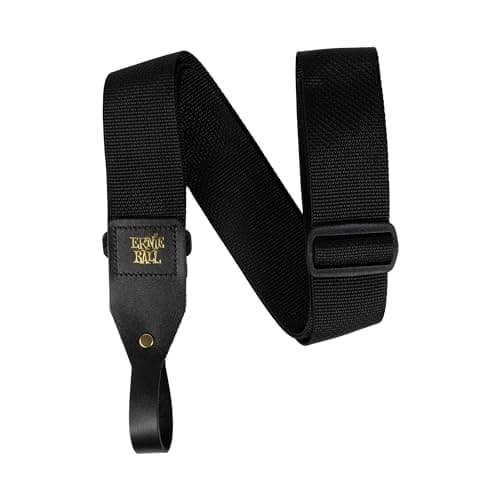 Ernie Ball Acoustic Guitar Strap, Black (P05365)The same 2 inch polypropylene strap with one difference that decides the purchase: an extended 6 1/2 by 3/4 inch leather loop at the neck end, for guitars with no strap button there. | An acoustic with no strap button at the neckThe honest floor | 8.8 | $10.99 · View on Amazon #ad How we’re funded |
If you want a better object
2 inch cotton with genuine suede ends and a tri-glide adjuster. Suede grips a strap button in a way webbing does not. For: a player who wants the strap to outlast the guitar. Skip if: the player is a child, because the minimum length is not published.
| # | Product | Best for | Score | Price |
|---|---|---|---|---|
| 1 | 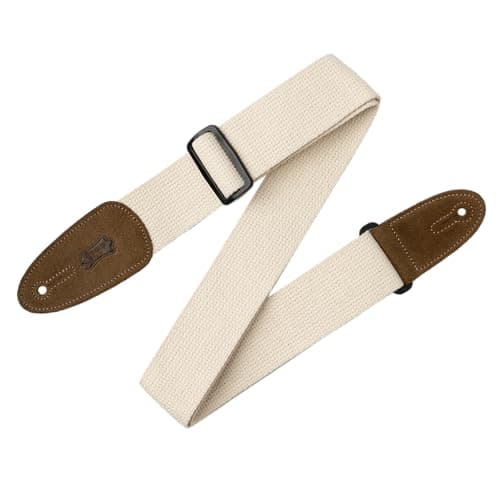 Levy's MC8-NAT 2" Cotton Guitar Strap, Natural2 inch cotton webbing with genuine suede ends and a tri-glide adjuster, adjustable up to 58 inches. | The one upgrade that is actually about the strapEnough | 7.6 | $19.99 · View on Amazon #ad How we’re funded |
Four times the price, one quarter the range
2.5 inches of cushioned neoprene, and 46 to 54 inches of adjustment against the cheap strap's 41 to 72. Genuinely comfortable, aimed by its maker at players with aches or chronic pain. For: a heavy instrument, or a sore shoulder. Skip if: this would be a first strap.
| # | Product | Best for | Score | Price |
|---|---|---|---|---|
| 1 | 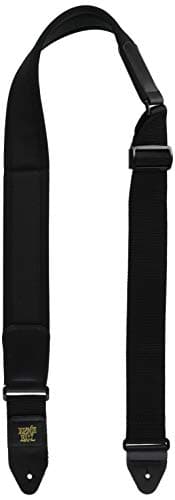 Ernie Ball Neoprene Comfort Guitar Strap, Black (P04144)2. | Weight a beginner is probably not carryingWhere overspending starts | 5.6 | $34.99 · View on Amazon #ad How we’re funded |
The picks in full
Ernie Ball Polypro Guitar Strap, Black (P04037)
Ernie BallBest for: The default, and the one to buy first
2 inches wide, polypropylene webbing, leather ends, adjustable from 41 to 72 inches. It is the cheapest item on this page and it has the widest adjustment range of anything here, which is the opposite of what you would expect.
Published specifications
- Width:
- 2"
- Adjustment range:
- 41" to 72" — 31 inches of range
- Webbing:
- Polypropylene, which the maker says will not stretch or bleed color
- Ends:
- Leather, machine stitched, gold-stamped logo
- Hardware:
- Delrin buckle and connector
- Publisher inventory:
- Ernie Ball SKU P04037; the same strap is sold in 23 colors
What it gets right
- 31 inches of adjustment range, the widest here — it fits a child and a tall adult out of the same package
- Polypropylene webbing does not stretch, which matters because a strap that stretches slowly lowers the guitar over months
- Leather ends rather than webbing ends, so the slot that goes over the strap button does not fray open
- Cheap enough that a second one for a second guitar is not a decision
Where it gives ground
- Flat webbing with no padding: under a heavy electric for a long session it digs into the shoulder
- The leather ends are stiff when new and need working over the strap button the first few times
- Nothing stops it coming off the button — that is a separate five-dollar fix, covered on the page
- Will not attach to an acoustic that has no strap button at the neck heel, which is most cheap acoustics
What it is not good at
An acoustic guitar with only one strap button. A standard two-end strap has nowhere to go at the neck end, and no amount of adjustment solves it — that is what the Acoustic version with the leather loop is for.
How the specs score against a beginner’s needs
Scores are our reading of the published specifications above against what a beginner physically needs. They are not test results — we have not played this instrument.
Specifications from Ernie Ball — Polypro Guitar Strap/Bass Strap, Black (P04037): 2" wide polypropylene webbing, leather ends, Delrin adjustable buckle and connector, adjustable length 41" to 72".
Ernie Ball Acoustic Guitar Strap, Black (P05365)
Ernie BallBest for: An acoustic with no strap button at the neck
The same 2 inch polypropylene strap with one difference that decides the purchase: an extended 6 1/2 by 3/4 inch leather loop at the neck end, for guitars with no strap button there. Adjustable from 43 to 75 inches.
Published specifications
- Width:
- 2"
- Adjustment range:
- 43" to 75" — 32 inches of range
- Neck end:
- Extended leather loop, 6 1/2" x 3/4", for instruments with no neck-heel strap button
- Webbing:
- Polypropylene
- Hardware:
- Delrin buckle and connector
- Publisher inventory:
- Ernie Ball SKU P05365; also sold in brown, burgundy and cream
What it gets right
- Solves the single most common strap problem on a beginner acoustic, which is that there is nowhere to attach the neck end
- The loop is a published dimension rather than a vague 'tie it on' instruction, so you can see it will reach
- Still 32 inches of adjustment, so it fits a child and an adult
- Costs two dollars more than the standard version, which is not a decision
Where it gives ground
- The loop goes behind the nut at the headstock, and on a guitar that does have a neck button it is simply in the way
- Tying it the first time is fiddly and the loop has to sit behind the strings, not under them
- Unpadded flat webbing, same as the standard Polypro
- A loop at the headstock pulls the neck slightly, which some players dislike on a very light guitar
What it is not good at
An electric guitar, or any acoustic that already has two strap buttons. On those the loop is redundant and the standard Polypro is the simpler object.
How the specs score against a beginner’s needs
Scores are our reading of the published specifications above against what a beginner physically needs. They are not test results — we have not played this instrument.
Levy's MC8-NAT 2" Cotton Guitar Strap, Natural
Levy's LeathersBest for: The one upgrade that is actually about the strap
2 inch cotton webbing with genuine suede ends and a tri-glide adjuster, adjustable up to 58 inches. Suede ends grip a strap button in a way polypropylene and leather do not, and cotton sits softer on the shoulder than webbing.
Published specifications
- Width:
- 2"
- Adjustment:
- Tri-glide, adjustable up to 58"
- Minimum length:
- Not published — see the cons
- Webbing:
- Cotton
- Ends:
- Genuine suede leather
- Construction:
- Pin-hole stitching, which the dealer states prevents stretching
- Made in:
- Antigonish, Nova Scotia, Canada
What it gets right
- Suede ends have real friction against a strap button, which is the cheapest protection against the strap slipping off
- Cotton is softer against the neck and shoulder than polypropylene webbing at the same width
- A tri-glide adjuster holds its setting better than a simple buckle once the strap is loaded
- Built by a maker that does nothing but straps, and it will outlast a beginner's first guitar
Where it gives ground
- No minimum length is published anywhere we could find, which matters if the player is a child — the Ernie Ball straps publish both ends of their range
- 58 inches maximum is 14 inches shorter than the Polypro's maximum, so a tall player wanting the guitar low may run out of strap
- Roughly twice the price of the Polypro for a comfort and durability gain, not a function gain
- Cotton picks up dirt where polypropylene wipes clean
What it is not good at
A first purchase on a tight budget, and an acoustic with no neck button. It is a better strap than the Polypro in the ways a strap can be better; it does not do anything the Polypro cannot.
How the specs score against a beginner’s needs
Scores are our reading of the published specifications above against what a beginner physically needs. They are not test results — we have not played this instrument.
Ernie Ball Neoprene Comfort Guitar Strap, Black (P04144)
Ernie BallBest for: Weight a beginner is probably not carrying
2.5 inches of cushioned neoprene, adjustable from 46 to 54 inches. The comfort is real and the maker is explicit that it is aimed at redistributing weight for players with aches or chronic pain — but it costs four times the Polypro and gives you 8 inches of adjustment instead of 31.
Published specifications
- Width:
- 2.5"
- Adjustment range:
- 46" to 54" — 8 inches of range
- Material:
- Neoprene, which the maker describes as ultra-durable, flexible and cushiony
- Maker's stated purpose:
- Redistributing instrument weight; aimed at players with existing aches or chronic pain
- Publisher inventory:
- Ernie Ball SKU P04144, Comfort Collection
What it gets right
- Genuinely more comfortable under a heavy instrument, and the maker is specific about who it is for rather than vague
- 2.5 inches spreads the load over more of the shoulder, which is the whole mechanism
- A real answer for a player with shoulder or neck pain, where a cheap strap makes practice shorter
- Same Ernie Ball construction and the same published figures, so the comparison with the Polypro is exact
Where it gives ground
- 8 inches of adjustment range against the Polypro's 31. A short adult or a child can fall outside it entirely, and no amount of comfort fixes a strap that will not shorten
- Four times the price of the Polypro for a benefit most beginners will not feel on a 7 pound guitar
- Neoprene is warm against the shoulder in a way webbing is not
- Nothing about it addresses the strap coming off the button, which is the failure that actually costs money
What it is not good at
A first strap, and any player who is still growing. It is in the overspend band for the adjustment range as much as the price: the cheapest strap on this page fits more bodies than this one does.
How the specs score against a beginner’s needs
Scores are our reading of the published specifications above against what a beginner physically needs. They are not test results — we have not played this instrument.
Questions people actually ask
What guitar strap should a beginner buy?
A 2 inch Polypro strap#ad, unless the guitar is an acoustic with no strap button at the neck heel — in which case buy the Acoustic version#ad, which has a leather loop that ties at the headstock instead. Both are under fifteen dollars and both adjust further than straps costing four times as much.
My acoustic guitar only has one strap button. What do I do?
This is normal and it catches almost everybody. Inexpensive acoustics very often have a button on the bottom of the body and nothing at the neck heel, so a standard two-end strap has nowhere to attach. There are three answers. Buy a strap with a lace or loop that ties behind the nut at the headstock, which is the cheapest and the one we recommend. Have a luthier fit a second button, which costs more than the strap. Or use a shoelace through the loop end, which genuinely works and looks like what it is.
Do I need strap locks?
No, and this is where beginners spend money they do not need to. The failure you are worried about is real — the strap end works off the button and the guitar hits the floor — but rubber strap blocks#ad slip over the buttons you already have and cost a few dollars. Ernie Ball’s own metal Super Locks cost several times as much and require a 7/64 inch pilot hole drilled an inch and a half into the instrument. Do not drill a guitar you have owned for a month.
How wide should a guitar strap be?
Two inches, which is the standard and what every strap on this page except the neoprene one uses. Wider straps — 2.5 or 3 inches — spread the weight over more shoulder and are a real benefit under a heavy bass or a Les Paul. They are not a benefit under a 7 pound beginner acoustic, and on this page the wide one gives up most of its adjustment range to get there.
Does a strap matter if I only play sitting down?
Yes, for two reasons. Standing up changes the angle of the fretting wrist considerably, and a player who has only ever practiced seated discovers this the first time somebody asks them to play at a gathering. And a strap is also what stops the guitar sliding off a knee. Our guitar accessories you actually need page puts it on the four-item essentials list for exactly this reason.
Will a cheap strap damage the guitar?
A strap will not, but what it is made of can mark a finish over years of contact, and a webbing end that frays open is how a strap comes off a button. The thing to look for is leather or suede ends rather than webbing ends with a punched slot, which all four picks here have. The real risk to the finish is not the strap — it is leaving the guitar leaning somewhere, which is what guitar stands and wall hangers are for.
Why does the expensive strap adjust less?
Because padded and wide straps are built around a cushioned section that cannot be fed through a buckle, so the adjustable part is only the tail. The Polypro is webbing end to end and adjusts across 31 inches; the 2.5 inch neoprene strap adjusts across 8. It is not a defect, but it is the opposite of what the price implies, and it is the reason a padded strap is a poor choice for a child who is still growing.
Sources
- Ernie Ball — Polypro Guitar Strap/Bass Strap, Black (P04037): 2" polypropylene webbing, leather ends, Delrin buckle and connector, adjustable 41" to 72"
- Ernie Ball — Acoustic Guitar Strap, Black (P05365): extended 6 1/2" x 3/4" leather loop for instruments without a neck heel strap button, adjustable 43" to 75"
- Ernie Ball — Neoprene Comfort Collection strap (P04144): 2.5" width, adjustable 46" to 54", stated purpose redistributing instrument weight for players with aches or chronic pain
- Ernie Ball — Strap Blocks: flexible rubber, slips over existing strap buttons, fits most strap button types with no modification to the guitar
- Ernie Ball — Super Locks: nickel plated steel, set of 2, pilot hole 7/64" diameter and 1 1/2" deep — the drilled alternative
- Cream City Music — Levy's MC8 cotton strap published features: 2" cotton, adjustable up to 58", tri-glide adjustment, genuine suede leather ends, pin-hole stitching
Still deciding?
Every recommendation on this site is built the same way, and the method is published in full — including what we do not do and what would get a pick dropped.
Read next
- Guitar accessories you actually need
The four accessories that change how a beginner's guitar plays, the ones that can wait, and the ones that are pure margin.
- Best guitar picks for beginners
Gauge is the whole decision: thin flexes and forgives, heavy is for single notes. Grip is the second one nobody mentions. Four picks, all under ten dollars.
- Best beginner guitar strings
Why gauge outranks brand, the default set for electric and acoustic, and when going lighter actually helps.
- Best clip-on tuners for beginners
Why a clip-on beats a phone app, the four specs that separate them, and three tuners for guitar, ukulele and band instruments.
- Best guitar stands and wall hangers
Why a stand raises practice time, the finish-safety question nobody covers, and four picks across floor stands, wall hangers and racks.
- How to buy your first guitar
The order to decide in, the four specifications that decide whether a cheap guitar is playable, and what to check before you pay.