Guitars
Best guitar picks for beginners
The cheapest thing you can change about your guitar, and the one most beginners are handed the wrong version of.
By Sawyer V. · Published · Last updated
Buy thin picks, buy a dozen, and buy a variety pack first if you have never deliberately tried a gauge. Gauge — the thickness, printed in millimeters on the pick — is the whole decision, and it is the one thing nobody tells a new player. A thin pick flexes and absorbs an inconsistent strumming hand. A heavy pick transmits every unevenness straight into the strings, which is exactly what a beginner does not need. The pick that came in your starter pack was chosen by a purchasing department, not for you.
Every pick states its Starter Path band, and we have not played any of them — the method is on how we pick. Gauges, materials, grip construction, SKUs and UPCs come from Dunlop’s own product pages and from Guitar Center where Dunlop’s descriptive copy is reproduced, cited at the bottom. Where we could not verify something — noted below — this page says so instead of printing it.
Gauge decides it. Beginners strum, and strumming wants a thin pick, roughly .46–.60 mm, which flexes to forgive an uneven hand. Heavy picks (1.0 mm+) are for single notes and make early strumming sound clumsy — buying “medium” because it sounds safe is the commonest mistake here. If you have never tried gauges, buy a light/medium variety pack and let your hand choose; it costs less than one guitar string. Grip is the second variable, and the one nobody mentions: glossy celluloid is slick, matte Tortex grips better, and Max-Grip nylon has texture molded in for hands that drop the pick. Buy a dozen — they vanish.
Why gauge matters more than everything else combined
A pick is a lever between your hand and six strings, and its thickness decides how much of what your hand does actually reaches them.
A thin pick bends as it crosses the strings. That flex does two useful things for a beginner: it smooths out the uneven attack of a strumming hand that is still learning, and it reduces the chance of catching a string and stopping dead mid-strum. The cost is definition — a thin pick cannot deliver a crisp single note, because it gives way before the string does.
A heavy pick barely flexes. Every bit of timing error, every uneven downstroke, goes straight into the string, so a strummed chord from an inexperienced hand sounds exactly as lumpy as the hand was. What you gain is attack and control on individual notes, which is why lead players use them.
A first year of guitar is overwhelmingly strummed chords. So the honest recommendation runs opposite to intuition: the beginner wants the flexible pick, and “medium” is not the safe middle choice it sounds like. Our guitar accessories page has said this for some time — it is where this page came from — and it never named a pick to buy.
Grip: the variable nobody mentions
Ask a new guitarist what is going wrong and a surprising number will say the pick keeps twisting in their fingers, or shoots out mid-song. That is not a skill problem that needs practicing through; it is usually the material.
Dunlop publishes a whole taxonomy of pick materials — Tortex, Nylon, Max-Grip, Jazz, Herco, Gator Grip, Celluloid, Ultex, Primetone, Delrin 500, Flow, Finger & Thumb and Stubby. For a beginner, three of them matter:
Celluloid is the traditional glossy pick, and it is the slickest common material. It is also what is in most starter packs, which is an unfortunate combination for someone who has not developed a grip yet.
Tortex is Dunlop’s Delrin-based formula, matte rather than glossy, which grips dry fingers noticeably better. Dunlop describes it as highly durable with great memory and just the right amount of flexibility, still made to the original formula in Benicia, California. “Memory” is the useful part of that claim: it returns to shape instead of staying bent.
Nylon is grippier again and more flexible than Tortex at the same thickness. The Max-Grip version goes further and molds a non-slip texture into the entire gripping surface — an engineered coarse grid rather than a coating that can wear off.
The picks
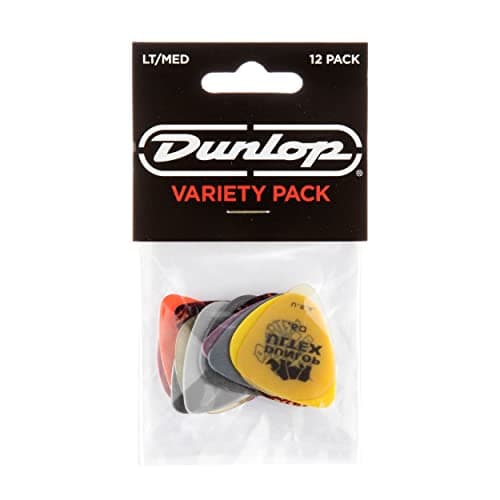
Dunlop’s Light/Medium variety pack#ad is the first purchase, and it is first for a reason that applies to almost nobody reading a specification: gauge preference is discovered by playing, not chosen by reading. Twelve picks across Dunlop’s light and medium gauges in a mix of materials settles both the gauge and the grip question in one evening, for less than a set of strings. Dunlop designates the pack Light/Medium and does not publish a model-by-model breakdown, so we are not claiming one. Buy this if you have never deliberately compared gauges. Skip it if you already know your gauge — a dozen of that one is cheaper and means you always have the pick you like.
Tortex Standard .60 mm#ad is the thin gauge to settle on for chord strumming, and the matte Tortex surface is a real upgrade in grip over the glossy pick in the bag. Dunlop publishes a SKU and UPC per gauge (418-060 for this one), which means you can confirm you are buying .60 mm rather than guessing from a photo. Buy these if you have established that thin suits you and you mostly play chords. Skip them if you are starting to pick out single notes — at .60 mm the pick gives way before the string does, and the notes lose their edge.
Max-Grip Nylon .60 mm#ad is the answer to a specific and very common first-month problem. The non-slip texture is molded into the whole gripping surface, with a molded quick-release edge, and it costs the same as the plain Tortex — so the grip is effectively free. Buy these if the pick rotates or escapes, or the player has sweaty hands. Skip them if the pick is already staying put: the grid is genuinely abrasive and some players find it unpleasant over a long session, and nylon at .60 mm is one of the floppiest combinations here.
Tortex Standard .73 mm#ad is the yellow one, and probably the most-used guitar pick in the world. It is in the “enough” band rather than the floor because of timing, not quality: .73 mm is the genuine all-rounder — stiff enough to define a single note, flexible enough to strum a chord — and it is where a player goes once their strumming hand has stopped fighting the guitar. Buy these if strumming is solid and single-note playing is starting. Skip them if this would be a first pick. Buying medium first is the commonest mistake in this category, because “medium” sounds like the sensible default and instead makes a beginner’s strumming sound worse than it is.
Two things we are not telling you, because we could not check them
Worth stating plainly on a page built on published specifications.
The full Tortex color chart. Dunlop color codes Tortex gauges across the line, which is genuinely useful — you can identify a pick’s thickness at a glance and re-buy the same one without reading a label. But we could only confirm two pairings from sources we actually retrieved: .73 mm is yellow, and 1.0 mm is blue. Rather than publish a chart from memory we have left it at that. The thickness is printed on the pick itself anyway.
What is inside the variety pack. Dunlop designates it Light/Medium, and that is all we can verify. No model-by-model contents list appears on any source we could retrieve, so if you need specific models, buy them individually.
One pick is not a universal pick
Worth knowing before you apply this page to the rest of a household’s instruments, because the answers genuinely differ.
A mandolin wants a far stiffer pick than a guitar — around 1.4 mm — because it is driving eight steel strings at high tension over a short scale, and a thin pick flexes instead of moving them. That is the only pick already in our registry, on the mandolin accessories page, and its own write-up says plainly that it is the wrong object for a six-string acoustic: loud, stiff and unsubtle.
A ukulele goes the opposite way. Nylon strings are normally played with the fingers, and where a pick is used it is usually soft felt — a hard plastic pick sounds harsh on nylon and can score the strings.
A bass takes heavier picks again, and many bassists use fingers exclusively. Dunlop sells a separate bass variety pack for exactly this reason.
What we did not list, and why
Unbranded bulk picks. A hundred picks for a few dollars is tempting and it is the one purchase on this page we would actively avoid. They typically carry no printed thickness, so you cannot tell what you are playing or re-buy what you liked — and since a branded dozen costs about six dollars, the saving is not real.
Ultex, Primetone, Jazz and the premium lines. All real Dunlop families and all aimed at players who already know what they want from a pick. Our own mandolin page uses a Primetone, which is a good illustration: it is an excellent pick and it is excellent for something that is not beginner guitar strumming.
Metal, stone and exotic-wood picks. They exist, they are expensive, and at this stage they are jewelry. Metal picks also wear strings faster.
Thumb picks and fingerpicks. A different technique rather than a different pick, and worth exploring when a player deliberately takes up fingerstyle or banjo rather than as a first purchase.
Pick holders that stick to the guitar. Adhesive on a finish is a risk for a benefit you can get from a pocket. If picks keep vanishing, the fix is owning twelve, not gluing something to the instrument.
Quick picks
Buy this first
Twelve picks across Dunlop's light and medium gauges in a mix of materials. Gauge is a preference you discover by playing, not a spec you choose. For: anyone who has not deliberately tried gauges. Skip if: you already know your gauge - buy a dozen of that instead.
| # | Product | Best for | Score | Price |
|---|---|---|---|---|
| 1 | Dunlop Guitar Pick Variety Pack, Light/Medium (12 pack)Twelve picks across Dunlop's light and medium gauges, in a mix of their materials. | Settling the gauge question by playing rather than readingThe honest floor | 8.6 | $8.39 · View on Amazon #ad How we’re funded |
The thin gauge, once you know
Matte Tortex at .60 mm, which flexes enough to forgive an inconsistent strumming hand. For: a beginner doing mostly chords. Skip if: they are starting to pick single notes, where .60 mm loses attack.
| # | Product | Best for | Score | Price |
|---|---|---|---|---|
| 1 | 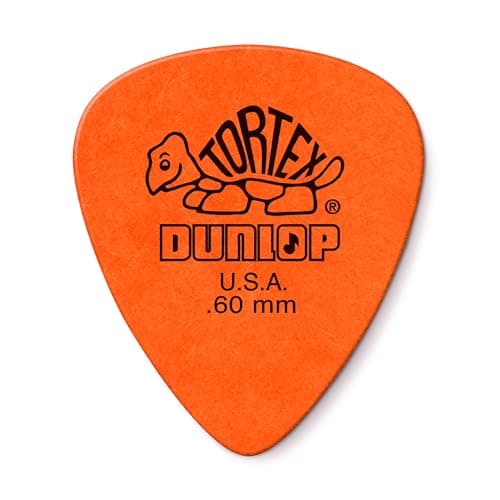 Dunlop Tortex Standard Pick, .60 mm (12 pack)Dunlop describes Tortex as highly durable with great memory and just the right amount of flexibility, still made to the original formula in Benicia, California. | The thin gauge, once you know thin is what you wantThe honest floor | 8.8 | $5.76 · View on Amazon #ad How we’re funded |
If the pick keeps flying out of your fingers
Non-slip texture molded into the whole gripping surface. Solves the first month's most common physical complaint, which nobody warns beginners about. For: sweaty or slipping hands. Skip if: the pick is already staying put - the texture is abrasive.
| # | Product | Best for | Score | Price |
|---|---|---|---|---|
| 1 | 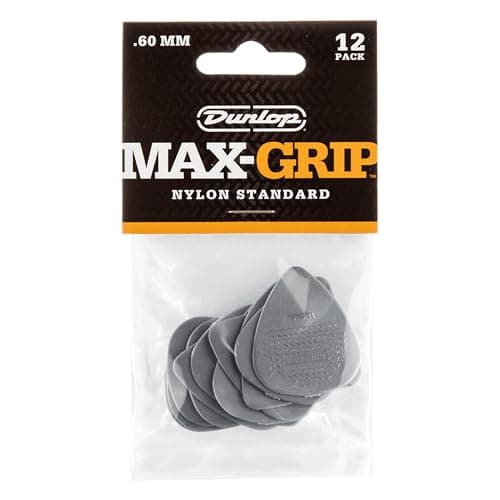 Dunlop Max-Grip Nylon Standard Pick, .60 mm (12 pack)A nylon pick with a non-slip texture molded into the entire gripping surface and a molded quick-release edge. | The beginner who keeps dropping the pickThe honest floor | 8.6 | $5.76 · View on Amazon #ad How we’re funded |
The step up, not the starting point
The yellow .73 mm Tortex, probably the most-used guitar pick in the world. For: a player whose strumming has stopped fighting the guitar. Skip if: this would be a first pick - buying medium first is the commonest mistake here.
| # | Product | Best for | Score | Price |
|---|---|---|---|---|
| 1 | 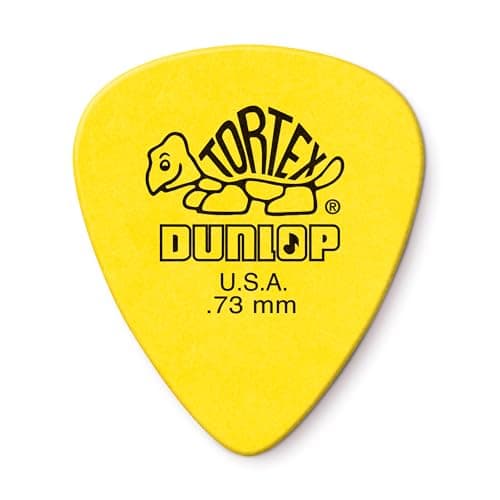 Dunlop Tortex Standard Pick, .73 mm Yellow (12 pack)The yellow Tortex, and probably the single most-used guitar pick in the world. | The step up, once strumming is solidEnough | 8.2 | $5.76 · View on Amazon #ad How we’re funded |
The picks in full
Dunlop Guitar Pick Variety Pack, Light/Medium (12 pack)
Jim DunlopBest for: Settling the gauge question by playing rather than reading
Twelve picks across Dunlop's light and medium gauges, in a mix of their materials. Gauge is the one variable that decides how a guitar feels to strum, and no amount of reading substitutes for ten minutes of trying four of them.
Published specifications
- Count:
- 12 picks
- Gauge range:
- Light/Medium, per Dunlop's LT/MD designation
- Materials:
- A mix of Dunlop's pick materials rather than one
- Exact contents:
- Dunlop designates the pack Light/Medium and does not publish a model-by-model breakdown we could verify, so we are not claiming one
- Why it is first:
- Pick gauge is a preference you discover by playing, not a spec you choose
What it gets right
- Answers the only question that matters here — which gauge suits your strumming hand — for the price of a sandwich
- Spans materials as well as gauges, so it also settles the grip question most beginners do not know they have
- Stays in the light-to-medium range, which is where a beginner who mostly strums belongs
- Twelve picks is about the right number given how reliably they vanish
Where it gives ground
- You will end up preferring two or three of the twelve and ignoring the rest, which is the nature of a sampler
- Dunlop does not publish exactly what is inside, so you cannot plan around specific models
- More expensive than a 12-pack of a single gauge once you know what you want
- No heavy gauges, so a player who turns out to prefer single-note work has to buy again
What it is not good at
Being the pack you keep buying. It exists to answer a question. Once the answer is a specific gauge, a dozen of that one gauge is cheaper and means you always have the pick you actually like.
How the specs score against a beginner’s needs
Scores are our reading of the published specifications above against what a beginner physically needs. They are not test results — we have not played this instrument.
Dunlop Tortex Standard Pick, .60 mm (12 pack)
Jim DunlopBest for: The thin gauge, once you know thin is what you want
Dunlop describes Tortex as highly durable with great memory and just the right amount of flexibility, still made to the original formula in Benicia, California. At .60 mm it flexes enough to forgive an inconsistent strumming hand, which is what a beginner has.
Published specifications
- Gauge:
- .60 mm
- Material:
- Tortex — Dunlop's Delrin-based formula, matte rather than glossy
- Dunlop's own description:
- Highly durable, with great memory and just the right amount of flexibility
- Manufacture:
- Made to Dunlop's original formula in Benicia, California
- Count:
- 12 picks
- Publisher inventory:
- Dunlop SKU 418-060, UPC 23418060112
What it gets right
- The matte surface grips dry fingers noticeably better than the glossy celluloid pick that came in the starter-pack bag
- Dunlop publishes a real SKU and UPC per gauge, so you can confirm you are getting .60 mm rather than guessing from a photo
- "Great memory" is the useful part of the claim: it returns to shape rather than staying bent, which cheap picks do not
- Tortex gauges are color coded across the whole line, which makes replacing the same pick later trivial
Where it gives ground
- At .60 mm it is too flexible for single-note playing — notes lose attack and definition
- The matte finish wears smooth over months, at which point the grip advantage fades
- Square-punched edges have a slightly brighter, clickier attack than a beveled pick, which some players dislike
- If you have not tried gauges yet, this is a guess — the variety pack is the better first purchase
What it is not good at
Lead playing and single-note lines. A .60 mm pick bends under a deliberate attack, which blunts the note. That is a feature while a beginner is strumming chords and a problem the moment they start picking out melodies.
How the specs score against a beginner’s needs
Scores are our reading of the published specifications above against what a beginner physically needs. They are not test results — we have not played this instrument.
Specifications from Jim Dunlop — Tortex Standard Pick .60MM product page, publishing SKU 418-060 and UPC 23418060112, Jim Dunlop — Tortex is described by the maker as highly durable with great memory and just the right amount of flexibility, still made to Jim's original formula in Benicia, California, with a color-coded gauge system across the line.
Dunlop Max-Grip Nylon Standard Pick, .60 mm (12 pack)
Jim DunlopBest for: The beginner who keeps dropping the pick
A nylon pick with a non-slip texture molded into the entire gripping surface and a molded quick-release edge. It solves a problem nobody warns beginners about and almost every beginner has: the pick rotating and then flying out of their fingers mid-strum.
Published specifications
- Gauge:
- .60 mm
- Material:
- Nylon
- Grip:
- Non-slip texture molded into the entire gripping surface — an engineered coarse grid, not a sticker or coating
- Edge:
- Molded quick-release edge for a sharp attack
- Count:
- 12 picks
- Publisher inventory:
- Dunlop SKU 449-060, UPC 22449060012
What it gets right
- Fixes the single most common physical complaint of a first month — the pick twisting and escaping — which is a bigger obstacle than tone at that stage
- Grip is molded into the material, so it does not peel, wash off or wear away the way a coating would
- Nylon is more flexible than Delrin at the same gauge, which compounds the forgiveness of a thin pick
- Same price as the plain Tortex, so the grip costs nothing
Where it gives ground
- The coarse grid is genuinely abrasive, and some players find it unpleasant against the fingertips over a long session
- Nylon at .60 mm is very flexible — combined, these make it one of the floppiest picks here
- Textured surfaces collect finger oil and need an occasional wipe to keep working
- The brighter nylon attack is not to everyone's taste on an acoustic
What it is not good at
A player who already holds a pick securely. The texture is a solution to a specific problem, and if you do not have that problem it is just a rougher pick. Try a plain Tortex first if the pick is staying put.
How the specs score against a beginner’s needs
Scores are our reading of the published specifications above against what a beginner physically needs. They are not test results — we have not played this instrument.
Specifications from Jim Dunlop — Max-Grip Nylon Standard Pick .60MM product page, publishing SKU 449-060 and UPC 22449060012, Guitar Center — Dunlop Nylon Max Grip picks: the non-slip texture is molded into the entire gripping surface, with a molded quick-release edge for a sharp attack.
Dunlop Tortex Standard Pick, .73 mm Yellow (12 pack)
Jim DunlopBest for: The step up, once strumming is solid
The yellow Tortex, and probably the single most-used guitar pick in the world. At .73 mm it gives a note definition a .60 mm cannot, and it is where a beginner goes once their strumming hand has stopped fighting the instrument.
Published specifications
- Gauge:
- .73 mm
- Color:
- Yellow — Tortex gauges are color coded across the line
- Material:
- Tortex, Dunlop's Delrin-based formula
- Dunlop's own description:
- Highly durable, with great memory and just the right amount of flexibility
- Count:
- 12 picks
- Why .73:
- Enough stiffness for single notes while still bending for a strummed chord
What it gets right
- The genuine all-rounder gauge: strums acceptably and picks single notes properly, which .60 mm does not
- Yellow is instantly identifiable, so replacing exactly this pick in a shop takes no thought
- Same Tortex matte grip and memory as the .60 mm, at the same price
- The gauge most teachers and players will hand you if you ask to borrow a pick
Where it gives ground
- Noticeably less forgiving than .60 mm on a strumming hand that is still inconsistent — early strumming can sound clumsy
- Buying this first is the commonest pick mistake, because "medium" sounds like the safe default and is not for a pure beginner
- No grip texture, so a player with sweaty hands is better served by the Max-Grip
- Still a punched edge, with the brighter attack that comes with it
What it is not good at
A first month of nothing but chord strumming. This is the pick to arrive at, not the one to start with, and handing it to somebody in week one is how a beginner concludes their strumming is worse than it is.
How the specs score against a beginner’s needs
Scores are our reading of the published specifications above against what a beginner physically needs. They are not test results — we have not played this instrument.
Questions people actually ask
What gauge guitar pick should a beginner use?
Thin, roughly .46 to .60 mm, because a beginner spends the first several months strumming chords and a thin pick flexes to absorb an inconsistent strumming hand. Heavy picks, 1.0 mm and up, are for single-note playing and make early strumming sound clumsy. If you have not tried gauges deliberately, start with a light and medium variety pack#ad and let your hand decide — it costs less than a set of strings.
Why is the pick that came with my guitar wrong?
It usually is not chosen for you at all. Starter packs include whatever pick was cheapest in bulk, commonly a glossy medium-to-heavy celluloid, and glossy celluloid is the slickest common material as well as being stiffer than a beginner wants. So new players often fight both the gauge and the grip without knowing either is a variable. Our page on whether guitar starter packs are worth it covers what else in the bag is chosen on price.
Does pick material change the tone?
A little, and much less than gauge does — at beginner level material mostly decides grip. Glossy celluloid is slick. Tortex, Dunlop’s Delrin-based formula, is matte and grips dry fingers better. Nylon is grippier still and more flexible at the same thickness, and the Max-Grip version has texture molded into the surface. Chase grip first; tone differences between materials are real but small next to what your hand is doing.
How many picks should I buy?
A dozen, which is how these are sold anyway. Picks are lost at a rate that has never been satisfactorily explained — they fall into soundholes, slide under sofas and vanish from cases. Buying one pick means being without a pick within a fortnight, and twelve of them costs less than a single guitar string.
How do I know what gauge a pick is?
Most makers print the thickness in millimeters on the pick itself, and Dunlop also color codes its Tortex line by gauge so you can identify one across the room — the .73 mm is yellow, for instance. If a pick has no number printed on it and no brand, you have no way of knowing what you are playing, which is a decent argument against unbranded picks given they cost the same.
Should I use a pick at all, or my fingers?
Both, eventually, and a pick first for most people. Strummed chord songs — which is the bulk of a first year — are easier and sound better with a pick, and fingerstyle is a distinct technique to add later rather than a substitute. If a pick feels genuinely impossible to hold, that is usually a grip problem rather than a sign to abandon it: see the Max-Grip pick above.
Is a thicker pick better for my mandolin or ukulele?
Different answers for each, and this trips people up. A mandolin needs a much stiffer pick than a guitar — around 1.4 mm — because it drives eight steel strings at high tension over a short scale; our mandolin accessories page covers that. A ukulele goes the other way: nylon strings are usually played with the fingers or a soft felt pick, and a hard plastic pick sounds harsh and can mark the strings.
Sources
- Jim Dunlop — Tortex Standard Pick .60MM product page, publishing SKU 418-060 and UPC 23418060112, and the maker's guitar-pick family taxonomy (Tortex, Nylon, Max-Grip, Jazz, Herco, Gator Grip, Celluloid, Ultex, Primetone, Delrin 500, Flow, Finger & Thumb, Stubby, Variety Packs)
- Jim Dunlop — Tortex Standard Pick .73MM: the maker describes Tortex as highly durable with great memory and just the right amount of flexibility, made to the original formula in Benicia, California, with color-coded gauges across the line
- Jim Dunlop — Max-Grip Nylon Standard Pick .60MM product page, publishing SKU 449-060 and UPC 22449060012
- Guitar Center — Dunlop Nylon Max Grip picks: the non-slip texture is molded into the entire gripping surface, with a molded quick-release edge for a sharp attack
Still deciding?
Every recommendation on this site is built the same way, and the method is published in full — including what we do not do and what would get a pick dropped.
Read next
- Guitar accessories you actually need
The four accessories that change how a beginner's guitar plays, the ones that can wait, and the ones that are pure margin.
- Are guitar starter packs worth it?
Which pack contents hold up, which get replaced within a month, and the four-item alternative that costs about the same.
- Best beginner guitar strings
Why gauge outranks brand, the default set for electric and acoustic, and when going lighter actually helps.
- Why the guitar hurts your fingers
Normal callus pain versus a badly set-up guitar, the four adjustments that reduce effort, and when to stop rather than push through.
- Best beginner guitars: one pick each for adults, teens and kids
Acoustic and electric in one place, segmented by player rather than price, with a single clear pick for each situation.
- Mandolin accessories you actually need
Strings and a stiff enough pick are the two upgrades that change how a budget mandolin sounds. Then a tuner, because eight strings is twice the tuning work.