Guitars
Best guitar and amp pairings for beginners
The guitar decides what you can play. The amp decides whether anyone, including you, ever hears it properly.
By Sawyer V. · Published · Last updated
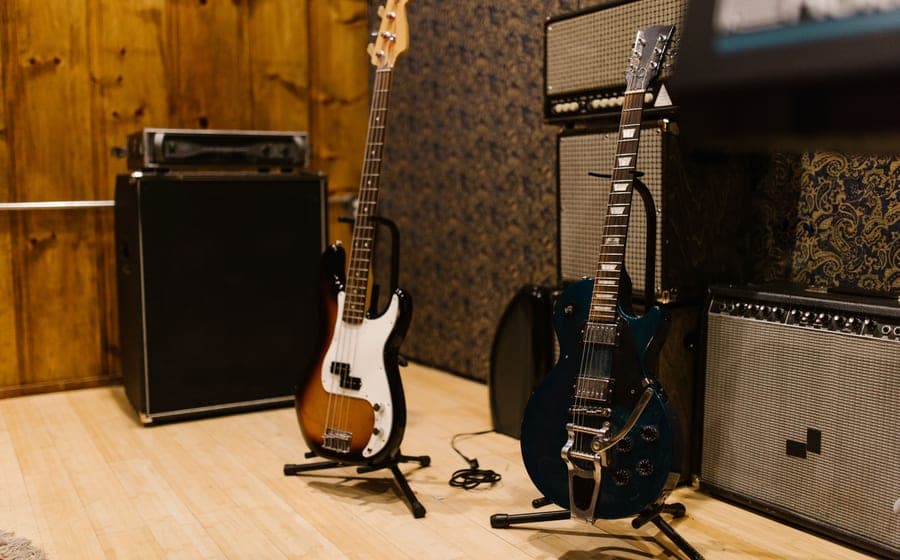
Our electric guitar and amp roundups each answer half a question. This page answers the other half: which ones go together, and what each combination is actually good at.
It matters more than it sounds. A bright single-coil guitar through a bright, clean amp is a specific sound, and it is not the sound of the records most beginners are trying to play.
Every pick states its Starter Path band, and we have not physically tested any of them — the method is on how we pick.
If you know you want clean, funky, poppy sounds, pair a three-single-coil guitar with a simple clean amp. If you do not know what you want, pair a guitar with a bridge humbucker to an amp with several voicings. Put the money in the guitar first if you can only afford one properly.
Pairing one: the default
The Squier Sonic Stratocaster#ad with the Fender Frontman 10G#ad is the rig most beginners actually end up with, and it is a sound recommendation rather than a lazy one.
The guitar is the honest floor for an electric: a full 25.5 inch scale, sealed tuners that hold pitch, a 9.5 inch fingerboard radius and a synthetic bone nut. Three single-coils give you the bright, clear sound behind an enormous amount of pop, funk, country and blues.
The amp is ten watts with a six-inch speaker, a clean channel, an overdrive channel and an aux input for playing along to music. That is not exciting and it does the job.
What this pairing is not good at is heavy music. Single-coils under high gain get thin and noisy, and a small solid-state overdrive channel is not a metal sound. If that is the plan, pick the next pairing instead.
Pairing two: for the undecided
The Yamaha Pacifica PAC012#ad with the Boss Katana Mini#ad is the pairing we suggest when a beginner cannot yet name what they want to play.
The guitar uses a humbucker at the bridge with single-coils elsewhere, so one instrument covers single-coil clarity for clean playing and humbucker thickness for heavier styles. Why that layout is so useful is in guitar pickups explained.
The amp is smaller, runs on batteries and carries several voicings rather than one, plus a headphone output. That combination makes it the amp that goes to a friend’s house and the amp you can use at eleven at night.
Its honest limits: a small battery amp is quieter than a mains combo, and endless voicing switching is a well-documented way to spend a practice session not practicing.
Pairing three: buy once
The Squier Affinity Series Stratocaster#ad sits one tier above the floor, and what the extra money buys is consistency — hardware that holds tune through a session and a fit and finish that does not remind you it was cheap.
Pair it with whichever amp above suits your music. An adult beginner who expects to still be playing in three years is usually better served spending here than at the floor, for reasons set out in best guitars for adult beginners.
Where to spend first
If the budget only stretches to doing one of them properly, do the guitar.
An amp is a box you can upgrade at any point with no consequences. A guitar that will not hold pitch, or has an action so high it hurts, actively teaches a beginner that they sound bad and that playing is painful — and that is what makes people stop. The line between acceptable and not is in are cheap guitars worth it.
You can also, genuinely, start with no amp at all. An unplugged electric is one of the quietest instruments there is and covers the first few weeks fine — the honest timeline is in do you need an amp to learn electric guitar.
What else the rig needs
A cable. Not always included with either item.
A tuner. A beginner cannot distinguish an out-of-tune guitar from their own mistakes, which makes this the highest-value cheap purchase available.
Spare strings. A broken string with no replacement in the house is a week of not practicing.
A setup. The single largest improvement available to any inexpensive guitar — see what a guitar setup actually is.
Once it is all plugged in, what to do with the knobs is in guitar amp settings for beginners.
Quick picks
The default first rig
The standard first electric and the standard first amp. Nothing about either will make a beginner's first year harder.
| # | Product | Best for | Score | Price |
|---|---|---|---|---|
| 1 | No image Squier Sonic StratocasterThe cheapest electric that still has full-scale geometry, sealed tuners and a real 9. | The honest floor, electricThe honest floor | 8.2 | Check price on Amazon → #ad How we’re funded |
| 2 | No image Fender Frontman 10GTen watts, a 6 inch speaker, a headphone socket and an aux input. | The default first ampThe honest floor | 8.2 | Check price on Amazon → #ad How we’re funded |
If you do not know what you want to play
A humbucker at the bridge covers heavier styles, and a battery amp with several voicings covers everything else.
| # | Product | Best for | Score | Price |
|---|---|---|---|---|
| 1 | No image Yamaha Pacifica PAC012An HSS layout and 22 frets at the entry tier. | One guitar, several stylesThe honest floor | 8.3 | Check price on Amazon → #ad How we’re funded |
| 2 | No image Boss Katana MiniSeven watts, three amp voices and a real analog three-band tone stack, running off AA batteries for around seven hours. | Battery power, better toneEnough | 8.6 | Check price on Amazon → #ad How we’re funded |
If you want to buy once
One tier above the floor on the guitar, where the money buys hardware that holds tune through a whole session.
| # | Product | Best for | Score | Price |
|---|---|---|---|---|
| 1 | No image Squier Affinity Series StratocasterSame geometry as the Sonic with medium jumbo frets and better hardware. | Buy once, adult starterEnough | 8.6 | Check price on Amazon → #ad How we’re funded |
The picks in full
Squier Sonic Stratocaster
Squier by FenderBest for: The honest floor, electric
The cheapest electric that still has full-scale geometry, sealed tuners and a real 9.5 inch fingerboard radius. Nothing about it will make a beginner's first year harder.
Published specifications
- Scale length:
- 25.5" (647.7 mm) — full size
- Body / neck:
- Poplar body, maple neck, "C" profile
- Fingerboard:
- Maple or Indian laurel, 9.5" (241 mm) radius
- Frets:
- 21, narrow tall
- Nut width:
- 1.650" (42 mm), synthetic bone
- Pickups:
- Three ceramic single-coils (SSS)
- Bridge:
- 6-saddle vintage-style synchronized tremolo
What it gets right
- Full 25.5 inch scale, so nothing learned here has to be relearned later
- Synthetic bone nut rather than a soft plastic one — the part that decides whether a cheap guitar stays in tune
- Sealed-gear tuners, which is the single most important spec on a first electric
Where it gives ground
- Poplar body and ceramic pickups are exactly what you would expect at this tier
- The tremolo bridge will pull the guitar out of tune if a beginner uses it, and beginners always use it
What it is not good at
Staying in tune if you use the whammy bar. If that matters, buy the hardtail (HT) version of the same guitar instead — it is the identical instrument with the tremolo deleted.
How the specs score against a beginner’s needs
Scores are our reading of the published specifications above against what a beginner physically needs. They are not test results — we have not played this instrument.
Specifications from Squier Wiki — Sonic Stratocaster specifications.
Fender Frontman 10G
FenderBest for: The default first amp
Ten watts, a 6 inch speaker, a headphone socket and an aux input. It is the amplifier almost every first electric guitar gets paired with, and there is no reason to argue with that.
Published specifications
- Power:
- 10 W
- Speaker:
- 6" special design
- Channels:
- Normal and drive, switchable
- EQ:
- 2-band
- Connections:
- 1/8" aux in, 1/8" headphone out
- Cabinet:
- Closed back
- Dimensions:
- 11" H x 10.25" W x 5.75" D
- Weight:
- 8.5 lb
What it gets right
- Headphone output — the single feature that decides whether an electric guitar can be practiced in the evening
- Aux input, so a beginner can play along with a phone without any extra hardware
- Two channels, so clean and distorted are a knob apart rather than a pedal purchase away
Where it gives ground
- The drive channel is fizzy at high gain, which is what you expect from a solid-state amp at this size
- A 6 inch speaker has no low end to speak of
What it is not good at
Playing with a drummer. Ten watts through a 6 inch speaker is a bedroom amplifier, and it will disappear the moment anyone hits a snare. That is fine — it is not what it is for.
How the specs score against a beginner’s needs
Scores are our reading of the published specifications above against what a beginner physically needs. They are not test results — we have not played this instrument.
Specifications from Sweetwater — Fender Frontman 10G specifications.
Yamaha Pacifica PAC012
YamahaBest for: One guitar, several styles
An HSS layout and 22 frets at the entry tier. The humbucker at the bridge means one guitar covers both the quiet and the loud thing a beginner wants to try.
Published specifications
- Scale length:
- 25-1/2" (648 mm) — full size
- Body:
- Solid agathis, bolt-on construction
- Neck:
- Maple, 22 frets
- Fingerboard radius:
- 13-3/4" (350 mm) — flatter than a Strat
- Pickups:
- Humbucker / single / single (HSS)
- Nut:
- Urea
What it gets right
- 22 frets rather than 21, and a flatter 350 mm radius that suits chord playing
- The bridge humbucker covers distorted rock without a pickup swap later
- Yamaha's entry instruments are consistently well set up out of the box for the tier
Where it gives ground
- Agathis is a soft, plain body wood; the finish marks easily
- The flatter fingerboard radius is a real difference from a Strat — if a friend's Strat is the reference, this will feel different
What it is not good at
Being a Stratocaster. It is Strat-shaped and it is not one; the radius and the bridge pickup make it its own thing. That is a feature, but do not buy it expecting a Fender feel.
How the specs score against a beginner’s needs
Scores are our reading of the published specifications above against what a beginner physically needs. They are not test results — we have not played this instrument.
Specifications from Yamaha USA — PAC012 specifications.
Boss Katana Mini
BossBest for: Battery power, better tone
Seven watts, three amp voices and a real analog three-band tone stack, running off AA batteries for around seven hours. It sounds considerably better than its size suggests.
Published specifications
- Power:
- 7 W
- Speaker:
- 4" special design
- Amp types:
- Brown, crunch, clean
- Tone stack:
- Three-band analog
- Effects:
- Built-in tape-style delay
- Power source:
- AC adapter or AA batteries, approx. 7 hours alkaline
- Dimensions:
- 9" x 7" x 5"
- Weight:
- 3 lb
What it gets right
- Battery power and three pounds means it goes to a friend's house, a park, or a bedroom floor without a cable hunt
- A genuine three-band analog tone stack rather than a single tone knob — you can actually shape the sound
- The multi-stage gain circuit is a real step above the fizz of most amps this size
Where it gives ground
- A 4 inch speaker is smaller than the Frontman's 6 inch, and it shows in the low end
- No aux input on the standard model, so playing along to music needs another route
What it is not good at
Being the last amplifier anyone buys. It is excellent for what it is and it is still a 7-watt practice box; a player joining a band will outgrow it fast.
How the specs score against a beginner’s needs
Scores are our reading of the published specifications above against what a beginner physically needs. They are not test results — we have not played this instrument.
Specifications from Sweetwater — Boss Katana Mini specifications.
Squier Affinity Series Stratocaster
Squier by FenderBest for: Buy once, adult starter
Same geometry as the Sonic with medium jumbo frets and better hardware. This is the tier where a beginner stops having a reason to upgrade.
Published specifications
- Scale length:
- 25.5" (648 mm) — full size
- Body / neck:
- Poplar body, maple neck, "C" profile
- Fingerboard:
- Maple, 9.5" (241 mm) radius
- Frets:
- 21, medium jumbo
- Nut width:
- 1.650" (42 mm), synthetic bone
What it gets right
- Medium jumbo frets are noticeably easier to fret cleanly than narrow tall wire, which is the physical thing a beginner struggles with
- Identical scale, radius and nut width to the Sonic, so the step up is hardware, not geometry
- Widely serviced — any shop can set one up without ordering parts
Where it gives ground
- The jump from the Sonic buys hardware and fretwire, not tone
- Still a poplar body; if you are chasing a specific sound this is not the guitar that delivers it
What it is not good at
Justifying itself over the Sonic on paper. The difference is real but it is felt, not read — if the budget is tight, the Sonic is not a compromise.
How the specs score against a beginner’s needs
Scores are our reading of the published specifications above against what a beginner physically needs. They are not test results — we have not played this instrument.
Specifications from Reverb — Squier Affinity Series Stratocaster specs.
Questions people actually ask
Should I buy a guitar and amp together or separately?
Separately is usually better value if you are willing to make two decisions, because bundles economize on whichever item you look at less. Buy a pack only if the guitar in it is one you would have chosen anyway.
How many watts does a beginner amp need?
Ten watts of solid-state amplification is plenty for any bedroom and most living rooms. Wattage only starts to matter when you need to compete with a drummer, which is a year-two problem at the earliest.
Should I spend more on the guitar or the amp?
The guitar, if you have to choose. It is the part you cannot fix later with an accessory, and a guitar that will not hold tune or hurts to play is a leading cause of quitting.
Does the amp need a headphone socket?
For most beginners it is the single most important feature on the amp. It decides whether practice can happen in the evening in a house with other people in it, which decides how many hours the guitar gets played.
Sources
Still deciding?
Every recommendation on this site is built the same way, and the method is published in full — including what we do not do and what would get a pick dropped.
Read next
- Best beginner electric guitars: what's worth it from $150 to $400
Segmented by player and price band, with the three specs that actually decide whether a first electric survives its first year.
- Best beginner guitar amps
Why the headphone socket outranks wattage, two picks, and the honest limits of a practice amp.
- Do you need an amp to learn electric guitar?
What playing unplugged hides, when an amp becomes necessary, and three silent routes for players who cannot make noise.
- Guitar amp settings, explained
What each control does, a neutral starting point to dial in from, and the three settings that cover most beginner playing.
- Are guitar starter packs worth it?
Which pack contents hold up, which get replaced within a month, and the four-item alternative that costs about the same.