Drums
Drum kit or practice pad first?
A practice pad is not a cheap substitute for a kit. It is a different tool that teaches one half of drumming very well and the other half not at all.
By Sawyer V. · Published · Last updated
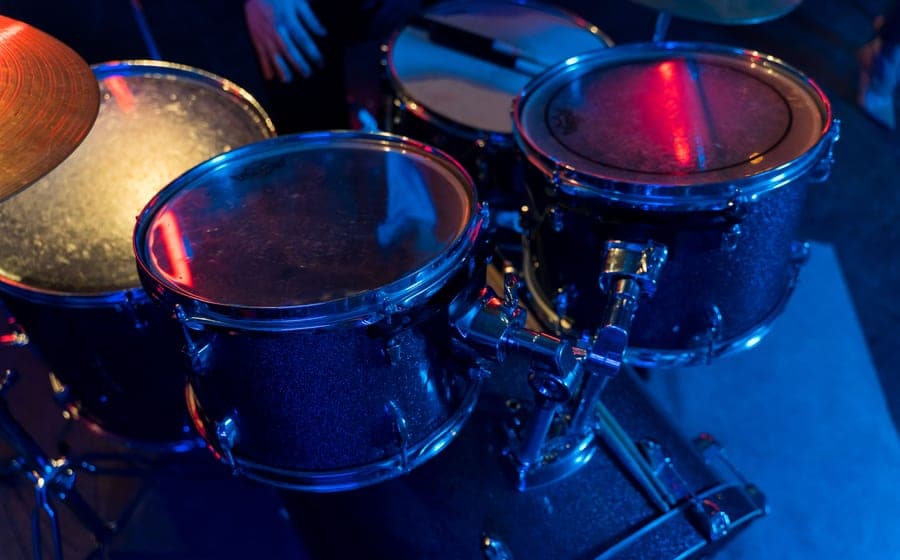
A practice pad teaches stick technique, hand speed, evenness and timing — genuinely half of drumming. It cannot teach limb independence, which is hands and feet doing different things at once, and that is the other half. Start on a pad if budget or noise makes a kit impossible; otherwise buy both.
What a pad is
A rubber or gum surface, usually 8 to 12 inches across, that gives a stick rebound similar to a drum head while making almost no noise. Mounted on a snare stand at playing height, or occasionally sat on a table.
It is not a compromise version of a drum. Every working drummer owns one, and pad practice is assigned homework in essentially every drum lesson ever given.
What it genuinely teaches
Rudiments. Single strokes, double strokes, paradiddles, flams, rolls. These are the vocabulary of drumming in the same way scales are the vocabulary of piano, and they are practiced on one surface with two hands. A pad is the correct tool for this, not a substitute.
Hand speed and evenness. Getting both hands to strike at exactly the same volume and exactly the right moment takes thousands of repetitions. On a pad you can hear unevenness with unusual clarity, because there is no drum sound to hide behind.
Stick control and rebound. Letting the stick bounce and controlling the bounce is the foundation of everything fast a drummer does. This is entirely a hands skill.
Timing. A pad and a metronome is the whole apparatus for building reliable time, which is the single most valuable attribute a drummer has.
What it cannot teach
Limb independence. The defining skill of kit drumming: right hand on the hi-hat, left hand on the snare, right foot on the kick, left foot on the hi-hat pedal, each doing something different at the same time. This has to be practiced with four limbs on four things, and there is no pad exercise that approximates it.
Anything involving feet. Bass drum technique — heel up, heel down, controlling the beater — needs a pedal. A separate bass drum pedal practice pad exists and is worth having if the pad is going to be the main instrument for a while.
Moving around the kit. A fill that travels across three toms and a crash is a physical motion with distance and timing. On a pad everything is in one place.
Dynamics between voices. Playing the snare loud and the hi-hat quiet in the same bar is a balance skill that needs two different surfaces.
When to start on a pad
When a kit is genuinely impossible right now. No space, no budget, or a living situation where even an electronic kit’s pedal thump is not workable. A pad and a pair of sticks costs very little and a beginner can make real progress on rudiments for months.
When commitment is unknown and the buyer is nervous. Three months of pad work costs almost nothing and answers the question of whether the interest is real, without a kit-sized purchase.
When there is a teacher. Many teachers start students on a pad for the first weeks regardless of what they own, because the technique laid down early is what everything else is built on.
When to buy a kit instead
When the player is a child. A seven-year-old on a rubber pad will lose interest, and reasonably so — they wanted to play drums, and a pad makes no drum sound. Get them a small kit and use the pad as a supplement.
When noise is the only obstacle. A mesh-head electronic kit solves noise while still being a kit, and it is the better answer than a pad if the budget reaches it.
When motivation needs feeding. Drumming along to a song is the thing that makes people want to practice. A pad cannot do it. If the risk is losing interest, buy the kit.
The option that is neither
If the reason a kit is impossible is noise rather than money, there is a third answer that a pad does not offer: a cajon. It makes a real musical sound you can play songs on, it needs no sticks, stand or throne, and because it has no pedal it puts nothing into the floor. It builds hands and time feel the way a pad does, and like a pad it cannot teach limb independence. The picks are in best cajons for beginners.
The honest recommendation
Buy both, and buy the pad first if there is a gap before the kit. The pad costs little, does not become redundant when the kit arrives, and will still be in use in ten years. Every kit owner we would take advice from also owns one.
What we would buy
Alesis Debut Kit
AlesisBest for: Ages roughly 5-9
Four 6 inch mesh pads sized and spaced for a small child, with headphones, a throne and sticks in the box. Alesis states it is designed for ages 5 to 9 and the geometry backs that up.
Published specifications
- Pads:
- Four 6" mesh pads (snare and three toms)
- Cymbals:
- Three 10" pads — hi-hat, crash, ride
- Pedals:
- Hi-hat and bass drum pedals included
- Module:
- DM-Lite: 120 sounds, 10 kits, 30 play-along tracks, drum coach
- Age guidance:
- Manufacturer states ages 5-9
- In the box:
- Metal rack, height-adjustable throne, sticks, headphones, cables, Melodics lessons
What it gets right
- Purpose-built small geometry — the pads are within a small child's reach rather than an adult kit with the legs shortened
- Headphones included, which for a kids' drum kit is the difference between practicing and being asked to stop
- Height-adjustable throne, so it tracks a growing child for a couple of years
Where it gives ground
- 6 inch pads are small enough that an older child will feel boxed in quickly
- The DM-Lite module is basic; 120 sounds and no real editing
What it is not good at
Lasting. Alesis's own 5-to-9 guidance is honest, and a 10-year-old should start on the Nitro Max instead. Buying this for an older child to save money buys a kit they will resent in a year.
How the specs score against a beginner’s needs
Scores are our reading of the published specifications above against what a beginner physically needs. They are not test results — we have not played this instrument.
Specifications from Alesis Drums — Debut Kit.
Pearl Roadshow RS525SC
PearlBest for: Complete acoustic kit, teen and up
A full 22 inch kick, five drums, four stands, a pedal, a throne and cymbals, on 9-ply poplar shells with hand-cut bearing edges. Nothing else needs buying to play it.
Published specifications
- Configuration:
- 5-piece: 22x16 bass, 14x5.5 snare, 10x8 and 12x9 rack toms, 16x16 floor tom
- Shells:
- 9-ply poplar, 7 mm, hand-cut 45-degree bearing edges
- Hoops:
- 1.6 mm triple-flanged steel
- Hardware included:
- H-50 hi-hat, C-50 cymbal, S-50 snare stand, P-50 pedal, D-50 throne
- Cymbals included:
- 16" brass crash/ride, 14" hybrid hi-hats
- Also included:
- Two pairs of maple sticks, stick bag
What it gets right
- Genuinely complete — stands, pedal, throne, cymbals and sticks are all in the box, which almost never happens at this price
- Hand-cut 45-degree bearing edges on poplar shells; the edge is what lets a drum be tuned at all
- Triple-flanged steel hoops rather than the pressed hoops on the tier below
Where it gives ground
- The included brass cymbals are the weak point and the first thing anyone replaces
- A 22 inch kick is a full-size kit and needs the floor space of one
What it is not good at
Being quiet, or fitting a child. This is a loud acoustic kit at adult dimensions — a 22 inch bass drum puts the pedal where an eight-year-old's leg does not reach. For that buyer, see the kids' kits and the electronic options.
How the specs score against a beginner’s needs
Scores are our reading of the published specifications above against what a beginner physically needs. They are not test results — we have not played this instrument.
Specifications from Pearl Roadshow RS525SC published specifications (Percussion Source).
Questions people actually ask
How do you learn drums with a practice pad?
You work on rudiments — single strokes, double strokes, paradiddles, rolls — with a metronome, building hand speed, evenness and stick control. Every drum teacher assigns this work, and it is a large share of what separates a competent drummer from a struggling one. What you cannot practice is anything involving feet or moving between drums.
Can you learn drums with only a practice pad?
You can learn stick technique, timing and reading, which is a genuine and substantial half. You cannot learn limb independence, which is the coordination of hands and feet doing different things simultaneously, and that is the other half. A pad alone does not produce a drummer.
Is a practice pad worth it if I already have a kit?
Yes, and most drummers own both. A pad allows technique work at any hour, in any room, on holiday, in front of a television. It removes every excuse not to practice hand technique, which is exactly why teachers assign pad homework.
What size practice pad should I get?
An 8 to 12 inch pad on a snare stand at playing height. A small pad on a table teaches a wrist angle that is wrong at a kit, so the stand matters more than the pad size.
Sources
Still deciding?
Every recommendation on this site is built the same way, and the method is published in full — including what we do not do and what would get a pick dropped.
Read next
- Best beginner drum sets: complete kits for teens and adults
Complete acoustic and electronic kits for adult players, with the total-purchase problem and the noise question both addressed.
- Acoustic vs electronic drums for beginners
Feel against practice hours, what transfers in each direction, and the building question that settles it. Buy paths for both.
- How loud are drums?
Measured decibel levels against the NIOSH limit, what travels through walls and floors, and which quieting options actually work.
- Best drum sets for kids
Picks by age band with real shell dimensions, plus the electronic option that makes a kids kit possible in an apartment.
- How much should a beginner drum set cost?
Four bands defined by completeness and hardware quality, with the shells-only trap and the real running costs.