Drums
Best drum brands for beginners
Drums is the one family where the brand on the shells tells you least, because the parts that decide whether a kit is playable are made by someone else.
By Sawyer V. · Published · Last updated
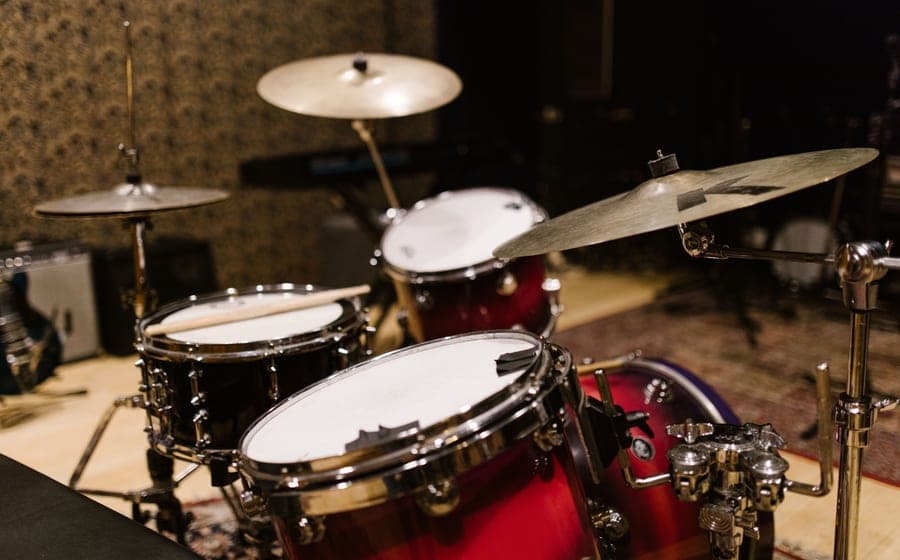
Brand does less work in drums than in any other family on this site, and that is worth understanding before you start comparing names. A drum kit is not one object. It is shells, hoops, heads, hardware, a pedal and cymbals, and those parts are frequently made by different companies and routinely replaced with parts from others.
Every pick states its Starter Path band, and we have not physically tested any of them — the method is on how we pick.
Alesis owns the beginner electronic tier. Pearl is the safest complete acoustic kit, because the Roadshow genuinely includes everything. Meinl and Evans are the percussion and practice specialists. The shell badge matters less than the hoops, the bearing edges and what the kit includes.
Alesis — the beginner electronic default
Alesis has the entry electronic market in a way no other brand has any category here. The Alesis Nitro Max Kit#ad is the reason: mesh heads on every drum pad, a dual-zone snare, a four-post rack, Bluetooth audio and USB-MIDI.
Mesh at this price is the specification that matters. Rubber pads are louder in the room, harder on the wrists and worse at teaching rebound, and the tier below Alesis is still full of them.
Alesis also covers the children’s end with the Debut Kit, which uses smaller pads spaced for a five- to nine-year-old and includes headphones and a throne. Both ends of the range are covered honestly, which is unusual. Picks are in best electronic drum sets for beginners.
What Alesis is not is a step-up brand. Roland and Yamaha sit above it and the gap is real, and neither of them competes at the beginner tier.
Pearl — the complete acoustic kit
The Pearl Roadshow RS525SC#ad is the acoustic recommendation, and the reason is not the shells. It is that the box contains a hi-hat stand, a cymbal stand, a snare stand, a pedal, a throne, cymbals and two pairs of sticks.
That matters because the standard trap in acoustic drums is buying a “kit” and then discovering that a kit means five drums and nothing to hold them up. Hardware is a substantial second purchase and plenty of buyers do not find out until it arrives.
The specifications that do matter on the shells are there too: 9-ply poplar with hand-cut 45-degree bearing edges and 1.6 mm triple-flanged steel hoops. The bearing edge is what lets a drum be tuned at all, and triple-flanged hoops are a genuine step above the pressed hoops on cheaper kits.
Its weak point is the included brass cymbals, and Pearl would not pretend otherwise; cymbals are the first thing anyone upgrades.
Meinl — percussion, and the cajon
Meinl is a percussion company rather than a drum kit company, and at the beginner end that means cajons, bongos and hand percussion.
The Meinl HCAJ1NT Headliner String Cajon#ad is the cajon we recommend, and its distinguishing feature is that the snare response actually adjusts: two hex screws tension the internal strings with an included key, so one instrument covers a dry tight sound and a loose sizzle.
For a household where a kit is not possible, this is the brand that matters most. See best beginner cajons and best first percussion instruments.
Evans and Remo — the heads
These two make the drum heads on most kits regardless of the badge on the shell, and a head change is the cheapest meaningful upgrade any acoustic kit can receive. A budget kit with good heads, properly tuned, outperforms an expensive kit with dead ones.
Evans also makes the practice pad we recommend. The Evans RealFeel 12" single-sided practice pad#ad is 12 inches of natural gum rubber with consistent rebound across the surface, and it is where a lot of real drumming practice happens. Options in best drum practice pads.
The names that show up next to them
Mendini by Cecilio occupies the small-child acoustic slot with a 16 inch junior kit, which is the smallest kit where the pedal is actually where a three- or four-year-old’s foot is. It is a starting point rather than a kit that lasts, and we say so in best drum sets for kids.
Ludwig, Tama and Mapex all make entry kits that compete directly with the Pearl Roadshow. The differences at this tier are in what is included rather than in the shells, so compare the box contents before the badge.
Zildjian and Sabian make cymbals, which is where an acoustic drummer’s second purchase goes and where the biggest audible improvement is available.
Vic Firth makes sticks, and sticks are the one part of a kit that is genuinely consumable. Sizing is in how to choose drum sticks.
What to check instead of the badge
On an acoustic kit: hoop type (triple-flanged, not pressed), bearing edges, and whether hardware, a pedal and a throne are included. What each of those parts is and does is in drum kit parts explained.
On an electronic kit: mesh heads rather than rubber, and whether the snare is dual-zone. Why that distinction matters is in mesh heads versus rubber pads.
A seller who publishes none of that is the warning sign, and it is a more durable test than any list of brand names.
What we would buy
Alesis Nitro Max Kit
AlesisBest for: Apartments and shared walls
Mesh heads on every pad, a dual-zone snare and Bluetooth audio for playing along. Mesh is the spec that makes an electronic kit tolerable to sit at for an hour.
Published specifications
- Pads:
- 10" dual-zone mesh snare, three 8" mesh toms
- Cymbals:
- Three 10" pads — hi-hat, crash, ride
- Module:
- 440 sounds, 32 kits, 60 play-along songs, performance recorder
- Connectivity:
- Bluetooth audio, USB-MIDI
- Mounting:
- Included four-post rack
- Weight:
- Under 15 kg complete
What it gets right
- Mesh heads on every drum pad — quieter and far closer to a real rebound than the rubber pads a tier down
- Bluetooth audio means playing along to a phone with no cable and no extra mixer
- USB-MIDI, so it doubles as a controller for recording software later
Where it gives ground
- Mesh heads are quiet in the room but the kick pedal thumps through a floor; downstairs neighbors still hear it
- Single-zone toms — no rimshot on anything except the snare
What it is not good at
Teaching cymbal technique. Three 10 inch pads cannot reproduce how a real hi-hat or a crash responds, and a drummer moving to an acoustic kit later has that to learn from scratch.
How the specs score against a beginner’s needs
Scores are our reading of the published specifications above against what a beginner physically needs. They are not test results — we have not played this instrument.
Specifications from Alesis Drums — Nitro Max Kit.
Pearl Roadshow RS525SC
PearlBest for: Complete acoustic kit, teen and up
A full 22 inch kick, five drums, four stands, a pedal, a throne and cymbals, on 9-ply poplar shells with hand-cut bearing edges. Nothing else needs buying to play it.
Published specifications
- Configuration:
- 5-piece: 22x16 bass, 14x5.5 snare, 10x8 and 12x9 rack toms, 16x16 floor tom
- Shells:
- 9-ply poplar, 7 mm, hand-cut 45-degree bearing edges
- Hoops:
- 1.6 mm triple-flanged steel
- Hardware included:
- H-50 hi-hat, C-50 cymbal, S-50 snare stand, P-50 pedal, D-50 throne
- Cymbals included:
- 16" brass crash/ride, 14" hybrid hi-hats
- Also included:
- Two pairs of maple sticks, stick bag
What it gets right
- Genuinely complete — stands, pedal, throne, cymbals and sticks are all in the box, which almost never happens at this price
- Hand-cut 45-degree bearing edges on poplar shells; the edge is what lets a drum be tuned at all
- Triple-flanged steel hoops rather than the pressed hoops on the tier below
Where it gives ground
- The included brass cymbals are the weak point and the first thing anyone replaces
- A 22 inch kick is a full-size kit and needs the floor space of one
What it is not good at
Being quiet, or fitting a child. This is a loud acoustic kit at adult dimensions — a 22 inch bass drum puts the pedal where an eight-year-old's leg does not reach. For that buyer, see the kids' kits and the electronic options.
How the specs score against a beginner’s needs
Scores are our reading of the published specifications above against what a beginner physically needs. They are not test results — we have not played this instrument.
Specifications from Pearl Roadshow RS525SC published specifications (Percussion Source).
Meinl HCAJ1NT Headliner String Cajon
Meinl PercussionBest for: The cajon to buy once
The only cajon here whose snare response you can actually adjust. Two sets of micro-coiled steel strings tension with the included key, so one box covers a dry, tight sound and a loose sizzle without buying a second instrument.
Published specifications
- Body:
- Siam Oak (Hevea brasiliensis Muell.-Arg.)
- Snare system:
- Internal cajon strings — adjustable micro-coiled steel
- String tension:
- Two hex screws, tuning key included
- Frontplate:
- Adjustable top corners, adjustable sizzle effect
- Seat:
- Anti-slip sitting surface
- Feet:
- Four solid silicone feet
- Dimensions:
- 11 3/4" W x 18" H x 12 1/4" D, about 8 lb (retailer spec sheet)
What it gets right
- String tension adjusts with the included key — the snare sound is a setting rather than a fixed characteristic
- Adjustable top corners set how far the frontplate sits off the body, which is what controls the slap
- Full-size body, so the bass note has somewhere to develop
- Silicone feet stop the box walking on a hard floor, which cheaper cajons do constantly
Where it gives ground
- Adjustability is only worth paying for if you use it — a player who never touches the hex screws is buying a feature they are not using
- Meinl does not publish dimensions on its own product page, so the figures above come from a retailer spec sheet
- Strings can buzz sympathetically against the frontplate until you find a tension you like
What it is not good at
Being played by a small child. A full-size cajon assumes adult-length arms reaching down over the front, and a seven-year-old ends up hunched over a box they cannot straddle.
How the specs score against a beginner’s needs
Scores are our reading of the published specifications above against what a beginner physically needs. They are not test results — we have not played this instrument.
Specifications from Meinl Percussion — HCAJ1NT product page, Amazon listing naming the exact model (dimensions and weight).
Evans RealFeel 12" single-sided practice pad
EvansBest for: Lighter, one surface
The same gum rubber playing surface as the two-sided pad, without the neoprene side. Lighter and cheaper, and for a beginner the second surface is not the point yet.
Published specifications
- Diameter:
- 12"
- Surface:
- Single — natural gum rubber
- Response:
- Realistic stick rebound, consistent across the surface
- Manufacture:
- Designed, engineered and made in the USA
What it gets right
- Identical playing surface to the two-sided pad, which is the part that matters
- Lighter, so it actually travels
- The cheapest genuinely good pad, which makes it the right first one
Where it gives ground
- One surface, so no harder option for strength work later
- The flat back slides on a smooth table without a stand
What it is not good at
Being the last pad a committed drummer owns. Most people who keep drumming end up wanting the second surface eventually.
How the specs score against a beginner’s needs
Scores are our reading of the published specifications above against what a beginner physically needs. They are not test results — we have not played this instrument.
Specifications from Evans RealFeel single-sided pad published description.
Questions people actually ask
What is the best drum brand for beginners?
Pearl for a complete acoustic kit, because the Roadshow includes hardware, a pedal, a throne and cymbals that would otherwise be separate purchases. Alesis for electronic kits, where it effectively owns the beginner tier.
Is Alesis a good drum brand?
At the beginner end, yes, and it is the default rather than a compromise. Mesh heads at the Nitro Max’s price is the specification that matters, and few competitors match it.
Do drum brands matter as much as guitar brands?
Less. A kit is an assembly of shells, hardware, heads and cymbals, and the parts that decide playability — heads, pedal, cymbals — are routinely replaced with other brands anyway.
Which drum brands should beginners avoid?
Any kit whose seller does not publish shell material, bearing edge type or hoop construction. Pressed hoops and unspecified shells are the reliable signal of a kit that cannot be tuned properly.
Sources
Still deciding?
Every recommendation on this site is built the same way, and the method is published in full — including what we do not do and what would get a pick dropped.
Read next
- Best beginner drum sets: complete kits for teens and adults
Complete acoustic and electronic kits for adult players, with the total-purchase problem and the noise question both addressed.
- Best electronic drum sets for beginners
Mesh versus rubber pads, the kick-thump problem that headphones do not solve, and picks for adults and children.
- Acoustic vs electronic drums for beginners
Feel against practice hours, what transfers in each direction, and the building question that settles it. Buy paths for both.
- Every part of a drum kit, explained
What every drum, cymbal and stand is for, which parts are the weak link on a budget kit, and what a five-piece actually means.
- How much should a beginner drum set cost?
Four bands defined by completeness and hardware quality, with the shells-only trap and the real running costs.