Drums
Best first percussion instruments
A drum kit is one answer to wanting to play percussion, and for a lot of people it is the wrong one.
By Sawyer V. · Published · Last updated
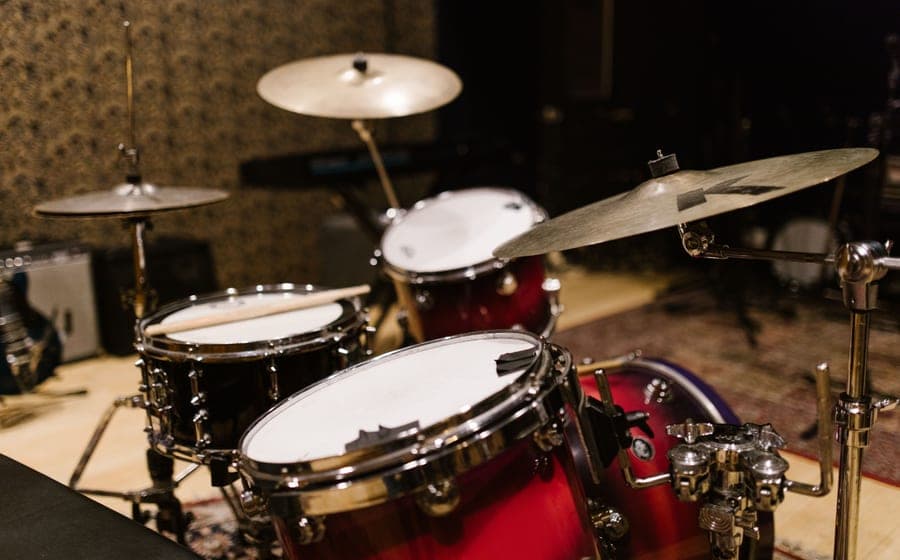
“I want to play drums” and “I want to play percussion” are different statements, and the default answer to both is a drum kit. For a substantial number of people that answer is wrong — usually because of the building they live in, sometimes because of the space, occasionally because what they actually want is to make music rather than to become a kit drummer.
This page lays out the honest alternatives and what each one costs you.
Every pick states its Starter Path band, and we have not physically tested any of them — the method is on how we pick.
Buy a cajon if you want to make music quietly and play with other people. Buy a practice pad if you specifically want drum kit technique and near-silence. Buy a junior kit if the player is a child and the noise is manageable. Only the kit teaches limb independence.
The four routes, compared
| Noise | Space | Teaches hands | Teaches feet | |
|---|---|---|---|---|
| Practice pad | Near silent | A stand | Yes, fully | No |
| Cajon | Acoustic-guitar level | It is a seat | Yes, differently | No |
| Electronic kit | Quiet, but pedals hit the floor | A rack | Yes | Yes |
| Acoustic kit | Very loud | Two meters square | Yes | Yes |
The picks
The Meinl HCAJ1NT Headliner String Cajon#ad is the one we recommend most often to adults, and the reason is that it is the only instrument here that produces actual music on its own. You sit on it and strike the front plate: the middle gives a bass note, the top edge gives a snare-like slap, and a beginner finds both within a minute.
For apartment living it is close to ideal, because it has no pedal. Nothing is driving impact into the floor, which is the part of drumming that travels through a building regardless of volume. Its adjustable internal strings mean the snare character is a setting rather than something fixed.
Against it: no cymbals, nothing for your feet, and it will not cut through an amplified band. It is also not silent — quiet is relative to a drum kit. The full field is in best cajons for beginners.
The Evans RealFeel 12" two-sided practice pad#ad is the right answer if what you actually want is drum kit technique. Twelve inches of gum rubber on a snare stand at real playing height, with a harder neoprene side for building strength against resistance.
It builds rudiments, evenness, hand speed and timing — a genuine and substantial half of drumming — and it does so at essentially zero volume, at any hour, in any room. What it cannot build is limb independence, and being clear about that is the point of kit versus pad to start.
The Mendini by Cecilio 16" Junior Kit#ad is the option for a small child, roughly ages three to six. A three-piece junior kit built around a 16 inch bass drum, which is the specification that matters: bass drum diameter sets how far in front of the player the pedal ends up, and a child whose leg cannot reach it cannot play.
Against it: it is a real acoustic kit and therefore genuinely loud, and the hardware at this price is basic. It is also the only pick here that teaches all four limbs, which for a child who wants to play drums is the entire point. Sizing by age is in best drum sets for kids.
How to choose
Start from the building. If an acoustic kit is impossible where you live, that decides the format before anything else does. The honest levels are in how loud are drums.
Then ask what you want to be able to do. Play songs with friends? Cajon. Sit at a kit competently in two years? Pad, then a kit. Play drums, now, as a child? Junior kit.
Then be honest about commitment. A pad or a cajon costs a fraction of a kit and answers the question of whether the interest is real without a kit-sized purchase or a kit-sized argument with your household.
What none of these replace
Limb independence — right hand on the hi-hat, left on the snare, right foot on the kick, left foot on the hi-hat pedal, each doing something different simultaneously — only happens on a kit.
A player who spends two years on a cajon or a pad arrives at a kit with excellent hands, real time feel and no coordination between their feet and hands. That is a good place to arrive from, and it is not the same as having played a kit.
If a kit is where you are heading and noise is the only obstacle, the mesh-head electronic route plus an isolation mat is the direct answer — see best electronic drum sets for beginners.
Quick picks
If you want to play music, quietly
A box you sit on and play with your hands. Real musical output, no pedal driving impact into the floor, nothing else to buy.
| # | Product | Best for | Score | Price |
|---|---|---|---|---|
| 1 | No image Meinl HCAJ1NT Headliner String CajonThe only cajon here whose snare response you can actually adjust. | The cajon to buy onceEnough | 8.8 | Check price on Amazon → #ad How we’re funded |
If you want drum technique, silently
Twelve inches of gum rubber on a stand. Builds every hand skill in drumming and makes almost no noise at all.
| # | Product | Best for | Score | Price |
|---|---|---|---|---|
| 1 | No image Evans RealFeel 12" two-sided practice padGum rubber on one side and neoprene on the other, so one pad gives you a realistic rebound surface and a harder, slower one for building control. | The standard practice padEnough | 9.0 | Check price on Amazon → #ad How we’re funded |
If the player is a small child
A junior acoustic kit sized so the pedal is actually reachable. Loud, and the only option here that teaches all four limbs.
| # | Product | Best for | Score | Price |
|---|---|---|---|---|
| 1 | No image Mendini by Cecilio 16" Junior KitA three-piece with an 11x16 bass drum, real hardwood shells and triple-flanged hoops. | Ages roughly 3-6, acousticThe honest floor | 7.0 | Check price on Amazon → #ad How we’re funded |
The picks in full
Meinl HCAJ1NT Headliner String Cajon
Meinl PercussionBest for: The cajon to buy once
The only cajon here whose snare response you can actually adjust. Two sets of micro-coiled steel strings tension with the included key, so one box covers a dry, tight sound and a loose sizzle without buying a second instrument.
Published specifications
- Body:
- Siam Oak (Hevea brasiliensis Muell.-Arg.)
- Snare system:
- Internal cajon strings — adjustable micro-coiled steel
- String tension:
- Two hex screws, tuning key included
- Frontplate:
- Adjustable top corners, adjustable sizzle effect
- Seat:
- Anti-slip sitting surface
- Feet:
- Four solid silicone feet
- Dimensions:
- 11 3/4" W x 18" H x 12 1/4" D, about 8 lb (retailer spec sheet)
What it gets right
- String tension adjusts with the included key — the snare sound is a setting rather than a fixed characteristic
- Adjustable top corners set how far the frontplate sits off the body, which is what controls the slap
- Full-size body, so the bass note has somewhere to develop
- Silicone feet stop the box walking on a hard floor, which cheaper cajons do constantly
Where it gives ground
- Adjustability is only worth paying for if you use it — a player who never touches the hex screws is buying a feature they are not using
- Meinl does not publish dimensions on its own product page, so the figures above come from a retailer spec sheet
- Strings can buzz sympathetically against the frontplate until you find a tension you like
What it is not good at
Being played by a small child. A full-size cajon assumes adult-length arms reaching down over the front, and a seven-year-old ends up hunched over a box they cannot straddle.
How the specs score against a beginner’s needs
Scores are our reading of the published specifications above against what a beginner physically needs. They are not test results — we have not played this instrument.
Specifications from Meinl Percussion — HCAJ1NT product page, Amazon listing naming the exact model (dimensions and weight).
Evans RealFeel 12" two-sided practice pad
EvansBest for: The standard practice pad
Gum rubber on one side and neoprene on the other, so one pad gives you a realistic rebound surface and a harder, slower one for building control. The default recommendation.
Published specifications
- Diameter:
- 12"
- Surfaces:
- Two — natural gum rubber and neoprene
- Gum side:
- Responds much the way a drumhead does
- Manufacture:
- Designed, engineered and made in the USA
What it gets right
- The gum side rebounds close enough to a real head that the stroke you build on it works on a kit
- The second surface is slower and harder, which is genuinely useful for building hand strength rather than just speed
- 12 inches is snare-sized, so it mounts on a snare stand at the right height
Where it gives ground
- Heavier than a single-sided pad, which matters if it lives in a backpack
- No stand mount on the pad itself in the basic version — check what you are buying
What it is not good at
Teaching anything involving feet. A pad is a hands tool; limb independence needs a kit, and no amount of pad work substitutes.
How the specs score against a beginner’s needs
Scores are our reading of the published specifications above against what a beginner physically needs. They are not test results — we have not played this instrument.
Specifications from Evans RealFeel practice pad published description.
Mendini by Cecilio 16" Junior Kit
Mendini by CecilioBest for: Ages roughly 3-6, acoustic
A three-piece with an 11x16 bass drum, real hardwood shells and triple-flanged hoops. It is the smallest acoustic kit where the pedal is actually where a small child's foot is.
Published specifications
- Configuration:
- 3-piece: 11"x16" bass with pedal, 6"x10" mounted tom, 5"x10" snare
- Cymbal:
- 9.5" with mounting arm
- Shells:
- Hardwood, triple-flanged hoops
- In the box:
- Wooden sticks, round padded adjustable throne
What it gets right
- A 16 inch bass drum puts the pedal within reach of a three- or four-year-old's leg, which no full-size kit does
- Triple-flanged hoops and hardwood shells, so it can genuinely be tuned rather than just hit
- Adjustable throne included, and at this age that is the part that has to move most
Where it gives ground
- Three pieces and one cymbal — this is a starting point, not a kit
- The included cymbal and pedal are the cheapest components and behave like it
What it is not good at
Anyone over about seven. Growth out of this kit is measured in a couple of years, and paying for it twice is worse than starting a six-year-old on a proper junior five-piece.
How the specs score against a beginner’s needs
Scores are our reading of the published specifications above against what a beginner physically needs. They are not test results — we have not played this instrument.
Specifications from Cecilio Music — Mendini kids drum set, 3-piece 16".
Questions people actually ask
What is the best percussion instrument for a beginner?
A cajon, for most adults who cannot make drum-kit noise. It produces real music, needs no sticks, stand or amplification, and has no pedal driving impact into the floor. A practice pad is better if the goal is specifically drum kit technique.
Do I need a drum kit to learn drums?
To learn limb independence, yes — that skill needs four limbs on four things and nothing else approximates it. Hand technique, rudiments, evenness and timing are a genuine half of drumming and all of them are learnable on a pad.
What percussion instrument is quietest?
A practice pad, comfortably. A cajon is next and is quiet only relative to a drum kit — roughly acoustic-guitar volume. An acoustic kit is in a different category entirely.
Is a cajon a good substitute for drums?
For playing with acoustic musicians, largely yes. As preparation for drum kit, only partly: it builds hands and time feel and cannot teach your feet anything, because there is nothing for them to do.
Sources
Still deciding?
Every recommendation on this site is built the same way, and the method is published in full — including what we do not do and what would get a pick dropped.
Read next
- Best cajons for beginners
The four specs that separate a real cajon from a wooden box, three picks at different sizes, and an honest account of what a cajon cannot do.
- Drum kit or practice pad first?
What a pad genuinely teaches, what it cannot, and when starting on one is the right call rather than a compromise.
- Best drum sets for kids
Picks by age band with real shell dimensions, plus the electronic option that makes a kids kit possible in an apartment.
- How loud are drums?
Measured decibel levels against the NIOSH limit, what travels through walls and floors, and which quieting options actually work.
- Best instruments for an apartment
Four instruments that survive a shared wall, ranked by how quiet they are at their loudest, plus the headphones that make the difference.