Drums
Best cajons for beginners
A cajon is the only percussion instrument on this site you can play at full effort in a shared building and still be on speaking terms with your neighbors.
By Sawyer V. · Published · Last updated
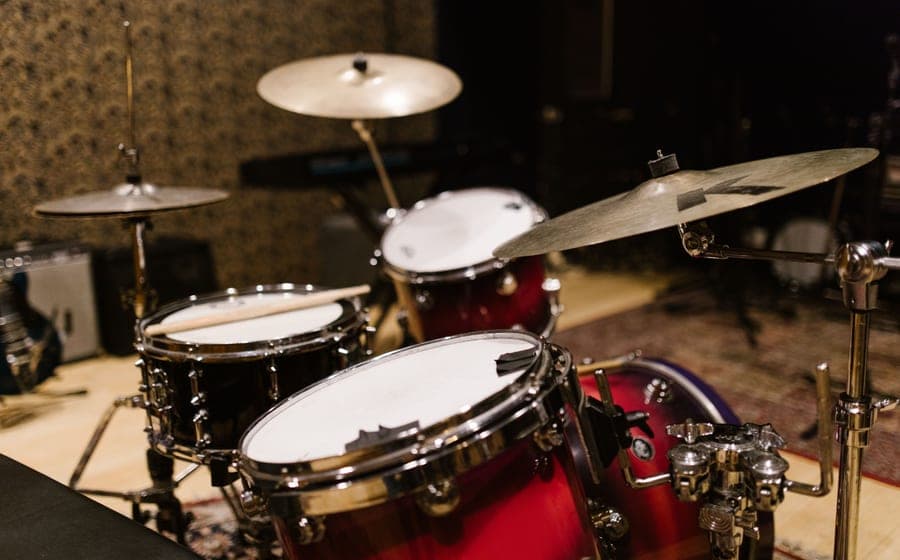
The cajon is the instrument we end up recommending in conversations that started about drums and ran into a wall. Somebody wants to play percussion, they live in an apartment or a row house, and every honest answer about an acoustic kit is some version of “not there, not at that volume, not without a conversation first.”
A cajon sidesteps all of it. It is a wooden box you sit on and hit with your hands. There is nothing to tune, nothing to assemble, no sizing chart, no throne, no sticks, and no pedal driving impact into the floor. It is the lowest-friction real percussion instrument there is.
Every pick below states its Starter Path band, and we have not physically tested any of them — the method, including what we refuse to claim, is published in full on how we pick. Specifications come from manufacturer documentation where the manufacturer publishes them and from named retailer spec sheets where it does not, and each product card says which.
Buy a full-size cajon with a real wood body and a snare system you can hear separately from the bass note. If you want to shape the sound, buy one with adjustable internal strings. If you want to sit down and play with no decisions, buy one with fixed snare wires. Buy a compact model only if the player is small or it has to travel.
What a cajon actually is
A box with five thick walls and one thin one. The thin front wall — the frontplate, or tapa — is the playing surface, and it is deliberately loose at the top corners so it can slap against the body.
That gives you two distinct sounds from one instrument, which is the entire design.
The bass note comes from striking the middle of the frontplate with a flat hand. The plate flexes, the air inside the box compresses and escapes through a port in the back, and you get a low thump that stands in for a kick drum.
The slap comes from striking near the top edge, where the plate is loose and where the snare system sits behind it. You get a sharp crack that stands in for a snare drum.
A beginner finds both in about a minute. That is genuinely unusual — almost every other instrument we cover has a gap of weeks between first contact and first recognizable sound.
The four things that separate a cajon from a wooden box
The category is full of instruments that look identical in a photograph and are not the same object. Four specifications do the work.
1. What the body is actually made of. The frontplate matters least here, because it is thin by design. What matters is the body, since that is the resonating chamber the bass note lives in. Baltic birch and Siam Oak are real tonewood construction. A body built from fiberboard with a decorative veneer will still make a noise, the bass note will be duller and shorter, and there is no fixing it later.
2. The snare system, and whether you can hear it separately. This is the test that separates a real cajon from a novelty. Strike the middle and you should get a bass note with the snare barely engaged; strike the top edge and the snare should crack. If both strikes sound like the same buzzing, the wires or strings are badly positioned and the instrument has one sound rather than two.
Two designs exist. Strings — micro-coiled steel, tensioned against the back of the frontplate — are adjustable and give a drier, more controlled response. Wires, borrowed from a snare drum, are usually fixed and give a brighter, buzzier sound. Neither is better; they are different instruments to play.
3. Whether the frontplate corners adjust. The top corners are held by screws, and how tight they are decides how far the plate sits off the body. Tight gives a focused, controlled slap; loose gives more buzz and more sizzle. Where this adjusts, it is the single most useful thing you can change, and almost nobody tells beginners it exists.
4. The feet. Sounds trivial and is not. A cajon with hard or missing feet walks across a wooden floor while you play it and transmits every strike into the boards underneath. Rubber or silicone feet stop both. In a building with neighbors below, this is the specification that decides whether the instrument is neighborly.
How we ranked these
Five criteria, applied in this order. All of them are our reading of published specifications rather than test results, and we do not claim otherwise.
Bass and slap separation first, because a cajon that produces one undifferentiated noise is not doing the job the instrument exists to do.
Adjustability second — whether the sound is a setting or a fixed characteristic. This cuts both ways, and we score it as a capability rather than as a virtue.
Build quality third: real tonewood construction throughout rather than a good face on a cheap carcass.
Quiet enough for an apartment fourth, because that is why a large share of readers are on this page at all.
Room to grow last: whether the instrument is still adequate in year three.
The picks
The Meinl HCAJ1NT Headliner String Cajon#ad is the one we would buy, and the reason is the hex key in the box. Two sets of micro-coiled steel strings tension against the back of the frontplate, and the top corners adjust as well, so the same instrument covers a dry, tight, controlled sound and a loose sizzle.
That matters more for a beginner than it first appears. Nobody knows what cajon sound they want before they have played one for a month, and an instrument where the answer is a screw rather than a second purchase is genuinely better value. Meinl publishes the body as Siam Oak; the dimensions on the card below come from a retailer spec sheet, because Meinl does not publish them on its own page.
The honest cost is that adjustability is worth nothing to a player who never uses it, and adjustable strings can buzz sympathetically until you find a tension you like.
The LP Aspire Accents Cajon (LPA1332)#ad takes the opposite position, and it is a defensible one. Three sets of fixed snare wires, no tension adjustment anywhere, and a birch and poplar body with a para wood soundboard. You cannot set it up wrong because there is nothing to set.
Three sets of wires rather than one is the specification worth noticing: they cover more of the frontplate, so the snare responds across a wider area instead of only in the dead center. What you give up is any route to a dry, wire-free bass note, and any recourse at all if you decide you dislike the snare character. Latin Percussion’s own store listed it out of stock when we checked, so this one is a retailer purchase.
The Meinl JC50B Jam Cajon#ad is here for a specific player rather than as a cheaper alternative. At roughly ten inches wide and fifteen tall it is small enough that a child, or a shorter adult, can sit on it with their feet flat and their arms in a sensible position instead of hunching over a box they cannot straddle.
Baltic birch throughout, and dual fixed wires resting against the inside of the frontplate so the snare answers a light touch. The trade is physics: a smaller box moves less air, so the bass note is clearly shallower than either full-size pick. We could not confirm an Amazon listing whose title names this exact model code, so its buy link is a tagged search rather than a direct product page — that is our standard practice rather than a problem with the instrument.
Size, which is the one fit decision
Cajons do not come in fractional sizes the way violins and children’s guitars do, which is a relief. There are effectively two: full size and compact.
The fit test takes ten seconds and it is the same test as a drum throne. Sit on it. Your thighs should be roughly level or sloping very slightly downward, your feet flat on the floor, and your hands should reach both the middle and the top edge of the frontplate without your shoulders lifting.
A full-size cajon is around seventeen to eighteen inches tall, which suits most adults. If the player’s feet dangle, or they have to lean forward and down to reach the plate, they are on the wrong size, and the resulting hunched posture is why people say cajons hurt their back. The same logic that governs kit setup applies here — see how to set up a drum set.
Why a cajon works in an apartment when a kit does not
Sound reaches a neighbor two ways, and only one of them is easy to fix.
Airborne sound travels out through the air and through the wall. Walls stop it reasonably well. A cajon is roughly in acoustic-guitar territory here — not silent, and not remotely a drum kit.
Structure-borne impact goes directly into the building and travels through joists and concrete far better than through air. This is what a kick pedal does, and it is why an electronic kit with the volume at zero can still get you a complaint.
A cajon has no pedal. Nothing is being driven into the floor. Rubber feet handle what little vibration the box itself produces. That combination is why it survives in buildings where a kit does not, and the fuller version of the argument is in best instruments for an apartment and in how loud are drums.
One honest caveat: a cajon is not quiet. It is quiet relative to a drum kit, which is a low bar. If your constraint is genuine near-silence, a practice pad with headphones is the answer instead — see best drum practice pads.
What a cajon will not do
The part most cajon buying guides leave out, and the reason we would not tell every would-be drummer to buy one.
It cannot teach limb independence. Drumming’s hardest skill is four limbs doing four different things at once. A cajon uses two hands and nothing else. A player who spends two years on one and then sits at a kit has excellent hands, real time feel, and no coordination between their feet and hands at all.
It has no cymbals. The vocabulary is bass, slap, and the tones in between. That is a genuinely expressive range, and it is a narrower one than a kit.
It will not cut through a loud band. Cajons live in acoustic settings. Put one next to an amplified guitar and a bass and it disappears without a microphone.
It is hard on the hands at first. You are striking a wooden plate repeatedly with bare palms and fingers. The skin adapts, and the first couple of weeks sting in much the same way a first steel-string guitar does.
If the goal is specifically to become a drum kit player, a kit or a practice pad is the honest route, and we lay that fork out in drum kit versus practice pad to start.
What else you need
Genuinely nothing, which is close to unique in this category. No sticks, no stand, no throne, no amplifier, no tuning.
Two optional items are worth knowing about. A padded gig bag, if the instrument travels, because a cajon is a large wooden box with corners and it gets carried by hand. And a seat cushion for long sessions, which is a comfort item rather than a musical one — a textured seating surface, which two of these three picks have, is not padding.
You will not need hearing protection, which is worth stating plainly given how strongly we insist on it for kit players in drum accessories you actually need. A cajon does not reach levels where cumulative hearing damage is the concern. That is one of the clearest practical differences between the two instruments.
Who should buy one
Anyone who wants percussion and cannot make drum-kit noise. The primary case, and the strongest one.
Anyone who plays with acoustic musicians. A cajon is the standard percussion instrument for acoustic sessions, singer-songwriter setups and small church groups, and a competent beginner gets invited to play far sooner than they would on anything else here.
Guitarists and singers who want a second instrument. It is inexpensive, it takes almost no room, and it is immediately useful in exactly the rooms they already play in — the second-instrument logic is in choosing a second instrument.
Families testing whether percussion will stick. No assembly, no space requirement, and it doubles as furniture between sessions.
Who should not: anyone whose actual goal is drum kit. Buy the kit, or buy a pad and start building hands while you wait — the comparison is in best beginner drum sets.
Quick picks
If you want one cajon that adapts
Adjustable internal strings and adjustable frontplate corners. The sound is a setting you dial in rather than a fixed characteristic you either like or do not.
| # | Product | Best for | Score | Price |
|---|---|---|---|---|
| 1 | No image Meinl HCAJ1NT Headliner String CajonThe only cajon here whose snare response you can actually adjust. | The cajon to buy onceEnough | 8.8 | Check price on Amazon → #ad How we’re funded |
If you want to sit down and play
Three sets of fixed snare wires and nothing to configure. A beginner cannot set this up wrong, which is a real feature rather than a limitation.
| # | Product | Best for | Score | Price |
|---|---|---|---|---|
| 1 | No image LP Aspire Accents Cajon (LPA1332)Three sets of fixed snare wires and no adjustment anywhere. | Sit down and play, nothing to set upThe honest floor | 8.0 | Check price on Amazon → #ad How we’re funded |
For a smaller player, or for carrying
A compact Baltic birch box. The size is the whole point: a child or a shorter adult can sit on this one properly instead of hunching over it.
| # | Product | Best for | Score | Price |
|---|---|---|---|---|
| 1 | No image Meinl JC50B Jam CajonA genuinely compact Baltic birch box with fixed wires resting against the frontplate. | Smaller players, and carrying it somewhereThe honest floor | 7.4 | Check price on Amazon → #ad How we’re funded |
The picks in full
Meinl HCAJ1NT Headliner String Cajon
Meinl PercussionBest for: The cajon to buy once
The only cajon here whose snare response you can actually adjust. Two sets of micro-coiled steel strings tension with the included key, so one box covers a dry, tight sound and a loose sizzle without buying a second instrument.
Published specifications
- Body:
- Siam Oak (Hevea brasiliensis Muell.-Arg.)
- Snare system:
- Internal cajon strings — adjustable micro-coiled steel
- String tension:
- Two hex screws, tuning key included
- Frontplate:
- Adjustable top corners, adjustable sizzle effect
- Seat:
- Anti-slip sitting surface
- Feet:
- Four solid silicone feet
- Dimensions:
- 11 3/4" W x 18" H x 12 1/4" D, about 8 lb (retailer spec sheet)
What it gets right
- String tension adjusts with the included key — the snare sound is a setting rather than a fixed characteristic
- Adjustable top corners set how far the frontplate sits off the body, which is what controls the slap
- Full-size body, so the bass note has somewhere to develop
- Silicone feet stop the box walking on a hard floor, which cheaper cajons do constantly
Where it gives ground
- Adjustability is only worth paying for if you use it — a player who never touches the hex screws is buying a feature they are not using
- Meinl does not publish dimensions on its own product page, so the figures above come from a retailer spec sheet
- Strings can buzz sympathetically against the frontplate until you find a tension you like
What it is not good at
Being played by a small child. A full-size cajon assumes adult-length arms reaching down over the front, and a seven-year-old ends up hunched over a box they cannot straddle.
How the specs score against a beginner’s needs
Scores are our reading of the published specifications above against what a beginner physically needs. They are not test results — we have not played this instrument.
Specifications from Meinl Percussion — HCAJ1NT product page, Amazon listing naming the exact model (dimensions and weight).
LP Aspire Accents Cajon (LPA1332)
Latin PercussionBest for: Sit down and play, nothing to set up
Three sets of fixed snare wires and no adjustment anywhere. That is the appeal rather than a shortcoming: a beginner cannot set it up wrong, and the response is identical from the first minute to the hundredth.
Published specifications
- Body:
- Birch/Poplar
- Soundboard:
- Premium tone wood (para wood)
- Snare system:
- Three sets of DW snare wires — fixed
- Dimensions:
- H 17-1/4" x W 11-3/4" x D 12"
- Seat:
- Textured seating surface, rounded corners
- Feet:
- Large rubber feet
What it gets right
- Three sets of wires cover more of the frontplate than a single set, so the snare answers across a wider area rather than only dead center
- Nothing to adjust means nothing to adjust wrongly — a genuine advantage on a first instrument
- Rounded corners and a textured seat, which matters more than it sounds once you sit on it for an hour
- Fixed wires stay consistent; adjustable strings drift and need re-checking
Where it gives ground
- No adjustment at all — if you dislike the snare character, your only option is a different cajon
- Fixed wires mean you cannot get a genuinely dry, wire-free bass note the way an adjustable cajon can
- Latin Percussion's own store listed it out of stock at the time of writing; availability is through retailers
What it is not good at
Quiet practice in a shared building. Three sets of wires are always engaged, so there is no way to play this softly without the snare rattling, and rattle is the part that carries through a wall.
How the specs score against a beginner’s needs
Scores are our reading of the published specifications above against what a beginner physically needs. They are not test results — we have not played this instrument.
Specifications from Latin Percussion — LPA1332 Aspire Accent Cajon specifications, Amazon listing naming the exact model.
Meinl JC50B Jam Cajon
Meinl PercussionBest for: Smaller players, and carrying it somewhere
A genuinely compact Baltic birch box with fixed wires resting against the frontplate. The size is the point: a player who cannot straddle a full-size cajon can sit on this one properly.
Published specifications
- Material:
- Baltic Birch (Betula-Pendula)
- Size:
- Compact — Jam Series
- Snare system:
- Dual internal fixed snare wires, resting against the inside of the frontplate
- Sound port:
- Rear
- Feet:
- Rubber
- Dimensions:
- 10 1/4" W x 15" H x 10 1/4" D, about 6 lb (retailer spec sheet)
What it gets right
- Small enough that a child or a shorter adult can sit on it with their feet flat and their arms in a sensible position
- Baltic birch throughout rather than a birch face on a cheaper carcass
- Wires rest against the frontplate, so the snare answers a light touch instead of needing to be hit hard
- Light enough to carry one-handed, which is most of why anyone chooses a cajon over a drum kit
Where it gives ground
- A smaller box moves less air, so the bass note is noticeably shallower than either full-size pick
- Fixed wires, with no tension adjustment
- Meinl does not publish dimensions on its own product page; the figures above are from a retailer spec sheet
- No Amazon listing was confirmed whose title names this exact model code, so the buy link is a tagged search rather than a direct product page
What it is not good at
Being the only cajon an adult ever owns. It is the right size for a smaller player and for travel, and a full-size box is a clearly deeper-sounding instrument for anyone who fits one.
How the specs score against a beginner’s needs
Scores are our reading of the published specifications above against what a beginner physically needs. They are not test results — we have not played this instrument.
Specifications from Meinl Percussion — JC50B Jam Cajon product page, West Music — JC50B published dimensions and weight.
Questions people actually ask
Is a cajon a good instrument for a beginner?
Unusually good. There is no tuning, no sizing chart, no setup and no assembly, and a complete beginner can produce two recognizably different sounds — a bass note and a slap — within about a minute of sitting on one.
How loud is a cajon compared to a drum kit?
Far quieter. A cajon sits roughly in the territory of a strummed acoustic guitar, where an acoustic drum kit is in a different category entirely. A cajon also has no pedal, so it puts no repeated impact into the floor — which is the part of drumming that travels through a building.
What should I look for in a first cajon?
A real wood body rather than a laminated carcass with a decorative face, a snare system you can hear separately from the bass note, a frontplate whose top corners are loose enough to slap, and feet that stop the box walking across the floor.
Do you need anything else to play a cajon?
Nothing at all, and that is the strongest practical argument for it. No sticks, no stand, no throne, no amplification, and no tuning for normal playing. You sit on it and play it with your hands.
Can a cajon replace a drum kit?
For playing with acoustic musicians, largely yes. For learning drum kit technique, no — a cajon builds hand technique and time feel but cannot teach limb independence, because there is nothing for your feet to do.
Sources
- Meinl Percussion — HCAJ1NT Headliner String Cajon product page
- Meinl Percussion — JC50B Jam Cajon product page
- Latin Percussion — LPA1332 Aspire Accent Cajon specifications
- West Music — Meinl JC50B published dimensions and weight
- Amazon listing naming the exact Meinl HCAJ1NT model (dimensions and weight)
Still deciding?
Every recommendation on this site is built the same way, and the method is published in full — including what we do not do and what would get a pick dropped.
Read next
- Drum kit or practice pad first?
What a pad genuinely teaches, what it cannot, and when starting on one is the right call rather than a compromise.
- Best instruments for an apartment
Four instruments that survive a shared wall, ranked by how quiet they are at their loudest, plus the headphones that make the difference.
- How loud are drums?
Measured decibel levels against the NIOSH limit, what travels through walls and floors, and which quieting options actually work.
- Best drum practice pads
Gum rubber versus neoprene, why 12 inches is the right size, and the honest limit of what pad practice builds.
- Drum accessories you actually need
Sticks, a pad, hearing protection and a throne, in priority order, plus the upgrades that genuinely change how a cheap kit sounds.